Monday, June 21, 2021

From Ian:
The New Refuseniks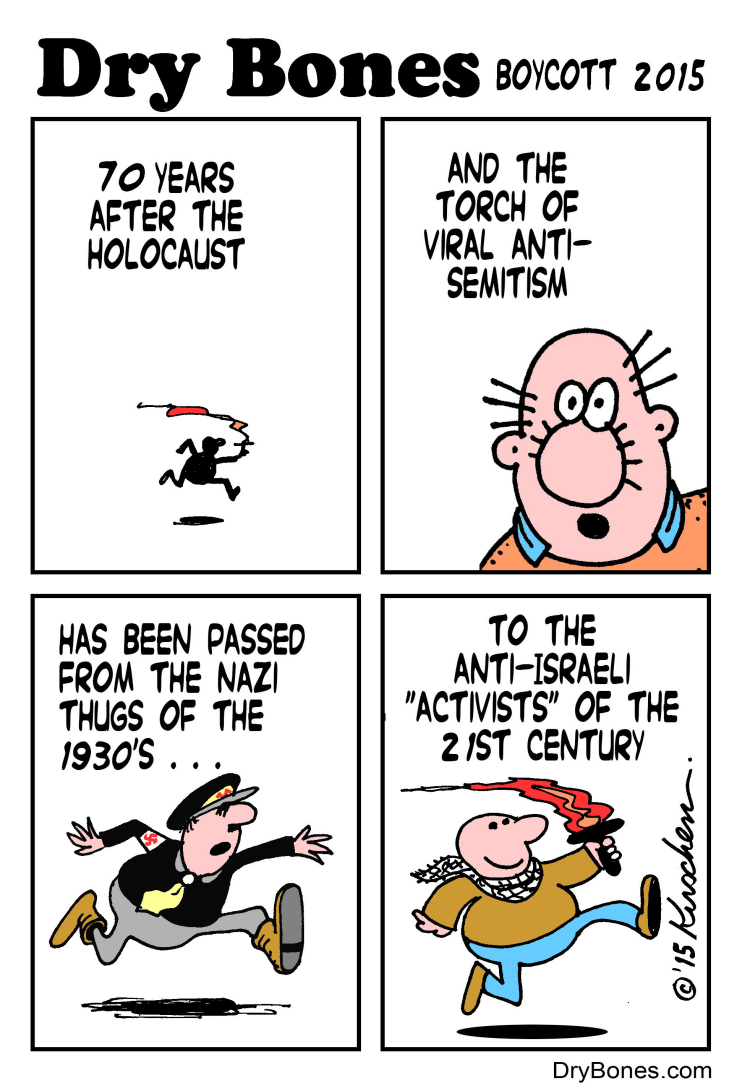
Too Jewish For Hollywood: As Antisemitism Soars, Hollywood Should Address Its Enduring Hypocrisy In Hyperbolic Caricatures of Jews
The New Refuseniks
At a recent United Against Terrorism rally in Beverly Hills, Jennifer Karlan, 17, spoke passionately about why American Jews should stand for Israel. With remarkable confidence, she talked about a new form of antisemitism facing American Jews: “Today, they no longer say they hate the Jew; today they say they hate Zionists. Today they no longer say they hate the Jewish people; they say they hate the Zionist entity. But the hate is the same.” Some 2,000 people had gathered for the rally. Karlan drew cheers as she insisted that Jewish identity and Israel are deeply interconnected: “Israel is not just the name of the land; it is the name of our people. We are the people of Israel, each and every one of us: Am Yisrael Chai.”Zionism has EVERYTHING to do with Judaism
Karlan is a graduate of Club Z, a Zionist club for teens and quite possibly the most important American Jewish organization you’ve never heard of. Club Z was founded four years ago by Masha Merkulova, a Soviet Jewish immigrant from Minsk. Along with a handful of other organizations that Russian-speaking American Jews have started over the past few years, it is changing the conversation about Jewish identity, Jewish peoplehood, Zionism, and Israel. Disappointed with the way the United States’ organized Jewish community has treated these issues, and alarmed by the growing embrace of politically weaponized Zionophobia—the form of antisemitism that they know so well from their lives in the Soviet Union—these immigrants are taking matters into their own hands.
The recent Hamas-Israel confrontation unleashed an antisemitic onslaught on social media and in the streets of U.S. cities of a kind that American Jews had never seen before. It wasn’t just the intensity of the hate that was shocking—it was also its source and nature. Suddenly, violent antisemitism was coming at American Jews from the left. Suddenly, it was progressive politicians who were fanning the flames of antisemitism, while the Democratic Party—the political home of most American Jews—looked the other way. Nothing in American Jews’ background or system of beliefs had prepared them for this moment, and many did not seem to know how to respond.
In that moment of crisis, only a few individuals and groups stood out as they fearlessly fought hate and propaganda. They did not log off their social media accounts. They showed no signs of confusion, and they most certainly were not demoralized. They simply stood up and joined the battle against what they perceived as an assault not only Israel but on who they were as Jews.
That ex-Soviet Jews projected a more confident and resilient Jewish identity in the midst of this crisis than many native-born American Jews is a fact that is both fascinating and significant. In the three decades since Soviet Jews arrived in the United States, they proved largely impervious to American Jewry’s attempts to inculcate their sense of what it meant to be Jewish. Having never bought into the idea that religion was central to Jewish identity, they stayed away from synagogues. The American tikkun olam perspective, which demanded that Jews put the world’s priorities ahead of their own, struck them as the height of folly. And they certainly did not buy into the notion that the far right had a monopoly on antisemitism.
The great American civil rights warrior, Martin Luther King, said way back in 1968 in response to a question from a student attacking Zionism, “When people criticize Zionists, they mean Jews. You’re talking Antisemitism.”
Today there are many people who say they are only anti-Zionistic and not anti-Semitic.
They try to defend it by saying they have nothing against Jews, only Israel.
Often this is done under the banner of so-called liberal and progressive movements that supposedly fight for freedoms and human rights. Groups such as Black Lives Matter or Jewish Voice for Peace or the United Nations Humans Right Council. The great irony of this is that true liberals who share progressive values should be at the forefront of supporting Israel with its freedoms for all its citizens, rather than leading the charge against it. But their minds are so clouded with hatred and antisemitism that they have lost all sense of what liberal values even mean. These are not groups of freedom but groups of hate.
And anti-Zionism is a movement of hatred, fuelled by the darkness of humanity, not the light. It brings out the worst in people, not the best. Its supporters are not driven by a sense of the lack of justice in the world, but rather by a sense of a reinforcement of long-standing injustice directed against only one particular group of people. They wave the banner of morality, while conveniently ignoring the absolute lack of morality of their own cause.
They try to ‘educate’ us by saying Zionism has nothing to do with Judaism – that somehow Zionism isn’t a Jewish movement at all, so you can therefore be anti-Zionist without being anti-Semitic. Of course Israel can be criticised and there are no bigger critics than Israelis themselves, but these people are not against any policy at all – they are against the very existence of the country.
They want to confuse you into thinking it’s some kind of evil movement by throwing in emotive and inflammatory terms such as colonialism, white supremacism, ethnic cleansing and apartheid.
So let me unconfuse you by setting the record straight:
Zionism has EVERYTHING to do with Judaism.
Too Jewish For Hollywood: As Antisemitism Soars, Hollywood Should Address Its Enduring Hypocrisy In Hyperbolic Caricatures of Jews
If Jews controlled Hollywood, it’s fair to say this would not be happening.
There are anomalies, and those, too, deserve mention. Israeli actor Shira Haas, who earned an Emmy nom for her role in “Unorthodox,” will play Golda Meir in the upcoming small-screen drama “Lioness,” which Streisand is set to executive produce. And then, there is “Shtisel,” the Israeli TV series so meticulous in its nuanced, understated, realistic portrayal of Jewish life — that it revolves around a Haredi family living in an ultra-Orthodox Jerusalem neighborhood detracts none from its universality; it’s a commercial hit in places ranging from Stockholm to Paris — it’s of near-miraculous proportions. Why? Because “Shtisel” never panders to Jewish stereotypes. Its characters are Jewish, they are played by Jews (albeit secular ones, which goes even further to prove my point) and its plotlines unfold in ways that, while adhering to the laws and traditions of ultra-Orthodox Jewry, never once undercut the impenetrable humanity of its protagonists. They are Jews, but they are people.
The Jews just are.
Hollywood has a social responsibility to reflect with unflinching accuracy the experience of being an ethnic minority in America, whether Asian or Black or Muslim or Indigenous, and that same social imperative holds true for the Jewish community. Because being Jewish is not about a wig or an accent or talking really loud. It’s not about bagels. Being Jewish is about a shared history, a soul, a spirit — in Hebrew we call it a neshama. Amidst the terrifying rise of antisemitism, Jews in America do not feel safe. And in truth, we never have. The ways in which we are portrayed on screen yields significant real-life consequences—some positive, but far too many dangerous. The last thing the Jewish community needs right now is hyperbolic misrepresentation of who we actually are.
The simple, boring truth:
Jews are human.