Friday, August 13, 2021

From Ian:
Fleur Hassan-Nahoum: In praise of the Abraham Accords, one year on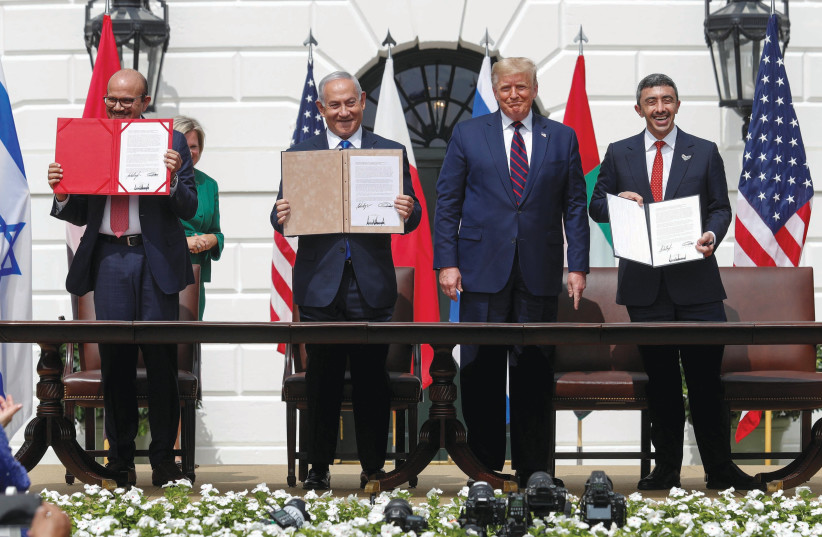
Houda Nonoo: The Abraham Accords: For the generations to come
Seth Frantzman: The Abraham Accords a year later: Challenges and hope
Fleur Hassan-Nahoum: In praise of the Abraham Accords, one year on
Two weeks ago, at the end of a fairly standard meeting in City Hall with a group of East Jerusalem businessmen, Mahmoud, a local entrepreneur, pulled me aside.
He told me that as the result of his attendance at one of the webinars organized by the UAE-Israel Business Council, an organization I co-founded over one year ago, he now has a promising new business with an Emirati investor which utilizes Israeli technology and Moroccan raw materials.
At that very moment I truly understood the power of people-to-people peace. This is the new model of peace and co-existence we are building every day.
Up until now, Israel was a lone player in the region and we were not part of any regional cultural, sporting or business alliances. Our network faced west rather than to our own neighborhood, where we share much in common.
This past year has changed everything. In June 2020, my co-founder Dorian Barak and I saw that a shift was taking place, but we did not know just how quickly it would boom.
The minute the Abraham Accords normalization agreement was announced, we created an online platform for people to connect, the first of its kind for the accords.
Within weeks thousands of Israelis and Emiratis had joined in order to interact with each other, to talk, to do business and to become friends.
This is embarrassing. Un-grit your teeth and show some damn pride in America's accomplishment. https://t.co/JwsEoFacN9
— Seth Mandel (@SethAMandel) August 13, 2021
Houda Nonoo: The Abraham Accords: For the generations to come
The signing of the Abraham Accords will no doubt be one of the biggest Middle East milestones in our lifetime and as we celebrate its first anniversary, it is an opportunity to reflect on this auspicious time for the Kingdom of Bahrain, and the region more broadly. It is also the time to look forward to the limitless opportunities ahead of us.
As one of the few indigenous Jews in the Arabian Gulf, it is particularly meaningful to me. As a citizen of this region, I am filled with excitement to see the construction of a new Middle East, one focused on coexistence and prosperity.
I would like to thank His Majesty, King Hamad bin Isa Al Khalifa and His Royal Highness, Prince Salman Bin Hamad Al Khalifa, the Crown Prince and Prime Minister, for their leadership, vision, and courage to lead our nation proudly and boldly into the future through the signing of the Abraham Accords.
These Accords represent a promise that the leaders in the region have made to build a better life with security and opportunity for all of us and for future generations still to come.
This is the fundamental accomplishment of the Abraham Accords. In the past, the nations of the world dealt with Israel in the shadows. The Jew was to be used but not seen with. Now the Jew's place in the world is open, acknowledged, and *equal.* Long live the Abraham Accords!
— Seth Mandel (@SethAMandel) August 13, 2021
Seth Frantzman: The Abraham Accords a year later: Challenges and hope
Asked about the expectations, she says that the peace deal has not met expectations in the UAE. “There have been so many missed opportunities on both sides. However, the UAE has repeatedly demonstrated good faith and that it delivers on its promises. Israel, on the other hand, hasn’t been meeting the UAE with the same amount of dedication and risk-taking. In fact, Israel has so far over promised and under-delivered. While normalization between Israel and the UAE, Morocco, Bahrain and Sudan was a calculated risk and took into consideration potential political and economic gains, it also took tremendous courage to pull it off. This courage is often overlooked and under-appreciated by Israelis. Economic benefits will take a long time to show.”
She points out that while the agreement can benefit trade and innovation, “its real value and incentive lies in a political and ideological agenda. The Arab Spring exposed the danger of Islamist groups.” This means that many countries in the Gulf and officials in Egypt realized the threat of the Brotherhood. “We are already starting to witness the largest effects of the normalization deals and to witness Islamist delegitimization and the dismantling of the Muslim Brotherhood and Islamist ideology in the region.” I also asked Dan Feferman, communications director for the organization Sharaka, which has been helping advance person-to-person connections in the wake of the peace deals. “Looking back one year, I could not have imagined that the relationships would have moved this quickly across all issues. I am so impressed and surprised by the scope and pace of normalization… I don’t know what the expectations were. I can only imagine they exceeded them. There are still many challenges ahead... There were and will be again policy disagreements.” He pointed to major trade implications. He says the new path with the Gulf will “reshape the Middle East as we know it. I believe this is the beginning of the end of the Arab-Israeli conflict. A path to taking extremism head on, a path to diplomatic engagement and cooperation in the region. The regional implications in fighting extremism are the most important here.”
These contrasting views share some commonalities but also point to some major conceptual differences between the Gulf and Israel. In Washington the change in administration has created a mixed bag of results. While there is hope the new administration will continue to stick with the Abraham Accords, and build on them, there are some who wonder if the administration will indeed do that, or will it put an emphasis on a new Iran deal and other agendas.
David Weinberg, vice president of the Jerusalem Institute for Strategy and Security, points out that the “real shadow hanging over the future of Abraham Accord-type peace treaties in the region comes from the incipient reconciliation between Washington and Tehran in the form of a renewed nuclear deal.” He pointed out that while the Gulf states could seek closer ties if they see instability in the region, they could also “hedge their bets by minimizing open ties to Israel and their full alignment with the United States. To a certain extent, this process may already be underway. For the first time in many years, the Saudis and Emiratis recently held direct and public talks with Iranian leaders.”
This leaves many questions about the challenges and hurdles that lie ahead for the Abraham Accords. While much has been accomplished, and the current Israeli government is hosting delegations and taking positive steps, there are complex hurdles. For instance, the pandemic has papered over questions about when Emiratis will get visas easily. If and when Israel opens to tourists, people from the Gulf will want the same ability to travel to Israel as Israelis enjoy going to the Gulf.




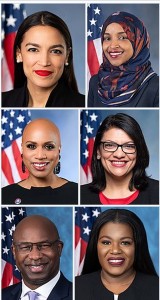 Cleveland, August 12 - More than a week after a Democratic Party primary race for a crucial Congressional seat resulted in the victory of a mainstream, pro-Israel candidate over one favored by the party's vocal left wing, prominent figures in that wing have realized that this latest failure to bolster its representation in the halls of power bespeaks a trend: if others are permitted to run against the progressives' choice, those others will siphon votes away from the progressive in sufficient numbers to deny the progressive the sought-after position, an aide to one of those figures disclosed today.