|
"He's an Anti-Zionist Too!" cartoon book (December 2024) PROTOCOLS: Exposing Modern Antisemitism (February 2022) |
![]() |
Elder of Ziyon|
"He's an Anti-Zionist Too!" cartoon book (December 2024) PROTOCOLS: Exposing Modern Antisemitism (February 2022) |
![]() |
The authors of a book detailing the behind-the-scenes story of Donald Trump’s decision to move the United States embassy in Israel to Jerusalem weighed in on what a future Trump administration will mean for U.S.-Israel relations. In their book, “Because It’s Just and Right,” Farley Weiss and Leonard Grunstein chronicle the story behind one of Trump’s most significant foreign policy moves. Now, as Trump prepares to return to office in January, the two authors offer unique insights about how his second term may further redefine and strengthen U.S.-Israel relations. “You’re going to be seeing a whole different world, a much more peaceful world now with the Trump administration,” said Weiss. Weiss and Grunstein both predict that a key priority of the Trump administration will be to expand the Abraham Accords. “I think you’re going to see many countries become part of the Abraham Accords and you’re going to just see a whole different dynamic,” said Weiss. He added that the Abraham Accords will be able to broaden because the United States will refocus on countering the Islamic Republic of Iran and their proxies, including Hezbollah, Hamas and the Houthis. Grunstein said that he hopes these actions will pave the way for a “Cyrus Accords” agreement — named after Cyrus the Great, who liberated the Jews from captivity and allowed them to return to Israel in 538 B.C. — between Israel and the free people of Iran. “It’s natural for the free people of Iran to come together. And this new axis of evil that’s developed will be dismembered in effect, and it will usher in a new age of peace and prosperity in the world,” said Grunstein. Both Grunstein and Weiss believe that more countries will be emboldened to follow Trump’s lead and move their embassies to Jerusalem. So far, Guatemala, Honduras, Kosovo, and Papua New Guinea have made the move. Argentina has indicated that it will follow suit, with some speculation that Hungary is considering the move as well. Because It’s Just and Right, named from the remarks for former Sen. Jon Kyl (R-AZ), who championed the Jerusalem Embassy Act in 1995. Weiss himself was instrumental in the act’s passage, after being asked by Kyl to serve as an advisor because of his credentials as the president of Young Israel of Phoenix, a prominent synagogue.JPost Editorial: Amnesty International cherry-picked incidents to fit its predetermined narrative
Undermining credibilityDavid Collier: BBC News is openly deceiving you
Amnesty International’s misuse of the term “genocide” undermines its credibility and trivializes the suffering of actual genocide victims. From the Holocaust to the Rwandan and Yazidi genocides, the term carries a historical and moral weight that should never be wielded irresponsibly.
The timing of this report is equally telling. It comes as Israel continues to recover from the October 7 massacre perpetrated by Hamas: the largest slaughter of Jews since the Holocaust. Amnesty International, which condemned Israel’s actions so swiftly, has yet to produce a comprehensive report on Hamas’s atrocities, including its use of human shields and indiscriminate rocket fire targeting civilians.
NGO Monitor said before the report’s publication that the announcement used selective evidence to come to its conclusions. The group highlighted how casting the humanitarian effort of evacuation orders as genocidal contradicted demands that Israel take precautions to avoid civilian deaths in combat.
This report is not about justice or accountability – it is about vilifying Israel. By turning a blind eye to Hamas’s crimes while condemning Israel for defending itself, Amnesty exposes its bias and forfeits its moral authority. The International Legal Forum pointed out that the report is “replete with malicious lies, gross distortions of truth, and fabrications of law.”
If Amnesty International wishes to salvage its reputation, it must retract this report and apologize for its reckless accusations. Human rights organizations must uphold fairness, impartiality, and truth – not inflame tensions with baseless claims. The term “genocide” should never be used as a rhetorical cudgel, and Amnesty’s decision to do so is an insult to both the victims of real genocides and to the truth itself.
Israel’s critics should remember this: The Jewish state will always be held to a higher standard and will not shy away from scrutiny. But reckless accusations like these do nothing to protect civilians or promote peace. Instead, they encourage extremists and deepen divisions.
Make no mistake – BBC News is openly deceiving its audience. It is happening day after day, and article after article. Sometimes we can put the problem down to laziness, ineptitude, or an ‘agency problem’ (the fact most BBC articles on the Middle East are dependant to some degree on toxic BBC Arabic journalists and their networks). But often, the problem is clearly more sinister than mere incompetence.
We know for a fact that there are numerous BBC journalists who spend almost all their time ONLY looking for new ways to demonise Israel – and there are far too many occasions where a piece has been deliberately worked to hide a central truth from a reader. The only logical conclusion – is that there are BBC journos out there who are deliberately skewing the news. BBC News deceiving readers – example 1
This heartbreaking article was published late Sunday night, 01 December. It is the story of a poor, innocent Lebanese family, who paid a devastating price during the conflict. Having already moved several times to get away from the fighting, the woman in the image – Rihab Faour – eventually lost both her children and her husband to a massive IDF strike. A devastating story with a crushing headline…so of course, the article went viral.
Hezbollah – the aliens from outer space
The article on Rihab Faour is a great example of a primary disinformation campaign the BBC has been running since Oct 7. The BBC completely misleads readers about the culture, and make-up of the societies being discussed. The truth is that Hezbollah is even more embedded into Shia Muslim Lebanese society, than Hamas is into Gaza – but this truth does not suit the narrative the BBC journalists want to spread around.
Instead, the BBC describe a fictitious landscape, which suggests 99% of the local population has nothing at all to do with the terrorist groups (that most of them voted for!). What this does is create a completely false illusion – as if Hamas and Hezbollah are aliens that have invaded these lands, and have forced themselves on all these poor, innocent, locals. This is a blatant misrepresentation of the truth and places the IDF in an impossible war.
But a very different story is hidden away behind the words in the article – or in some cases omitted all together. For example, even though it can be found easily online, the original village Rihab Faour came from is (strangely) not mentioned in the BBC article. I found it on the FB page of her husband’s workplace. It was Bint Jbeil. Which means that the BBC journo did not have to go far, to give some colour and context to the piece, because BBC News has previously referred to Bint Jbeil as ‘Hezbollah heartland’. For whatever reason – this information – that the family lived in a Hezbollah heartland, was left out.
Then the article tells us the family left ‘their unnamed village’ – and headed to a suburb of Beirut
“The Israeli bombs fell close enough to Rihab’s village that the 33-year-old and her husband Saeed, an employee of the municipal water company, gathered their daughters Tia, eight, and Naya, six, and fled to Rihab’s parents’ house in Dahieh, a suburb of the capital Beirut.”
A responsible journalist would probably have added here that the Beirut suburb of Dahieh – is the capital of Hezbollah’s ‘state-within-a-state’, which is WHY the suburb was being specifically targeted. But the BBC is not publishing this article to INFORM readers – it is being written to MISINFORM. So nowhere in the article is that vitally important fact mentioned either. The family left one Hezbollah outpost – and headed to another.
And it gets worse. The family moves again, and is tragically struck (and children being killed is always a tragedy), during an Israeli attempt to kill Wafiq Safa, the head of Hezbollah’s co-ordination and liaison unit. Which means (whether it was successful or not) that the third place we know the family had set up home inside, was in, or next to, a building being used by Hezbollah’s leadership.
And then there is this from Saiid Kabalan – Rihab Faour’s husband. Posted on his timeline 11 years ago. A statement he is proud to be considered a terrorist, and is ‘at the service’ of Hezbollah:
It seems odd that the great mass of “anti-imperialist” students and scholars are so unenthusiastic about having a real-world example to point to. Nonetheless, the end of the Assad rule in Syria, whatever else it may also mean, signifies the textbook dissolution of an empire whose time has come and gone.Brendan O'Neill: The suicide of the Israel haters
That empire is, of course, Iran’s.
The Iranian government itself may not fall. The end of the Russian Empire did not result in the disappearance of Russia, and the same is true of most empires. But Iran’s empire is crumbling.
It is appropriate, then, that it appears to be ending where it began: in Syria.
The Iran-Iraq War that consumed most of the 1980s reshaped political alliances in odd ways, one of which was that Baathist Syria aligned itself against Baathist Iraq and with non-Arab Iran.
zran expanded into Lebanon by helping to launch Hezbollah. This proved to be the most advantageous of any of its investments. Born of chaos and opportunism, Hezbollah was Iran’s successful effort to organize Lebanon’s disparate militias under one umbrella, while gaining Tehran a Mediterranean outlet.
Soon the Lebanon and Syria branches of this imperial tree would start to benefit each other. Iran used Syria to transfer arms and other terrorism supplies to Hezbollah, and Hezbollah’s leadership helped guide Bashar al-Assad when he succeeded his father, Hafez, as president of Syria at the young age of 34.
In the late 1980s, Iran was also an “angel investor,” so to speak, in Hamas. “Since its formation in late 1987, Hamas has received and continues to receive significant financial and other support from Iran,” writes Matthew Levitt, counterterrorism program director at the Washington Institute for Near East Policy. “By 1994, Palestinian author-turned-legislator Ziad Abu-Amr wrote that Iran ‘provides logistical support to Hamas and military training to its members,’ estimating Iranian assistance to Hamas ‘at tens of millions of dollars.’ Over time, this figure would rise steadily.”
Saddam Hussein’s Iraq was an important source of funding and training for Hamas. After Hussein’s fall, Iran stepped in to fill the void left by its old rival. Khaled Meshaal, the Hamas leader based until 2012 in Syria, played a key role in increasing Iran’s operational control over the Palestinian terror group.
They tried to destroy the Jewish State and ended up destroying themselves. The 7 October effect is extraordinary. Fourteen months after Hamas visited its racist savagery on the people of southern Israel, the so-called Axis of Resistance is in tatters. Hamas is gravely weakened as a result of the ruinous war it started. Hezbollah has been spectacularly humiliated, its leadership almost entirely wiped out by the IDF. And now the Assad regime has fallen. This ‘keystone’ of the Iran-led ‘Axis of Resistance’ is no more. The Iranian regime hasn’t looked this rattled, this isolated, this existentially brittle, since the Iran-Iraq war that followed its Islamic Revolution in 1979. Has there ever been a greater self-inflicted blow in world affairs than 7 October?How Assad’s Potemkin dictatorship crumbled
The fall of Assad is first and foremost a good day for the people of Syria. People are right to raise questions about what comes next, about what the Islamists of Hayat Tahrir al-Sham and their various allies might do now they’ve conquered Damascus. But the staggeringly swift fall of the Assad regime, a testament to its superficiality, should be welcomed by all who love liberty. Bashar al-Assad, like his father Hafez before him, was the cruellest of rulers. He viciously suppressed dissent, jailed his critics, massacred Kurds and invited Russia to help him slaughter tens of thousands of his own countrymen during the civil war. The Syrians dancing in the streets following his spineless fleeing are not doing so because they’ve read every policy statement of Hayat Tahrir al-Sham and agree with it all. They’re doing so because they feel the sweet relief of deliverance from Assad’s boot on their throats. It’s their Berlin Wall moment and it should not be begrudged them.
Yet Assad’s fall also speaks to the suicidal dynamic of 7 October. Hamas’s pogrom set in motion a chain of events that proved catastrophic for the pogromists themselves and their apologists. Assad’s scalp is the greatest prize yet in this self-destruction of the Israelophobes. That his shallow government, all-powerful but unrooted, was so speedily put into the history books by the advancing rebels is down to two things. First, and most importantly, the distraction of Russia. Assad’s allies in Moscow are too busy killing Ukrainians to be able help him kill Syrians this time round. Without the brute force of Russian back-up, Assad’s hollow government collapsed overnight. That Syrian soldiers in city after city downed arms as the rebels arrived spoke to the regime’s pathological frailty in the absence of Russian muscle.
The second problem for the Assadists was the gutting of Hezbollah by the IDF in recent months. Hezbollah played a central role in propping up the Assad regime during the civil war. Where Russia slayed rebels from the air, Hezbollah did it on the ground. It both trained pro-Assad militias in the ‘art’ of urban warfare and took part in major clashes, including the Battle of al-Qusayr when Assad forces and Hezbollah militants won back the key supply route of al-Qusayr in western Syria. The Center for the National Interest in Washington, DC went so far as to say that Hezbollah was ‘winning the war in Syria’, using its ‘battlefield acumen’ to re-establish Assad’s rule. In 2024, though, Hezbollah could do precisely nothing to assist its allies in Damascus. Like Russia, it is distracted. In fact, it is virtually defeated.
Where once Hezbollah ‘deployed its well-trained fighters’ to aid Assad, says the BBC, that ‘did not happen this time’ because Hezbollah is ‘preoccupied with [its] own affairs’. That’s one way of putting it. Actually, Hezbollah is suffering one of the worst ignominies of its entire existence as a result of the fallout from the 7 October pogrom it supported. In the days after Hamas’s butchery in southern Israel, Hezbollah started raining missiles on northern Israel in an act of solidarity with the Jew-killers. It was a low-level war for months until Israel upped the ante in September this year. It launched its devastating ‘pagers attack’ and took out Hezbollah leaders one by one, including the secretary-general, Hassan Nasrallah. Last month, Hezbollah agreed to the humiliating terms of a ceasefire deal with Israel that effectively forces it to vacate southern Lebanon and, worse, to submit to the authority of the Lebanese government.
And just like that, Bashar al-Assad’s reign over Syria is no more. Over the course of a mere two weeks, what looked from the outside like a brutal but relatively stable regime has evaporated into thin air.
When several thousand opposition fighters, headed up by Islamist group Hayat Tahrir al-Sham (HTS), launched their offensive in late November, few would have predicted their triumph. Riding out from their anti-Assad hold-outs in Syria’s north-west, in pick-up trucks and on motorbikes, they looked like what they were – a fearsome set of militias, but surely no match for a state army backed by Russian airpower.
The HTS-led forces soon took towns and villages with ease. By last weekend, they had captured Syria’s second city, Aleppo, and were seemingly advancing on the capital, Damascus. Even then, few inside and outside Syria believed that Moscow-backed government forces would not at some stage mount a counter-offensive. On Saturday, Russian foreign minister Sergei Lavrov insisted that Russia ‘was trying to do everything possible to prevent terrorists from prevailing’. Rumours circulating that Assad had fled were denied. The interior ministry announced that the army was forming a ‘ring of steel’ around the capital. Surely, there would be a fightback.
But the fightback never came. The insurgents were able to enter and capture Damascus without really having to lift a weapon – except to fire celebratory shots into the sky. By Sunday, HTS had announced that ‘the city of Damascus is free from the tyrant Bashar al-Assad’, and a few hours later HTS leader Abu Muhammad al-Jolani, now going by his original name Ahmed al-Sharaa, was declaring victory in a speech to the nation from within Damascus’ historic Umayyad mosque, the same mosque at which Assad would usually mark Eid.
The speed with which Assad’s rule has collapsed and the sheer absence of any resistance reveals a stark truth about Syria’s fallen dictatorship. It has been completely hollowed out over the past decade or more of conflict. This was a regime built on repressive force that now lacked any actual force. A regime whose authority rested on military strength that now lacked a strong military. And so when Islamist factions pushed at the doors to the palace, as they did both literally and figuratively this weekend, they simply opened.
Few will mourn the passing of the Assad family’s half-century-long exercise in despotism. Bashar’s father, former airforce pilot Hafez al-Assad, had been a key player in a military coup in 1963, which brought the Ba’ath Party to power. When Hafez became president in 1971, it wasn’t due to popular support. From the start, his regime’s authority rested almost entirely on its use of force, principally through Syria’s much feared intelligence and security agencies.
Bashar al-Assad inherited this repressive regime, complete with its brutal security apparatus, in 2001. Initially feted by the West, this British-educated ophthalmologist set about liberalising Syria’s economy, largely for his and his network’s own benefit. At the same time, he busied himself repressing any hints of dissent and striking up a close relationship with Hezbollah leader Hassan Nasrallah in neighbouring Lebanon – all the better to suppress their mutual opponents.
Elder of Ziyon
The Leader of the Islamic Revolution, Sayyed Ali Khamenei, stressed that Syrian President Bashar al-Assad and the Syrian people enjoy high esteem and prestige among the peoples of the region, noting that everyone today views Syria as a force to be reckoned with.During his reception today, Sunday, of Syrian President Bashar al-Assad and his accompanying delegation, Leader Khamenei considered the resistance and steadfastness of the people and state in Syria and the victory in an international war as having provided the ground for strengthening Syria’s position and pride.He said: "In light of the interest, activity and strong will of the President of the Republic and the Iranian government to develop cooperation with Syria, efforts should be made to further advance relations between the two countries."The Leader of the Revolution stressed that Syria today is not Syria before the war, and pointed to the great successes achieved by Syria in the political and military arenas, indicating that respect for Syria and its status have become much higher than they were in the past, and that everyone sees this country as a force.
Syrian President Bashar al-Assad has won a new presidential term for the fourth time in a row after winning 95.1 percent of the votes, according to results announced by People's Assembly Speaker Hammoudeh Sabbagh on Thursday.
The Syrian President sent greetings to the resistance fighters in Palestine, Lebanon, Iraq, and Yemen, who represent "a role model, an example, and a model for us to follow on the path of liberation, dignity, honor, and independence."
|
"He's an Anti-Zionist Too!" cartoon book (December 2024) PROTOCOLS: Exposing Modern Antisemitism (February 2022) |
![]() |
Elder of Ziyon|
"He's an Anti-Zionist Too!" cartoon book (December 2024) PROTOCOLS: Exposing Modern Antisemitism (February 2022) |
![]() |
Elder of ZiyonIn the face of the ongoing Israeli genocidal campaign against Palestinians in Gaza, this issue of the Journal of Architectural Education calls for urgent reflections on this historical moment’s implications for design, research, and education in architecture. This volume will build on existing knowledge, research and publications to continue to learn from and with practices of resistance to the Zionist, militarist, carceral, and capitalist regime of Israeli settler colonialism and apartheid.....Contributors might map, represent, theorize, and historicize genocide, ecocide, spaciocide, terracide, and urbicide as practices of colonial erasure and unpack the way they appear and operate.
The Palestinian philosopher Abdaljawad Omar argues that Israel’s genocidal campaign in Gaza and resistance to it—“no matter how horrific, bloody, and tragic”—cannot be reduced to a “pathology of violence.” Palestinians are not hapless victims nor motivated merely by “vengeance.” Omar advocates, instead, that a “pathology of hope” in a decolonial struggle “might ultimately create the space for new possibilities.” .....A decline of imposed Western hegemony corresponds with the rise of new formations of struggle and power that draw from radical possible histories, presents, and futures. Through this call for papers, we invite authors to engage with such formations of anti-colonial struggle within and beyond Palestinian geographies, reflecting on how Palestine has inspired pathologies of hope, constellations of coresistance, and infrastructures of resistance, the world over.
Though not human-built borders, the Jordan River and Mediterranean Sea form the boundaries of aquatic imaginaries of sovereignty: the latter’s shores are equal parts a respite for Gaza’s citizens and the banks of now-heavily polluted waters weaponized by Israel in counterinsurgency efforts against Palestinian military resistance and the health of its soil. ...
In addition to weaponized environments of soil, water, and air, sites of consideration include the tunnel as a route of militants’ fight and prisoners’ flight, the blockade as carceral infrastructure, the safe haven of the hospital, the intergenerational sanctity and stewardship of the olive grove, the absenting of sacred space and cultural memory, the resistive archive, the breaching of the border fence and the rupture of settler containment...
|
"He's an Anti-Zionist Too!" cartoon book (December 2024) PROTOCOLS: Exposing Modern Antisemitism (February 2022) |
![]() |
Elder of ZiyonElder's book is a delight, I LOVED it.The few cartoons in this surprising collection that aren't absolutely fabulous are merely really good. Amazingly, this important and insightful book about antisemitism is actually fun to read. A feel-good experience, a powerful message, and a great gift to be shared with friends (and others).
|
"He's an Anti-Zionist Too!" cartoon book (December 2024) PROTOCOLS: Exposing Modern Antisemitism (February 2022) |
![]() |
Elder of ZiyonWhile Iran may appear cornered, there are still many wheels in motion in the region. Qatar will benefit from Iran’s weakness because it gives Doha even more influence and sponsorship space – the one Iran lost – over groups such as Hamas or the new emerging rulers in Damascus.Jonathan Schanzer: Assad End in Syria
The system works like this: Over the past few years, Iran backed various regional groups, positioning itself in the role of hollowing out the countries these groups are based in, weakening them, and filling that space with militias.In Iraq and Lebanon, the militias are Shi’ite – like the Iranian regime; in Yemen, they also are a local sect.
In Syria, the Assad family is Alawite, a minority group. That means Iran fed off working with non-Sunni groups in the region.The exception to that rule was Hamas and Palestinian Islamic Jihad. By sponsoring these groups, Iran gained significant influence over Palestinians, enabling it to escape what was partly a sectarian ghetto.
Qatar is a different story. Doha backed the Muslim Brotherhood for years all across the region, a group rooted in Sunni Islamic politics, meaning that Doha has often found influence in civil conflicts and has been on a different path than Iran.
This was the case in Libya, Syria, and with Hamas. Qatar lost out at times, like when the Muslim Brotherhood was overthrown in Egypt in 2013. It even suffered some isolation when Saudi Arabia led several Arab countries to break ties in 2017.
Qatar and Turkey have formed an iron bond, however, and both have reached out to Iran. Turkey, Iran, and Russia were all part of the Astana process that aimed to end the Syrian civil war, and all three, along with Qatar, support Hamas.
While Israel will gain from Iran’s weakness, it is not a complete victory because Hamas continues to control Gaza, is angling for influence in the West Bank, and is holding 100 hostages. The Iranian threat was only one part of the deadly chessboard in this region, and a new threat will emerge soon.
Israel has always faced new threats. In the 1950s and 1960s, they were led by Arab nationalist regimes. Later, they were replaced by the Muslim Brotherhood and Hamas. Turkey, whose leading Justice and Development Party (AKP) has roots in the Muslim Brotherhood, is one of the most vicious foes of Israel.
Make no mistake, the end of the Assad regime will not likely solve all of Israel’s challenges. Qatar is angling to make itself more important, and its historic hosting of Hamas presents a challenge to Israel’s security.
On October 7, 2023, more Jews were massacred in one day than at any time since the Holocaust. So, while Iran and its axis continued to be a threat, they could not massacre 1,200 people and kidnap 251. Israel prevented Iran and its allies from such activities.
The key issue right now is preventing Hamas and its backers in Ankara and Doha from exploiting the situation in Syria for their own ends.
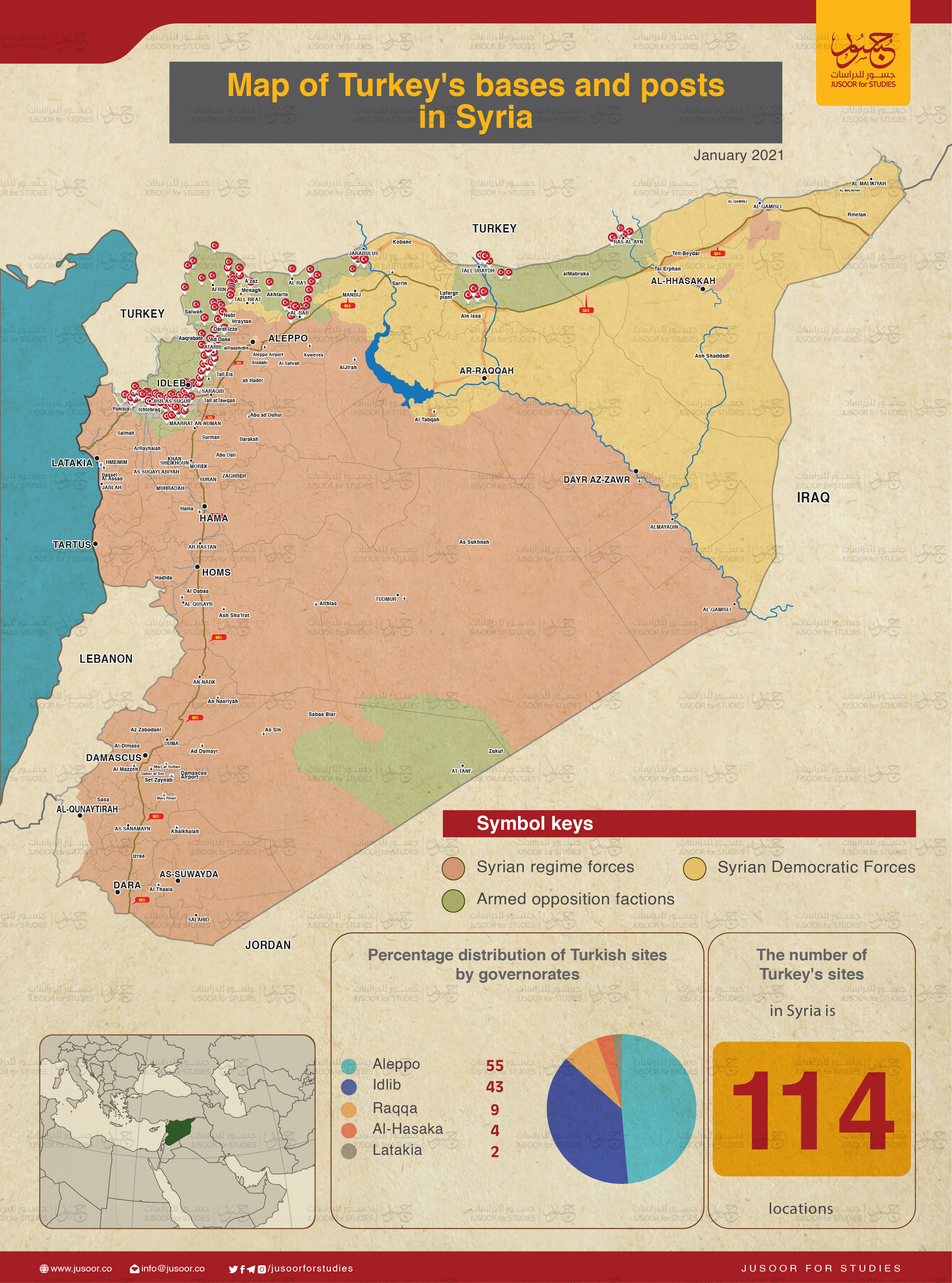
The Syrian border with Israel, now fortified with ground troops and air power, is one to watch in the weeks and months ahead. The Israelis have already taken the buffer zone on the Golan Heights. But Northern Syria is another flashpoint to watch. This is the Kurdish region, which is already a target for the Turks and their Sunni jihadi proxies. The Kurdish People’s Defense Units or YPG have been a consistent concern for Ankara because of the group’s close ties to the Kurdistan Workers Party (PKK), a designated terrorist group in Turkey and in the United States. Never mind that the YPG played a significant role in the US campaign to defeat ISIS. Troublingly, Turkey has unfinished business in Syria. The Kurdish people, who have suffered mightily throughout their history, are slated for more suffering.Syria: Better the Devil We Don't Know
Alarmingly, the lame duck Biden Administration looks like a bystander. The region has its eyes instead on the X feed of President-Elect Donald Trump, who has advised America to simply let the drama in Syria play out. This may ultimately be the American interest, but the incoming Trump team should warn the patrons of the Syrian rebels—Turkey and Qatar—to keep their fighters away from America’s allies. This should include both Israel and the Kurds.
Some analysts believe that a consolidated Syrian state under Sunni control, after more than half a century of dominance by the country’s Alawite minority, could portend stability. Still others believe that sectarian cantons could emerge. Still others see the eventual Balkanization of the country. It’s obviously too soon to predict, but it certainly seems as if the Sunni rebels will dominate most if not, all of the country when the guns fall silent.
Whatever the map ultimately looks like, we are watching the return of a competition between two storied Middle East empires. The Iranian aspirations for a resurrected Persian empire experienced a massive setback yesterday. But those in Turkey seeking a neo-Ottoman order in the Middle East are elated. In other words, Syria has flipped from an Iranian satrap to an Ottoman sanjak overnight.
The fight for Syria appears to be over. The end of the Assad regime is an historic event. But history is still being written. The regional war launched by Hamas on October 7 has backfired horribly on its patrons in Tehran. Whether other unintended consequences follow is yet to be seen.
From the perspective of Israel's strategic interests, the rebel attack in Syria presents opportunities that overshadow the risks. During the years when ISIS controlled territories in Iraq, the Iranian land route from Iran to Syria was blocked. Now, a similar blockage is expected to affect the land routes from Syria to Lebanon.
The chances of the recent agreement in Lebanon to restrain Hizbullah in the long term are increasing, as the process of its military recovery, after the war with Israel, will be slowed. At the same time, Iran's appetite for continuing cycles of threats and blows with Israel is expected to wane further, after Israel's effective strikes within its territory in October, which have already cooled its enthusiasm.
Some view Assad's regime as the "lesser evil" and argue that Israel would be better off with "the devil we know." According to this view, Assad is a figure with whom Israel can engage in deterrence dialogue (allowing air force freedom of action). He suppresses the Islamist forces that are far from being "Zionist-friendly," and he maintains a certain degree of stability in Syria and control over weapons, especially unconventional ones, within its territory.
We disagree. Assad, who massacred half a million of Syria's citizens and used chemical weapons against them, is a central figure in the axis that poses the most significant strategic threat to Israel. Most of Hizbullah's weapons have come from his production lines, his warehouses, or from Iran through Syrian territory. The ties between the Alawite regime in Syria and the mullah regime in Tehran are deep, and all efforts to distance Syria from Iran have been in vain.
On the other hand, the many Sunni rebel groups in Syria are not expected to direct their weapons toward Israel, certainly not in the immediate or medium term. They have a long-standing blood feud with Assad, Iran, and Hizbullah, and also among themselves.
Israel would prefer "the devil we don't know," as long as it leads to the weakening of Iran and the Shiite axis, which would mean a dramatic and positive shift for Israel in the regional balance of power.
Elder of Ziyon![]() |
| "Death to You, O Sons of Zion" message from URWA doctor on Facebook, 2015 |
Among the seized records are secret Hamas military plans that show that the Qassam Brigades regarded schools and other civilian facilities as “the best obstacles to protect the resistance” in the group’s asymmetric war with Israel. The documents also list two schools in particular that were to be used as redoubts where fighters could hide and stash weapons in a conflict.
In several cases, educators remained employed by UNRWA even after Israel provided written warnings that they were militants.
Residents of Gaza said in interviews that the idea that Hamas had operatives in UNRWA schools was an open secret. One educator on Israel’s list of 100 was regularly seen after hours in Hamas fatigues carrying a Kalashnikov.
Paragraphs 33-34:
Seized records say that the principal of the school, Khaled al-Masri, is a Hamas member who was issued an assault rifle and a handgun, and he is pictured standing in front of a Hamas banner on Facebook.
He remains on UNRWA’s staff, the agency says, but is under investigation for a social media violation.
Even for criminal background checks, UNRWA relies on employees to self-report and provide confirmation of a clean record by way of a letter from the “de facto authorities.” In Gaza, that means Hamas, and before Hamas took over in 2007, it meant the Palestinian Authority.
For nine of the workers, the U.N. Office of Internal Oversight Services said there was insufficient evidence to take action. But a copy of its report, which was never made public, says it did not consider evidence that Israel provided about their “alleged membership of the armed wing of Hamas or other militant groups.”U.N. investigators ultimately only found that the other nine “may have” been involved. (In one case, investigators were shown video of the worker throwing a dead Israeli into an S.U.V.)
|
Or order from your favorite bookseller, using ISBN 9798985708424. Read all about it here! |
|
Elder of ZiyonIsraeli police have detained Rabbi Abraham Katz, a prominent anti-Zionist figure from New York, for over two months under a non-departure order, demonstrating the Benjamin Netanyahu regime's hostility toward everyone opposed to their genocidal war crimes.Rabbi Katz, a citizen of both the United States and Canada, has been languishing behind bars for his pro-Palestine and anti-genocide activism in the occupied Palestinian territories.Many prominent Jewish organizations around the world have urged the US and Canadian governments to intervene and pressure the Tel Aviv regime to release Rabbi Katz.
|
Or order from your favorite bookseller, using ISBN 9798985708424. Read all about it here! |
|
Elder of ZiyonIn cases like this, where the occupying power has withdrawn its forces from all or parts of the occupied territory but has maintained key elements of an occupying power’s authority – in this case, after the 2005 redeployment of Israeli forces – this retention of authority can amount to effective control. In such cases, occupation law – or at least the provisions relevant to the powers the occupant continues to exercise – remains in force.[179]Footnote 179 includes several sources. One of them is "Determining the beginning and end of an occupation under international humanitarian law" by Tristan Ferraro, published in the International Review of the Red Cross in 2012, after Israel withdrew from Gaza.
In light of what has been discussed above, one may infer the following test for the purposes of determining the existence of a state of occupation within the meaning of IHL. The effective-control test consists of three cumulative conditions:
– the armed forces of a state are physically present in a foreign territory without the consent of the effective local government in place at the time of the invasion;
– the effective local government in place at the time of the invasion has been or can be rendered substantially or completely incapable of exerting its powers by virtue of the foreign forces’ unconsented-to presence;
– the foreign forces are in a position to exercise authority over the territory concerned (or parts thereof) in lieu of the local government.
Not one of these were true before November 2023.
Ferraro adds, "If any of these conditions ceases to exist, the occupation should be considered to have ended."
He also addresses the claim that Israel is engaged in "effective control" because Israel controls most of the borders and airspace of Gaza:
Occupation and its related element of effective control cannot – in principle – be established and maintained solely by exercising power from beyond the boundaries of the occupied territory. The test of effective control cannot include the potential ability of one of the parties to the armed conflict to project power through its forces positioned outside the ‘occupied territory’ without stretching the concept of occupation so much that it makes any assignment of responsibilities under occupation law meaningless. Otherwise, any state capable of invading the territory of its weaker neighbours by virtue of its military superiority, and of imposing its will there, would be said to be in ‘effective control’ of that territory and considered an occupant for the purposes of IHL. Such an interpretation would be unreasonable.
Amnesty does not only rely on Ferraro, of course. Their main arguments come from the the ICJ advisory opinion issued earlier this year, "Legal Consequences arising from the Policies and Practices of Israel in the Occupied Palestinian Territory, including East Jerusalem," which makes up a completely new international law just for Israel, where "occupation" is not a binary of yes or no, but where Israel is considered to be an occupier for specific obligations and not for others.
As is often the case, this is a sui generis law made just for Israel.
And it also contradicts previous ICJ rulings!
Ferraro quotes the ICJ on DRC vs. Uganda (2005):
In order to reach a conclusion as to whether a State, the military forces of which are present on the territory of another State as the result of an intervention, is an ‘occupying Power’ in the meaning of the term as understood in the jus in bello, the Court must examine whether there is sufficient evidence to demonstrate that the said authority was in fact established and exercised by the intervening State in the areas in question. In the present case the Court will need to satisfy itself that the Ugandan armed forces in the DRC were not only stationed in particular locations but also that they had substituted their own authority for that of the Congolese Government.The ICJ requires physical presence as well as substituting Israel's authority over the Palestinian or Hamas government in Gaza, neithr of which happened.
In order to reach a conclusion as to whether a State, the military forces of which are present on the territory of another State as the result of an intervention, is an occupying power in the meaning of the term as understood in the jus in bello, the Court must examine whether there is sufficient evidence to demonstrate that the said authority was in fact established and exercised by the intervening State in the areas in question. In the present case the Court will need to satisfy itself that the Ugandan armed forces in the DRC were not only stationed in particular locations but also that they had substituted their own authority for that of the Congolese Government.
Elder of Ziyon
Elder of Ziyon=Military source: The news from some media channels about terrorists entering al-Qaryatayn area south-east of Homs is incorrect and our forces are in their positions and in full readiness.-Military source: There is no truth to any news about the withdrawal of our forces from the Damascus countryside-Cabinet: The government has the experience and ability to deal with emergency situations-Syrian Army Eliminates large numbers of Terrorists, destroys dozens of their vehicles in northern Homs countryside-President Al-Assad assumes his work, national and constitutional duties from Damascus
Buy EoZ's books!
PROTOCOLS: EXPOSING MODERN ANTISEMITISM
If you want real peace, don't insist on a divided Jerusalem, @USAmbIsrael
The Apartheid charge, the Abraham Accords and the "right side of history"
With Palestinians, there is no need to exaggerate: they really support murdering random Jews
Great news for Yom HaShoah! There are no antisemites!