Thursday, July 01, 2021

From Ian:
Mr. President, Bring Home My Son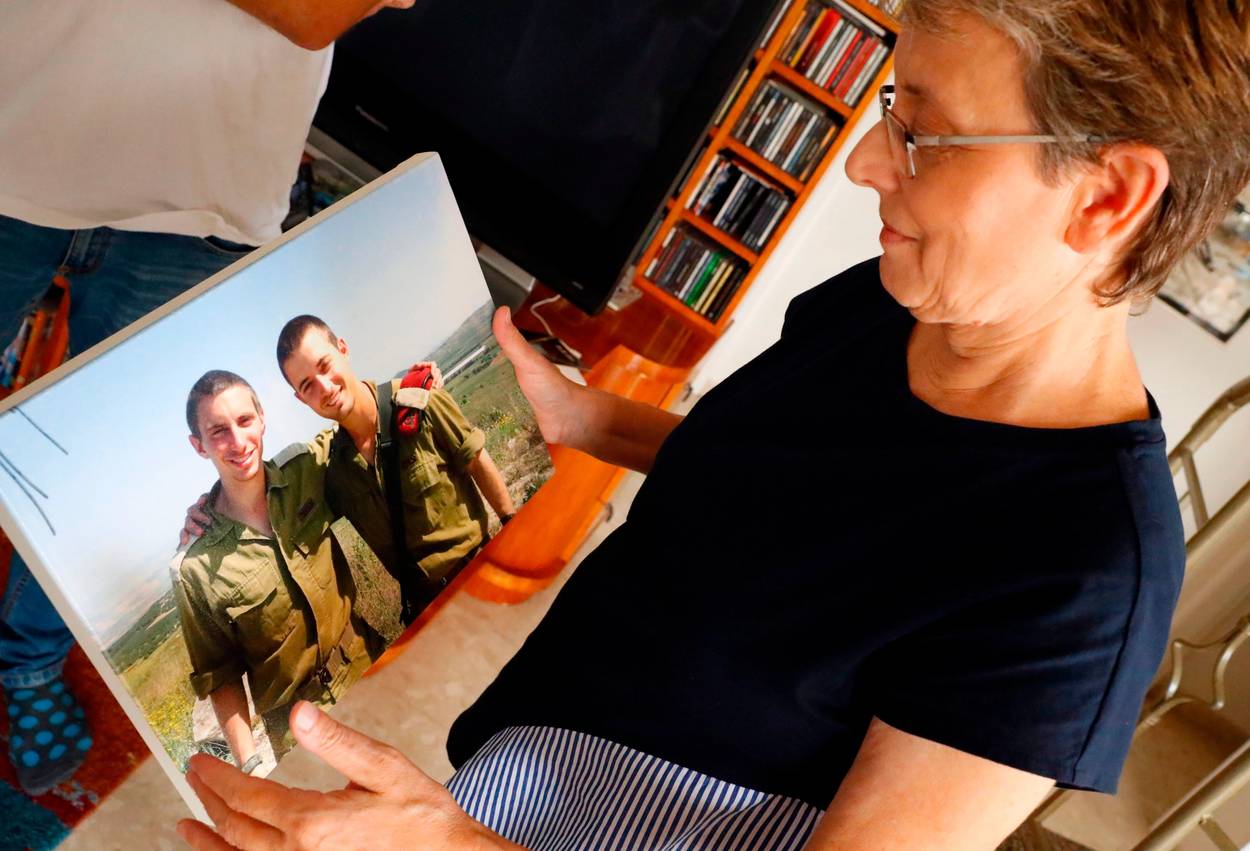
Israelis ‘Surprised’ at Hamas Sitting Next Door in Cairo, as Indirect Talks on Captives Show No Progress
Arsen Ostrovsky on ILTV discussing Israel - UAE relations
Mr. President, Bring Home My Son
Mr. President,
Earlier this week, 73 members of your party in Congress publicly urged you to reverse your predecessor’s policies toward Palestine. It seems like they won’t need to exert much effort to convince you, as earlier this year your administration allocated $235 million to the Palestinians, presented as part of an effort to “restore credible engagement” in the world’s most bitter conflict.
But I am here, sir, with a painful reminder: No American engagement in Israel and the Palestinian territories would ever be credible until my son comes back home.
Here, in case you need it, is the story: Early on August 1, 2014, at the tail end of yet another round of bloodshed provoked by Hamas, a ceasefire finally took hold. It was brokered by the United Nations and the Obama administration. Two hours later, it was blatantly violated when Palestinian terrorists, taking advantage of the lull in fighting, used one of their tunnels to creep into Israel. They shot and killed two soldiers, and abducted another—my son, Lieutenant Hadar Goldin.
Hadar was almost certainly killed in action, and we demanded that his body be returned to us for proper burial. John Kerry, then secretary of state for the administration in which you also served, agreed. “The United States condemns in the strongest possible terms today’s attack,” he said in a statement. “It was an outrageous violation of the ceasefire negotiated over the past several days, and of the assurances given to the United States and the United Nations. Hamas, which has security control over the Gaza Strip, must immediately and unconditionally release the missing Israeli soldier, and I call on those with influence over Hamas to reinforce this message.”
You, Mr. President, now have influence over Hamas. You can, and must, demand that Gaza’s rehabilitation be contingent upon the return of my son and of Oron Shaul, another Israeli soldier whose body is held captive by the terrorist organization.
Sadly, while diplomats—including your new ambassador to the U.N., Linda Thomas-Greenfield—continue to affirm the validity of our case, no concrete pressure has yet been exerted on Hamas or its paymasters in Iran. This week, the organization continued to restore its capabilities, propping up some of the power stations damaged during its recent assault on Israel. When asked if the organization was indirectly enjoying U.S. aid, a State Department spokesman last week said it was possible.
Israelis ‘Surprised’ at Hamas Sitting Next Door in Cairo, as Indirect Talks on Captives Show No Progress
Members of an Israeli delegation attending a Cairo meeting on securing Israeli captives held in Gaza were “surprised” to learn that senior Hamas representatives were sitting in a nearby room, Hebrew media reported Wednesday, with the two sides making no progress so far during indirect negotiations.Sheikh Abdullah bin Zayed and Yair Lapid: UAE-Israel peace is more than an agreement. It's a way of life
The Tuesday meetings, mediated by Egypt, were described by Israeli officials as “preliminary” efforts to bring home two civilians and the remains of two IDF soldiers held by the Hamas terrorist group, Israeli news site Walla reported.
Despite the close proximity of the Israeli and Hamas delegations — the first such indirect talks since the 11-day conflict in May — no progress was made, with Hamas demanding the release of Palestinian security prisoners that have “blood on their hands.”
Hamas holds captive Israeli citizens Avera Mengistu and Hisham al-Sayed, who crossed into Gaza Strip in 2014 and 2015, as well as the bodies of IDF soldiers Hadar Goldin and Oron Shaul.
Walla said that Israel’s security cabinet would convene in the coming weeks to decide whether to maintain a policy of not releasing security prisoners involved in killing Israelis.
On Monday, Israeli Prime Minister Naftali Bennett pressed Egyptian President Abdel-Fattah al-Sisi on returning the captives held by Hamas, thanking the Egyptian leader for its role in brokering the ceasefire that ended the May conflict.
As part of the Accords, the UAE, US and Israel also announced the Abraham Fund. Through this fund, the US International Development Finance Corporation, the UAE, and Israel will mobilise more than $3 billion in private sector-led investment and development initiatives to promote regional economic co-operation and prosperity in the Middle East and beyond. In turn, the initiative will generate unprecedented opportunity for the region’s peoples.
Now, two of the world’s most dynamic and advanced societies have begun to create a linked and powerful engine of progress and opportunity, not just for the UAE and Israel but also for the entire region.
This vision is one we share and cherish. The peoples of the UAE and Israel seek to live in a world where peace abounds. In order to achieve this vision, we must work hard to create opportunities for engagement and encourage others to join these efforts. This pursuit can only be bolstered by multilateral co-operation among countries similarly invested in opting for collaboration over confrontation.
While the Abraham Accords were the first of their kind in our region, they represent a future that we believe must become more commonplace: one in which differences are set aside in favour of dialogue. As momentum grows, we are reminded that sometimes the most impactful decisions are those believed to be difficult, if not impossible.
We both want to live in a world where peace is possible. We need to work hard with our peoples and with each other. In order to achieve lasting and sustainable solutions to the issues that our region faces, we will continue to champion the spirit of peace in all efforts to shape a better world for our children. Peace isn't an agreement you sign – it's a way of life. The ceremonies we held this week aren't the end of the road. They are just the beginning.
In doing so – in deciding differently – we choose peace.
The #AbrahamAccords are the future; the relationship between the Jewish people and their neighbors is flourishing, especially people to people, says @lalshareef:
— i24NEWS English (@i24NEWS_EN) June 29, 2021
The Israeli embassy in the UAE is the 'foundationn' of our relationship and 'there's no going back' pic.twitter.com/QgDchd8EQG
Arsen Ostrovsky on ILTV discussing Israel - UAE relations