Monday, February 08, 2021

From Ian:
Will the Boycott-Israel Clique Co-opt the Scientific Community?
The family we didn't know we had
Will the Boycott-Israel Clique Co-opt the Scientific Community?
Higgs is among the most important figures in the world of physics, but he eluded the media and popular culture. Doing the opposite arguably made Stephen Hawking the world’s most famous physicist, perhaps even its most famous scientist. In May 2013, when he pulled out of a conference in Jerusalem, the New York Times headline blared, “Stephen Hawking Joins the Boycott Against Israel.” He was reportedly persuaded to do so by MIT linguist and anti-Israel activist Noam Chomsky and members of the British Committee for Universities of Palestine (BRICUP), which effectively functions as the U.K.’s arm of the BDS movement.Vaccinated people less likely to transmit coronavirus, Israeli study suggests
BRICUP founding members Hilary (a sociologist) and Steven (a neuroscientist) Rose wrote in The Guardian that Hawking’s decision “threatens to open a floodgate with more and more scientists coming to regard Israel as a pariah state.” While not quite a floodgate, certainly a door was opened by Hawking’s example, and gradually a number of physicists, chemists, and biologists began to distort history, repeat the rhetoric of Palestinian terrorist groups, and call for a boycott of Israel. In 2015 a group of physicists founded Scientists for Palestine “to raise awareness among scientists . . . about the challenges of science under military occupation.”
Malcolm Levitt, a British professor of chemistry, made headlines in 2017 by urging his colleagues to boycott the Federation of European Biochemical Societies’ annual convention being held in Jerusalem. In 2019, George P. Smith, a Nobel Prize–winning professor of biological sciences at the University of Missouri, endorsed a boycott of Israel while receiving an award at Westminster College. Both Levitt and Smith played a role in the initial Molecules decision to oust Levine as guest editor.
By 2018, the Electronic Intifada, sensing a trend, published an article titled “Why Scientists Should Boycott Israel.” It predicted a propaganda victory when more scientists join the BDS movement by disrupting Israel’s “projection of itself as a modern, hi-tech, Western-style liberal democracy.”
In the history of physicists and chemists boycotting Israel, there is both irony and hypocrisy. Some have detected irony in Hawking’s boycott of the country that produced the technology that extended his life, and a whiff of hypocrisy in his collaboration with Israeli physicist Jacob Bekenstein (as in the theory of Bekenstein-Hawking entropy). After the then-theoretical Higgs boson was confirmed in 2012, David Shamah wrote that while Higgs was the father of the so-called God particle, “researchers at the Weizmann Institute in Rehovot, Hebrew University, and the Technion” played such a crucial role that “Israeli scientists were uncles.” In the last decade four Nobel Prizes in chemistry have gone to Israelis, so future boycotters of Israel harm themselves by precluding collaboration with Israeli scientists.
The BDS movement is at a crossroads, sinking in the wake of Donald Trump’s Abraham Accords but likely to be buoyed by the Biden-Harris administration, which has already named BDS activist Maher Bitar as senior director for intelligence programs at the National Security Council. The big question is: If the Electronic Intifada gets its wish and scientists become as common as Middle East studies professors in the BDS movement, will it matter? Do people, unwittingly or otherwise, privilege science and therefore the opinions of scientists, or do most people see scientists (physicists especially) as savants, brilliant in their fields but only humored, certainly not emulated, outside of them? In short, are people more likely to trust and believe the opinions of scientists than those of other academics?
The evidence is mixed. Pew Research and other polls indicate that “public confidence in the scientific community has remained stable for decades” and that scientists are far more trusted than journalists, educators, and politicians. This suggests that a major influx of scientists could strengthen the BDS movement.
Others believe that public faith in scientists amounts to only “soft support,” and that the more people know about science, the more likely they are to be “concerned about biases that may cloud scientists’ thinking.” If so, then scientists are no more likely than anthropologists, historians, or English professors to salvage the dying cause.
Israel’s largest COVID-19 testing lab says it has found evidence indicating that the Pfizer-BioNTech vaccine significantly reduces the transmissibility of the coronavirus, offering a tentative answer to one of the world’s most burning questions.
A paper published online Monday claims that positive test results of patients age 60 and over had up to 60 percent smaller viral loads on the test swab than the 40-59 age group, starting in mid-January, when most of Israel’s population age 60-plus had already been vaccinated with at least one dose.
The results were published by the MyHeritage lab, which handles more than 10,000 tests a day, in a study co-authored by several prominent scholars, including leading COVID-19 statistician Eran Segal of the Weizmann Institute of Science.
The results are only based on partial data, because MyHeritage did not know if individual samples came from patients who had been vaccinated or not. But overall, the results appear to show that once someone is vaccinated, even if they have the virus in their system, they are less likely to pass it on because they have fewer infectious SARS-CoV-2 droplets hanging around their noses and throats.
“Our result reflects great data, because it gives exactly what we want from a vaccine, namely that it reduces transmission,” Prof. Yaniv Erlich, head of the MyHeritage lab, told The Times of Israel on Monday. “It shows, to some extent, that this reduces viral load in the nose and throat, which is the main channel for transmission of the virus.”
While the lab found a 60% reduction in viral load for those 60 and over, Ehrlich postulated that it could drop further once more people in the cohort are vaccinated. He emphasized that his research is at an early stage, and the topic needs more investigation.
The family we didn't know we had
Israeli travel to the UAE picked up at lightning speed with the country listed 'green' up until recently, allowing Israelis to travel back home without the need to quarantine. During the month of December alone, over 65,000 Israelis visited the UAE according to Ben Gurion airport spokesman. Among them were Israeli delegations participating in GITEX, Israeli singer/songwriter Idan Raichel's who performed at Dubai Opera, a delegation of Israeli Mayors, Peres Center for Peace officials, Israel's ice hockey team who arrived for a friendly match against Dubai, and many tourists driven by intense curiosity to see and experience the intriguing destination.Moroccan TV programme celebrates Jewish culture
Thousands of Israelis and diaspora Jews who arrived to the UAE to celebrate Hanukkah described the occasion as historic. For the small Jewish community living in Dubai and Abu Dhabi, the festival of lights marked the first time in which a Jewish holiday was publicly celebrated and recognised. Hotel lobbies displayed signs wishing visitors a Happy Hanukkah as the sound of Hebrew filled large parts of the city. Emirati guests who joined the candle lighting ceremony were also amazed to see the giant menorah at the base of Burj Khalifa - a site that neither side imagined possible before the signing of the Abraham Accords.
Ever since UAE tourism opened up for Israelis, several new Kosher restaurants and services have been added to the city landscape, and the site of kippa-wearing-visitors in Dubai easily outnumber Tel Aviv during high holidays.
The effects of the Abraham Accords don't stop with Israel-Jewish communities around the world are expressing great interest in visiting and learning about the UAE. Observant Jews who already visited the Emirates say they feel safer walking around with their prayer shawls here, than they do in Europe and even New York.
While Covid-19 has slowed down travel between the two destinations, excitement levels remain high. Israeli tourists are eager to get back in the air and look forward to introducing Emiratis to Israeli culture, cuisine, history, and the family they never knew they had.
On 3 February 2021 the Moroccan TV channel MED1tv broadcast a 'culturathon' - a two-hour long programme vaunting Moroccan-Jewish culture. The programme featured performers, a Judaica collector, a film-maker and academics, all speaking of their memories, nostalgia and affection for Morocco. It ended with the Moroccan national anthem being played in Israel.
The programme was clearly aimed at an external audience. It began with the glamorous French-speaking presenter quoting from the 2011 Constitution, which recognised Jews and Berbers as integral components of Moroccan 'pluralism'. Kamal Hachkar, a French-Moroccan with Berber roots, took part. He had made a documentary about Israeli Jews homesick for their mutual home town of Tinghir in the Berber Atlas, and a sequel following an Israeli singer, Neta Elkayam, who has returned to live in Morocco.
Interspersed with blessings for the welfare of King Mohamed VI, the programme bore the unmistakable stamp of royal adviser Andre Azoulay, who for years has been pushing Jewish heritage into the Moroccan mainstream. A 19th century synagogue in Essaouira has been converted into Beit Dakira, a House of Memory, opened by the King in 2020 to great fanfare.
Now that Azoulay has fulfilled his foreign policy objective of US recognition of Moroccan sovereignty over Western Sahara as part of the Abraham Accords (one interviewee called it the US-Morocco accords') what is he trying to achieve next? The programme ended with a call to the young generation of Jews, now mostly settled in Israel, to return to Morocco.


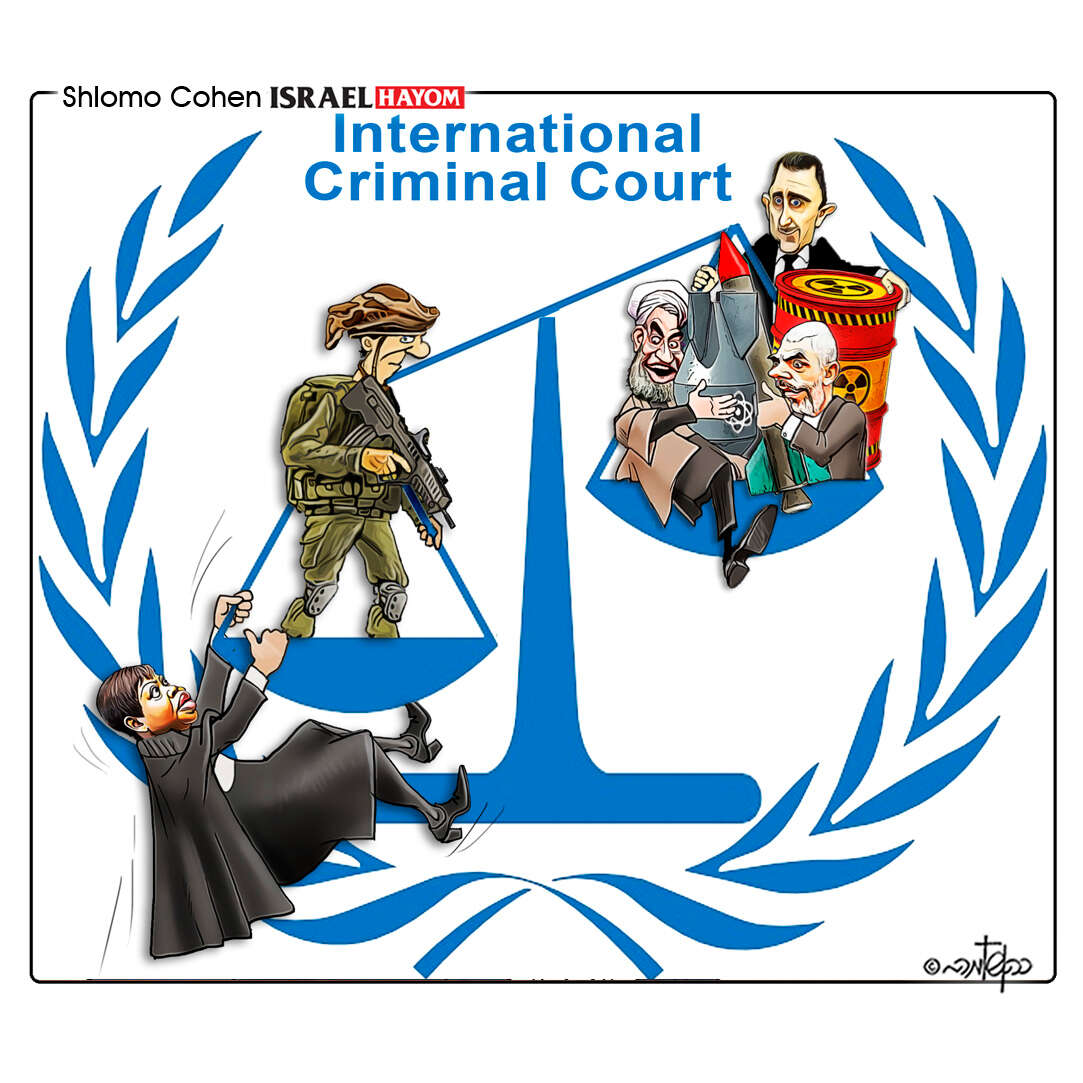


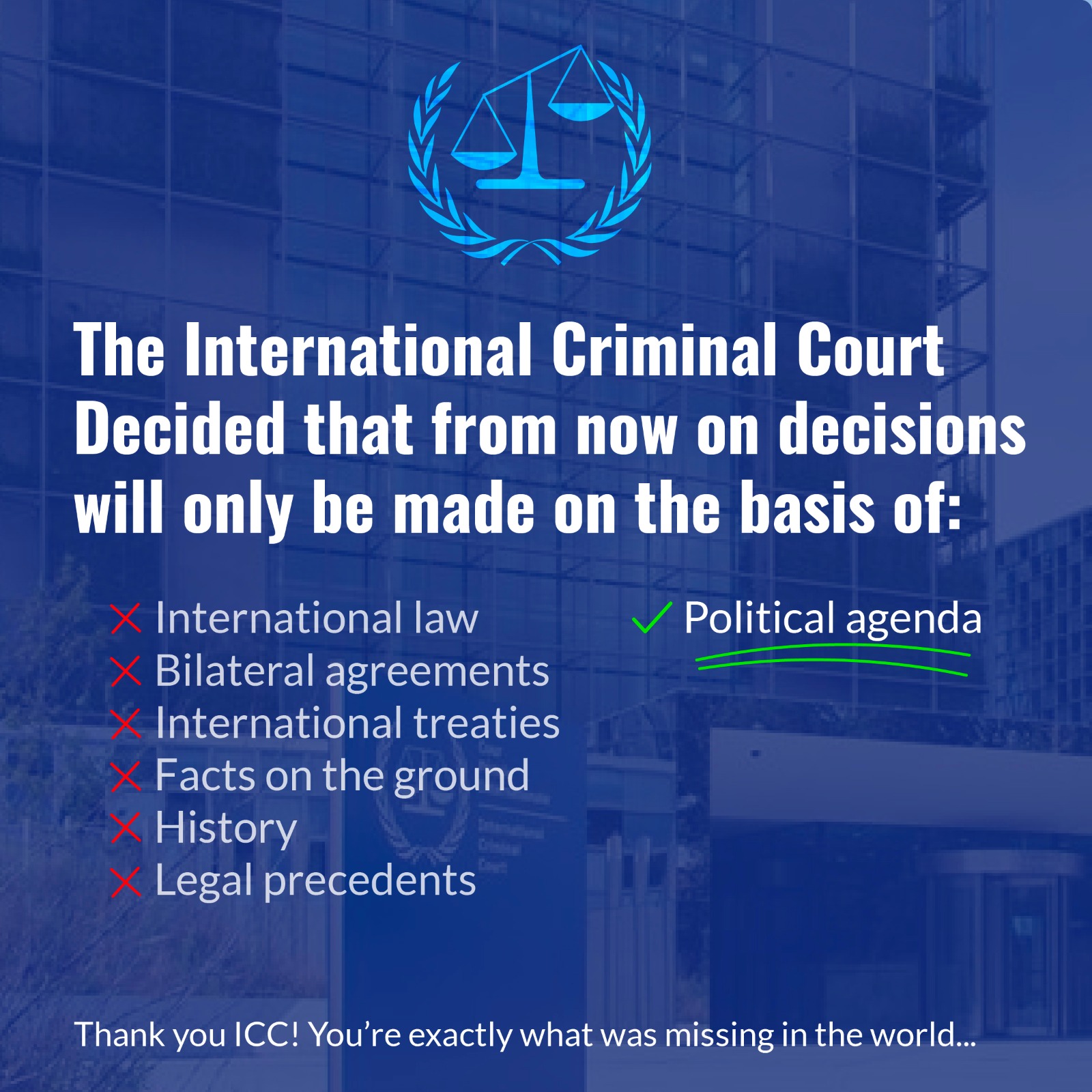
 The International Criminal Court decided that it had jurisdiction to charge Israel with crimes. As