
 Saturday, February 06, 2021

From Ian:
JPost Editorial: ICC investigation into Israeli 'war crimes' an immoral decision - editorial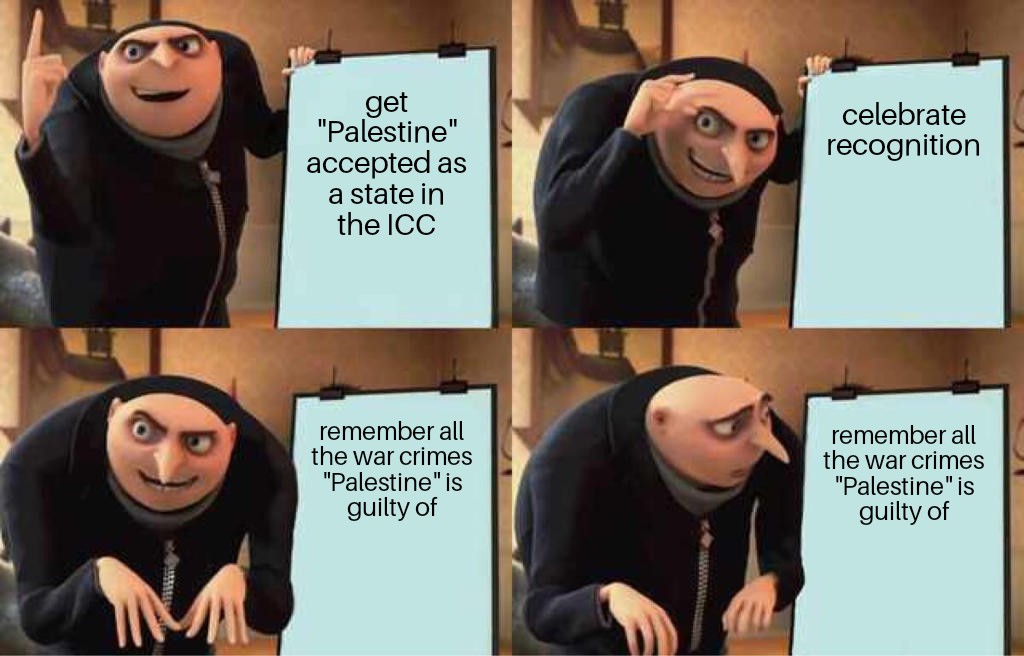
Melanie Phillips: Why can those on the left never see their own antisemitism?
JPost Editorial: ICC investigation into Israeli 'war crimes' an immoral decision - editorial
The International Criminal Court at The Hague made a terrible decision on Friday in announcing that it had legal justification to open a war crimes investigation against Israel.
In a majority ruling published on Friday, following a six-year review by the chief prosecutor, the ICC judges said that, “The Court’s territorial jurisdiction in the Situation in Palestine... extends to the territories occupied by Israel since 1967, namely Gaza and the West Bank, including East Jerusalem.”
Granting itself jurisdiction over the territories paves the way for the court – set up under the Rome Statute of 2002, which Israel and the US did not ratify – to investigate Israel and, if it wants, the Palestinians, for alleged war crimes. These could include past Israeli military operations like Protective Edge in 2014 against terrorist groups in the Gaza Strip as well as settlement construction in the West Bank.
As expected, Israel and the United States responded harshly to the court decision.
“Today, the International Criminal Court has proven once more that it is a political body and not a judicial institution,” Prime Minister Benjamin Netanyahu said on Friday.
“This is refined antisemitism,” Netanyahu said. “This court was created to prevent horrors like the Nazi Holocaust against the Jewish nation, and now it is attacking the only country of the Jewish nation.”
He added that the court “casts these delusional accusations against the only democracy in the Middle East” while refusing to “investigate the real war crimes committed by brutal dictatorships like Iran and Syria on a daily basis.”
In the US, State Department Spokesman Ned Price said the Biden administration is committed to Israel’s security, and objects to the court’s decision.
“As we made clear when the Palestinians purported to join the Rome Statute in 2015, we do not believe the Palestinians qualify as a sovereign state, and therefore are not qualified to obtain membership as a state, or participate as a state in international organizations, entities, or conferences, including the ICC,” Price said.
“The United States has always taken the position that the court’s jurisdiction should be reserved for countries that consent to it, or that are referred by the UN Security Council,” he added.
Melanie Phillips: Why can those on the left never see their own antisemitism?
In his new book Jews Don’t Count, David Baddiel observes that people on the left don’t treat the problem of antisemitism on the same level as prejudices over race, sexuality or gender.Michael Doran [WSJ]: In the Mideast, Biden Returns to Abnormal
I personally started to detect a double standard over antisemitism in the 1980s, when I wrote that antisemitism had become “the prejudice that dare not speak its name”.
This was when the left was calling Israelis “Nazis” for trying to root out from Lebanon the Palestine Liberation Organisation’s terrorist infrastructure. It was when people started saying openly: “Jews make so much money / they’re so clannish / they always stick together against everyone else”.
Merely to mention the word “antisemitism” among left-wingers, though, caused an instant glacial chill, provoked eye-rolls or produced the charge: “You’re using antisemitism to sanitise Israel’s atrocities”.
It wasn’t until the issue so spectacularly blew up in Jeremy Corbyn’s Labour party that this last accusation was itself finally acknowledged as a form of Jew-hatred. And it was only then, because Corbyn was so left-wing he was deemed beyond the pale, that Jews began to feel it was safe to use the a-word.
So why does the left deny or marginalise the antisemitism amongst it? And why are many Jews still so nervous about provoking a bad reaction if they talk about this on the left other than in the context of the Corbynised Labour Party?
One obvious factor is that, in progressive circles, Marxist assumptions have been absorbed often without their provenance being recognised. Like Marx himself, many left-wingers believe capitalism is evil and white, that capitalism is run by Jews, that money is power and that Jews have so much money and power they run the capitalist world.
Joe Biden implicitly campaigned on Warren G. Harding’s 1920 promise of “a return to normalcy.” But his administration is returning to Barack Obama’s abnormal Middle East strategy. A normal policy would respect the fundamental commandment of sound statecraft: Strengthen friends and punish enemies. It would distinguish between them by asking two simple questions: Which states have tended to shelter comfortably under the American power umbrella? And which have instead sought to destroy the American order? Israel, Turkey and the Gulf states, led by Saudi Arabia, have functioned as pillars of the postwar American order. By contrast, for the past 40 years Iran has tirelessly opposed the American security system.JINSA PodCast: Vaccinating in Israel: A Genuine Success Story
Three details of Iran’s strategic position could make it more dangerous in the near future. First, the Persian Gulf contains five of the world’s 10 largest proven oil reserves, and Iran threatens to dominate the region. Second, Tehran is increasingly allied with both Russia and China. Third, outreach to Iran by the U.S. has deeply angered most of America’s Middle Eastern allies.
A normal policy would seek to contain Iran. Every president since Jimmy Carter regarded Iran as a threat—except Mr. Obama. His flagship policy was the Joint Comprehensive Plan of Action, to which Mr. Biden is dedicated to return. The JCPOA won’t contain Iran. Its sunset clauses create a clear path for Iran to obtain nuclear weapons. By lifting sanctions, it supplies the Islamic Revolutionary Guard Corps with cash.
Mr. Obama also dispensed with traditional military deterrence. Tehran saw a green light to expand and arm its militia networks. By the time Mr. Obama left office, Tehran held substantial sway over four Arab capitals: Baghdad, Beirut, Damascus and Sana’a. Donald Trump returned to containment. While revitalizing deterrence and imposing sanctions, he also supported military and intelligence operations by allies, especially Israel, against Iran and its proxies. A new coalition of regional states developed and was formalized in the Abraham Accords.
Professor Eugene Kontorovich of George Mason’s Antonin Scalia Law School joins host Erielle Davidson to discuss Israel’s COVID-19 vaccination program and what has made it so successful. Professor Kontorovich discusses the international treaties that govern Israel’s current vaccine distribution regime and corrects misinformation surrounding its vaccine program, including what international law says about Israel’s responsibilities and abilities to vaccinate Palestinians.




 Tel Aviv, February 4 - Political groups at the extremes of Israeli society with a small following cautioned today that the representative, accountable nature of the country's political system risks collapse unless those groups exert some control over the government.


