Showing posts with label Linkdump. Show all posts

Friday, January 22, 2021

From Ian:

Room where it didn’t happen: US mediators reveal failed Israel-PLO peace talks
Why, after more than a century of bloody conflict, have Israelis and Palestinians failed to reach a peace agreement? Israeli director Dror Moreh goes behind closed doors of the sincere, though largely failed efforts spearheaded by the United States by interviewing a handful of the American negotiators in his new documentary, “The Human Factor,” opening January 22 in the US.

This past November marked the 25th anniversary of the assassination of Israeli prime minister Yitzhak Rabin by right-wing Jewish extremist Yigal Amir. Moreh sees this as a fitting time to reflect on the derailment of the peace process Rabin worked so hard on. He does so from the unique perspective of the Americans who devoted decades of their careers trying to create a more secure and tranquil Middle East.

Moreh, whose work often focuses on geopolitics, is the director of the critically acclaimed, Oscar-nominated 2012 “The Gatekeepers.” In it, he conducted unprecedented on-camera interviews with all six former heads of Israel’s secret service — the Shin Bet — who were still living at the time.

In “The Human Factor,” we hear from well-known figures special Middle East envoy Dennis Ross, Ambassador Martin Indyk, Ambassador Daniel Kurtzer, State Department analyst Aaron David Miller, special assistant to president Bill Clinton for Arab-Israeli affairs Robert Malley, and State Department interpreter and Middle East advisor Gamal Helal. Most of these men have penned books sharing their insights on the peace process, but now they collectively reflect on what went right and wrong.

“The Human Factor” tracks in detail the diplomatic maneuvers carried out by American delegations at the behests of presidents George H.W. Bush and Bill Clinton from the 1991 Madrid Peace Conference through to the failed Camp David summit in July 2000.


Haim Ramon: Former minister's autobiography blows through history
Supporters of Israel growing up in the United States in the late 1980s and early to mid-1990s saw two young politicians who explained Israel well in American media and were said to have bright futures as Israel’s leaders.

The one on the Right, Benjamin Netanyahu, became Israel’s longest-serving prime minister.

The one on the Left, Haim Ramon, never fulfilled his potential.

Ramon’s new Hebrew autobiography, Against the Wind, does a good job of explaining why.

The book takes readers through history, with each of 20 chapters representing another fight he led publicly or behind the scenes on issues in which he believed strongly. Each fight was an uphill battle, and whether he won or lost, he made enemies along the way.

In an interview with the Magazine, Ramon said he had no regrets about rubbing people the wrong way and earning those enemies, because it was worth sacrificing his own political future to ensure the future of the country.

“Basically, when I was involved in revolutions, I fought hard for my ideas,” he said. “I didn’t plan for the consequences that would prevent me from becoming prime minister. I did things that people didn’t like, and they never forgave me, even long after I was proven right.”

The title of the book is the same as those of classic songs in both Hebrew and English. The Hebrew song, by Shalom Hanoch, describes feeling like the most isolated person in the world but continuing onward anyway. The English song, by Bob Seger and the Silver Bullet Band, describes a man looking back at the independence and naiveté of his youth.
The Tikvah Podcast: Michael Oren on Writing Fiction and Serving Israel
Very few contemporary public figures have had as many successes in as many fields as Michael Oren. A writer-statesman in the model of Thucydides, Oren was Israel’s ambassador to the United States during the Obama years, and was before that a historian of the Jewish state, the author of perhaps the best single book on the Six-Day War. He’s also worked in think tanks, been a professor at Ivy League institutions, and served as an MK in the Israeli parliament. Now, with the recent publication of The Night Archer, a collection of short stories, Oren returns to the genre of fiction, a pursuit that animated his younger years.

This week on the podcast, Oren joins Mosaic’s editor Jonathan Silver to discuss how his varied career fits together—how the writing of fiction relates to the writing of history, how the study of history relates to the practice of diplomacy, how diplomatic service and writing both require the same aptitudes of perception, and how all of this came together in the service of Zionism and the state of Israel.


From Ian:

'We left the Middle East in good shape'
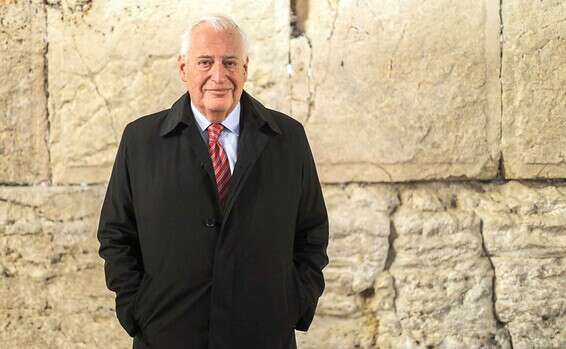
One morning in the winter of 2017 a young, unknown man arrived at the Kesher Israel synagogue in the heart of Washington. He prayed fervently, as if his heart was filled with a special request. His tallit bag bore the name "Friedman," and it was the only time he had come to the famous synagogue. That same day, his father David M. Friedman, was undergoing Senate confirmation for his appointment as US ambassador to Israel.

In the best tradition of Jewish divisiveness, powerful forces were aligned against Friedman Sr., led by the J Street lobby. But a few weeks later, in a ceremony organized by B'nai B'rith International, Friedman made his first speech as ambassador.

"If you were wondering about my middle name, Melech, it's not because my parents expected great things of me, but because my grandmother was named Malka [the feminine version of the name]," he began the speech, causing the audience to double over with laughter.

The prayers of his son and his parents had come true. Not only was the appointment approved, but David Melech Friedman became the most influential US ambassador in the history of US-Israeli relations. And not only through the steps known to everyone – stamping down Iran, recognizing Jerusalem as Israel's capital, relocating the US Embassy in Israel to Jerusalem from Tel Aviv, recognizing the Golan Heights as Israeli and shaping the Trump peace plan – but also through endless moves that never made headlines in the dramatic Trump era. For example, visits to the Golan Heights, to Ariel in Samaria, and the City of David in Jerusalem – all of which would have been inconceivable prior to Freidman's arrival.

After four intense years, Friedman sat down with Israel Hayom for an "exit interview." For decades, the American Consulate on Agron St. in Jerusalem served as a conduit through which the Palestinian Authority would spread its lies and incitement into Washington. Friedman shut down the consulate and turned it into the official residence of the American ambassador in Jerusalem.


David Friedman reflects on Trump's revolutionary Middle East policies
Friedman emphasized the extensive efforts the Trump administration took to make the agreements a reality, highlighting his senior adviser Aryeh Lightstone’s travels throughout the region to foster agreements between Israel and the other countries’ governments once normalization was announced.

“The Abraham Accords are still new; they need to be nurtured,” Friedman said. “I hope we can continue to nurture this relationship. It’s too new to leave it on its own.”

Friedman’s advice to his replacement would basically be to leave Israel be. He argued that there is a consensus that the Trump administration did a good job in the Middle East, and the next administration would do well to address other problems in the world and domestically.

“We left our relationship with Israel as strong as it has ever been, and it is reciprocal – we are getting an excellent return on investment in Israel that should be maintained. The Abraham Accords have been transformational and need to be maintained.... The issues that tend to occupy people’s attention are all in a good place,” he said.

As such, Friedman said, “the short answer [is that], oddly enough, of all places, the Middle East is pretty good. You should leave well enough alone.

“There are lots of other problems – China, Russia, domestic issues. There is plenty to work on. Leave the Middle East alone. Leave Israel alone, on the path that it is on,” he suggested.

Now that Friedman is no longer ambassador, what is next for him?

Trump’s former bankruptcy attorney said he does not plan to return to practicing law.

First, the departing ambassador plans to write a book about his experiences.

Then, Friedman says, he hopes to continue to have a positive impact in Israel.

“I’m going to find a way to be relevant in this space,” he promised.


The Palestinian Authority Is Still Paying Terrorists
In 2018, the United States Congress passed the Taylor Force Act, which ended U.S. aid to the PA unless the latter ceased paying stipends to terrorists and their families. The legislation is named after Taylor Force, a 28-year-old U.S. Army vet who was stabbed to death by a Palestinian terrorist while he was visiting Israel for his MBA program. Force's murder helped galvanize efforts to penalize the PA and end "pay to slay." In 2019, Israel enacted its own version of the Taylor Force Act, which deducted the amount that the PA pays to terrorists from tax revenues that the Jewish state collects and transfers to the authority.

Yet, the PA has been unbowed.

In a Sept. 26, 2019 speech before the U.N. General Assembly, PA president Mahmoud Abbas declared, "Even if I had only one penny, I would've given it to the families of the martyrs, prisoners and heroes." Abbas's boast of paying people to murder Jews was met with applause. And the PA's actions match his words. In the first five months of 2019 alone, the PA paid terrorists and their families $66 million—an 11.8 percent increase from the previous year.

Abbas has also tried to hide the "pay to slay" program. As journalist Donna Rachel Edmunds observed in May 2020, "monthly budget documents prepared by the Palestinian Authority for 2020 show that it is attempting to hide the salaries that it pays to terrorists from international donors, making a sham of its commitment to financial transparency." Edmunds cited research from Palestinian Media Watch, which found that "the PA is diverting the payments through the Palestine Liberation Organization (PLO), a trick it has used in the past."

Indeed, as AFP reported in June 2020, Abbas ordered his security services to destroy "secret documents, fearing possible Israeli raids on their offices." The Committee for Accuracy in Middle East Reporting and Analysis noted at the time that the PA might have had the past in mind. An Israeli raid in September 2000 resulted in the seizure of PA and PLO documents which showed that "senior Palestinian Authority officers were actively involved in terrorism, providing logistical and financial assistance" to other terrorist groups.

There is no evidence that the PA, facing a new U.S. administration, intends to reduce its support for terror. In January 2021, the authority announced that it was creating the "Alive and Provided For" initiative, which plants trees in honor of terrorists. Jibril Rajoub, a prominent PA official and possible successor to Abbas, declared, "these martyrs are the most sacred thing that we have."

Policymakers and press alike should take note.

Thursday, January 21, 2021

From Ian:

Douglas J. Feith: Why I’m a Zionist
There are negative reasons to be a Zionist - that the Jews need a state because they need a refuge. That argument launched the Zionist movement in the 19th century and it remains valid to this day.

There are also affirmative reasons that relate to Jewish civilization. They boil down to the conviction that Jewish culture is an invaluable inheritance that only in the Land of Israel, in a state with a Jewish majority, can be developed fully and perpetuated reliably. As an adult, I came to appreciate the positive reasons to be a Zionist.

To be a Zionist is to revel in the ways Israel has integrated Jewish principles and traditions into the daily life of a large, modern, democratic society. Israel is where Jewish collective interests prevail, so they enjoy the dignity of self-reliance and self-defense. Hebrew is the main language. Jewish history inspires the geographical names. Jewish subjects have a special place in the schools. The Jewish religious calendar influences the rhythm of life.

In general, the American political tradition is averse to official privileges for particular ethnicities or faiths. But the way Americans practice democracy is not the only way. Most liberal, democratic countries were founded on an ethnic basis. Most give special consideration to the majority population's cultural interests.


CAMERA Op-Ed A Historian Who Forgets History
More than 100 years ago, George Santayana famously intoned that “those who cannot remember the past are doomed to repeat it.” The Spanish philosopher’s warning has often been repeated. Regrettably, it is often ignored, including by many historians.

Avi Shlaim provides the latest example. In a Dec. 22 op-ed in Foreign Policy magazine titled, “If Biden Wants Israeli-Palestinian Peace, He Must Break with the Past,” Shlaim seeks to provide the incoming U.S. administration with advice on how to “achieve in the Middle East.” The Oxford University professor emeritus has even found the culprit for the lack of Israeli-Palestinian peace.

“The basic flaw in the U.S. approach to Middle East peacemaking since 1967,” he claims, is “the unconditional nature of its economic, military and diplomatic support for Israel.” He elaborates, saying “the United States has posed as an honest broker, but in practice, it has acted more as Israel’s lawyer. This has made its policy for resolving the Israeli-Palestinian conflict incoherent, contradictory and self-defeating.” The United States, asserts Shlaim, has held a “monopoly” over peacemaking efforts and has failed “because it was unable or unwilling to use its massive leverage to push Israel into a final-status agreement.”

The implication is clear: Israel at fault for the lack of a permanent peace agreement between Israelis and Palestinians. And America shares the blame for its supposedly uncritical support of the Jewish state.

The solution, Shlaim tells Foreign Policy readers, is for the United States to “impose penalties for Israeli intransigence.” The United States should encourage Israel to adopt the 2002 Arab Peace Initiative, and should it refuse, the Jewish state should be deprived of aid. That proposal, writes Shlaim, would have provided the Palestinians with an independent state on the Gaza Strip and a capital city in eastern Jerusalem.

But Shlaim’s recommended strategy is based on a selective reading of history.

Indeed, his commentary is replete with omissions and misrepresentations.

In fact, Palestinian leaders have been presented with numerous opportunities for statehood, and they alone are responsible for refusing them. In 1937 and 1947, Palestinian Arabs rejected British and U.N. proposals for statehood—proposals that were accepted by the Zionists.
WaPo, ABC, CBS Run with AP Piece Denouncing Israel’s Defense Against ‘Apartheid’ Smear
Major news organizations, including The Washington Post, ABC News and CBS News reprinted an Associated Press (AP) article that incorrectly portrayed as undemocratic a move by Israel’s education minister to bar members of B’Tselem from giving presentations or conducting other activities in publicly-funded schools. The decision was made after the controversial group, which supports the anti-Israel Boycott, Divestment, Sanctions (BDS) movement, published a report in which it accused the Jewish state of being an “apartheid regime.”

Lost in the mix, however, is that the Israeli government has not banned B’Tselem from assuming any position; rather, Jerusalem has determined, in accordance with the law, that state-funded schools are not appropriate vehicles through which to slander Israel.

Apartheid: Not Part of the Israeli School Curriculum
When announcing the decision, Education Minister Yoav Gallant said that organizations like B’Tselem “contradict the goals of the education system, including calling Israel false disparaging names, opposing Israel as a Jewish, Zionist and democratic state, discouraging meaningful service in the IDF, or acting to harm or degrade IDF soldiers during or after their service.”

Yet, the AP story casts doubt on the legitimacy of the move by Israel’s democratically-elected government by quoting a representative of Adalah, another pro-BDS organization that is innocuously described as an “Arab legal rights group:”
Adalah said it had appealed to the country’s attorney general to cancel Galant’s directive, saying it was made without the proper authority and that it was intended to “silence legitimate voices.”

In reality, the Israeli parliament in 2018 passed legislation authorizing the education minister to prevent members of groups that “act against the goals of education and against the IDF from entering schools.” The law was intended to curb organizations from fanning flames of hatred against Israel through the promotion of the BDS movement’s annihilationist agenda.

This critical fact is, by happenstance, mentioned in the AP article — buried in the ninth paragraph below the Adalah quote — but thereafter includes this modifier: “It was not clear if Galant’s decree was rooted in the 2018 law.”

Yes, it was.
From Ian:

Michael Oren: The Case Against the Iran Deal
The JCPOA allowed Iran to both maintain its nuclear program and revitalize its economy. Biden must make clear to Tehran that it can have one or the other, but not both. Tragically, spokespeople for the new administration are proposing to return to the JCPOA and lift sanctions, and only afterward negotiate a longer, stronger deal. Such a course has no chance of success. Even a partial lifting of sanctions would forfeit any leverage that could compel the regime to negotiate a deal that genuinely removes the danger of a nuclear Iran. At best, the regime will agree to cosmetic changes—for example, extending the sunset clauses—but not to dismantling its nuclear infrastructure. A fatally flawed deal would remain essentially intact.

The Biden administration must resist pressure from members of Congress and others who are urging an unconditional return to the JCPOA. Even the deal’s fervent supporters need to recognize that its fundamental assumptions—that Iran had abandoned its quest for a military nuclear option and would moderate its behavior—have been thoroughly disproved.

At the same time, America must consult its Middle East allies about what they think a better deal would look like. Such a deal would verifiably and permanently remove Iran’s ability to develop nuclear weapons. This means not merely mothballing the nuclear infrastructure, but eliminating it. It means empowering international inspectors with unlimited and immediate access to any suspect enrichment or weaponization site. It means maintaining economic and diplomatic pressure on the regime until it truly comes clean about its undeclared nuclear activities and ceases to develop missiles capable of carrying nuclear warheads. A better deal will deny Iran the ability to commit the violations it is now committing with impunity.

Achieving these objectives will require close and candid cooperation among the United States, Israel, and concerned Arab states. Such cooperation was not possible in the negotiations leading up to the JCPOA, which America initially conducted behind the backs of its Middle Eastern partners. In the final stages, U.S. officials misled their Israeli and Arab counterparts about America’s negotiating positions. This displayed not only bad faith, but a patronizing presumption of knowing the vital security interests of the countries most threatened by Iran better than they knew those interests themselves.

The incoming administration has declared its determination to restore the trust of America’s allies, along with promoting peace and human rights. But those objectives are incompatible with renewing a deal that betrayed America’s allies, strengthened one of the world’s most repressive regimes, and empowered the Middle Eastern state most opposed to peace.

The JCPOA is also incompatible with President Biden’s long-standing commitment to Israel’s security. At a 2015 gathering celebrating Israel’s independence, then–Vice President Biden said: “Israel is absolutely essential—absolutely essential—[for the] security of Jews around the world … Imagine what it would say about humanity and the future of the 21st century if Israel were not sustained, vibrant and free.”

Reviving the JCPOA will endanger that vision, ensuring the emergence of a nuclear Iran or a desperate war to stop it. Biden is a proven friend who has shared Israel’s hopes and fears. He must prevent that nightmare.
JINSA (PodCast): After the Abraham Accords: Relocating Israel to CENTCOM’s AOR
The recent Abraham Accords have solidified a growing anti-Iran coalition in the Middle East, and the latest decision to move Israel to CENTCOM’s Area of Responsibility reflects and reinforces this changing dynamic within the region. Jonathan Ruhe, Director of Foreign Policy at JINSA’s Gemunder Center, joins Erielle to discuss the importance of this relocation, the reasoning behind the decision, and what we might expect from future administrations when it comes to Israel’s role within CENTCOM.


Khaled Abu Toameh: Palestinians: Victims of an Arab Country
Like most Arab countries, Syria denies citizenship to Palestinians. Children born in Syria to fathers who are Palestinian nationals are considered Palestinians, not Syrian nationals.

Palestinian leaders see no evil or wrong-doing when their people are being killed, injured, displaced, arrested and tortured in an Arab country. The attention of these leaders is solely focused on Israel, which they denounce day and night not only for what it does, but also for what it does not do.

On January 9, Abbas entered the 17th year of his four-year term. He is again talking about his desire to hold new elections. This charade is played at least once or twice a year so that people will believe that he really wants elections.

The Palestinians do not need new elections. They need new leaders who will guide them out from their longstanding morass into a future of promise and peace.
PMW: American values are incompatible with funding UNRWA and the PA - watch lecture by Itamar Marcus
Itamar Marcus explains why funding UNRWA is the international communities’ worst investment ever: ‎because “UNRWA is just growing refugees,” in his recent webinar/lecture to the DC-based EMET ‎organization. ‎

During the 12 years of the last two American administrations, Palestinian refugees have grown by a ‎million from 4.6 million - 5.6 million, according to reports by UNWRA. Billions of American dollars during ‎this period were invested – presumably to solve the refugee problem – but instead UNRWA used the ‎money to literally increase the refugee problem. ‎

Funding of UNRWA should be conditional upon saving 300,000 people a year by removing them from ‎refugee lists and giving them a life and a future. Instead, UNRWA abuses nearly 100,000 additional ‎people each year, by condemning them to be refugees. Funding UNRWA is supporting the abuse of ‎human beings for political purposes.‎

Funding the PA likewise contradicts fundamental American values. The PA uses its money to reward ‎terrorists, glorify terrorists, fund terror organizations, disseminate vicious Antisemitism, celebrate the ‎murder of Israelis and Jews, and deny Israel’s right to exist. ‎

There is no logical reason why any US administration would want to support entities so diametrically ‎opposed to American values.‎


Wednesday, January 20, 2021

From Ian:

Meir Y. Soloveichik: Israel’s Vaccine Triumph
This lesson is the essence of Jewish identity. Rabbi Joseph Soloveitchik noted that “Israel,” the name given by the Bible to the chosen nation, originally belonged to the patriarch also known as Jacob. This, he argued, is no coincidence: Jacob, he pointed out, is the only biblical progenitor who is seen interacting not only with children but grandchildren. Drawing Joseph’s sons Ephraim and Menashe to him, the patriarch blesses them in the name of Abraham and Isaac, linking ancestors to descendants. We are all named for Israel because the original Israel, in joining generations, is our polestar; a nation that emulates his life cannot die.

With the coming of the vaccine, our forefather Israel was imitated in modern Israel. As Israeli seniors swarmed the vaccinations centers, one of them, Amnon Frank, expressed to the Israeli media what drew him there. “A grandchild without a hug is half a grandchild,” he reflected. “We haven’t hugged them since March.” This single succinct sentence captures the meaning of l’chayim; life is truly life when it is shared.

These two Israeli sets of statistics—the vaccination of the old and the perpetuation of the young—are two trends that are wholly connected with each other. A country that toasts l’chayim, a society that desires life, illustrates what life truly means. It ensures that grandfathers and grandmothers are written in the book of life, so that they are thereby able to embrace their grandchildren once again.

In one of the most famous of Talmudic tales, a group of rabbis beheld a Jerusalem devastated by Rome and wept, while one of their colleagues, Rabbi Akiva, laughed and stubbornly cited the prediction of the prophet Zachariah: “There shall yet old men and old women dwell in the streets of Jerusalem, and every man with his staff in his hand for very age. And the streets of the city shall be full of boys and girls playing in the streets thereof.” The story is cited as an example of profound faith, as indeed it is. But perhaps Akiva’s insight also is that the prophetic verse, joining grandparents and grandchildren, contained the secret of Jewish survival: A nation that reveres its elders and celebrates new life would outlast an empire that glorified war and death. In Israel today, Akiva’s seemingly preposterous prediction has come true, as the world discovers new meaning in the mantra am Yisrael chai—the nation of Israel lives.


Shumuely Boteach: Should Europe’s Jews move to Israel? - opinion
On Sunday, The Guardian reported the depressing fact that “almost half of British Jews avoid showing visible signs of their Judaism in public, such as a Star of David or a kippah, because of antisemitism,” according to a new study.

“The Campaign Against Antisemitism and King’s College London gave 12 statements that participants in the survey were asked to agree or disagree with,” The Guardian reported. “Twelve percent showed ‘entrenched antisemitic views’ by agreeing with four or more of the statements. The one that had most backing was ‘Israel treats the Palestinians like the Nazis treated the Jews,’ affirmed by almost a quarter (23%) of respondents.” That’s pretty sobering. But it gets worse. “Among the general public, a similar proportion agreed with one or more antisemitic statements put to them, pointing to a ‘deeply troubling normalization of antisemitism.’”

Is anyone surprised? The question is what to do about growing European antisemitism. Should Jews in Britain give up and move to Israel? On the other hand, making Europe “judenrein” is exactly what the Nazis sought through the annihilation of European Jewry, and should we give Hitler that posthumous victory?

Two of the greatest Jewish leaders of the 20th century had opposing views on this question.

Theodor Herzl concluded that antisemitism was unmovable, and the only hope for Jewish survival was the establishment of an independent Jewish state. He insisted on the necessity of using diplomacy to persuade the world that Jews have a right to self-determination in their historical homeland – Israel – and helped turn the centuries-old dream of returning to Zion into a reality.
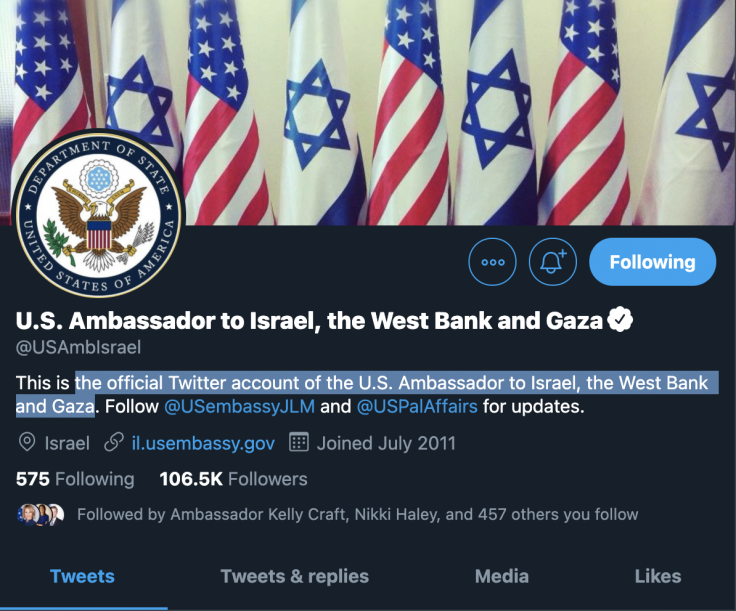
Biden Changes U.S. Ambassador to Israel Twitter Name to Include West Bank and Gaza
The Biden administration on Wednesday reversed a change to the U.S. ambassador to Israel's Twitter account name to read, "the official Twitter account of the U.S. Ambassador to Israel, the West Bank, and Gaza" after a Washington Free Beacon report highlighting the shift.

For a time on Wednesday, the official Twitter feed for the U.S. ambassador to Israel had its title changed to add "the West Bank and Gaza," territories the United States has for decades avoided taking a stand on due to ongoing peace talks between the Israelis and Palestinians. The title change sparked an outcry online, including among Republican lawmakers, and was quietly changed back to read only, "U.S. ambassador to Israel." The State Department would not comment on the initial change or why it was changed back to its original form.

Embassy officials have speculated that the title was inadvertently changed by Twitter due to a technical glitch when the accounts were switched from the Trump administration over to the Biden administration. The Free Beacon could not confirm the veracity of these claims.

"The U.S. doesn’t have ambassadors to any other disputed territory in the world. Singling out Israel, once again, is wrong," said Len Khodorkovsky, former deputy assistant secretary at the State Department. "Instead of building on all the progress that’s been made toward peace in the Middle East, the Biden administration seems to be reversing course toward the failed policies of the Obama years."

During the Obama administration, former ambassador Dan Shapiro was referred to in official communications as the "U.S. Ambassador to Israel."

While President Joe Biden has said he would maintain the U.S. embassy facility in Jerusalem—which former President Donald Trump moved in a historic policy shift—it is likely he will put greater emphasis on Israeli-Palestinian peace talks, which have long been stalled. Biden also will grapple with the last administration's decision to recognize the Golan Heights area along the Israel-Syria border as officially part of the Jewish state.
From Ian:

EXCLUSIVE: As Trump exits, the full Mossad story on normalization into focus
As the administration of president Donald Trump exits stage left, it’s time to take stock of the four normalization deals that Israel has already signed.

But there is a crucial piece of the story that has not been emphasized.

Contrary to conventional wisdom, although the July-to-December 2020 wave of deals provided the historic photos, the turning point moments were back in 2017 and 2019, The Jerusalem Post has learned. Also, though, it has not yet signed an agreement itself, the key party was always Saudi Arabia.

Much of the de-emphasis of these points has to do with Mossad chief Yossi Cohen – whose acts were mostly shrouded in mystery until a major speech in July 2019 – who was leading the Israeli push by Prime Minister Benjamin Netanyahu.

There have been multiple narratives about who really got the ball rolling between Israel, the US and the UAE, and about when was the critical turning point.

Of course, part of the complex answer is that each country in the Israel, UAE, US triad played its part.

Also, each of the countries that came afterward made its own contributions which helped form the order of who would be “in” during the Trump era and who would play “wait and see.”

But to properly understand what happened in 2020, Israeli intelligence sources would say that it is imperative to understand the behind-the-scenes role of Cohen and the Saudis and what happened in September-November 2017, and in July 2019.
Trump officials: Mauritania, Indonesia were next to normalize, but time ran out
The Trump administration was closing in on agreements with Mauritania and Indonesia to be the next Muslim countries to normalize relations with Israel, but ran out of time before the Republican president’s term ended, two US officials told The Times of Israel this week.

An agreement with Mauritania was the closest to being reached, with US officials believing they were mere weeks away from finalizing a deal. The northwest African country was identified by the Trump peace team led by senior White House adviser Jared Kushner and special envoy Avi Berkowitz as a likely candidate to follow the United Arab Emirates, Bahrain, Sudan and Morocco in normalizing with the Jewish state, given that it once had relations with Israel.

Mauritania became just the third member of the Arab League to establish full diplomatic relations with Israel in 1999, but severed ties 10 years later against the backdrop of the 2008-2009 Gaza war.

After the UAE agreed to normalize ties with Israel in August, Mauritania’s Foreign Ministry issued a statement offering tepid support for the deal, saying it trusted Abu Dhabi’s “wisdom and good judgment” in signing the accord.

Mauritania also has close ties with Morocco, which similarly established relations with Israel in the 1990s only to break them off several years later. The Trump peace team was encouraging Rabat to push its neighbor and ally to forge ties with the Jewish state.

The next most likely candidate to join the so-called Abraham Accords was Indonesia, the US officials said, claiming that a deal could have been inked if Trump had another month or two in office.
Melanie Phillips: On Iran, it's groundhog day all over again
When anxiety first surfaced that in Joe Biden the US would once again be led by a president who would be soft on Iran, some others attempted a positive gloss. Don’t worry, they said; in light of Iran’s appalling aggression over the past four years and the fact that the regime was now far weaker than it had been, Biden would be exceptionally stupid to cosy up to Tehran and re-empower this lethal threat to the Middle East and the west.

But with the Biden era about to begin, those fears have become even stronger. For the signals are all pointing towards the Democratic party’s cultural default of empowering evil people both at home and abroad and abandoning or actively trashing their victims. And against stiff competition from the world’s tyrants (China, North Korea, Russia), the Iranian regime is arguably the most dangerous.

In 2015, it was given a tremendous boost by the nuclear deal, brokered by US President Barack Obama and supported by (to their eternal shame) the UK, France, Germany and others. The fiction was that the deal would stop Iran from developing the nuclear weapons with which they had pledged to erase Israel and attack the west, because the agreement would bring the regime in from the diplomatic cold and thus transform it into a regular government.

The opposite happened. The deal funnelled billions of dollars into the regime, enabling it to increase its dominance of the region, repress its own people still further and continue its sponsorship of international terrorism. Far from stopping the Iranian bomb, the terms of the deal meant that at best it would only delay the Iranian nuclear weapons programme by a few years, and only assuming that the regime would not continue to cheat and lie.

It was actually a deal to facilitate the Iranian bomb and fund the regime’s genocidal and fanatical aggression abroad and tyrannical repression at home. It made Neville Chamberlain’s Munich agreement with Hitler look by comparison like an act of principled statesmanship.

Tuesday, January 19, 2021

From Ian:

Elder of Ziyon: Martin Luther King Proves Palestinian Intellectuals Never Cared About Human Rights
Historian and scholar Martin Kramer writes:
Not a year goes by without an attempt by someone to associate the name of Martin Luther King, Jr. with the Palestinian cause. It’s particularly striking because while he lived, no one had much doubt about where he stood. Here, for example, is the late Edward Said, foremost Palestinian thinker of his day, in a 1993 interview:

With the emergence of the civil rights movement in the middle ’60s – and particularly in ’66-’67 – I was very soon turned off by Martin Luther King, who revealed himself to be a tremendous Zionist, and who always used to speak very warmly in support of Israel, particularly in ’67, after the war.


Kramer goes on to show how King was an unabashed Zionist even though today the anti-Israel crowd tries to steal his legacy.

The Edward Said quote is fascinating, though. It seems to indicate that all of the good King did – all of the progress he made towards equal rights for all people – is worthless to Said because of this one position. Never mind that King’s position of support for Israel is entirely in line with his support for equal rights for all; after all, King saw the justice of having a Jewish state which in fact allowed Jews to be considered equals with other peoples in the world. But to Said, all of MLK’s legacy seems to be worthless because of his Zionism.

Further reading into Said’s writings show that this is in fact consistent. He addresses King briefly again in his memoirs, where he says:
Eleanor Roosevelt revolted me in her avid support for the Jewish state; despite her much-vaunted, even advertised, humanity I could never forgive her for her inability to spare the tiniest bit of it for our refugees. The same was true later for Martin Luther King, whom I had genuinely admired but was also unable to fathom (or forgive) for the warmth of his passion for Israel’s victory during the 1967 war. (141)

Said didn’t just disagree with these icons of human rights. He was revolted by them if they also were sympathetic to Jews and Jewish aspirations to self-determination.


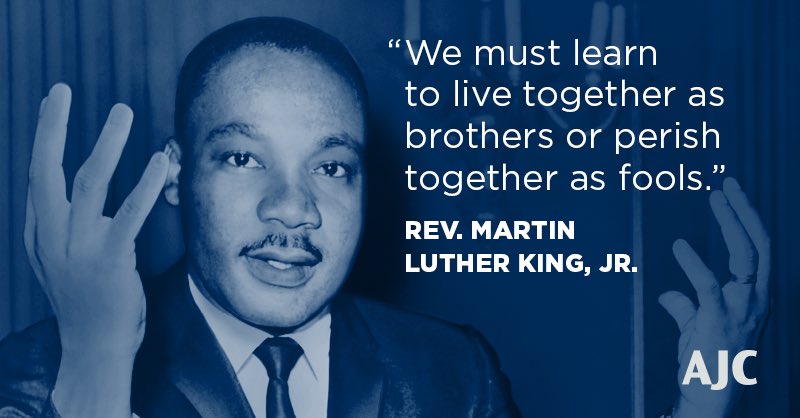
Dr. King’s Clarion Call for Soviet Jewish Freedom Remembered on MLK Day
A 1966 speech by Dr. Martin Luther King Jr. urging justice for the persecuted Jewish communities in the USSR has been reissued to mark the annual US holiday honoring the civil rights leader, who was tragically murdered in 1968.

The speech by Dr. King was delivered to the American Jewish Conference on Soviet Jewry on what was billed as a “nationwide telephone hook-up” on Dec. 11, 1966.

On Monday, the National Coalition Supporting Eurasian Jewry (NCSEJ) — a US NGO supporting Jewish communities in the former Soviet Union — distributed the speech online in honor of Dr. Martin Luther King Day.

Opening his remarks with a famous John Donne quotation — “No man is an island entire of himself” — King said that these words affirmed “the interdependence and interrelatedness of mankind … particularly when we think of the plight of three million Jews in the Soviet Union.”

“Jewish communal rights are deprived by the Soviet government of elementary needs to sustain even a modest level of existence and growth,” King said.

King noted that while “Jews in Russia may not be physically murdered as they were in Nazi Germany, they are facing every day a kind of spiritual and cultural genocide.”

He argued that African-Americans could “well understand and sympathize with” the plight of Soviet Jews.


Anti-Semitic propaganda is not news
Accusing democratic Israel of committing "apartheid" against its Arab community, which enjoys full equality under the law and has been seeing an unprecedented rise in the number of working women (up 5%) and students in universities (up from 10% to 18%), while being highly represented among the country's doctors (17%) and pharmacists (47%), is patently absurd.

Finally, CNN echoes the outrageous position that Israel's identity as the homeland of the Jewish people, guaranteeing a Jewish majority and encouraging the "ingathering of exiles," should be considered racism. This reflects an attempt to apply globalist and racialist theories to the Israeli-Palestinian conflict, fundamentally considering the world as an ethnic struggle between "oppressors" and "oppressed," and rejecting the very concept of religious and national identity – yet only when it comes to Jews.

B'Tselem attempts here to fawn on world progressive movements, creating an artificial parallel to the common trope of "white supremacy," by considering the Jewish affinity to Israel a form of "Jewish superiority."

The recent example of this "fashion" on social media to refer to "Jewish privilege" as a parallel to "white privilege" proves how anti-Semitic sentiments traditionally and still apply to these groups' credo. This is not only an insult to the historic yearning of Jews worldwide, but also to Israel's recognition and endorsement by the international community – in the 1920 San Remo Conference, in the 1947 Partition Plan, preceding Israel's foundation a year later, and on countless other occasions.

It is regretful that CNN has chosen to cooperate with the attempt to subvert Israel's very existence. Far from covering news, it cherishes distortions.

Israel is not an identity-free immigration hub; it has always been intrinsically bonded with Judaism as an inseparable part of Jewish existence while preserving equality under the law of all of its citizens, as is stated in its Declaration of Independence.
From Ian:

State Department Cuts Ties With Islamic Charity Over Anti-Semitism
The State Department has cut ties with Islamic Relief Worldwide, an international charity that the United States accuses of spreading anti-Semitism. The public accusations represent a wholesale shift in how the United States approaches a global charity that was, until recently, an official partner of the American government and raked in hundreds of thousands in taxpayer dollars.

The State Department is "conducting a full review of the organization and U.S. government funding" due to the "anti-Semitism exhibited repeatedly by IRW’s leadership," Ellie Cohanim, the deputy special envoy to monitor and combat anti-Semitism, told the Washington Free Beacon.

IRW boasts a budget of more than $100 million annually and has a registered nonprofit arm in the United States. The State Department’s public reproach of the charity means that it will no longer enjoy the legitimacy that comes with a close relationship with the American government or be able to cash in from this stamp of approval.

Anti-Semitism watchdogs have been sounding the alarm on IRW for years. IRW was an official State Department partner in the Obama administration and, for a time, in the Trump administration, despite evidence the group’s senior leadership engaged in persistent anti-Semitism, including social media posts from the organization's senior leaders praising Hamas leaders and calling Jews the "grandchildren of monkeys and pigs." Israel has designated IRW as a supporter of terrorism. The outgoing administration’s decision to publicly chastise the charity sets down a marker for the Biden White House as it assesses U.S. humanitarian priorities abroad. The next administration could restore ties with IRW, though it is unlikely given the current State Department’s rare elevation of anti-Semitism claims against the organization.

"Now that the State Department has issued this warning about the anti-Semitic Islamic Relief, it would be a very worrying step back if the incoming Biden administration, like Trump, rejected European concerns and started to fund this dangerous charitable franchise once more," said Sam Westrop, a Middle East researcher and director of Islamist Watch who has documented IRW’s promotion of anti-Semitic conspiracy theories.

Westrop described the Trump administration’s last-minute move as a severe blow for IRW, speculating the group stands to lose millions in funding from Western governments, the United Nations, and the European Union—all of which have contributed at least $100 million to the charity in the past decade.


Australian Government Probes UNRWA After Watchdog Report Reveals Antisemitic Educational Materials
The Australian Department of Foreign Trade and Affairs (DFAT) will investigate antisemitic and inflammatory educational materials used by the United Nations Relief and Works Agency for Palestine Refugees (UNRWA), after a report by an Israel-based watchdog organization, The Australian reported Monday.

“UNRWA has a fundamental obligation to remain unbiased and impartial while it delivers its humanitarian mandate,” a department spokesperson told the paper. “DFAT has reiterated to UNRWA the importance it places on non-discrimination, equality and neutrality in the education programs that UNRWA supports.”

Last week, the organization IMPACT-se, which monitors school curricula, released a report on racism, falsehoods, and incitements to violence in materials used by UNRWA.

Australia spent $8.39 million on UNWRA funding in 2020, the 19th-biggest contribution to the $921 million in total funds pledged to the organization. Last year the country reduced its aid allotted to the agency, following a similar move by the US in 2018.

“Instead of nurturing young Palestinians with the knowledge that they will need to lead satisfying and productive lives as citizens in a future Palestinian state, UNRWA is feeding their hearts and minds with the poison of racism and violent extremism,” said Peter Wertheim, CEO of the Executive Council of Australian Jewry, to the Australian daily on Monday. “It is time for Australia to look for new, more constructive partners through which to channel its assistance.”


JPost Editorial: Gallant is right
The security fence and checkpoints on West Bank roads are not designed to perpetuate a regime where there is one superior and one inferior people, but rather to protect Israel from real-life terrorism. Anyone remotely acquainted with the Israeli-Arab conflict of the last century understands this.

Hagai El-Ad, executive director of the human rights organization B’Tselem, doesn’t understand this – and in a dramatic announcement last week, his organization declared Israel an apartheid state.

“The territory between the Jordan River and the Mediterranean Sea is governed by a single regime that works to maintain Jewish supremacy,” the organization stated. “In recent years, the Israeli regime has grown increasingly explicit regarding its Jewish supremacist ideology.”

It is because of this view that Israelis largely yawn at B’Tselem’s pronouncements, believing them to be so far from the truth as to be irrelevant.

The Jerusalem Post, unlike the Hebrew media, was one of only a few media outlets in Israel – all of them English – that reported on B’Tselem’s outlandish declaration, believing that the public should know what this group, trumpeted abroad as Israel’s “leading human rights organization,” is saying.

We do not believe, however, that B’Tselem should be given a blank check to peddle this pernicious lie in the country’s schools. Therefore, we support Education Minister Yoav Gallant’s directive to keep groups calling Israel an apartheid state out of the schools, a decision breached Monday when El-Ad delivered a Zoom talk to Haifa’s Hebrew Reali School.

El-Ad has both a right to his viewpoint and to articulate it. The state must by no means prevent him from expressing his opinion, but it need not provide him a platform. Gallant is not saying that El-Ad can’t express his opinion, only that state-funded schools don’t need to give him a bullhorn and an audience.

While some may say this is undemocratic, we contend it is just good common sense.

Monday, January 18, 2021

From Ian:

David Collier: Academia – the epicentre of global antisemitism
The epicentre of global antisemitic activity is – astonishingly – academia. Anti-Zionist, antisemitic academics beget more anti-Zionist, antisemitic academics, all scratching each other’s backs and agreeing with each other.

It is almost impossible to follow a research path on the subject of Israel unless you have spent several years mentored by an Islamist, a Marxist or someone who claims Palestinian heritage. If you show potential as a professional anti-Israel propagandist, or agree to research an area that they choose for your study – your fees may all be covered. Once holding your PhD, you join a club whose members praise each other’s books, sign off each other’s grants – and block access to anything and anyone that does not fit the anti-Israel profile. As a group you actively seek to silence dissent. Hey – you even get to co-sign letters to the Guardian. It is a self-protecting global factory that churns out activists who hold PhDs and who all hate Israel. This isn’t academia, it is taxpayer-funded, Islamist-sponsored, antisemitic, propaganda. This propaganda is the central pillar upon which western antisemitic, anti-Zionism is supported.

In opposition to this, we must stop spending our time putting out fires and begin to address why these fires keep starting and where the fuel for them is all coming from.

Jews on campus – a type of ‘dhimmitude’
Jewish people today on campus can be tolerated, protected or abused. At no point are they treated as equals. The best they can hope for is protection and tolerance in a hostile environment. It is reminiscent of dhimmitude under Islamic rule. On the campus the prevailing wisdom is that their beliefs in Jewish identity are fundamentally wrong.

The Woke doctrine of ‘systemic racism’ holds that Jews are ’white’ and that they are guilty of establishing the ‘settler colonial’ state of Israel. Post-colonial, post-modernist, Marxist thought dominates the universities in which they are ‘permitted’ to study, and they will be tolerated provided that they ‘behave’. In these halls Zionism is a dirty word which is equated with racism.

Jewish students can wave their flags in secret rooms but must not do it where it can provoke. They are offered the protection of being allowed to be wrong within a superior system of thought – or in other words they are second class students. If they are abused, it is far less serious than an offence against someone from the Muslim, BAME or LGBTQ communities. If an academic is responsible for the abuse (see Bristol, Leeds, Warwick) it is the academic who will be protected and the complaining Jewish student who will be victimised – even if the student can prove abuse. Academics fiercely resist the protection for Jewish students that the government is trying to implement. Jewish students that bow down before their masters will be given special favours and status. The best analogy I can find is Dhimmitude.

It has got so bad that there are some universities which are virtually Judenfrei. Why would an openly pro-Israel Jewish student want to go to a University where they will be vilified by other students and victimised by lecturers? What an indictment of the failure to deal with the problem that Jewish students choose a University not by the course content or the quality of teaching – but by the extent of antisemitism that they will encounter.
Guardian anti-Israel editorial evokes antisemitism
On Sunday, the Guardian (via their sister site, the Observer) published an article on a King’s College/YouGov poll – commissioned by Campaign Against Antisemitism – on the attitudes of British Jews, which found that “90% believe that media bias against Israel fuels persecution of Jews in Britain”.

On that same day, the Guardian published an official editorial on the recent B’Tselem report they’ve been promoting which not only accused Israel of apartheid, but characterised it as a “Jewish supremacist” state. Though their coverage up until today uncritically quoted B’Tselem’s “Jewish supremacism” charge, and included an op-ed by the NGO’s director which used that term, this editorial used that term in their own editorial voice:
Israel has a problem of historic discrimination. But under Benjamin Netanyahu’s government there has been the enactment of the nation state law that constitutionally enshrines Jewish supremacy and a plan to formally annex parts of the West Bank.

First, let’s be clear. This has nothing whatsoever to do with Israel’s prime minister, or even the nation state law. Though we’ve refuted Guardian charges that the law enshrines discrimination, our concern is with their editors’ use of a term which suggests the state is intrinsically racist, and which has a clear antisemitic history.

We contacted Community Security Trust (CST), who provided us with the following statement about the use of the term by the Guardian and B’Tselem:
“The meaning and impact of language can vary considerably depending on who is using it, the audience that is hearing or reading it, and the context in which it lands. For this reason, whatever B’Tselem’s intended meaning in Israel regarding the phrase “Jewish supremacy”, they ought to have been cognisant that this phrase has a long-standing antisemitic usage outside Israel, and journalists in the UK, writing for primarily non-Jewish audiences, should be even more mindful of the danger of such wording.”

The danger British Jews feel about such wording, per the CAA poll which the Guardian reported on, is that it demonises not only Israeli specifically, and Zionism more broadly in a manner that’s arguably antisemitic per the IHRA definition, but vilifies Jews qua Jews – insofar as most are (correctly) identified as Zionists.

We’ve complained to the Guardian, and asked that they remove that antisemitic term from their editorial.
Martin Luther King Jr.’s legacy alive in Israel
On Monday, the US marks Reverend Dr. Martin Luther King Jr.’s birthday with a national holiday. Celebrated this year on January 18, the event comes less than two weeks after historic violence on Capitol Hill, the symbol of American democracy.

King was only 39 years old in 1968 when an assassin’s bullet ended his life in Memphis, Tennessee, but his legacy as a proponent of nonviolent conflict resolution lives on.

This year, though, a different spirit – one directly affected by the attack on the home of the US legislative bodies – adds a variant to King’s heritage.

“I have also been thinking a lot this past week about Rev. Martin Luther King’s famous ‘I Have a Dream’ speech in Washington, DC, at the [National] Mall, in front of hundreds of thousands of Americans in August 1963, in which he envisioned freedom for all Americans and called for an end to racism,” Rabbi Ron Kronish, the founding director of the Interreligious Coordinating Council in Israel, told The Media Line.

“How relevant this is today when racism is once again tearing America apart, as we witnessed so dramatically during the insurrection incited by US President Donald Trump last week on January 6, at the same place, in America’s capital city,” stated Kronish.

What are the ramifications of these events for Israel and the Middle East?
From Ian:

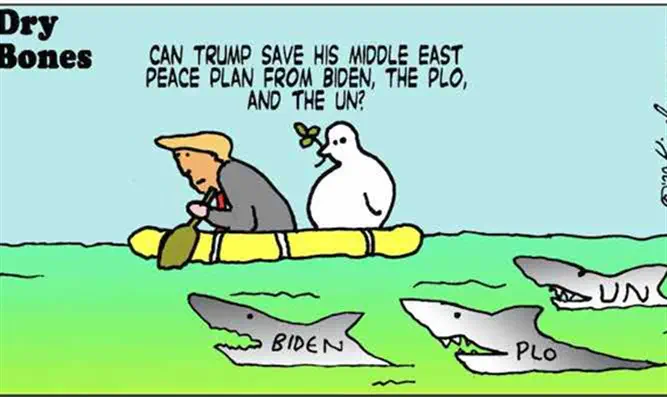
David Singer: Trump's Middle East solution will sink into oblivion
Trump’s Peace Plan was rejected by PLO Chairman Mahmoud Abbas on 5 February 2020:
“They told me Trump wants to send me the deal of the century to read, I said I would not,” Abbas told the meeting of Arab League foreign ministers.

“Trump asked that I speak to him over the phone, so I said ‘no’, and that he wants to send me a letter, so I refused to receive it.”

On 9 February 2020 - US Ambassador to Israel – David Friedman – affirmed:
“The process [preparing a detailed map – ed] will not last very long, but we want to go through a process… We’re going to go through a mapping process to convert a map which is drawn of more than a million to one into something which really shows on the ground how the territory will be put together.

"It’s not unduly difficult, but it’s also not simple, because there are a lot of judgment calls. We don’t want to do this piecemeal …

"We want to do it once, holistically, in totality, and get it done right. We just want to get it done right. That’s not too much to ask. And that was the president’s message when he spoke about it the first time.”

On 15 February 2020 - the three US members of a joint US-Israel committee to join Israel’s three nominees in translating Trump’s conceptual plans into two defined territorial entities were announced (Mapping Committee).

Eleven months later the Mapping Committee’s map remains under tight wraps. No reasons have been given for the Committee’s failure to publish.

Failing to release the Mapping Committee’s detailed map before 20 January setting out defined borders to facilitate future Israel-PLO negotiations – should they ever be resumed - will see Trump’s two-state solution sink into political oblivion.

President Trump’s opportunity to finally end the 100 years-old unresolved Jewish-Arab conflict will then become just a footnote in history – joining the failed attempts of his Presidential predecessors.


Commentary Magazine Podcast: Trump’s Gift to Biden
Hosted by Abe Greenwald, Christine Rosen, John Podhoretz, Noah Rothman Bret Stephens, newly minted COMMENTARY contributing editor, joins the podcast today to discuss his blockbuster article, “Memo to President Biden: Please Don’t Mess Up the Abraham Accords.


Col. Richard Kemp on 30th Anniversary of 1991 Gulf War

Sunday, January 17, 2021

From Ian:

As Israel-UAE Ties Deepen, BDS Advocates ‘Give Up’ on Efforts to Boycott Jewish State
Amid expanding ties between Israel and the United Arab Emirates following the Abraham Accords, a leading Palestinian BDS organization is giving up on efforts to boycott the Jewish state inside of the Arab Gulf country.

In a statement, the Palestinian Campaign for the Academic and Cultural Boycott of Israel (PACBI)—a member of the Palestinian BDS National Committee—announced that it would “exclude” those residing in the UAE from its call to ban UAE-Israeli economic and diplomatic partnerships.

“The PACBI takes into account the delicate situation of Arab subjects in Arab countries, such as the United Arab Emirates, ruled by tyrannical regimes that have become a hotbed of normalization and betrayal plans and projects in the region,” wrote the BDS group.

Previously, the PACBI had called on Emiratis to boycott several major UAE companies and institutions that had established ties with Israel, including the First Dhabi Bank, Emirates Policy Center and Dubai Expo.

The move by the BDS movement to drop its efforts to boycott Israel in the UAE comes as Arabs in countries that signed the Abraham Accords are showing increasingly positive attitudes towards the Jewish state.

A new report from Israel’s Ministry of Strategic Affairs (MSA) found a substantial decrease in negative posts on Arab social media regarding normalization with Israel in the weeks after the agreements were signed.

According to the MSA, the decline in negative comments towards Israel and normalization was in part due to the public awareness campaigns carried out by the respective governments.
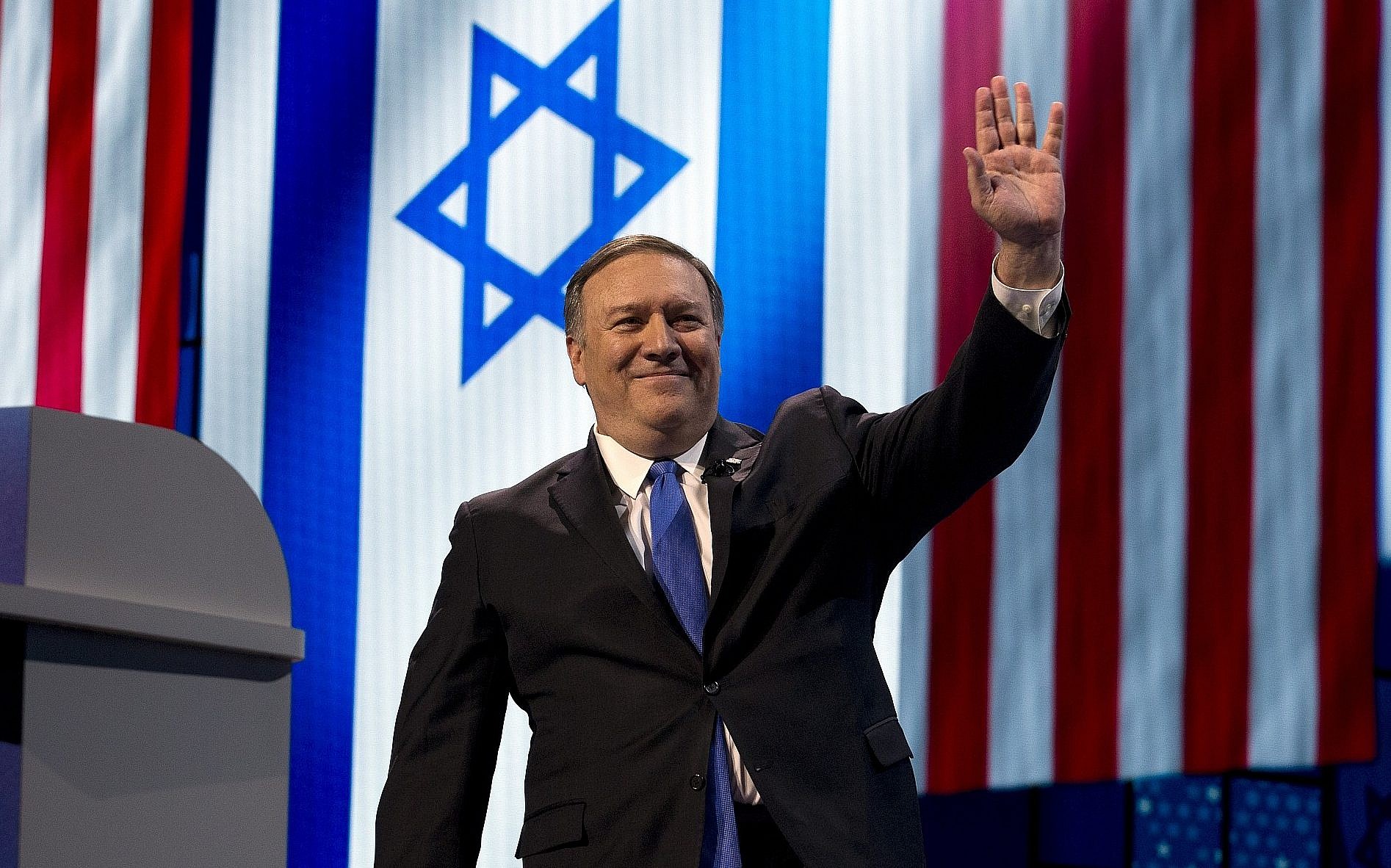
From Pompeo’s Twitter Account, an Understated Policy Statement
Mike Pompeo’s Twitter account has apparently tucked a notable policy statement into an otherwise unremarkable legacy-burnishing tweetstorm — and it has significant implications for U.S. support of Israel at the U.N.

The tweet was just one of the dozens that the secretary of state’s account has fired off every day since the start of 2021 to note his foreign-policy accomplishments as he nears the end of his tenure. It’s generally unremarkable stuff — some old pictures and graphics with snappy, occasionally stilted sloganeering (though more than a few Pompeo critics have seized on it as an opportunity to go after the top Trump official).

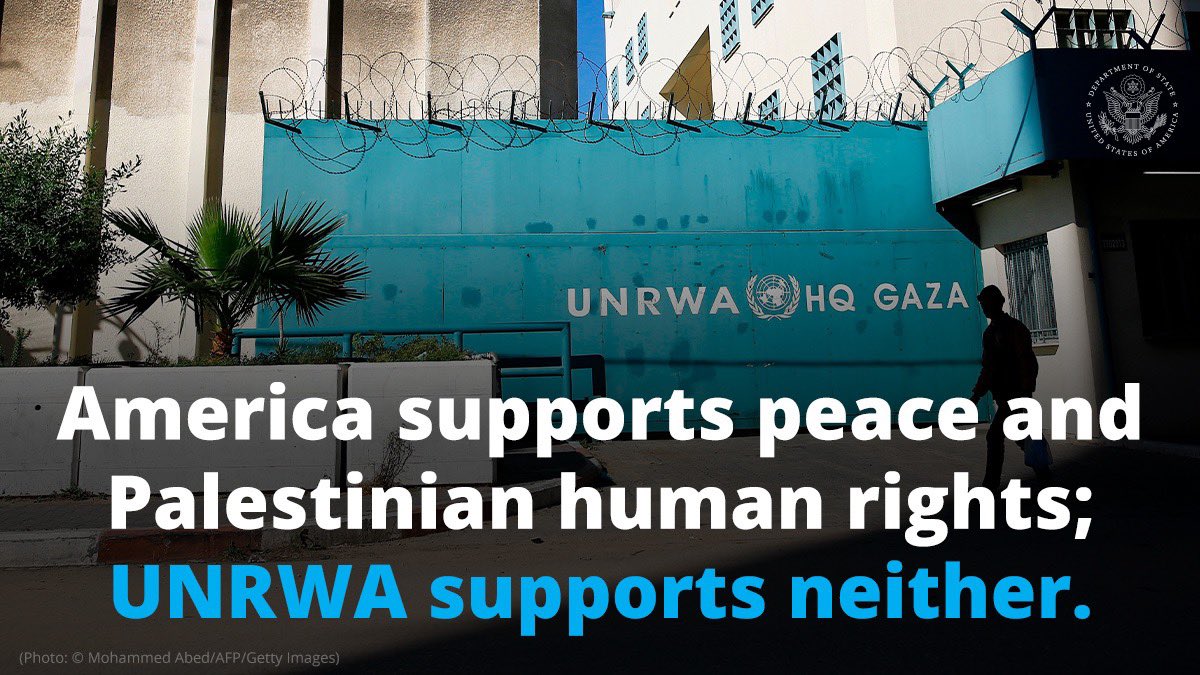
But Richard Goldberg, a senior adviser at the Foundation for Defense of Democracies, noticed a decision that has otherwise gone unremarked upon: When @SecPompeo shared the 2018 press release announcing the U.S. decision to halt funding to the U.N. Relief and Works Agency (UNRWA), the post stated that “it’s estimated less than 200,000 Arabs diplaced in 1948 are still alive and most others are not refugees by any rational criteria.”

UNRWA serves Palestinian refugees exclusively — it says that there are 5.8 million of them in Lebanon, Jordan, Syria, and Palestine — and it’s the only organization within the U.N. system that focuses on a specific set of refugees. (All other refugee groups are handled by the U.N. High Commissioner for Refugees.) It’s a testament to the U.N.’s single-minded obsession with criticizing Israel, holding the Jewish state to a different standard.

But what actually makes someone a refugee? Many have disputed the 5 million number as a gross inflation that purposefully overstates the true refugee population in order to undermine Israel at the U.N. Goldberg, dissecting Pompeo’s statement, takes square aim at a longstanding myth:

UNRWA claims to serve millions of “Palestinian refugees.” These “refugees” are in some cases kept in poverty and hopelessness, told they are waiting for the day when they will return to their rightful homes within modern Israel (to end the Jewish majority of the state). Of course, most people served by UNRWA don’t meet basic criteria for refugee status. Most are either citizens of other countries or live within Palestinian territories. Most were not displaced by conflict. Yet @StateDept has promoted UNRWA’s fiction for decades – with taxpayer $.


So Long, Ambassador David Friedman, and Thanks for All the Fish*
Today we are taking our leave from US Ambassador to Israel David Friedman. I must say that over the years I have met many ambassadors from many countries, including from the US, our great ally, but I can say that there was never a better ambassador than David Friedman in establishing the deep ties between Israel and the US, in correcting the diplomatic injustices that were created over the years in global diplomacy regarding Israel and in establishing the status of Jerusalem as the capital of Israel, and many other things some of which have yet to be told.

David, I do not know, when you were appointed ambassador, if you knew the mark you would leave behind, but today we all know it. We know that you were very active in bringing about the American recognition of Jerusalem as the capital of Israel, itself a correction of an injustice that is difficult to understand.

You not only did his but you acted quickly on the transfer of the American embassy to Jerusalem and on the fact that in American passports it will be written ‘Jerusalem – Israel.’

What could be simpler, what could be more just, than correcting this injustice? This nonsense was corrected after decades due to vigorous action by President Trump and with your encouragement and at your initiative. This is the first thing.

Saturday, January 16, 2021

From Ian:

Bret Stephens: Memo to President Biden: Please Don’t Mess Up the Abraham Accords
Where does the creation of a Palestinian state rank on this list of American priorities? Not high, in the final analysis. There’s a shopworn argument that the failure to “solve” the Israeli–Palestinian conflict is a major reason for ideological extremism and jihadist terrorism. Yet to the extent that extremists and jihadis care about, and act upon, their Palestinian grievance, it’s to destroy Israel in its entirety, not to create a Palestinian state alongside a Jewish one. There is also an argument that a Palestinian state of some kind will be necessary to preserve Israel’s Jewish and democratic character. But even if one concedes the point, it’s an argument about Israeli interests, not American ones.

The upshot is that the infatuation so many U.S. policymakers have with Palestinian statehood has disserved American interests in myriad ways.

- It confuses a vital national interest with a political wish—in this case, the wish of American presidents like Bill Clinton and secretaries of state like John Kerry to be lauded as peacemakers.
- It wastes the White House’s political capital and diplomatic time.
- It perpetuates the damaging myth that the plight of the Palestinians is the gravest in the region—to the detriment of other Middle Eastern people, such as the Kurds, who have fared far worse at the hands of Turks, Iraqis, and Syrians alike.
- It perpetuates the false notion that a solution to the Palestinian issue would somehow solve everything else.
- It allows the Arab world to go on asking “Who did this to us?” rather than “What did we do wrong?”—thereby fostering a mindset of blame-avoidance, conspiracy thinking, and political prevarication.
- It plays into the propaganda of America’s radical enemies, led by Iran, that Israel’s behavior, rather than their own, is the chief source of turmoil and injustice in the region.
- It asks that this same ally, Israel, weaken its defenses and take the proverbial “risks for peace,” when what America most needs from Israel is a strong country that can defend itself, come to the aid of its neighbors, provide the U.S. with critical intelligence and tactical know-how, and serve as a bulwark against the region’s radicals.
- It puffs the vanity of Palestinian leaders and encourages them to pursue maximalist demands and reject every compromise, since it is only through the perpetuation of conflict that they remain relevant actors on the world stage. The paradox of the Palestinian issue is that the greater the public and diplomatic attention paid it, the harder it is to solve.
- It stands in the way of full normalization of ties between Israel and Arab states by tying normalization to demands that Israel cannot safely meet, such as relinquishing the Jordan River Valley or allowing the descendants of Arab refugees from 1948 to return to Israel.
- It feeds anti-Semitic stereotypes. As one French ambassador put it not long after 9/11, “All the current troubles in the world are because of that shitty little country, Israel. Why should the world be in danger of World War III because of those people?”

In sum, not only did the Obama administration harm U.S. interests and values by overworking the Israeli-Palestinian issue, it harmed Israeli, Arab, and even Palestinian interests as well. Could the Trump administration do better?

To its credit—and to the pleasant surprise of some of its critics, including me—it did, in spades.
Biden Doesn’t Need a New Middle East Policy
As with the past eight U.S. presidents, much of President Donald Trump’s foreign policy was dominated by the broader Middle East. Despite talk of ending “forever wars” and pivoting to Asia, core national interests have repeatedly drawn the United States back to the region.

In many ways, Trump’s priorities in the Middle East differed little from those of his two predecessors: eliminating weapons of mass destruction, supporting U.S. partners, fighting terror, and facilitating the export of hydrocarbons. In other ways, however, his administration—in which I served as envoy for both Syria and the coalition to counter the Islamic State (also known as ISIS)—oversaw a notable paradigm shift in the U.S. approach to the region. Both U.S. Presidents George W. Bush and Barack Obama pursued transformational campaigns in the Middle East based on the erroneous belief that by burrowing politically and militarily into states there, the United States could address the underlying causes of Islamist terror and perpetual regional instability.

Although Trump’s real policy views were often difficult to divine, his administration took a different tack, with clear results. By keeping American aims limited, responding to imminent regional threats but otherwise working primarily through partners on the ground, Trump avoided the pitfalls encountered by his predecessors while still advancing American interests. For all the partisan rancor in debates about foreign policy today, this new paradigm should—and likely will—continue to define U.S. policy. It offers the best option for containing challenges in the Middle East and prioritizing geopolitical challenges elsewhere.

A NEW STRATEGY
Most new administrations issue a National Security Strategy and then quickly shelve it. But the 2017 document drafted by the White House offered a novel blueprint for U.S. policy in the Middle East and one that the Trump administration generally followed. Overall, the strategy called for shifting focus from so-called endless wars to great-power competition, primarily with China and Russia. For the Middle East, that first principle meant avoiding entanglement in local issues while still pushing back on near-peer and regional dangers. In practice, this amounted to containing Iran and Russia while smashing serious terrorist threats.
Biden Administration Tells Israel It Will Continue to Pursue Normalization With Arab Countries: Report
The incoming Biden administration has told Israel that it plans to continue pursuing normalization agreements with Arab countries, according to a report from journalist Barak Ravid in Walla News.

“I do not think it is possible to reverse the relations that have been established between Israel and the Arab states in recent months,” Israeli Foreign Ministry official Eliav Benjamin told Ravid. “We’re in touch with Biden’s staff and what we have heard is that they are in favor of the normalization process, and that they are willing to continue it and we will work with them on that.”

Brokered by the Trump administration, the Abraham Accords saw normalized relations between Israel and Bahrain, the United Arab Emirates, Morocco, and Sudan — the first such deals since the Jewish state’s peace accord with Jordan in 1994.

“Some are more prepared and some less prepared,” Benjamin also said. “I expect more countries to join — I do not know if it will be in weeks or months, but there will be more”

President-elect Joe Biden praised the agreements in a Sep. 2020 statement, as a candidate, saying, “I welcome the United Arab Emirates and Bahrain taking steps to normalize ties with Israel … It is good to see others in the Middle East recognizing Israel and even welcoming it as a partner.”
Report: Biden team already holding talks with Iran on US return to nuclear deal
Officials in the incoming Biden administration have already begun holding quiet talks with Iran on a return to the 2015 nuclear deal, and have updated Israel on those conversations, Channel 12 News reported Saturday.

The network gave no sourcing for the report, and no details on what was allegedly discussed.

US President-elect Joe Biden has indicated his desire to return to the accord, while Israel is pushing for any return to the deal to include fresh limitations on Iran’s ballistic missile program and support for terror and destabilization around the world.

On Wednesday, Walla News reported that Israeli Prime Minister Benjamin Netanyahu is assembling a team to strategize for the first talks with the Biden administration on Iran’s nuclear program.

The team will include officials representing national security elements, the Foreign Ministry, the Defense Ministry, the military, the Mossad spy agency, and the Atomic Energy Commission, the report said, citing unnamed sources in the Prime Minister’s Office.

Netanyahu is considering appointing a senior official to head the team and to serve as an envoy in talks with the US on the Iranian nuclear program, the report said.

Friday, January 15, 2021

From Ian:

Caroline Glick: Israel goes back to the future
Then there are the Palestinians. In September 2000, the Palestinians launched a massive terror onslaught against Israel which lasted for four years. Every day, Israelis were subjected to acts of murderous terrorism that ranged from roadside stonings, shootings and bombings to mass shootings to suicide bombings, to mortar and missile assaults.

The Palestinians launched their terror war after rejecting Israel's offer of peace and statehood at the Camp David Peace Summit in July 2000. Yet in 2001, Burns was instrumental in convincing then-president Bush to become the first president to support Palestinian statehood.

Burns' support for the Palestinians is widely shared among members of Biden's incoming team. On Wednesday, Biden announced he is appointing Obama's former UN ambassador Samantha Power to serve as administrator of USAID.

Power played a central role in conceiving and passing UN Security Council Resolution 2334 in December 2016 which referred to Israeli communities and installations beyond the 1949 armistice lines in Jerusalem and Judea and Samaria as "a flagrant violation of international law." As USAID administrator, Power will be responsible for providing US financial support to the endemically corrupt and terror-supporting Palestinian Authority and to international organizations that facilitate Hamas's terror regime in Gaza.

According to sources in contact with Biden's transition team, Biden intends to appoint Obama's ambassador to Israel Dan Shapiro to oversee the Abraham Accords. The sources raised the concern that Biden's goal in making the appointment is to restore the Palestinian veto over the normalization of relations between Israel and Arab states. Shapiro, who took the unprecedented step of remaining in Israel and active in public affairs after he left office, is expected to remain in Israel to take on this function.

In anticipation of the incoming administration's restoration of Obama's policies towards Israel and the Palestinians, on Tuesday, the foreign ministers of Germany, France Britain, Egypt, and Jordan called on the Biden and his team to lead negotiations between Israel and the Palestinians towards the so-called "two-state solution," replete with an Israeli withdrawal to the 1949 armistice lines. The foreign ministers also called on Israel "to completely end all settlement activities including in East Jerusalem."

The leftist political group J Street issued a call for Biden to officially abandon the Trump administration's peace plan. It also asked the new administration to end scientific cooperation with Israeli institutions located beyond the 1949 armistice lines, to open a diplomatic legation in Jerusalem to serve the Palestinians, and to pledge to open a US embassy to "Palestine" in Israel's capital upon the conclusion of a peace deal.

Efforts by Biden's supporters to blot out the actions and achievements of the outgoing administration extend to the fight against anti-Semitism. One of the most significant achievements that Israel and Diaspora Jewry have accomplished in recent years in the fight against anti-Semitism has been the adoption by governments throughout the world of the definition of anti-Semitism conceived by the International Holocaust Remembrance Alliance.
The IHRA: A Reply to the Guardian Letter signed by Sir Stephen Sedley et al.
On 7 January 2021 The Guardian published a letter from eight lawyers who claimed that the IHRA definition of antisemitism, which the UK government has instructed UK universities to adopt, undermines free expression. The signatories also claimed that examples included in the IHRA definition have been ‘widely used to suppress or avoid criticism of the state of Israel.’ Dave Rich, Director of Policy at the Community Security Trust and a leading expert on left-wing antisemitism, argues that the letter rests on a ‘misrepresentation of what the definition says and does, ‘unevidenced claims’ about its impact, and confusions about its legal status and power. The IHRA definition, he contends, offers universities ‘a modest, sensible and practical guide to antisemitism that would help Jewish students to play a full part in campus life’.

The campaign against the International Holocaust Remembrance Alliance (IHRA) working definition of antisemitism has been running for long enough that it is now possible to identify its common themes. These include repeated misrepresentation of what the definition does, and does not, say about Israel and antisemitism; unevidenced claims about the definition’s alleged impact on free speech; confusion of its legal status and power; and an appeal to authority by quoting others from within this same campaign.

A letter in last week’s Guardian (where else?), signed by eight experienced lawyers, is a helpful example of how this works. It opens with the claim that, ‘The legally entrenched right to free expression is being undermined by an internally incoherent “non-legally binding working definition” of antisemitism.’ The letter then cites the Universal Declaration of Human Rights, the Human Rights Act 1998 and the Education Act 1986 before noting that the IHRA definition ‘has no legislative or other authority in international or domestic law.’

Given that this is the case, it is hard to see how a non-legal definition with no legal authority could undermine legally-guaranteed rights to free expression and academic freedom. Most universities understand this, even if these eight lawyers don’t: the University of Oxford, in announcing its recent adoption of the IHRA definition, stated that, ‘The IHRA definition does not affect the legal definition of racial discrimination, so does not change our approach to meeting our legal duties and responsibilities.’

There are other legal restrictions on free expression which these lawyers did not mention in their letter, including the Public Order Act, the Equality Act, the Protection from Harassment Act, the Malicious Communications Act and so on. These all limit free speech, including at universities, but the letter’s signatories do not seem troubled by this. Instead, a definition that even they concede is ‘non-legally binding’ is, apparently, such a grave threat to free expression that it is worth a letter to the Guardian. Why is this the case?
In the Guardian, Antisemites are Authorities on Antisemitism
Signers of the Guardian letter had previously accused Jews of dual loyalty; of using their control over the media and banks to manipulate others; of “whining” about the Holocaust and pedaling “fairy tales” about the Final Solution; and of being part of a “pampered religion.” They had celebrated terrorists who targeted and murdered innocent Jewish civilians. And they had excused those responsible for vile antisemitism, including the claim that Jews use Christian blood in their rituals, Holocaust denial, and calls to “kill the Jews.”

ANTISEMITISM
Subhi Hadidi: Jews forever disloyal to home countries
One co-signer, Subhi Hadidi, justified the persecution of Jews living in the Arab world by insisting their expulsion underscored a “higher truth”: that Jews are disloyal and insular.

In the London-based newspaper al-Quds al-Arabi, Hadidi took issue with historian Geoffrey Alderman’s criticism of the ethnic cleansing of Jews from Arab lands. It seems Alderman placed blame on the wrong side. The expulsions, Hadidi wrote, were “a textbook case of a greater truth: the failure of most Jewish communities to assimilate into any national culture, their unwillingness to meet a high or sufficient standard of citizenship sense and participation in society, and raising [their] loyalty to Israel, even before it was born, above all loyalties.”

The charge of dual loyalties is something of a habit for Hadidi. After the US ambassador to Israel criticized Palestinian president Mahmoud Abbas for saying the Holocaust was provoked by the Jewish role in society — “usury and banking and such” —Hadidi insisted the real reason for the ambassador’s criticism was that the he was “a Jew before he is an American.”

He has also cast Judaism in general as being pampered — “a very spoiled [religion] on a global scale.”

Despite this history of flagrant antisemitism, the Guardian felt it was appropriate for him to instruct readers on what is and isn’t appropriate language about Jews.

Mohamed Alyahyai: “Jewish media machine” abuses Holocaust
Hadidi is hardly the only hen-house guard that looks suspiciously foxy.

Mohamed Alyahyai, another co-signer of the letter, has blamed the “Jewish media machine” for planting guilt in European minds about the Holocaust.

Ali Fakhrou: Jewish “whining” about Holocaust includes lies, fairy tales, exaggerations
Ali Fakhrou, a 9/11 conspiracy theorist, has taken such arguments even farther. If his co-signer Hadidi insisted the persecution of Jews in the Arab world is the fault of the Jews themselves, Fakhrou flatly denied any such mistreatment occurred, writing in al-Quds al-Arabi of a “false Zionist claim that the Arab Jews were persecuted.”

And just as co-signer Alyahyai charged the Jews with running the media and misusing the Holocaust, so too did Fakhrou, who expanded on the argument by raising doubts about Holocaust historiography.
From Ian:

Prof. Eugene Kontorovich: Refuting Btselem’s Israel-Apartheid Accusation
The Apartheid accusation in Btselem’s recent report is not just totally false, it is anti-Semitic. Apartheid is not just a term for policies one dislikes – it is an international crime defined as “inhumane acts committed in the context of an institutionalized regime of systematic oppression and domination by one racial group over any other racial group or groups, and committed with the intention of maintaining that regime.” These “acts” include such things as “widespread” murder and enslavement. The legal standard for labeling a government an “apartheid regime” is set quite high—indeed, so high that no country since the end of South African apartheid has ever received the distinction. Despite massive systematic oppression of racial and ethnic minorities in countries from China to Sri Lanka to Sudan, the apartheid label has never been applied to those countries or any other country by the U.S. or anyone else.

Invoking the heinous crime of Apartheid to criticize Israeli policy is a classic anti-Semitic rhetoric: it accuses Jews, uniquely among the peoples of the world, of one of the most heinous crimes, while also judging the Jewish state by a metric not applied to any other country. And the clear agenda is to entirely delegitimize Israel: the remedy for apartheid is not reform, it is the abolition of the regime itself and a total reshaping of the government.

The very essence of apartheid was the physical separation – apartness – of people based on a legislated racial hierarchy. There is no racial or ethnic distinctions in Israeli law. Under the Reservation of Separate Amenities Act of 1953, municipal grounds could be reserved for a particular race, creating, among other things, separate beaches, buses, hospitals, schools and universities. Inside of Israel there are no separation of this sort. In Judea and Samaria Israelis and Palestinians buy at the same stores, work together and etc.In South-Africa Public beaches, swimming pools, some pedestrian bridges, drive-in cinema parking spaces, parks, and public toilets were segregated. Restaurants and hotels were required to bar blacks. In Israel and all territories under its jurisdiction, Palestinians patronize the same shops and restaurants as Jews do. It is true that Jews are de facto excluded from Palestinian-controlled territory, but that is not the Apartheid Btselem has in mind.


US House reintroduces bill to sanction fiscal supporters of Hamas, Palestinian Islamic Jihad
A bill that would impose American sanctions on supporters of Hamas, Palestinian Islamic Jihad (PIJ) or their affiliates has been reintroduced in the U.S. House of Representatives.

Reps. Josh Gottheimer (D-N.J.) and Brian Mast (R-Fla.) reintroduced the Palestinian International Terrorism Support Prevention Act on Thursday. Hamas and PIJ are U.S.-designated terrorist groups.

The bill passed the House in 2019 but died in the U.S. Senate.

If enacted, the bill would require the president to submit to Congress an annual report for the next three years identifying foreign persons, agencies or instrumentalities of a foreign state who knowingly and materially assist Hamas, the PIJ or an affiliate or successor of one of those organizations.

It would also require the president to report to Congress on each government that provides support for acts of terrorism and provides material support to Hamas, PIJ or any affiliate or successor organization.

Additionally, the president would need to prohibit that government’s transactions in foreign exchanges that are subject to the jurisdiction of the United States and prevent that government’s transfers of credits or payments between financial institutions subject to the jurisdiction of the United States.
After Watchdog Report, UNRWA Admits Educational Materials Rife With Anti-Israel Racism and Incitement
The United Nations Relief and Works Agency (UNRWA), which serves Palestinian refugees, admitted on Thursday that its educational materials contain exhortations to violence, hate speech, and terrorism that violate UN regulations.

In a statement by UNRWA Commissioner-General Philippe Lazzarini one day after the release of a report by the group IMPACT-se examining the materials, UNRWA asserted that its educational curriculum — which is used to teach over 500,000 children — “emphasizes the UN values of neutrality, human rights, tolerance, equality, and non-discrimination with regard to race, gender, language and religion.”

The agency claimed that the inclusion of the offensive material was due to bureaucratic problems prompted by the shift to remote learning during the coronavirus pandemic.

“Unfortunately, in the rush to continue students’ education uninterrupted, some material the Agency had previously identified as not in line with UN values was mistakenly included,” the statement said. “As soon as the issue was identified, the Agency conducted a thorough review of the entirety of the self-learning material that UNRWA developed and took steps to address it.”

“UNRWA has a zero-tolerance policy for discrimination and for incitement to hatred and violence in its schools and in all of its operations,” it claimed. “Any breach reported is dealt with firmly. The Agency adheres, in its education program, to the highest standards of neutrality, humanity, and tolerance.”

Marcus Sheff, the CEO of IMPACT-se, commented, “After years of hearing UNRWA’s claims that it does not teach hate and has safeguards in place, we have for the first time taken a [peek] behind the curtain and what we see is shocking.”

AddToAny

Printfriendly

EoZTV Podcast

Podcast URL

Subscribe in podnovaSubscribe with FeedlyAdd to netvibes
addtomyyahoo4Subscribe with SubToMe

search eoz

comments

Speaking

translate

E-Book

For $18 donation


Sample Text

EoZ's Most Popular Posts in recent years

Search2

Hasbys!

Elder of Ziyon - حـكـيـم صـهـيـون


This blog may be a labor of love for me, but it takes a lot of effort, time and money. For 20 years and 40,000 articles I have been providing accurate, original news that would have remained unnoticed. I've written hundreds of scoops and sometimes my reporting ends up making a real difference. I appreciate any donations you can give to keep this blog going.

Donate!

Donate to fight for Israel!

Monthly subscription:
Payment options


One time donation:

Follow EoZ on Twitter!

Interesting Blogs

Blog Archive