Friday, January 17, 2020

From Ian:
Melanie Phillips: The west mourns the Jewish dead. But what about the living

Keep an eye out for Israel Derangement Syndrome
Melanie Phillips: The west mourns the Jewish dead. But what about the living
At Yad Vashem in Jerusalem on Jan. 23, some 46 political leaders and royals, including Britain’s Prince Charles, will be attending the fifth World Holocaust Forum to commemorate Holocaust Remembrance Day and the 75th anniversary of the liberation of Auschwitz.
At this and doubtless other such memorial events, many eloquent, important and heartfelt observations will be made about the evils of Nazism and Jew-hatred. In today’s climate, however, there’s something disquieting about such memorializing.
Given the eruption of physical and verbal attacks on Jews in Britain, America and Europe, it might be said that it’s never been so important to remember the horrors of the Holocaust.
But the west is now teeming with Holocaust memorials and museums, while schools have been imparting Holocaust education since the 1980s. And yet never since the defeat of Nazism has there been such an epidemic of Jew-hatred in western society.
Moreover, some of the countries that will be represented at Yad Vashem support people who want to kill Jews. They fund the Palestinians, who pump out murderous anti-Jewish and anti-Israel incitement.
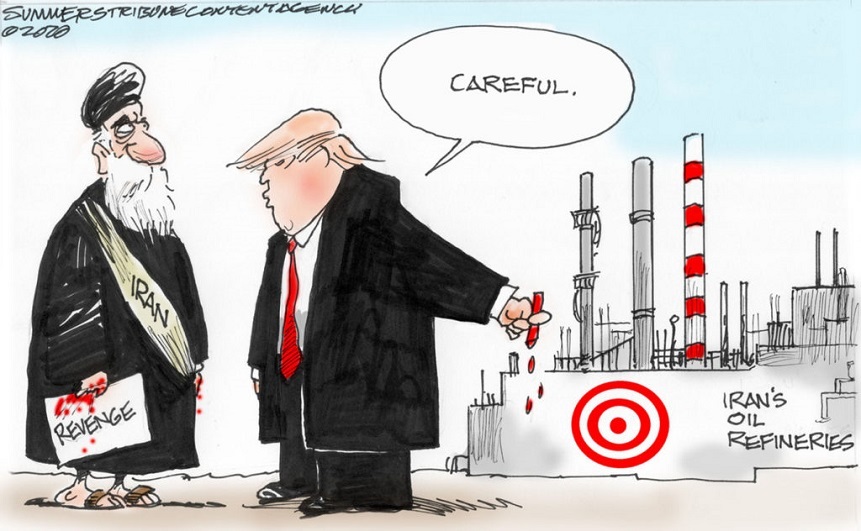
Some of these countries have also turned a blind eye for years to the Iranian regime’s genocidal agenda towards Israel and the Jewish diaspora, and have even been trying to continue to funnel billions of dollars into Iran in defiance of U.S. sanctions.
To put it bluntly, it might appear that while the west beats its collective breast over dead Jews, it is largely indifferent to the mortal threats currently posed to the living ones.
At the very least, it’s clear that all this Holocaust memorializing and education hasn’t put antisemitism back in its putrid box.
Indeed, such Jew-hatred is propagated most perversely among liberals, who constantly flaunt their anti-racist and anti-Nazi credentials.
Keep an eye out for Israel Derangement Syndrome
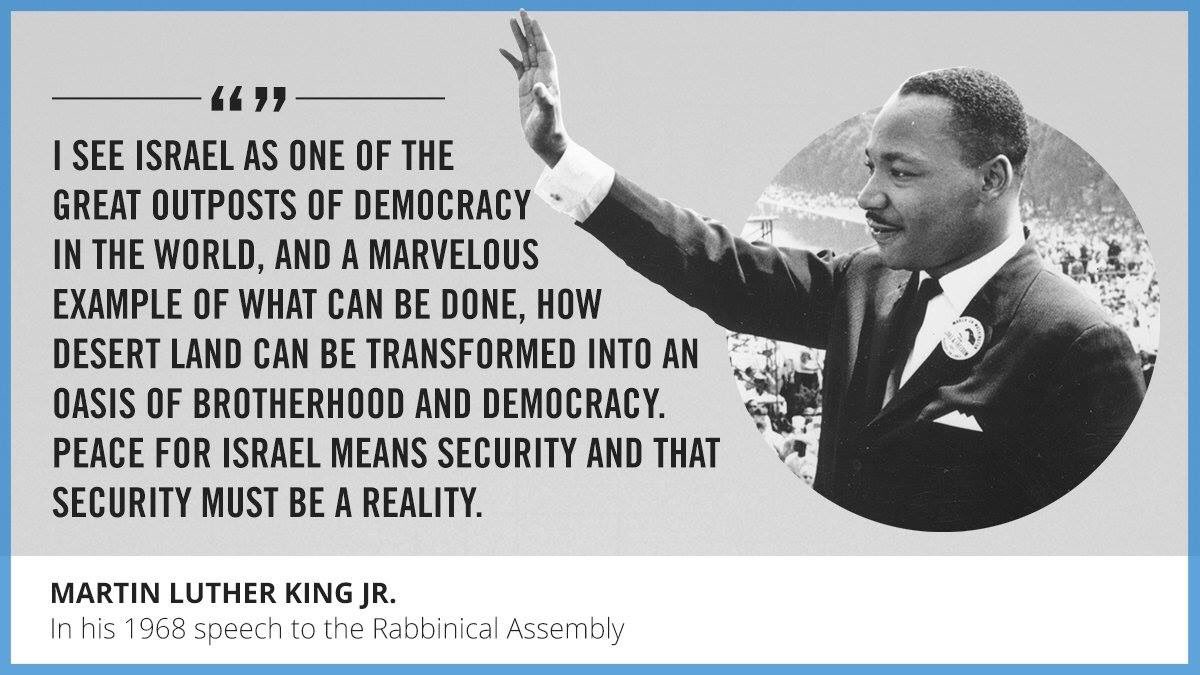
I am not a psychiatrist, but I’ve observed a kind of psychosis in far-left activists of the West who claim to be progressives championing the Palestinian cause: Israel Derangement Syndrome, or IDS.Martin Luther King on Peace, Israeli Security and Anti-Zionism
Sufferers of this insidious illness don’t rationally advocate for Palestinians and criticise Israeli policies, in the same way they’d criticise other states. They are doctrinaire cultists possessed of an unadulterated, unhinged hatred for Israel, which they see as a uniquely evil state that must be eradicated. Until then, it will be their all-consuming, defining cause; never mind the Uyghurs, Kurds or Iranian women. In indulging in the delusion that the end (of Israel) goal will eventually occur, they are complicit in perpetuating the conflict and emboldening the despotic regimes that act against the interests of the very people they purport to champion, the Palestinians.
Corbynism is the most recent prominent example of IDS. While we will no longer be bombarded with its leader’s sneering visage, the animosity towards Israel that its dogmatism exemplifies, replete with conspiracism and terrorist sympathising, is unlikely to fade. And it is rising across the Atlantic.
The hallmarks of this anti-Israeli posturing cult include such garb as ‘free Palestine’ t-shirts, keffiyehs, and snazzy accessories daubed with Palestinian flags. Their social media is flooded with memes and Electronic Intifada articles about evil Israel, and little else. They proudly quote token anti-Israel Jews like Noam Chomsky. In their special language ‘peace and justice’ is code for ‘end of Israel’ and ‘resistance’ is code for ‘terrorism’. And they think they’re clever, rhyming ‘resistance is justified’ with ‘apartheid’ and ‘genocide’ in their street mob chants.
The derangement that Israel is the root of all evil requires certain tropes and conspiracy theories — such as that Israel was behind 9/11 and Isis — to make sense of a world that is too complex, nuanced, uncertain and daunting, for their ideology to accommodate. But when, despite their best efforts, Israel can’t be blamed for the Palestinian plight, you will not hear a whimper from them. Not about the Palestinians living in Lebanon who are denied citizenship, excluded from social services and prohibited from owning property and entering over 20 professions. Nor that Palestinians are among the worst affected by the Syrian civil war and that their community in Yarmouk has been decimated. Nothing about the Gazans whose protests against Hamas are brutally suppressed, or LGBT groups, women’s organisations and journalists increasingly persecuted by the Palestinian Authority in the West Bank. They’ll excoriate Israel (never Egypt) for the blockade on the Gaza strip and the poverty of its people, but ignore the fact that, despite the blockade and poverty, Hamas spends tens of millions building sophisticated tunnels under Israel and firing thousands of rockets at it, instead of building hospitals. And when President Abbas recently announced that he won’t allow the building of a US-funded field hospital in Gaza, silence.
The Op-Ed also pointed out that King was clearly against against attacks on Zionists. Lewis wrote that “During an appearance at Harvard University shortly before his death, a student stood up and asked King to address himself to the issue of Zionism. The question was clearly hostile. King responded, ‘When people criticize Zionists they mean Jews, you are talking anti-Semitism.'” (This is not to be confused with a widely circulated hoax letter said to be written by King.)
Clarence B. Jones, a friend and advisor to King, likewise recalled King’s opposition to anti-Zionism. “I can say with absolute certainty that Martin abhorred anti-Semitism in all its forms, including anti-Zionism,” he explained in a 2008 Op-Ed. Jones elaborated on that point in What Would Martin Say?, a book he co-authored with Joel Engel. Mainstream reporters, he argues, have given a pass to anti-Semitism by black leaders like Al Sharpton because they buy the rationale that Israel’s existence is a provocation to Arabs. “Martin, for one, could see this coming after the Six-Day War in 1967, which is why he warned repeatedly that anti-Semitism would soon be disguised as anti-Zionism.”
While King would surely support better circumstances for both Israelis and Palestinians, it seems clear that he was unambiguously opposed to the Israel-bashing that counts as pro-Palestinian advocacy today. His strong statement about Israel’s right to exist suggests he recognized the centrality of this issue to the conflict. And judging by his views on anti-Zionism, he would be outraged by the idea that an avowed anti-Zionist like Omar Barghouti, who openly calls for replacing Israel with a state in which Jews will be a minority, pretends King would back boycott, divestment and sanctions against Israel.