


 Wednesday, March 10, 2021
 Elder of Ziyon
 cartoon of the day, humor
The Middle East is currently split among this Saudi bloc, Iran, and Turkey. Israel is not particularly at odds with Turkey but is irked by its support for Hamas, a Palestinian movement and militia. The Saudi bloc is perturbed by Turkey’s support for the political Islamists of the Muslim Brotherhood, which has local branches in the Gulf and, those countries’ leaders fear, enough potential popularity to subvert their monarchical rule. Israel is set to benefit from this rivalry too.Pinsker Centre: Ep. 4 - The ICC's Probe Into Israel - Credible or Credulous? - with Colonel Richard Kem?p?
“Israel’s policy focuses on degrading capabilities of radical enemy forces—starting from Iran to Hezbollah, Hamas and more,” said Koby Huberman, co-founder of an Israeli think tank working on regional cooperation. “In addition, Israel, together with other Arab states, aims to block the negative impact of the Muslim Brotherhood movements and forces, supported and funded by Turkey and Qatar.”
But while Netanyahu would love to sell Israel’s improving ties as his own achievement in the upcoming elections on March 23, the fourth in the last two years, there is a risk of too much cooperation, too soon, backfiring.
Bassam Barabandi, a former Syrian diplomat currently living in exile in the United States, said while Arabs are happy to see Israel take on Iran, they still see Israel as an enemy state that stole their land. Ahmad is a dentist in Damascus, Syria and from an area that witnessed the worst of the coronavirus. Speaking to Foreign Policy on the condition of anonymity, he said he did not think much of Israeli largesse in purchasing Sputnik V, Russia’s coronavirus vaccine, for Syrians. “First Russians bomb, and now they give us vaccines. Who is going to trust them?” he asked rhetorically. “Israel is bombing Syria too, but the regime says nothing to them. This is all their deal-making. People can see through it. In fact, the vaccines must be coming for regime officials.”
Other Israeli analysts said they worried Israel may lose its leverage in the Gulf under Biden’s presidency. For decades, Arab nations have eased ties with Israel to seek U.S. pardons for their excesses at home. But as Israel itself is under the Biden scanner now, it can hardly put in a word for them.
Israel hopes to present itself as a soft power in the region, a worthy but unobtainable goal as long as it continues annexing Palestinian lands. Within the Israeli expert community too, some of the government’s policies are criticized, especially when they entail aiding the suppression of dissent in Arab nations. Elizabeth Tsurkov, a fellow at the Newlines Institute for Strategy and Policy, said Arab companies will be hesitant of purchasing Israeli products mainly because they would not want to “alienate customers.” She said business cooperation thus far has been in surveillance technologies, which might grow but at a cost. “It will further increase the repressive capabilities” of Gulf nations, Tsurkov said, “and their ability to track dissidents and surveil their private communications. Therefore, Israeli-Gulf cooperation will likely be quite detrimental to political freedoms.”
Bar said he is quite certain his company’s services were not misused to crush dissent in Saudi Arabia. However, he would be more comfortable conducting business with a country like Sweden.
Despite the challenges, Israel’s relationship with the Saudi and Emirati bloc seems to be on the up and up. And as they present a united front against Iran, Biden’s attempt to rejoin the nuclear deal will only become harder.
Colonel Richard Kemp is a distinguished retired British Army Officer. His experience includes commanding troops during Operation Fingal in Afghanistan, before going on to work in the Joint Intelligence Committee and Cabinet Office Briefing Rooms (commonly referred to as COBRA).Netanyahu heading to UAE to meet crown prince
Today, he sits down with Daniel Sacks, a Pinsker Centre Policy Fellow, to discuss the legitimacy of the International Criminal Court's probe into Israeli activity.
Prime Minister Benjamin Netanyahu plans to fly to the United Arab Emirates on Thursday, for the first time since its normalization agreement with Israel last year.
Netanyahu is expected to meet with Crown Prince of Abu Dhabi Mohammed bin Zayed.
The trip is set to take place less than two weeks before the March 23 election, despite reports that officials in the UAE were hesitant to host Netanyahu at a date that would be viewed as political.
A well-connected source in Abu Dhabi confirmed that the election was a consideration, but the UAE decided to welcome Netanyahu regardless of the date.
The prime minister is expected to take a private plane to Abu Dhabi and conduct meetings in the airport.
The plan is for a quick jaunt to Abu Dhabi, the UAE’s capital, for several hours. Netanyahu would leave Thursday morning and arrive back in Jerusalem in time for a 6 p.m. meeting with the prime ministers of Hungary and the Czech Republic.
Netanyahu canceled three planned visits to the UAE in the past, due to COVID-19 lockdowns and restrictions, as well as political developments. He had originally planned a trip of several days, with stops in Dubai and Bahrain, as well.
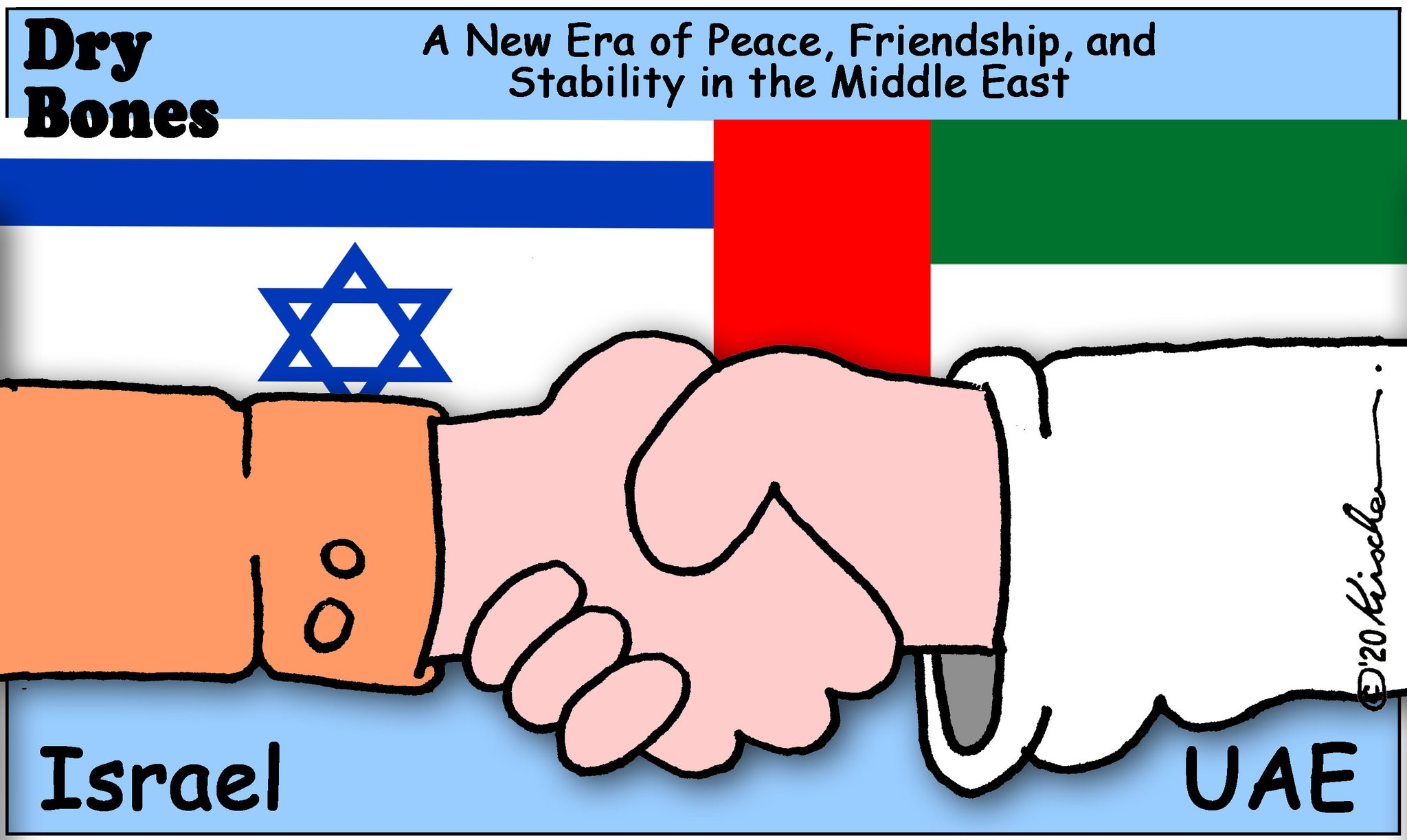
How petty, how vindictive from the #Palestinian Authority! This after #UAE continues to provide them aid and support at UN. And why? Simply because they chose to also normalize relations with #Israel.
— Arsen Ostrovsky (@Ostrov_A) March 10, 2021
Kids, be like UAE. Not PA. https://t.co/KZFBpM5goR
Wednesday, March 10, 2021Elder of Ziyon Wednesday, March 10, 2021Elder of Ziyon
Stevie Wonder, Born in Michigan, 1950, a world-renowned singer, songwriter, instrumentalist, record producer -and an outstanding ambassador for peace. Stevie Wonder’s music draws its inspiration from rhythm and blues, jazz, soul, and funk, but its core is welded deeply into the rich culture of the black community throughout the history of the United States and its roots in Africa. Stevie Wonder’s beautiful and soulful lyrics reflect a wide variety of relevant topics, from deep personal thoughts and emotions up to social and political issues that deal with discrimination, racism, poverty and cultural expression within society as such they continue to be extremely relevant up to this day While the music contribution of Stevie Wonder has shaped popular music worldwide since the 1960s, with dozens of records and numerous unforgettable songs, his ongoing commitment to support social struggles in the interest of mankind and his activism for peace.... Wonder has left strong, lasting marks as a humanitarian, philanthropist and civil rights activist, as he has used his success and fame to affect people and make the world a better place.
We ask you to please consider what you’ll be sanctioning if you accept this: the occupation and suppression of the Palestinian people; their infinitely renewable incarceration without charge or trial in Israeli jails; the illegal collective punishment Palestinians suffer on a daily basis throughout Occupied Palestine; the denial of Palestinians’ right to return to their homeland – stolen and colonized in 1948; and ongoing practices of apartheid–including Israel’s refusal to vaccinate the Palestinian population under its military occupation for COVID while administering the vaccine to Jewish citizens.
.@steviewonder, with respect, you turned down Haim Saban’s IDF fundraiser in 2012. Please turn down Israel’s @WolfPrize_ in 2021.
— Roger Waters (@rogerwaters) March 9, 2021
Love
R.https://t.co/VXS3pWP2X9 pic.twitter.com/KTeFk5ePck
 Wednesday, March 10, 2021Elder of Ziyon
The Egyptian parliament recently commended the Ministry of Education on approving a new school subject: common values. The course examines religious values and verses that have the same meaning in the three Abrahamic religions — Judaism, Christianity and Islam — in a move that will allow Egyptian students to study verses from the Jewish religion for the first time ever.Kamal Amer, the head of the parliamentary defense and national security committee, said in parliament Feb. 26, “The Ministry of Education’s approval of the subject of religious values shared between the divine religions expresses the state’s keenness to spread the values of tolerance and fraternity.”The three religions “include common values that students must study to be able to confront the extremist and takfirist ideas that backward groups are working to spread in society,” Amer said, adding, “President Abdel Fattah al-Sisi is keen to teach the youth the values of respect for others, tolerance and rejection of fanaticism and extremism. This is why the Ministry of Education decided to teach the subject of common values in schools.”On Feb. 14, the Ministry of Education approved the parliament’s proposal on the subject of common values between all the Abrahamic religions and the principles of tolerance, citizenship and coexistence.Deputy Minister of Education Reda Hegazy said during his Feb. 14 meeting with the defense and national security committee, “Due to its importance, the subject will be factored into students' GPA,” even though religious classes are not counted.
Farid el-Bayadi, a member of the defense and national security committee and author of the proposal, also called for the removal of Islamic religious texts from a number of subjects such as Arabic.He told parliament on Feb. 14, “Including religious texts in subjects such as Arabic, history and geography is too dangerous.”“Teaching religious texts through subjects not related to religion leads teachers to interpret such texts in extremist and subversive ways and studies have established a link between this issue and the spread of extremist ideas,” he added.
The treatment of Jews is useful for illustrating the sheer darkness of the woke hegemony on campus pinpointed in the report. Professor David Miller, a sociologist at the University of Bristol, recently accused the Bristol University Jewish Society and the Union of Jewish Students of being “directed by the State of Israel”. Prof Miller seemed unable to muster any scholarly subtlety, baldly stating that Zionists and their acolytes “impose their will all over the world” and run a “campaign of censorship” and “political surveillance” in support of a devilish ideology (Zionism) that “has no place in any society”.A Möbius Strip of Hate
Last year he told The Sunday Telegraph “I don’t teach conspiracy theories of any sort”, adding that it is “simply a matter of fact” that “parts of the Zionist movement are involved in funding Islamophobia”.
A few weeks earlier, at Leeds University, barely a ripple was caused when Ray Bush, professor of African studies, was found to have tweeted: “Does it take a Nazi to recognise a Nazi #nazi #israel #racism?” and “#nazi-zionistalliance #zionism #settlercolonialism hold onto power whoever you align with.” Comparing Israelis to Nazis, which these tweets appear to do, is extreme anti-Semitism. It is also apparently considered more than fair play in the pantheon of woke ideas.
Prof Miller was hired after allegedly making a number of anti-Semitic comments and continues to be employed at Bristol. There has been little outrage: indeed, 13 colleagues have signed a letter in support of him. Meanwhile, Prof Bush is still merrily professing away, too. Leeds University has said it is examining his social media posts and had received a complaint from its Jewish Society. Prof Bush has denied accusations of anti-Semitism, adding that his “retweets are mostly taken from commentators within Israel”.
Meanwhile, violent incidents against Jewish students on campuses in Europe, the UK and America are soaring.
Much, then, is wrong, from the most fiddling of cancellations to the highest of moral trespasses. The only way to fix this is to combat noxious ideas with better ideas. As the report concludes, the barriers to ideological change on campus are “massive”. Still, at least we are beginning to have a picture of the extent of the problem and, with it, the rather daunting challenge of reversing it.
The new radicals — the most vociferous of whom were rich children from big cities — were bound together by three animating forces: antiracism, anti-Semitism and opposition to any debate about the new radicalism, which was reflected in their hostility to free expression. These three threads were not arbitrary. They were woven together, and the one could not be disentangled from the others. They comprised a Möbius strip of hate.Jew-Hatred's Many Strains
The antiracism, to those who hadn’t succumbed to the newspeak, was racism. A belief in the genetic wrongness of white people. The radicals didn’t put it this way. They Christianized their hate. They turned whiteness into original sin, and they cordoned themselves off from accusations of hate by redefining it — by arguing one could only hate from the top-down: the powerful could be racist; the not-powerful could not be. Black antiracists were simply “calling out” white people’s oppression of them. White antiracists were repenting.
The anti-Semitism was the apotheosis of the antiracism. It cloaked itself, as it must these days, in anti-Zionism, and it was remarkable because, at first blush, it struck one as so off-topic. What did Israel have to do with George Floyd or equity or “white supremacy”? But it wasn’t off-topic. It was the logical outgrowth of a long and inextinguishable hate. In times past, of course, gentiles were free to wage war against Jews. But, with the dawn of the modern, in the 17th century, and with the blossoming of Enlightenment, in the 18th century, that sort of overt Jew-hate became unpalatable — forcing a shift, in the late 19th century, from religion to race. The problem with the Jews was not the God they prayed to or any of their depraved rituals. (Long gone were the days of accusing Hebrews of making matzoh out of the blood of Christian children.) The problem with the Jews was biological, which was a very modern way of looking at things. #IFuckingLoveScience! One’s anti-Semitism, understood racially, or scientifically, was not really anti-Semitism. It was not a chosen hatred. It was the lamentable discovery that these people, these poor, pale, shtetl-ized quasi-humans with their backward, inscrutable traditions, were not fully human. They were of a lesser race, and — sadly — there was nothing that could be done about that. But then — dammit — Zyklon-B, and it was no longer so easy to racialize Jews. How Nazi-ish. For a couple of years, the non-Jewish world (sort of) admired the Jews. When they were wandering and emaciated. But then — what’s this? — Israel, which was founded in 1947 and has morphed into the rationalization for the new anti-Semitism. Today, a good progressive doesn’t hate Jews qua Jews or racial inferiors but colonizers of black people. Exponents of a latter-day apartheid. This Jew is just a reified version of the white-nationalist version of the Jew: Instead of imposing his will clandestinely, in the fashion of the Elders of Zion, he oppresses openly, in an IDF uniform, with his automatic rifle pointed at the head of a Palestinian. He is all-powerful, but instead of his power standing in opposition to whiteness, as the white nationalist understands things, it embodies whiteness. Viewed through the lens of the new radicalism, anti-Semitism is really anti-colonialism, and anti-colonialism is really antiracism in its most distilled form. Which means it cannot be anti-Semitic, and if you say it is, you’re anti-antiracist. Which is the worst thing anyone can be.
While the Catholic Church has come a long way in creating amity with Jews, the same cannot be said about some of the current mainline Protestant churches. Christianity Today (September 1, 2004) carried a story headline: Are Mainline Churches Anti-Semitic? In this story, Diane Knippers, President of the Institute on Religion and Democracy (IRD) answered: “An extreme focus on Israel, while ignoring major human rights violators, seriously distorts the churches’ message on universal human rights. We cannot find a rational explanation for the imbalance. We are forced to ask: Is there an anti-Jewish animus, conscious or unconscious, that drives this drumbeat against the world’s only Jewish State?”
The emphasis on secular “social justice” by some of these mainline churches led to BDS (Boycott, Divestment, and Sanctions against Israel) campaigns in the Presbyterian Church USA (PCUSA), the Evangelical Lutheran Church, etc. They are driven by former missionaries to the Muslim world who then returned to the denominational headquarters with a pro-Palestinian and an anti-Israel bias that evolved into antisemitism in the guise of anti-Zionism. That is not to say that the people in the pews necessarily support such campaigns.
This latest anti-Semitic strain is anti-Zionism or anti-Israelism, and it is a subterfuge for aiming at Israeli Jews and ultimately at Jews in general. This variant is found in the BDS movement, co-founded by Omar Barghouti (pictured above), who declared that the “BDS aim is to turn Israel into a pariah.” He and the BDS movement, single out Israel among the nations for academic and cultural boycotts. Born in Qatar, Barghouti lived in Egypt, and received his MA degree at Tel Aviv University!… Former Soviet Refusenik, and human rights activist, Nathan Sharansky, adopted the 3D Test in order to distinguish legitimate criticism of Israel from antisemitism. The 3D stands for Delegitimization of Israel, Demonization of Israel, and subjecting Israel to a Double Standard. The BDS movement and some of the mainline Protestant churches meet all of the above criteria.
The collective bias against Jews, at times violent, sometimes verbal, and appearing in multiple forms, has resulted in record high anti-Semitic incidents particularly in Europe, and recently in the US. It is time for decent society to face the fact: silence and inaction is consent.
 Tuesday, March 09, 2021Elder of Ziyoncartoon of the day, humorTuesday, March 09, 2021Elder of Ziyonanalysis, Daled Amos
When did the breakthrough that paved the way to the accords take place? According to Pompeo, it was at a summit in Warsaw, Poland, in 2019 at which Prime Minister Benjamin Netanyahu sat down with foreign ministers of the Gulf states, which he called a "historic moment."
The announced goal of the 2019 Warsaw Conference was to build a coalition against Iran. However, because of the pushback from other countries, the US was forced to backtrack and seek more modest goals, along the lines of brainstorming ideas for the Middle East.
In that sense, the conference was a failure for the US -- and that is what many journalists focused on.
But not all.
Writing for the Times of Israel, Raphael Ahren described how In Warsaw, Pence hails sight of Netanyahu ‘breaking bread’ with Arab leaders:
US Vice President Mike Pence on Wednesday hailed the symbolic importance of Prime Minister Benjamin Netanyahu “breaking bread” with Arab leaders at a Mideast conference in Warsaw, saying he hoped it heralded further cooperation to come.
Ahren reports up front that the original focus of the 2-day conference was supposed to be on Iran and that its goal was watered down to a discussion of regional stability in the Middle East. But that did not stop Pompeo from making a statement that in retrospect seems almost prescient, and backs up his claim that the conference was intended for more than just standing up to Iran:
Tonight I believe we are beginning a new era, with Prime Minister Netanyahu from the State of Israel, with leaders from Bahrain, Saudi Arabia, and the UAE, all breaking bread together, and later in this conference sharing honest perspectives on the challenges facing the area.
Here were leaders from both Israel and the Arab world together at the same conference -- something that last happened at the Madrid peace conference in 1991, which in that case culminated in the Oslo Accords.
Netanyahu was dropping hints as well. At the conference, he connected again
with Omani Foreign Minister Yusuf bin Alawi bin Abdullah, with whom Netanyahu
met 4 months earlier during a visit to Oman in November:
Netanyahu said many Arab countries were following Oman’s lead in moving toward more open interaction with Israel, “including at this conference.”
Israel Hayom also emphasized the conference's potential for Arab-Israeli peace
and
reported on a leaked video of one of the meetings:
The Prime Minister's Office released a 25-minute video of the closed meeting, in which senior Gulf Arab officials played down the Israeli-Palestinian conflict, defended Israel's right to defend itself, and described Iran as the greatest threat to regional peace.And it wasn't just the Israeli media that noticed what was happening at the conference.
The video, bearing the insignia of the Prime Minister's Office, was recorded on a mobile device and it was not clear who took it. Netanyahu's office briefly made the YouTube video available to a small group of journalists traveling with him before quickly removing it.
That joke — an endorsement of the alarm sounded by Saudi Arabia, the United Arab Emirates, and Bahrain — all but vindicated the Warsaw conference on Middle East peace in the minds of U.S. organizers...Netanyahu’s remarks — and the nearly unprecedented public meetings he's held in Warsaw with Arab leaders — offset the frigidity of diplomats from major European powers, who declined to applaud the Arab triumvirate’s broadside against Iran.Now contrast those accounts of the conference with the Washington Post, which confidently featured the headline, Pompeo won’t find a future for Middle East peace in Warsaw and mentioned Netanyahu only once in passing that
Israeli Prime Minister Benjamin Netanyahu, meanwhile, announced a meeting with Arab leaders in Warsaw that would seek to “advance the common interest of combating Iran.”
Ironically, the Washington Post chose this article to feature an ad bragging about their journalistic expertise:

Still, togetherness had its limits. The Arab leaders who attended were hesitant to appear on the stage at the same time as Mr. Netanyahu; they kept their distance, lest images from the conference, which was closed, circulated back in Arab capitals.
...Officials from Bahrain, Qatar, Saudi Arabia and the United Arab Emirates sat at a table on one side of the room, while officials including Mr. Kushner, Mr. Pompeo, Mr. Netanyahu and Abdul Malik al-Mekhlafi, the Yemeni foreign minister, sat on the other. [emphasis added]
Two weeks ago, six far-left groups sent an inaccurate and deceitful letter to the Biden administration that urged the reversal of the Trump administration's labeling requirements for goods exported from Judea and Samaria (the West Bank) and Gaza Strip into the United States. Their effort is not surprising, given their long record of vilifying and delegitimizing Israel and their support for the discriminatory Boycott, Divestment and Sanctions (BDS) campaign against Jewish communities in Judea and Samaria. But there is absolutely no legitimate basis to reverse the Trump administration's decision, which is consistent with long-standing U.S. policy and practice, as well as prior agreements and the reality on the ground.CAMERA Op-Ed In POLITICO, Peace Processors Offer Bad Advice
The Trump administration's Notice issued on December 23, 2020 requires goods produced where Israel continues to exercise relevant authorities and administrative control under the Oslo Accords and Hebron Protocol in Area C and H2 of the West Bank be labeled as "Product of Israel" or similar markings. Goods produced where the Palestinian Authority (PA) continues to have civilian oversight in Areas A and B, along with H1 of the West Bank, must be labeled as "West Bank" or similar markings. Goods from the Gaza Strip have to be marked as "Gaza Strip" or similar markings. It is no longer permitted for goods from any of these geographic areas to be labeled as "West Bank and Gaza" or similar markings.
The central argument in the groups' letter is that the Trump administration's decision "marks a significant change from longstanding U.S. Customs guidance maintained under both Democratic and Republican administrations, which prohibits products from anywhere in the West Bank—whether from settlements or Palestinian areas—from being labeled as made in Israel." Their letter further states that "[t]he pre-Trump guidance was first promulgated in 1995 following the Oslo Accords." Both these claims are untrue. Indeed, these groups conveniently excluded from their letter the 1995 Notice text described prior to the Oslo Accords: "Customs required that the word 'Israel' must appear in the marking designation" for all goods exported from the West Bank or Gaza Strip.
The 1995 Notice changed the labeling requirements only after the Oslo Accords. Goods from the West Bank or Gaza Strip had to be marked as "West Bank," "Gaza" or "Gaza Strip," and could no longer use the word "Israel" or similar markings. The 1997 Notice then stated that the West Bank and Gaza should be considered one territory, thus permitting the label "West Bank and Gaza" or similar markings. Both the 1995 and 1997 Notices were reaffirmed by the Obama administration in 2016.
But there were three main problems with the 1995 and 1997 Notices.
Writing in POLITICO Magazine, Aaron David Miller and Richard Sokolsky proclaim that “elections have consequences” and herald that new U.S. President Joe Biden “will end the Trump sugar high for Israel and Saudi Arabia.”Jonathan Tobin: Will Biden’s moves bring the Saudis closer to Israel?
Both Miller and Sokolsky have decades of public service to their credit, serving in Republican and Democratic administrations alike. Their years of service should be commended. But both, regrettably, have failed to learn either from their experience or from recent events.
First, Miller and Sokolsky assert that Israeli premier Benjamin Netanyahu and Saudi Crown Prince Mohammed bin Salman have the “two biggest egos” in the Middle East. While certainly subjective—and prime ministers and princes are not usually known for their humility—this claim omits the dictatorship in Tehran, where both the power and likeness of Iran’s self-styled “Supreme Leader,” Ayatollah Ali Khamenei, are omnipresent.
It is unsurprising that the two analysts omitted Khamenei. The rest of their op-ed reveals an inability to recognize the strategic challenges that confront the United States in the Middle East.
Iran is the main threat plaguing the U.S. in the region. Long listed as a chief state sponsor of terrorism, the Islamic Republic has, in recent years alone, plotted to blow up a restaurant in Washington D.C., murdered U.S. servicemembers in Iraq and Afghanistan, planned attacks at major U.S. airports and power grids, and sheltered and supplied both Al-Qaeda and Al-Qaeda in Iraq, the progenitor of the Islamic State in Iraq and Syria (ISIS). Tehran has also acted as arguably the greatest imperialist power in the world, with its proxies seizing power in Yemen, Iraq, Lebanon and, to a different extent, Syria.
What can the Saudis and other Arab states do to protect their interests in the face of America abandoning them?Saudi Shocker Temple Mount is Jewish, Muslims Should Pray Toward Mecca
As some sources told JNS, the breach with the Americans could draw the Saudis and other Arab states closer to Israel. Indeed, a desire to make things right with the Americans might impel Riyadh to break down and recognize Israel itself, rather than persist with the current status in which the two countries are actively allied but do so without formal recognition.
It’s far from clear that’s the most likely outcome.
As much as MBS and the Saudis value their relationship with Israel and regard it now as essential to their security, there is a big difference between them and the other Arab countries. The Saudi royal family sees its legitimacy as rooted in its status as the guardian of Islamic holy places in Mecca and Medina. Recognizing the Jewish state makes sense from a realpolitik perspective, but not from a religious one since such a move would render the Saudis even more vulnerable to attacks from Islamist critics.
There’s also the possibility that Washington won’t merely punish the Saudis but actively pressure them and the other Gulf states to make their peace with Iran. Indeed, muscling them into bowing to American demands may be a much higher priority for the administration than strong-arming Israel into making concessions to a Palestinian Authority that even Washington’s most ardent two-state solution advocates know won’t make peace.
While it’s hard to imagine such a turn of events right now, stranger things have happened in the history of the Middle East.
Downgrading relations with the Saudis might bring them even closer to Israel and further solidify an Israel-Arab alliance against Iran that could be powerful enough to deter Iranian aggression and transcend Washington’s feckless efforts to appease Tehran.
But if the Biden administration, despite its claims of support for the Abraham Accords, decides that it wants to actively trash them so as to assist its agenda of making nice with Iran or try to bring the dead-in-the-water peace process with the Palestinians back to life, it’s not inconceivable that they could wind up sabotaging the greatest advance towards Middle East peace in decades.
Seen from that perspective, Biden’s swipe at the Saudis isn’t so much a blow struck for human rights as possibly a devastating defeat for the cause of genuine peace between Jews and Arabs.
Saudi Twitter users have recently been pushing a new line of thought that plays up the importance of Muslims praying towards the holy city of Mecca in Saudi Arabia, while downplaying the importance of the Al Aqsa mosque in Jerusalem, Israel National News(INN) reported Sunday.
The controversial campaign appears to be designed to push the message emphasizing the importance of the Saudi cities of Mecca and Medina as the holy places of Islam, and to eliminate the importance of Jerusalem and the Temple Mount for Muslims, thereby decreasing any Islamic authority the Palestinians have over the site.
One of the messages reportedly comes from well-known Saudi cartoonist Fahd al-Jabiri, who tweeted that “the direction of the prayers of the Jews is not important to us, what is important to us is only our homeland.”
Another English-language tweet is by a Moroccan user named Ibtissam Zegiga whose profile says he studies Hebrew and wants peace, and calls on “dear brothers and sisters” to join in the movement.
“This recent Saudi twitter movement believes that there is no importance of the temple mount to Muslims, and the waiting for the [Jewish] third temple. A new era, one of peace.”
According to the report, the Saudi campaign is in response to the Palestinian insults online and chants against the Kingdom of Saudi Arabia heard at at demonstrations at the Temple Mount after prayers on Fridays. The Saudis have quietly supported the recent Abraham Accords the established peace between four Arab countries and Israel, and that has infuriated the Palestinians.
The reaction of the Saudis is to emphasize that the Al-Aqsa in Jerusalem is simply a mosque like all mosques, but the direction of prayer for all Muslims no matter where they are on the planet is only towards to the city of Mecca in Saudi Arabia.
One tweet from the account Saudi Arabia In Numbers said Muslims were not religiously obligated to help the Palestinians by fighting for Jerusalem, where the Palestinians constantly emphasize that the Al Aqsa mosque is the “third holiest site in Islam.”
 Tuesday, March 09, 2021Elder of Ziyon
An international conference was launched, Saturday, in solidarity with the Palestinian leader, Raed Salah, who is detained in Israeli prisons, with the aim of coming up with a document declaring him a "global humanitarian symbol."The Forum for Thought and Strategic Studies (a non-governmental organization based in Istanbul) and the Global Coalition for Support of Jerusalem and Palestine sponsor the "International Conference of Solidarity with Raed Salah", in sessions that started Saturday on Zoom and will continue for 3 days.Among the most prominent participants in the international conference, whose proceedings are translated into 5 languages, are the former Prime Minister of Malaysia, Mahathir Muhammad, the advisor to the President of the Turkish Justice and Development Party Yassin Aktay, the former Bahraini parliamentarian, Nasser Al-Fadhala, and the preacher of the Al-Aqsa Mosque, Ikrimah Sabri.During the opening session, President of the Forum, Bassam Dwaihi, said: "Today, an elite group of opinion, intellectual and diplomatic leaders are meeting to address a global figure, including the character of Salah with great qualities abounding in the struggle against the occupation."He pointed out that "the conference includes many sessions to confirm Salah's achievements at all levels, the most important of which are humanitarian, civil and social work, and defending the rights of Palestinians and Islamic and Christian sanctities, and come up with a document aimed at adopting him as a global symbol."
Tuesday, March 09, 2021Elder of Ziyon
Domestic violence soared during the lockdown period. Official statistics conducted by the Ministry of Women Affairs indicate that domestic violence significantly increased during the lockdown imposed by the Palestinian government. However, mental violence was the most documented, which reached 55% of the total number of reported cases of violence against women. In addition to economic violence (53%), social violence (27%), verbal violence (24%), and physical violence, that increased during Covid-19 pandemic.Surveys have indicated that 88% of women with disabilities were subjected to various kinds of gender-based violence, such as economic, social, physical, mental, and verbal violence. 47% of women sought protection during the pandemic. [This may be a typo or mistranslation, it seems inconceivable that nearly half of all women sought protection! -EoZ]During 2020, PCHR documented the killing of five women in the oPt on grounds of gender-based violence; 3 in the West Bank and 2 in the Gaza Strip.
Tuesday, March 09, 2021Elder of Ziyon
There is no ongoing persecution of the Jews anywhere in the world now. In fact, there was no Arab hostility to Judaism when ships loaded with Jewish refugees were unloaded on the shores of Palestine during World War II, but rather sympathy and hospitality from Palestinians and Arabs, until the purpose of bringing them became clear. Until then, there is no Palestinian or Arab discrimination mentioned against Jews or Judaism.
There are no longer any demands that have political support for the deportation of these people from all of Palestine.
All the descriptions of the old and new ethnic and historical rights and grievances in describing the Jews presented through IHRA apply more precisely to the Palestinians as a people that has been displaced from their historical land and even exterminated, which is still continuing.
Buy EoZ's books!
PROTOCOLS: EXPOSING MODERN ANTISEMITISM


