Monday, April 19, 2021

From Ian:
France's Macron calls for change in law following Sarah Halimi ruling

Martin Sherman: When did Palestine become Palestine?
France's Macron calls for change in law following Sarah Halimi ruling
French President Emmanuel Macron has called for a change in the law after the highest French court of appeals last week ruled the murderer of Sarah Halimi could not be held criminally accountable for his actions since he took cannabis before he committed the crime.
“Deciding to take drugs and then ‘becoming mad’ should not in my eyes remove your criminal responsibility,” Macron told Le Figaro in an interview published Sunday.
“On this topic, I would like the minister of justice to submit a change to the law as soon as possible,” he said.
“It is not for me to comment on a court decision, but I would like to tell the family, relatives of the victim and all fellow citizens of the Jewish faith who were awaiting this trial of my warm support and the determination of the Republic to protect them,” Macron said.
The French Jewish community was angered by the Court of Cassation’s ruling.
In April 2017, Kobili Traoré, a 27-year-old Muslim man, beat Halimi, his 65-year-old Jewish neighbor, while screaming “Allahu Akhbar” and antisemitic slogans before throwing her out of the window of her third-floor apartment.
A lower court ruled in December 2019 that Traore was not criminally responsible for his actions since his heavy intake of cannabis had compromised his “discernment,” or consciousness.
When it comes to Jews, everyone always has their excuses Kenneth.
— David Collier (@mishtal) April 19, 2021
For example - if this exact same thing had happened in Israel - you wouldn't call it antisemitism either.
In fact, you probably wouldn't mention it at all.
Martin Sherman: When did Palestine become Palestine?
With Joe Biden in the White House, the question of Palestinian statehood is now back on the international agenda, after being largely sidelined under the Trump administration.At NY Times, Myth of Edward Said’s Jerusalem Home Is Tenacious
For decades, the discourse on the “Palestinian issue” has been dominated by the Palestinian-Arabs contention that Judea and Samaria (a.k.a. “The West Bank”) has long been their ancient homeland.
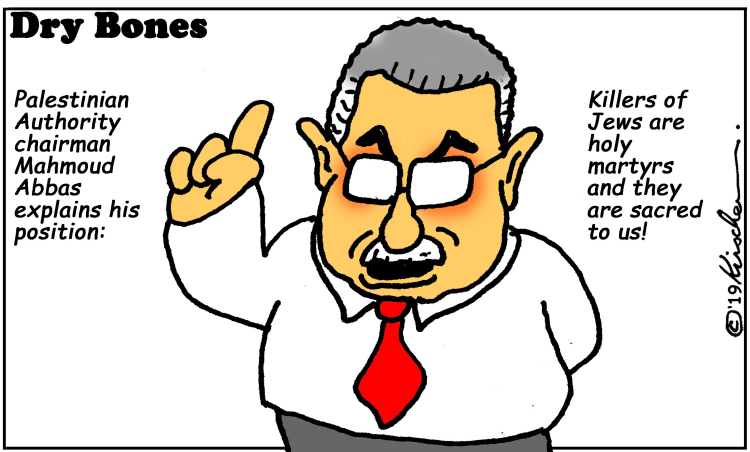
Preaching Genocide
However, many would probably be interested—and certainly very surprised—to learn just when realization dawned on the Palestinian-Arabs that this territory supposedly comprised their yearned-for motherland.
Indeed, long before Israel held a square inch of “the West Bank”—before there was any “occupation” or “settlements”—the Arabs claimed all the territory of pre-1967 Israel i.e. within the Green Line—as “Palestinian” territory and threatened to reclaim it by force of arms, and annihilate all its Jewish inhabitants.
Thus, in March 1965, over two years prior to the 1967 Six-Day War—after which the “West Bank” came under Israeli administration—Egyptian President, Gamal Abdul Nasser threatened, with chilling genocidal malevolence: "We shall not enter Palestine with its soil covered in sand, we shall enter it with its soil saturated in blood".
No less blood-curdling were the words of Yassir Arafat’s predecessor as head of the Palestine Liberation Organization (PLO), Ahmed Shukeiry, who on the very eve of the Six-Day War—in a somewhat premature flush of triumph—crowed:
“D Day is approaching. The Arabs have waited 19 years for this and will not flinch from the war of liberation…This is a fight for the homeland – it is either us or the Israelis. There is no middle road. The Jews of Palestine will have to leave.[but] is my impression that none of them will survive...We shall destroy Israel and its inhabitants and as for the survivors — if there are any — the boats are ready to deport them.”
“…Jordanians & Palestinians are considered … one people."
Significantly, the first version of the Palestinian National Covenant was formulated three years before the Six-Day War—in May 1964—in East Jerusalem (then under Jordanian control).
In it, the Palestinian-Arabs explicitly foreswear any sovereign claim to the “West Bank” (or to Gaza):
A book review in The New York Times’ print edition yesterday (“The provocative polymath,” page BR17, and online here) repeats an error about Edward Said’s childhood that The New York Times twice previously corrected, most recently on March 25.
Ayten Tartici errs, writing about Said:
At the time [1986], he had not been back to the place of his birth, what was then Mandatory Palestine, since fleeing in December 1947 at the age of 12.
While Said was born in Jerusalem in 1935, his family left for Cairo at a very young age, and that is where he spent his childhood — not in Mandatory Palestine. He did not “flee” Palestine, a falsehood about his life story that he told “as an allegory of the Palestinian people,” as the late scholar Justus Weiner, who uncovered the truth about Said’s biography, said.
As the March 25, 2021 Times correction, about a separate Times review of Timothy Brennan’s book about Said (“Places of Mind: A Life of Edward Said”), states:
An earlier version of this review misidentified the city that was Edward Said’s childhood home and misstated details about Jerusalem’s division into Jewish and Arab areas. Although Said was born in Jerusalem, his family’s home was Cairo; they did not move from Jerusalem. Jerusalem was not partitioned into Jewish and Arab halves in 1947. In 1949, control of the city was divided as part of an armistice.
When the digital article was amended March 25, the false claim that “Said’s family moved to Cairo in 1947 after the United Nations divided Jerusalem into Jewish and Arab halves” was replaced with accurate information: “Said grew up in Cairo.”
Previously, on Oct. 1, 2003,The Times published the following correction regarding Said’s obituary:
An obituary on Friday about Edward W. Said, the Columbia University literary scholar and advocate of a Palestinian state, misidentified the city that was his childhood home and misstated the date of Jerusalem’s partition into Jewish and Arab areas. Although Mr. Said was born in Jerusalem, in 1935, his family’s home was Cairo; they did not move from Jerusalem. Jerusalem was partitioned in 1949, not 1947.
According to British Mandate records, Said’s parents neither owned nor rented the Jerusalem dwelling that he at times falsely portrayed as his childhood home.
An Islamist is left speechless after a Zionist educates him about Jewish refugees from the Arab world. pic.twitter.com/txUkvL9MSw
— Israel Advocacy Movement (@israel_advocacy) April 18, 2021