Thursday, November 11, 2021

From Ian:
FDD: Gaza Conflict 2021: Hamas, Israel and Eleven Days of War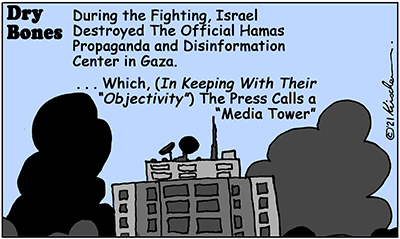
Dennis Ross: As America Retrenches, Israel Becomes an Increasingly Valued Partner
FDD: Gaza Conflict 2021: Hamas, Israel and Eleven Days of War
The May 2021 conflict between Israel and the terrorist group Hamas generated headlines around the world. However, much of the reporting ignored the history, funding, political dynamics, and other key components of the story. Hamas initiates conflict every few years. But the reporting rarely improves. Social media has only further clouded the picture. Hamas is rarely held responsible for its use of “human shields,” blindly firing rockets at civilian areas in Israel, or diverting aid that should benefit the people of Gaza.New book takes a deep look into Operation Guardian of The Walls: interview
The Islamic Republic of Iran, a state sponsor of terrorism, has been the primary patron of Hamas since the group’s inception in the late 1980s. Hamas has received additional assistance over the years from Qatar, Turkey and Malaysia. These countries are fomenting conflict, while others, such as Egypt, the United Arab Emirates and Bahrain, have tried to minimize it. Gaza is therefore ground zero in a struggle for the future stability of the Middle East.
The Biden administration has important choices to make. Its intent to re-enter the Iran nuclear deal could have significant consequences, given that sanctions relief to Iran will likely yield a financial boon for Hamas, along with other Iranian proxies. The Biden administration must also come to terms with “The Squad” — a small but loud faction of the Democratic Party that seeks to undermine the US-Israel relationship.
When Jonathan Schanzer, senior vice president for research at the Foundation for Defense of Democracies, watched Operation Guardian of the Walls unfolding on TV, he decided to write a book about it.
“I watched the war in May, and for the first time since the Second Intifada, when I lived in Israel, I was able to watch almost the entire war in Hebrew,” Schanzer said in an interview with The Jerusalem Post. “I also watched it in Arabic, and, of course, I watched it in English.
“It almost felt like the US media and the Israeli media were covering two different wars,” he said. “The gap was so big, in terms of what both sides chose to cover, that I felt like it was time to write a book.”
Gaza Conflict 2021: Hamas, Israel and Eleven Days of War was published in-house by FDD Press.
“When the war was over, I took a few days off, and then I wrote the first draft in eight days.” Schanzer said, adding that he then traveled to Israel to interview Israeli officials, lawmakers and IDF officers, including OC Southern Command Maj.-Gen. Eliezer Toledano.
“I initially wrote the book in chronological order, but in the end, I decided to jump back and forth between the recent war and the history of Hamas dating back to the 1980s,” Schanzer said. “The goal was to help the reader see how the present and past are inextricably linked.
“The American media focused almost entirely on Sheikh Jarrah being the cause of the war, and, remarkably to me, there was no coverage at all of the canceled Palestinian elections and the fact that this was something that made Hamas furious, and they were looking to make themselves part of the political conversation again,” he said. “I would say that that has as much, if not more, to do with the outbreak of the conflict than Sheikh Jarrah, which, by the way, is still going on today and clearly is not the cause of additional wars.
“As I note in the book, at the end of the day, when you point to a single cause of the conflict, you’re usually going to be wrong. “Instead of looking at a real-estate dispute in Sheikh Jarrah, maybe we [should] look at a few other things that also contributed to it, which were not part of the discussion,” such as the role of Iran in backing Hamas, he said.
Dennis Ross: As America Retrenches, Israel Becomes an Increasingly Valued Partner
The sense that America is retrenching is one of the factors that has fostered Israel's ties with Sunni Arab leaderships. The more the U.S. has been seen to be pulling back in the Middle East, the more Sunni Arab leaders have seen the security value of Israel as a bulwark against threats from Iran and its Shiite militias and ISIS, al-Qaeda, and the radical Sunni Islamists. As one senior Gulf official said to me, the U.S. can withdraw, but we know Israel is not going anyplace.As a Lone IDF Soldier, I Know I'll Never Be Alone
As long as the U.S. realizes it has stakes in the Middle East - whether because of the need to fight terror or to prevent the area from being characterized by disorder and refugee flows - it will depend on regional partners who can help. Israel's status as the foremost military power in the region makes it an increasingly valued partner for the U.S.
A year ago I moved to Israel and officially made it my home. Today I am officially a combat soldier, physically defending Israel, whereas before it was just in words. My closest friends in high school were a group of elite triathletes that trained together. Among them, I had found a community and bonded with a group of girls who like me believed we could do anything we put our minds to. We were all strong, independent feminists; however, as the only Jew and the only Zionist in the group, I never felt like I could truly be myself.
I remember wondering whether I'd feel less alone after making aliyah to a country where I knew few people, had no family, and struggled with the language - where I would be labeled a "lone soldier." I live with other "lone soldiers" when off base and do miss my family and friends, but I have now found family among my fellow soldiers. Among them I am the whole me.
In a female combat unit, all the girls have volunteered to be there in the specific roles they serve. None of us were required to be combat soldiers. We are all really here for the same reasons, a personal sense of duty to use every skill we have to defend Israel. I have learned what it means to come home and be accepted for all the parts of me.