Monday, November 28, 2016

From Ian:
Khaled Abu Toameh: Palestinians: The 'Wall of Shame'
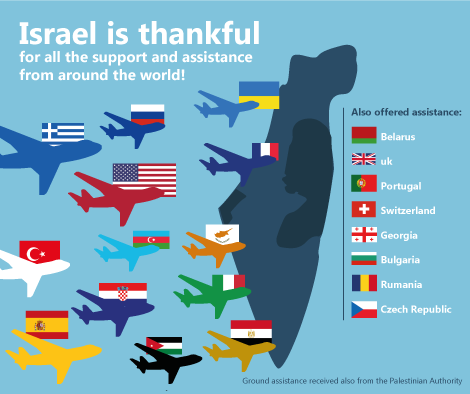
325 Foreign Nationals Came to Israel to Fight Fires
Khaled Abu Toameh: Palestinians: The 'Wall of Shame'
"The equation facing the Palestinian factions is clear: Hand over the terrorists and there will be no wall. The Palestinians have proven that they are unable to take security matters into their own hands in this camp." — Lebanese security official.JPost Editorial: Fires and Hezbollah
These anti-Palestinian practices are regularly ignored by the international community, including mainstream media and human rights organizations, whose obsession with Israel blinds them to Arab injustice. A story without an anti-Israel angle is not a story, as far as they are concerned
Typically, Western journalists and human rights activists do not even bother to report or document cases of Arab mistreatment of Arabs. This abandonment of professional standards is why apartheid laws targeting Palestinians in several Arab countries are still unknown to the international community.
The Lebanese authorities also say that they decided to build the wall after discovering several tunnels in the vicinity of Ain al-Hilweh, used to smuggle weapons and terrorists into and out of the camp.
The new wall will not solve the real problem -- namely the failure to absorb the refugees and grant them citizenship. Palestinians living in Arab countries are denied citizenship (with the exception of Jordan) and a host of basic rights.
In the past few days the nation has faced one of the worst brushfires in its history. Nearly a thousand hectares of forests and rural areas have been destroyed in Zichron Ya’acov, Neveh Shalom, Modi’in, Neveh Ilan and Nataf. Tens of thousands were evacuated from their homes in the Haifa area alone.
Israel’s under-staffed firefighting forces have been battling day and night to stop the flames from spreading.
Firefighters and equipment from abroad have provided important backup. In times of natural disaster – even when many of the fires seem to have been the result of arson – nations come together. Israelis received help from Palestinians and Turks as though the political differences that normally taint relations did not exist.
Thankfully, as of this writing there have not been any casualties. This is a testament to the success of firefighters and other rapid response teams.
However, the fires provide an opportunity to reflect on the dangers of a very different scenario.
325 Foreign Nationals Came to Israel to Fight Fires
The media may have hailed the arrival of the Supertanker from the United States, but the heads of Israel's Fire & Rescue Authority said Sunday there is no need for the massive firefighting aircraft at present.
The Supertanker landed in Israel on Friday night, but was only put to use on Saturday in the Jerusalem Mountains area, over Nataf.
It took to the air again on Sunday afternoon, but found itself circling idly over the sea near Zikhron Ya'akov and the Haifa Bay area after all of the major fires had already been put out.
While acting Fire Commissioner Shimon Ben-Ner said there was no need for the Supertanker, the aircraft is operated directly by the Israel Police and it is the police that will eventually decide whether or not to use it.
On Saturday, police demanded to use the firefighting aircraft in the forests that border Highway 1, while the Fire & Rescue Authority determined there was no operational need for it. Eventually, despite disagreements between the two emergency services, the Supertanker was used to help extinguish areas that were still on fire near Nataf.
The massive firefighting aircraft, which reached Israel after firefighters had already gained control over the fires in Haifa, was one of 21 planes that took to the sky to help put out the blazes that plagued Israel last week.
In total, some 325 foreign nationals participated in firefighting efforts.