Wednesday, February 17, 2016

From Ian:
Israel’s Legitimacy is not dependent on a Palestinian State, or The NY Times
Israel’s Legitimacy is not dependent on a Palestinian State, or The NY Times
We hear from critics of Israel that Israel needs a two-state solution to be legitimate.Jewish star of Scandinavian BBC crime drama The Bridge reveals he quit the show because he was fed up with filming in 'anti-Semitic' Malmo
Without a Palestinian state, the argument goes, Israel will rule over millions of resentful Palestinians to whom it will have to deny their basic rights in order to maintain its Jewish nature. Or if Israel enfranchises the Palestinians, they could overwhelm the Jews with their votes and then Israel would cease to be a Jewish state. So the reasoning goes, without a separate Palestinian state, Israel will either cease being Jewish or democratic.
But there was already a separation achieved in 1993, with the signing of the Oslo Accords.
By the end of 1995 Israel had withdrawn from the major population areas in the West Bank, leaving over 90% of Palestinians under the political control of the Palestinian Authority. In 2005, Israel “disengaged” from Gaza ending the occupation of that territory.
On the political front, Yasser Arafat rejected a two state solution from then Israeli Prime Minister Ehud Barak. In 2008 Arafat’s successor, Mahmoud Abbas rejected a peace deal from then Israeli Prime Minister Ehud Olmert. Two years ago, Abbas rejected a framework agreement that current Prime Minister Benjamin Netanyahu had reluctantly agreed to.
So the problem isn’t the occupation but what the Palestinians have done or haven’t done with the opportunity.
By focusing strictly on Israel, the peace processors have absolved the Palestinians of any responsibility for their own plight. Worse, by making Israel responsible, they give the Palestinians the ability to determine Israel’s legitimacy.
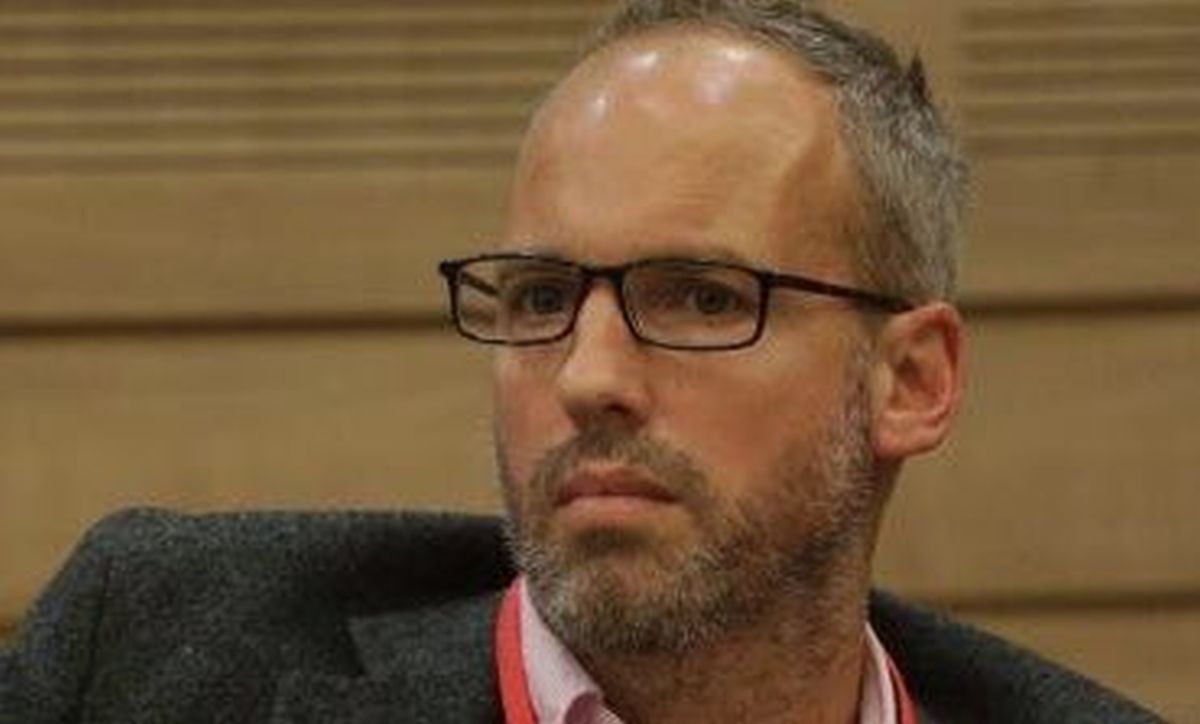
Danish actor Kim Bodnia has revealed that one of the reasons why he quit hit show The Bridge was because as a Jew he did not feel safe working in Sweden.The Ambassador From Hell?
Bodnia played detective Martin Rohde in two seasons of the Scandi-crime show, but after first signing up for a third, he later dropped out.
The 50-year-old had previously cited issues with the script, but has now said his departure was also caused by of the rise of anti-Semitism in Sweden.
The Bridge is filmed on both sides of the Oresund - in Denmark and Sweden - and its first two seasons starred Bodnia as Rodhe, and Sofia Helin as the socially awkward Swedish detective Saga Noren.
Despite initially signing up to return as Rohde in season three, Bodnia later announced he was quitting the show in 2014.
Bodnia made the controversial comments during an interview for Israeli TV where he spoke about why he left The Bridge.
After initially explaining that the changes made to the script and lack of influence on it as an actor was the main reason, he is then asked about anti-Semitism in Scandinvia.
‘It [anti-Semitism] is growing, especially in Malmo where we shot the Bridge in Sweden,' he told Channel 10. (h/t Zvi)
Yet there were—and are—clearly other options. In A Problem From Hell, Power suggests that the United States “should set up safe areas to house refugees and civilians, and protect them with well-armed and robustly mandated peacekeepers, airpower, or both.” Lots of people did argue for a no-fly zone or buffer zone to protect Syrians fleeing from Assad’s killing machine. But the White House said no. Mighty Syrian air defenses were too much for the U.S. air force, said former Defense Secretary Leon Panetta and Chairman of the Joint Chiefs of Staff Martin Dempsey.Clifford D. May: Bystanders to genocide
There was a time when virtually all of Obama’s national security staff advocated arming the rebels to take down Assad. The president was against it. He derided the opposition. As he told Thomas Friedman in August 2014, “This idea that we could provide some light arms or even more sophisticated arms to what was essentially an opposition made up of former doctors, farmers, pharmacists and so forth, and that they were going to be able to battle not only a well-armed state but also a well-armed state backed by Russia, backed by Iran, a battle-hardened Hezbollah, that was never in the cards.” But the reality is that those doctors, farmers, and pharmacists are still out in the field, and might already have stopped the genocide against them on their own, if the president of the United States had been moved to help them help themselves.
Last week John Kerry blamed members of the anti-Assad opposition for walking away from the negotiating table at Geneva, even as Aleppo was being bombed by Russian planes. He told them to expect another three months of bombing, which, he said, would “decimate” them. When the opposition petitioned Kerry to do more, he replied: “Don’t blame me, go and blame your opposition.” Then he continued: “What do you want me to do? Go to war with Russia?” This represents something new in the history of American acquiescence to genocide, and something not even Power documented in her handbook—a U.S. official demanding pity from the victims of a genocide whose suffering he thinks can be alleviated by surrendering to the people who are killing them.
The entire White House, from the president on down, is complicit in the crimes that Power tweets about. As the person who quite literally wrote the book on how the American superpower must stop genocides when it has the power to do so, why hasn’t she resigned? Maybe genocide isn’t actually that important after all, when measured against things like a trade deal with Asia. Perhaps, like the predecessors she describes in her book, she “assumed that U.S. policy was immutable, that their concerns were already understood by their superiors, and that speaking (or walking) out would only reduce their capacity to improve the policy.” Power’s book was taken at the time of its publication as a powerful warning against the moral price that our country pays for such delusional rationalizations. It will be hard to read it the same way again.
One must wonder: Is Ambassador Power asking herself that question now that she's a key figure in an administration that for five years has been choosing to look away from the carnage in Syria and hardly mentioning -- much less taking steps to "mitigate and prevent" -- what history is likely to record as the genocide of Middle Easter Christians?
On the same day last week that the Syrian Center for Policy Research released its report on the death toll, American, Russian and other diplomats meeting in Munich agreed to a "cessation of hostilities" that is to begin within a week. Critics say it will allow Assad and his allies to consolidate their recent gains and prepare for further advances.
We should hope the critics are wrong. But by now we also should have learned that the Russians and Iranians do not see diplomacy as does Obama. They are not trying to "get to yes," find "win-win" compromises or achieve "conflict resolution." Sparing innocent lives is certainly not a priority. To them, diplomacy is war by other means, and wars are for winning.
As they see it, Americans in recent years have been defeated in one diplomatic battle after another -- by North Koreans, by Cubans, by Iran's revolutionary jihadis. They expect to build on this trend. A convincing argument that they're wrong would be challenging to mount.