
 Thursday, May 14, 2026
 Elder of Ziyon
The Rededication
This is the last part of this series and of the book Reclaiming the Covenant that is now available for purchase.
The actual book includes two appendices - source materials and an overview of the philosophical basis for the book.
This is about half of the final chapter.
Every year at the Passover seder, Jews read from the Haggadah a sentence that has struck some people as puzzling and others as the most radical educational philosophy ever committed to text: “In every generation, each person is obligated to see themselves as if they personally left Egypt.”
The obligation is personal and present-tense. You did not inherit the Exodus. You experienced it personally. The covenant that was made at Sinai was made by you, not merely by people who came before you, and the commitment accepted in the wilderness is your commitment — not a tradition received but a responsibility assumed.
This is the opposite of nostalgia. It is the insistence that covenant membership cannot be inherited passively. Each generation must accept it actively, re-enact it consciously, make it their own through genuine engagement with its terms and its demands. The seder is not a historical commemoration. It is a rededication — the annual renewal of a covenant that does not renew itself. The rabbis did not make rededication optional or leave it to individual enthusiasm. They made it a commandment, because they understood something about the nature of structure that takes most political philosophers a lifetime to learn: order does not persist on its own. It requires energy. Left untended, it returns to disorder — not dramatically, not all at once, but steadily, inevitably, in the direction the universe always runs.
America has no equivalent. The Fourth of July is a celebration, which is a different thing entirely. Celebrations say: look what was achieved. Rededications say: look what is required. Celebrations face backward. Rededications face forward and inward simultaneously — toward the obligations the achievement created and the question of whether the current generation is prepared to honor them.
The founders had no Seder, but they understood the problem it solves. Washington’s Farewell Address was itself a civic rededication document — an argument, addressed to the whole nation, about what the covenant required and what threatened it. The Fourth of July became, within a generation, something closer to a renewal ceremony than a birthday party, with public readings of the Declaration functioning as the annual re-encounter with the founding terms. It was imperfect and inconsistent, and it has largely collapsed into celebration. But the instinct was there.
Marriage vow renewals exist because the people who do them understand something the purely contractual view of marriage misses: the commitment made at the altar, however sincere, recedes. The daily texture of a life together can quietly erode what the ceremony made vivid. The renewal doesn’t create the marriage again — it makes the obligation present-tense, witnessed, and real in a way that decades of assumption cannot sustain on its own. The covenant renewal pledge works the same way, for the same reason.
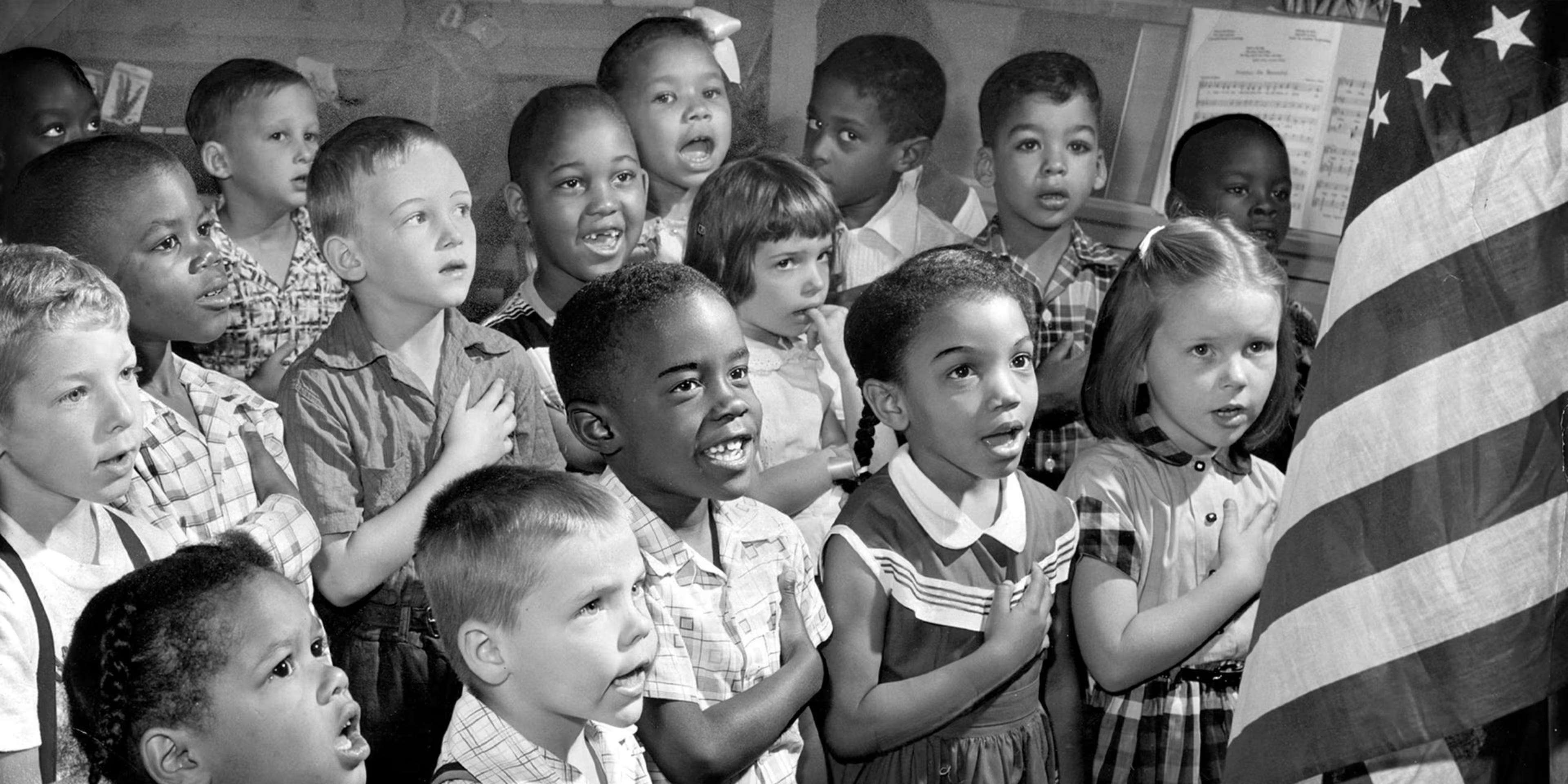
Washington’s concern — what makes an oath stick when keeping it becomes costly — has an answer that is not God and is not law. It is the continuous, public, witnessed commitment that makes defection visible as self-betrayal. The person who has renewed their covenant commitment last week, in the presence of their community, faces a different internal cost when tempted to defect than the person for whom the commitment is a distant memory of a ceremony they barely remember. Integrity is not a character trait that either exists or doesn’t. It is a practice, and like all practices it atrophies without exercise
.
There is a word for the direction the universe runs without the continuous input of energy: entropy. It is a law of physics, but it is also a law of civilization. Structure — any structure, physical or social or political — requires energy to exist. Left untended, it does not stay what it is. It decays back toward its constituent parts. The highway that seemed permanent, that your parents drove and their parents drove, is already cracking if nobody is filling the potholes. The institution that seemed self-sustaining, because it survived one crisis and then another, is accumulating damage with every generation that assumes maintenance is someone else’s job.
The founders understood this, even if they didn’t use the word. It is why Franklin’s answer was not “a republic” but “a republic, if you can keep it.” The “if” is an entropy statement. It is why the Constitution is not a declaration of arrival but an architecture of maintenance — separated powers to prevent the concentration that decays into tyranny, checks and balances to catch the errors that compound into catastrophe, the amendment process to correct the certainties that harden into injustice, the Bill of Rights to protect the minorities that majorities, left unconstrained, tend to consume. Every mechanism in the document is a structural answer to a specific entropic failure mode the founders had watched destroy other republics. They were not optimists about human nature. They were engineers who knew what they were building against.
Morality, in this light, is the human form of anti-entropy — the active, chosen imposition of structure and obligation on a world that tends toward neither. The covenant is a moral structure in this precise sense. It does not run on inertia. It runs on people who understand what it requires and choose to supply it. Part 4 called this Active Defense — the habit of auditing whether the covenant’s preconditions are being maintained or eroded. Part 5 called it covenantal patriotism — the affirmation of the covenant’s terms, chosen, binding even when it constrains your tribe. Part 6 called it civic obligation — the specific maintenance inputs the covenant’s architecture requires from its members. All of these are the same thing: energy added against entropy, structure maintained against the direction the universe runs without intervention.
Look at what the book has been describing, chapter by chapter, through this lens.
Part 2 showed where the structural blueprint came from — the Hebrew political tradition’s covenantal architecture, the tribal federation model, the word “federal” rooted in foedus, covenant. The founders were not inventing structure; they were recovering the most durable anti-entropic political design in Western history and stripping it of its theological scaffolding.
Part 3 showed the Jews as the first indicators of structural failure — the canaries whose sensitivity derives from three thousand years of pattern recognition about what entropy looks like in a civilization’s treatment of its most vulnerable members.
Part 5 showed dissent as anti-entropic maintenance and defection as accelerated decay. The white moderate’s appalling silence, which King named in his Letter from Birmingham Jail, was passivity enabling entropy — the choice to withhold the energy that enforcement required while the structure quietly deteriorated.
Part 7 showed Tocqueville’s Americans as anti-entropic actors — barn-raisings, volunteer fire companies, mutual aid societies, the habit of imposing structure on problems that would otherwise dissolve into disorder. He recognized this habit as the republic’s survival mechanism not because it was admirable but because it was structurally necessary. A republic without it decays, because the alternative to citizens maintaining structure is either government imposing it or nobody imposing it, and the founders had explicitly rejected the first option. Part 7 also showed the American Dream in its honest form as an anti-entropic mutual commitment: the individual adding energy through genuine pursuit, the community adding energy by maintaining genuine conditions of opportunity. Both sides of that commitment are anti-entropic; the failures of both left and right are entropic — the passivity of waiting for outcomes rather than pursuing them, the complacency of assuming the scaffolding maintains itself.
Part 8 showed entropy advancing: the bowling leagues, union halls, neighborhood churches, and local newspapers that had been the republic’s civic maintenance infrastructure collapsing under the weight of television and then smartphones and then social media, which offered the sensation of connection while delivering its opposite. The pride and belonging data are entropy measurements. The two ideological exit routes — academic anti-Americanism and ethno-nationalism — are what fills the vacuum when the maintenance infrastructure decays and citizens stop adding energy to the project of shared identity.
The covenant has survived 250 years because enough Americans, in enough generations, chose to add energy rather than assume the structure would hold without them. Washington writing to the Newport congregation was anti-entropic — he was building a membership principle that would resist the ethnic and religious stratification that decays every other polity. Lincoln fighting the war was anti-entropic — he was reversing entropy that had advanced so far it required catastrophic energy to correct. Lazarus writing the poem was anti-entropic. King writing from Birmingham jail was anti-entropic. Every figure this book has held up as a model of covenantal patriotism was, in the precise sense the word allows, an anti-entropic actor — someone who chose to add structure rather than watch it dissolve.
The question the 250th anniversary poses is whether the current generation will make the same choice.
|
Reclaiming the Covenant on America's 250th (May 2026) "He's an Anti-Zionist Too!" cartoon book (December 2024) PROTOCOLS: Exposing Modern Antisemitism (February 2022) |
 |
 Buy
Buy


