Saturday, January 30, 2021

From Ian:
Natan Sharansky: Remember the People, Not Just the Atrocities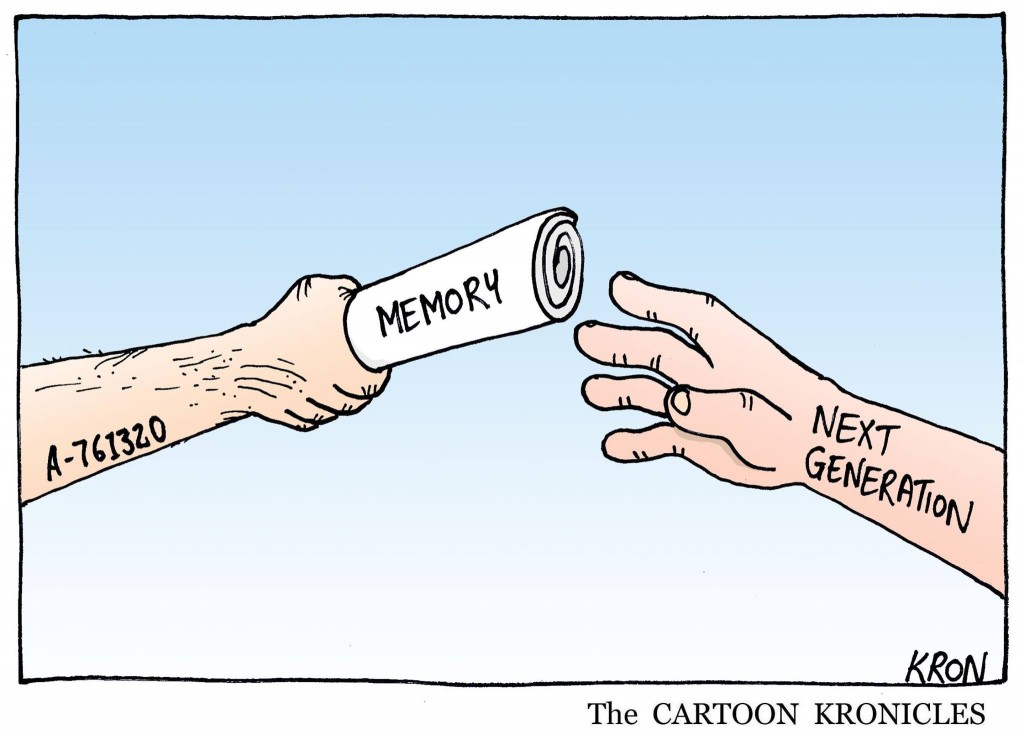 The Jews who fought back during the Holocaust
Natan Sharansky: Remember the People, Not Just the Atrocities
On International Holocaust Remembrance Day, everyone around the world — individuals, leaders, communities — gather to reinforce their commitment to honor the memory of the victims of the darkest hour of human history.
But while the world bows its head to commemorate the Holocaust, it often remembers its victims as a unified collective. The very day we commemorate the victims, Jan. 27, marks the liberation of the Auschwitz concentration camp, the ultimate symbol of the Nazi terror. But not all Holocaust victims were sent to concentration camps. Far from it. The time has come to tell the all-encompassing story of the Holocaust.
Behind the monstrous number of “six million victims” stand six million individual life stories. To commemorate the Holocaust means remembering each and every one of those individually. We are committed to telling as many stories as possible, but unfortunately, too many of them remain unknown.
How many life stories will never be known after the massacre in Ukraine’s Babi Yar ravine? Within two days, the Nazis brutally murdered 33,771 Jewish men, women and children. By the end of the war, they murdered 100,000 people, including Ukrainians and gypsies.
The Babi Yar massacre destroyed the Jewish community in Kyiv. The Jews of Riga, Minsk and Vilnius encountered the same tragic fate — murdered in ravines. Some 1.5 million Jews lost their lives that way.
The central chapter of the Nazi’s “final solution” is still largely unknown. As I know from bitter experience, the Soviet regime after World War II did everything possible to erase Jewish identity and the memory of the Holocaust from collective memory.
Much has been written about what needs to be done during the remaining days of the year to properly commemorate and educate the world about the horrors of the Holocaust, and what “never again” really means. A recent Pew Research poll proves that Americans’ Holocaust education is sorely lacking. For example, only 45 percent of Americans interviewed even knew that 6 million Jews were murdered during the Holocaust. Even fewer knew that Adolf Hitler became chancellor of Germany by a democratic political process.Caroline Glick: Democrats, American Jews and Politically Correct Bigotry
Surely, what is far less known is how many Jews fought valiantly against the Nazis. But fight they did. Jews fought back alongside resistance groups around Europe, organized uprisings in the ghettos, created partisan units and even fought back in the concentration camps, attempting to bomb a crematorium in Auschwitz. To properly commemorate the Holocaust, these stories must be told as well.
To that end, I commemorate and honor the story of the following Jews who courageously fought back during World War II and the Holocaust. Their stories represent the thousands who fought to the end.
- Mordechai Anielewitz. The leader of the Warsaw Ghetto Uprising. In April 1943, he led 750 Jewish fighters armed with a handful of pistols, 17 rifles and Molotov cocktails—all smuggled into the ghetto—in a clash with more than 2,000 heavily armed and well-trained German troops. They held off the Germans for 27 days.
- Boris Lekach. This one is personal. My wife’s maternal grandfather. Lekach fought for the Russians against the Nazis. He enlisted at age 16 with doctored papers just so he could fight. He was also well-known to many in the Jewish community in Russia for helping Jews escape during and after the war.
- The Bielski Brothers. Made famous in a number of books and in the 2008 movie “Defiance,” the Bielski brothers—Tuvia, Asael and Zus—fled their city in Belarus after their parents and two other siblings were murdered. The brothers found shelter in the forest, where they created one of the largest and most effective partisan groups during the war, focusing on guerrilla attacks against the Nazis and their collaborators, as well as on preserving Jewish life even in their hideout. In a little more than two years, the Bielski group grew to about 1,200 people.
- Tosia Altman. A young woman who used fake papers to smuggle weapons and information in and out of Poland’s ghettos. She was an active member of the social Zionist youth movement Hashomer Hatzair, active in the Warsaw Ghetto Uprising alongside Anielewitz and the other brave fighters.
- Eta Wrobel. A young woman in her 20s who helped form an all-Jewish partisan unit in the Polish woods. Her unit attacked German troops as they traveled through the area and is credited for saving hundreds of Jews.
- Rudolph Masaryk. On Aug. 2, 1943, at the Treblinka extermination camp, Masaryk and other Jewish prisoners stole 20 grenades, 20 rifles and a few handguns. Together, they attacked the SS guards, while another doused a large part of the camp with gasoline and lit it on fire. Approximately 300 prisoners escaped and 40 Nazi guards were killed during the Treblinka uprising.
In recent weeks, outspoken anti-Israel campaigners and BDS supporters like Representative Ilhan Omar, former CNN commentator Marc Lamont Hill and New York Times columnist Peter Beinart have been pushing for the new administration to reject the IHRA definition and legitimize BDS. They have attacked Jewish Democratic groups like the Democratic Majority for Israel, as well as the vast majority of all American Jewish groups, led by the Conference of Presidents of Major American Jewish Organizations—all of which are urging the Biden administration to maintain the previous administration's policies.
These efforts are being driven both by overtly anti-Israel, nominally Jewish groups like IfNotNow and Jewish Voice for Peace, and by ostensibly "pro-Israel" progressive Jewish groups, including Peace Now, J Street, T'ruah and the New Israel Fund. The AMCHA Initiative report found that since 2019, 44 percent of efforts to discredit the IHRA definition of anti-Semitism were carried out by these and other like-minded Jewish-run groups.
All of these groups are calling for the Biden administration to disavow the IHRA definition of anti-Semitism and its examples of contemporary anti-Semitism as a legal tool for combating anti-Semitism. IfNotNow is running a social media campaign, as well, to lobby the Biden administration to appoint an official special envoy to monitor and combat anti-Semitism who will simply ignore leftist anti-Semitism. As the group put it in a recent Twitter post, "It is important for us to demand that [President Biden] appoint someone to the special envoy to monitor and combat anti-Semitism who'll be committed to fighting neo-Nazis and white nationalists, not Palestinians and students."
It is a peculiar thing to see ostensibly Jewish groups dedicating their efforts to removing legal protections against anti-Jewish discrimination from their fellow Jews. It is a mark of the corruption of the American Jewish far Left that this is what they wish to fight for today. But even more disconcerting is the anti-Semitic disposition of large swaths of the Democratic Party. Democratic activist circles are now dominated by anti-Semitic voices from the Left who denounce Israel and its supporters. The effort by progressive Jewish groups to deny civil rights protection to pro-Israel Jews is indicative of the prevailing winds in the Democratic Party. Progressive Jews believe that to remain relevant in their party, they must fill the role of Jewish fig leaves for their party's anti-Semitic activist base.
This then brings us to the object of their lobbying efforts—President Joe Biden. Wednesday was International Holocaust Remembrance Day. To mark the occasion, Biden released a strong statement decrying anti-Semitism. Arguably more significant, however, is the fact that Trump's executive order on anti-Semitism has been scrubbed from the Biden White House's website.