Monday, January 11, 2021

From Ian:
Kissinger: Return to Iran deal could spark Middle East nuclear arms race
David Halbfinger’s Weird David Friedman Interview Ends Up Appearing More on Twitter than in the New York Times
Kissinger: Return to Iran deal could spark Middle East nuclear arms race
The new US administration should not return to the spirit of the Iran deal, which could spark an arms race in the Middle East, former US secretary of state Henry Kissinger said Monday at a Jewish People Policy Institute online conference.New CIA nominee Burns widely respected in US, pro-Iran nuke deal
He criticized the 2015 Iran deal, which President Donald Trump left in 2018. President-elect Joe Biden seeks to return to it if Iran agrees to comply again with the agreement’s limitations on its nuclear program.
“We should not fool ourselves,” the 97-year-old diplomat, consultant and author said. “I don’t believe that the spirit [of the Iran deal], with a time limit and so many escape clauses, will do anything other than bring nuclear weapons all over the Middle East and therefore create a situation of latent tension that sooner or later will break out.”
The current leaders in Iran “don’t seem to find it possible to give up this combination of Islamist imperialism and threat,” Kissinger said. “The test case is the evolution of nuclear capacities in Iran, if these can be avoided.”
“I do not say we shouldn’t talk to them,” he added.
Dennis Ross, a former adviser to presidents George H.W. Bush, Bill Clinton and Barack Obama, interviewed Kissinger at the JPPI farewell event for its founding director, Avinoam Bar-Yosef.
Ross asked Kissinger what he would advise Biden and his administration to do to take advantage of the Abraham Accords, in which four Arab states normalized ties with Israel.
“We should not give up on what has recently been achieved in these agreements between the Arab world and the Israeli world,” he said. “I would tell the incoming administration that we are on a good course.”
The accords “have opened a window of opportunity for a new Middle East,” Kissinger said. “Arab countries understood that they could not survive in constant tension with parts of the West and with Israel, so they decided they had to take care of themselves.”
His initial choice, former CIA acting director Michael Morrell, had been vetoed by some US Senate Democrats for defending the CIA against allegations of post 9/11 torture of terrorist detainees.
Instead, Biden appears to have picked Burns due to his expertise on Russia and an impression that he will rally respect and legitimacy both to the CIA and in the intelligence community’s relationship with other parts of the government.
He served as ambassador to Jordan during the Clinton administration and as ambassador to Russia during the George W. Bush administration. Burns was significantly involved in the Obama-era negotiations toward the Iran nuclear deal.
He has criticized President Donald Trump for pulling out of the deal and for the “maximum pressure campaign.” He has expressed doubts about the assassination of IRGC Quds Force commander Qasem Soleimani.
In a January 2020 op-ed for the Carnegie Endowment for International Peace, where he has been serving as president, Burns and incoming National Security Advisor-designate Jake Sullivan wrote: “As we’ve argued before, we’re at this dangerous juncture because of Trump’s foolish decision to withdraw from the nuclear deal, his through-the-looking-glass conception of coercive diplomacy, and his willing hard-line enablers in Tehran.”
#BillBurns was the lead U.S. negotiator and architect of the secret American talks that paved way to the disastrous JCPOA #Iran deal. This does not exactly create confidence in his capacity to lead #CIA in this time. https://t.co/U9CNmAcp9v
— Arsen Ostrovsky (@Ostrov_A) January 11, 2021
David Halbfinger’s Weird David Friedman Interview Ends Up Appearing More on Twitter than in the New York Times
The outgoing New York Times bureau chief in Jerusalem, David Halbfinger, interviewed the outgoing American ambassador to Israel, David Friedman — and the result, which appeared in Sunday’s print newspaper, was just weird.
Halbfinger’s 1,500-word dispatch included two paragraphs from the hard left Foundation for Middle East Peace, the Alexander Soros Foundation-funded vehicle that supports the anti-Zionist New York Times opinion page contributing writer Peter Beinart. It includes another two paragraphs from “Husam Zomlot, who headed the Palestinian diplomatic mission in Washington.”
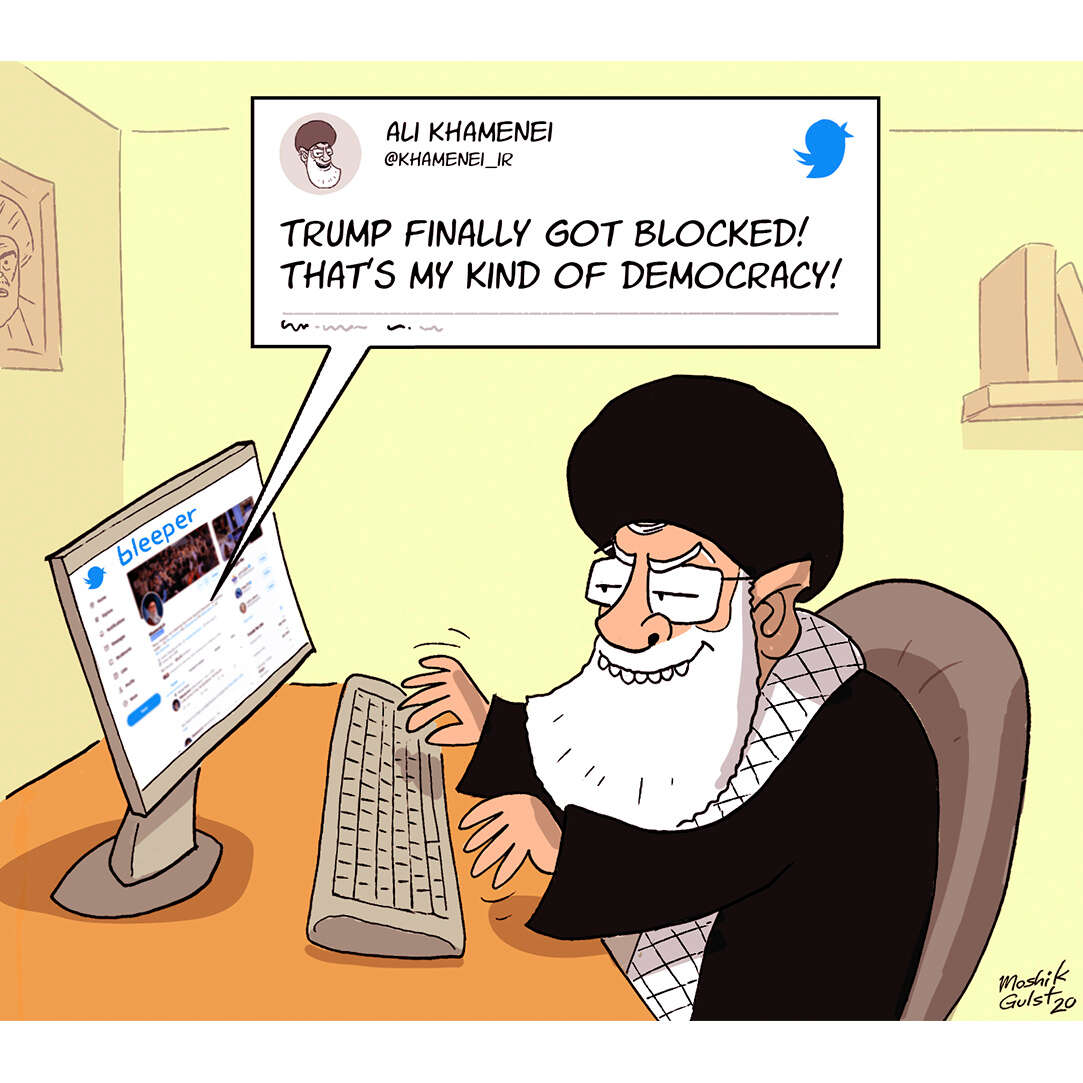
The third-party comments took so much space that there wasn’t room for much of Halbfinger’s actual interview with Friedman. Rather than publish a fuller version to the Times’ website, Halbfinger took to newly Trump-free Twitter — which is outside the paper’s paywall — and published two threads, totaling 44-tweets, of remarks from the outgoing-David-on-outgoing-David interview. Strung together, the tweets ran longer in accumulated word-count than the New York Times article, and were more informative, sticking more closely to Friedman’s comments.
As for the Times article reporting on the interview, it was inaccurate and tendentious. Halbfinger writes, “The Trump administration said it wanted to achieve peace. It will leave office this month as far away from that goal as ever.” Actually, it’s closer than ever to that goal: it succeeded, with the Abraham Accords, in advancing normal relations between Israel and the United Arab Emirates, Bahrain, Morocco, and Sudan.
Halbfinger also writes, “It was Mr. Friedman, 62, who drove the radical overhaul of White House policy toward the Israeli-Palestinian conflict, dreaming up the seemingly endless list of political giveaways that President Trump bestowed upon Prime Minister Benjamin Netanyahu and his supporters on the Israeli right.”
There was nothing “radical” about the Trump administration’s Israel policy. US-Israel relations have a strong bipartisan foundation based on mutual interests and shared values that transcends any particular presidential administration. Rather than characterizing American actions as “political giveaways,” the Times news article might have more accurately described the policies — such as moving the American embassy to Israel’s capital — as righting historical injustices, fulfilling long-made promises, and adhering to laws like the long-ignored Jerusalem Embassy Act. When the Obama administration provided $150 billion in cash and sanctions relief to the terror-supporting, genocide-pursuing Iranian government, the Times described it not as a “political giveaway” but rather as an exchange “in return for nuclear concessions.”