Thursday, October 29, 2020

From Ian:
US announces citizens born in Jerusalem can now list Israel on their passports
A New Nuclear Deal with Iran?
US announces citizens born in Jerusalem can now list Israel on their passports
The United States will now allow US citizens born in Jerusalem to list Israel as their country of birth on passports and other consular documents, Secretary of State Mike Pompeo announced Thursday.
The declaration marked the reversal of a decades-old policy that refrained from identifying the city as part of the Jewish state in an effort by the US to remain neutral on a key final status issue of the Israeli-Palestinian conflict.
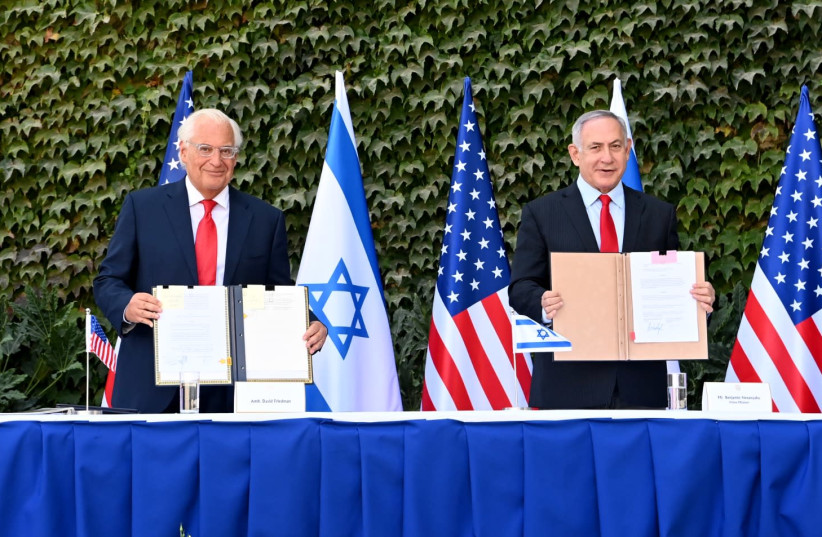
Pompeo said in a statement that the policy change would be “effective immediately” and was “consistent” with US President Donald Trump’s 2017 decision to recognize Jerusalem as Israel’s capital and subsequently move the US embassy there from Tel Aviv.
The new policy will allow US citizens to choose between “Jerusalem” or “Israel” as their place of birth; those who refrain from choosing will by default continue to be issued documents with their place of birth listed as “Jerusalem.”
US policy until Thursday allowed American citizens born in Jerusalem to identify only the city as their birthplace in their passports, unless they were born before Israel’s creation in 1948, in which case their country of birth was listed as “Palestine.” The State Department policy was challenged in the Supreme Court but ultimately upheld in 2015.
NYTs: Could a New U.S. Government Undo Trump's Policy toward the Palestinians?Consistent with President @realDonaldTrump's policy, I am happy to announce U.S. citizens born in Jerusalem can now elect to list their place of birth as either "Jerusalem" or "Israel" on their passports. We remain committed to lasting peace between Israelis and Palestinians.
— Secretary Pompeo (@SecPompeo) October 29, 2020
Allowing the reopening of the Palestine Liberation Organization's diplomatic mission in Washington or restoring much of the aid to projects that directly benefited the Palestinian Authority would require overcoming a number of legal obstacles, some of which might require Congressional approval. And re-establishing the U.S. Consulate in Jerusalem, which until 2019 functioned as the American diplomatic mission to the Palestinians, would require Israel's permission. "These are all possible but they would require heavy political lifting," said Lara Friedman, president of the Foundation for Middle East Peace.
What PA President Abbas may wish for most - that a new U.S. president would prioritize the Palestinian cause, pressure Israel to make concessions, and even move the U.S. Embassy back to Tel Aviv from Jerusalem - seems highly unlikely at best. Former Vice President Joe Biden has made clear he has many higher priorities and has signaled that he does not want to clash with the Israeli government. "The idea that everything will go back to the way it was before is somewhat of a fairy tale," said Mouin Rabbani, an expert on Palestinian politics.
A New Nuclear Deal with Iran?
How then can the United States get around the Iranian regime's adamant opposition to any restrictions on its nuclear or missile ambitions and secure a sound nuclear deal?
Even if the United States secured a new nuclear agreement with Iran, or resuscitated the old one, what makes anyone think that Iran would honor a deal any more than it honored the last ones?
Given the seriousness of these issues and the lack of trust in the mullahs, all provisions must not have "sunset clauses" but be permanent.
Even if these six factors may now make it possible to give "diplomacy a chance," it might be advisable only to try that route if it is reinforced with resolute military force.
The JCPOA it is not only a fraud, it is camouflage for the appeasers of the world to pretend they are doing something about Iran's nuclear ambitions when in fact they are not doing anything but allowing Iran, after a short delay, to have nuclear weapons.... The mullahs will not change on their own. Diplomatic options are poor and unrealistic.
The JCPOA deal not only fails to stop Iran from having a nuclear weapons and the missiles to deliver them, it also hides Western inaction in confronting Iran's missiles, nuclear sites and terrorism.