Friday, January 10, 2020

From Ian:
Caroline B. Glick: Donald Trump and the mythmakers
American Self-Criticism Borders on Narcissism
My despair at those who weep for Quassem Soleimani
Caroline B. Glick: Donald Trump and the mythmakers
If Trump's reality-based policies succeed, he will dismantle their foreign policy legacy. All their protestations of wisdom, all their fancy resumes and titles as former senior officials will lose their allure and market value.
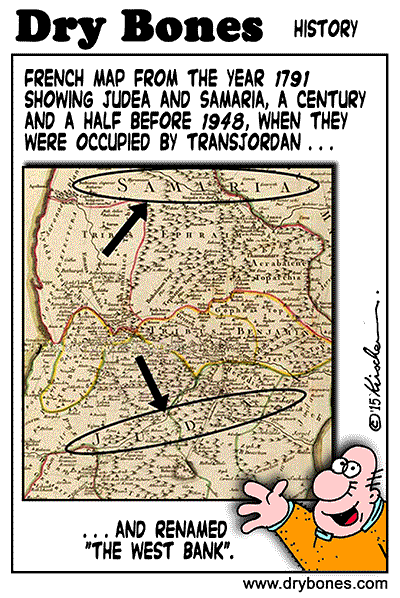
Since Pompeo's statement regarding the Israeli communities in Judea and Samaria related to an issue which, while critical, is less in the headlines today than it was under Obama, aside from a few peremptory condemnations, the foreign policy aristocrats ignored it. As they saw it, once they return to power and start working with an Israeli government led by someone other than Benjamin Netanyahu, the anti-Israel phony narrative will be restored to its rightful place as the foundation of US policy.
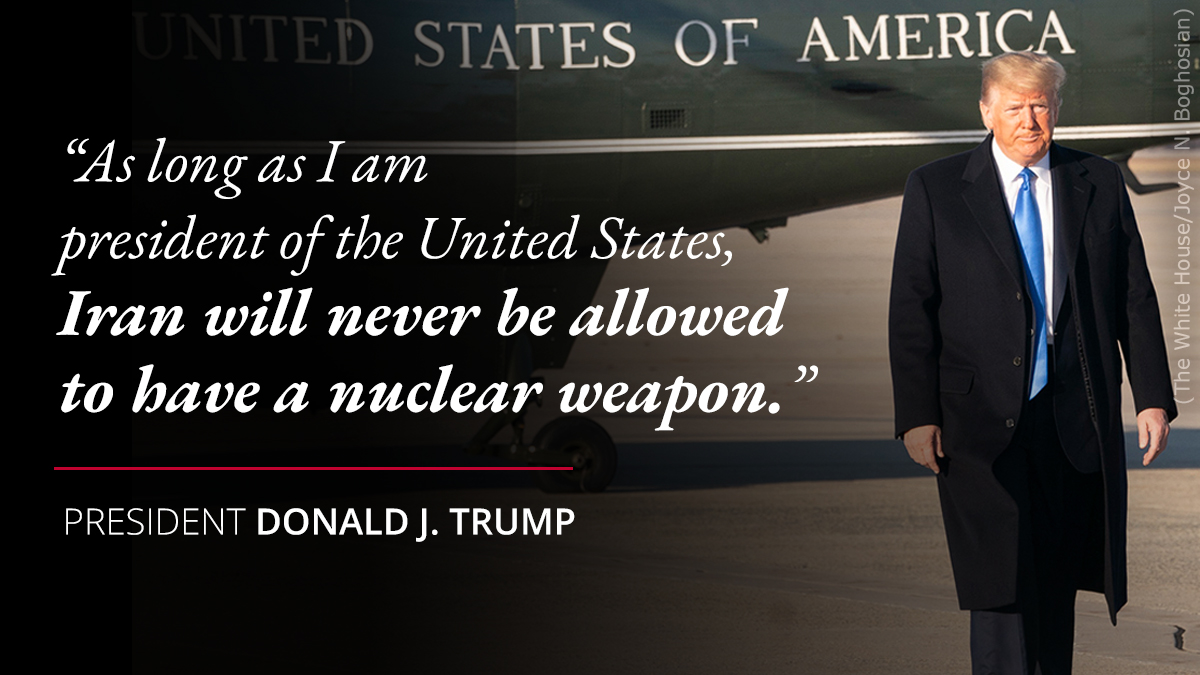
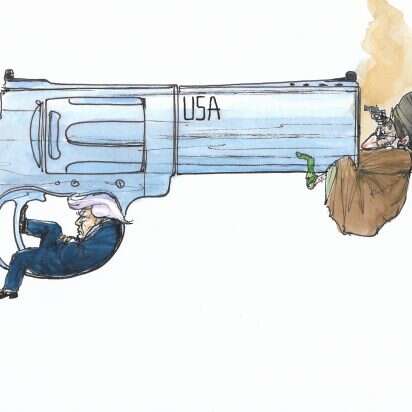
The Iran story is different. Days before the drone strike that killed him, Soleimani tried to re-enact the 1979 "student" takeover of the US Embassy in Tehran with "protesters" in Baghdad. But this time it didn't work. And Soleimani paid with his life for his failure. Iran's half-hearted, failed missile attack against US forces in Iraq showed that the Iranian regime is terrified of Trump and their reversal of fortune.
Trump's policies expose the mendacity and rank insanity of his predecessors’ policies towards Iran and Israel. Since Obama's policies were particularly radical, divorced from reality and devastating, Trump has reasonably singled them out for particular rebuke and condemnation. Among other things, reasonably, Trump said the missiles Iran shot at US forces in Iraq were paid for by the 150 billion dollars in sanctions relief and 1.8 billion dollars in cash that flowed to the coffers of the IRGC through the 2015 nuclear agreement.
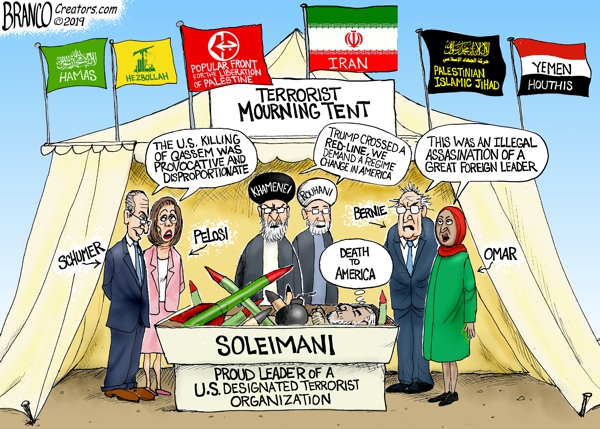
Rather than keep quiet as their signature policy was exposed as a strategic disaster, Obama administration officials and their supporters in Congress and the media went into very public paroxysms of rage. Ben Rhodes, Obama's deputy national security adviser and chief propagandist, who sold the nuclear deal to a credulous and eager media, said Trump's move would lead to war. House Speaker Nancy Pelosi said that the US strike against Soleimani was "disproportionate," hinting it was a war crime to kill the terrorist who had just ordered the seizure of a US Embassy. She scheduled a Congressional session to curb Trump's power to confront Iranian aggression and nuclear proliferation.
On cue, a group of psychiatrists wrote an open letter to Congress insisting that Trump is crazy and must be restrained. (The same group has written several nearly identical letters since Trump took office.)
To protect and preserve their 40-year old delusion-based policy, Trump's domestic opponents are effectively supporting the Iranian regime against the United States. And as they see it, they have no choice. They are in a race against time. The more successful Trump's reality-based policies towards Iran on the one hand and Israel on the other are, the harder it will be for the foreign policy establishment to restore their delusion-based policies when he leaves power. Given the stakes, we can assume that their attempts to clip Trump's wings and debase him will increase in intensity, churlishness and irrationality as time goes by and as his successes mount.
Flags L-R, via @PhillipSmyth + @abubakrbashir4:
— Raf Sanchez (@rafsanchez) January 9, 2020
1. Iran
2. IRGC
3. IRGC Aerospace
4. Hizbollah (Lebanon)
5. Houthis (Yemen)
6. Hashd al Sha'abi (Iraq)
7. Hamas (Gaza)
8. Fatemiyoun (Afghanistan)
9. Zainabiyoun (Pakistan) pic.twitter.com/cYm9krGciV
American Self-Criticism Borders on Narcissism
Those who said there will be war may not have realized there already was war. This doesn’t mean killing Iranian General Qassem Soleimani was good. It almost certainly wasn’t. Iran quickly retaliated by targeting two American military bases in Iraq and may find new ways to escalate, but Iran had already been escalating. The regime of the Syrian dictator Bashar al-Assad, with its Iranian patrons, led by Soleimani, has been waging a brutal assault on Syrians for more than eight years. War, in short, has been happening—costing hundreds of thousands of Syrian civilians their lives—since long before Donald Trump ordered the drone strike against Soleimani.
In the aftermath of the strike, critics of the Trump administration’s foreign policy, particularly on the left, have described the move as one more rash American intervention that’s sure to further destabilize the region. Yet this formulation gives U.S. policy, for all its flaws, too much credit. Not everything is America’s fault; others are sometimes to blame; and no one, not even the weaker parties, are devoid of agency or freed of responsibility. The burden of de-escalation does not fall entirely on the United States; Iran, too, can choose to de-escalate.
There is also the problem of Trump himself. Because killing Soleimani was very much his decision—reflecting the impulsiveness and disarray a decision by him implies—it seems fair to assume that one’s view of the president will affect how one interprets the fallout from Soleimani’s killing. Correcting for subconscious bias isn’t easy, but at the very least, observers should be aware of the Trump effect.
Middle East experts, and particularly those from the region, have tended to be less alarmist than most other commentators. These experts are likely to be less fixated on Trump himself and less likely to put the United States at the center of their analysis. And they are more likely to be aware of the sheer scale of brutality, mass murder, and sectarian cleansing that Soleimani helped orchestrate. Soleimani wasn’t just another bad guy. He was one of the region’s worst. (Yet another humanitarian catastrophe has been unfolding in Syria, but it has garnered little attention. The Assad regime, with crucial military support from Iran and Russia, has been bombing Idlib province. More than 200,000 Syrians have already fled, and hundreds of thousands more could be forced from their homes.)
It is not an overstatement to say that Qassem Soleimani “haunted” the Arab world. As Kim Ghattas wrote here in The Atlantic, “Soleimani was so central to almost every regional event in the past two decades that even people who hate him can’t believe he could die.” It is a rich irony that as Democrats portrayed the strike as one of the worst foreign-policy blunders of the Trump presidency, a significant number of Syrians and Iraqis rejoiced—one of the very few times they have reacted positively to something, anything, that the United States has done. Their interests, of course, are not the same as Americans’, but there should at the very least be an effort to understand why they might have celebrated.
It would be outrageous if:
— Israel Advocacy Movement (@israel_advocacy) January 10, 2020
🇸🇦 Israel launched a "Mecca Force" to conquer Arabia
🇮🇹 Turkey launched a "Vatican Force" to conquer Italy
🇮🇳 France launched a "Sapta Puri Force" to conquer India
But the world's ok with:
🇮🇱 Iran trying to conquer Israel with their "Jerusalem Force"
My despair at those who weep for Quassem Soleimani
A few hours into the new year, pro-Assad forces targeted a school in southern Idlib with a cluster bomb. The bombing took place at 11am when it was clear the school would have been busy. Five children were killed. Two of those who died were just six years old; the oldest child victim was only thirteen. Four adults were also killed. I will forever be haunted by the faces of Yahya and Hour, the innocent six-year-olds who were amongst the child victims who attended – and died at – the school run by the organisation I work for.
This isn’t the first time one of our schools has been destroyed. In fact, six of our schools have been hit in as many months in Syria. Make no mistake: this is a clear co-ordinated bombing campaign against children.
Yet with the Syrian civil war entering its ninth year, the reaction to these dreadful, evil crimes is muted. Instead, the outrage appears to be directed elsewhere.
Two days after the New Year’s Day attack in Syria, Iran’s Quassem Soleimani was killed by a US airstrike near Baghdad airport. Many of my friends were furious. But why?
Were they concerned about the impact it would have on the region? No, they had never heard the name Soleimani until news of his death broke.
They knew little of his influence in Syria, Lebanon, Iraq, Yemen and further afield. Instead, quite simply, they were furious because his death resulted from a decision made by Donald Trump. Trump is bad and therefore this was bad, the logic seemed to be. Few paid heed to the crimes against humanity Soleimani is accused of. Soon, many of my Facebook friends had turned into foreign policy experts queuing up to predict that “WWIII” was inevitable. It was all Trump’s fault, they said. In the aftermath of Iran’s retaliation against US airbases, this fervour has only increased.