Saturday, July 28, 2018

From Ian:
Israel Helps the West with Its Security Needs; When will the West Allow Israel to Defend Itself?
Busting Italy's myths about the Holocaust
Israel Helps the West with Its Security Needs; When will the West Allow Israel to Defend Itself?
At the beginning of the month it was reported that an Iranian-backed terror plot in Paris had been broken up and several people, including an Iranian diplomat, had been arrested. Last week, the Israeli media reported that indeed, the Mossad, Israel’s external security agency, had provided security officials in Germany, France, and Belgium the crucial intelligence those countries needed to thwart the attack and arrest its suspected perpetrators.NYTs [$]: ‘They Spit When I Walked in the Street’: The ‘New Anti-Semitism’ in France
The reports in the Israeli media are consistent with a claim that Israeli Prime Minister Benjamin Netanyahu made in January of this year in a meeting with NATO ambassadors, that Israeli intelligence helped foil dozens of major terror attacks across Europe.
Perhaps it’s no surprise then that last week, Europol, Europe’s police agency, signed a cooperation agreement with Israel, its first with a non-European state, to fight crime and terrorism.
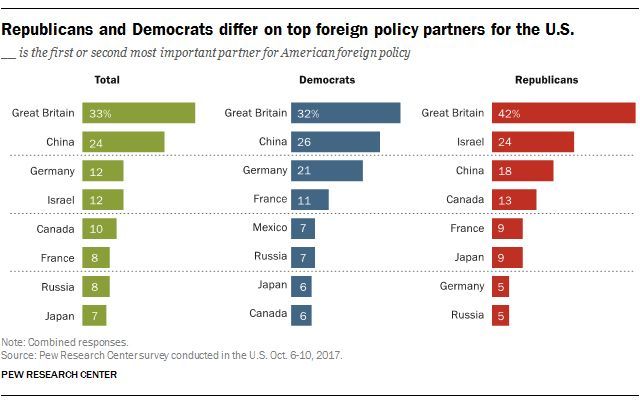
In these three examples, all occurring within the past month or two, Israel has demonstrated its indispensability to the security of the West.
Israel’s military and intelligence capabilities are especially valuable as it is a Western outpost in the Middle East. And those capabilities have been honed by being targeted by terrorism on its borders, as well as by Iran, the world’s leading state sponsor of terror. Being a small country in a hostile region has made improving its military and intelligence capabilities a necessity for survival.
That Israel can use these capabilities to help its Western allies fight threats to their citizens makes Israel an essential ally. It was nice to see so many of those allies acknowledge this much after the rescue of the White Helmets.
One can only hope that this appreciation of Israel’s capabilities into greater sympathy towards Israel when it identifies and defends itself against threats that don’t threaten others.
The solemn boulevards and quiet side streets of the 17th Arrondissement in Paris suggest Jewish life in France is vibrant: There is a new profusion of kosher groceries and restaurants, and about 15 synagogues, up from only a handful two decades ago.
But for residents like Joanna Galilli, this area in northwestern Paris represents a tactical retreat. It has become a haven for many Jews who say they have faced harassment in areas with growing Muslim populations. Ms. Galilli, 28, moved to the neighborhood this year from a Parisian suburb where “anti-Semitism is pretty high,” she said, “and you feel it enormously.”
“They spit when I walked in the street,” she said, describing reactions when she wore a Star of David.
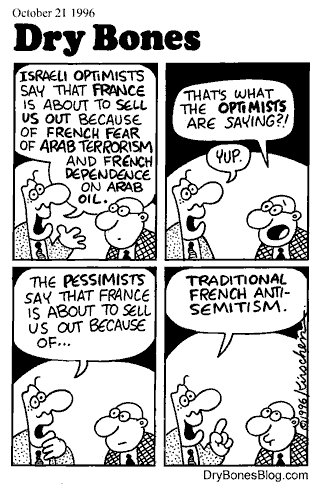
France has a painful history of anti-Semitism, with its worst hours coming in the 1930s and during the German occupation in World War II. But in recent months, an impassioned debate has erupted over how to address what commentators are calling the “new anti-Semitism,” as Jewish groups and academic researchers trace a wave of anti-Semitic acts to France’s growing Muslim population.
Nearly 40 percent of violent acts classified as racially or religiously motivated were committed against Jews in 2017, though Jews make up less than 1 percent of France’s population. Anti-Semitic acts increased by 20 percent from 2016, a rise the Interior Ministry called “preoccupying.”
In 2011, the French government stopped categorizing those deemed responsible for anti-Semitic acts, making it more difficult to trace the origins. But before then, Muslims had been the largest group identified as perpetrators, according to research by a leading academic. Often the spikes in violence coincided with flare-ups in the conflict between Israel and the Palestinians, according to researchers. (h/t Zvi)
Busting Italy's myths about the Holocaust
Two coins in the fountain of the historical analysis of Italy's role in the Holocaust jostle for which one will be blessed. It remains controversial.
The familiar and prevalent view is a positive one of the "good", benevolent and generous Italians, who sheltered Jews in their country from the "bad" German Nazis.
This view is challenged in a brilliant and important, authoritative new book, The Italian Executioners: The Genocide of the Jews of Italy, (Princeton University Press) written by Simon Levis Sullam, professor at the University of Venice. He regards the positive view as a myth and a misrepresentation of the reality.
He contrasts the increasing attention paid to the Italian Righteous, of whom Yad Vashem in Israel names 671, with the neglect of the story of Italian executioners of Jews which should be placed in the forefront of the narrative. His main aim is to direct attention to the role of Italians in the genocide of Jews in Italy.
Jews have had a long uneven history in Italy, with extended periods of persecution and discrimination. Simon Maccebeus sent an embasy to Rome in 139 B.C. to help the Romans in the fight against the Hellenistic kingdom. A Jewish contingent is said to have attended the funeral of Julius Caesar in 44 B.C. However, with the rise of Christianity as the official religion of the Roman Empire, the position of Jews declined rapidly, especially during the papacies of Paul IV in 1554, Gregory XIII in 1577, and Urban VIII in 1625.
Jews were segregated and obliged to bear a yellow badge of identification. The Ghetto set up in 1556 was finally abolished only in 1870 after Napoleon's troops had opened it sixty years earlier.
Italy was the last Western European country to grant full civil rights to Jews. They became full citizens in 1861. Assimilated, they entered the professions and the military. In 1910 the Venetian Jew Luigi Luzzatti became prime minister. There were 50 Jewish generals in World War I, and a number of Jews were officials of the Fascist party.