Saturday, March 20, 2021

From Ian:
The whole of the Middle East will pay the price for Biden’s Iran appeasement policy
Don't cut or condition US military aid to Israel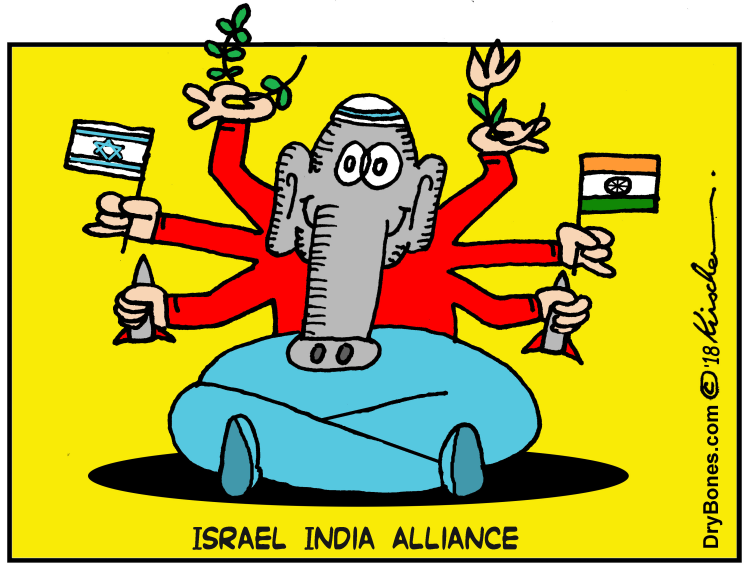
The whole of the Middle East will pay the price for Biden’s Iran appeasement policy
Since the Biden administration’s decision to reverse the designation of Yemen’s Houthi militia as a foreign terrorist organisation (FTO) on February 12, drones and ballistic missiles have targeted Saudi Arabia 48 times.
The latest attack, on Saudi oil facilities in Ras Tanura, in Saudi Arabia’s eastern province, on Sunday, did not come from the direction of Yemen, a royal court adviser told the Wall Street Journal; declining to comment on whether the projectile was launched from Iran or from Iraq.
The removal of the Houthis from the US government’s FTO list was meant to reduce tensions, but it achieved the opposite result. At the heart of the Biden administration’s Middle East policy is a fallacy: that the region’s politics should be understood as a contest between Saudi Arabia and Iran, a conflict between two states that is also a sectarian struggle.
Seen from Tehran, the central contest in the region is between the American alliance system and Iran’s self-styled “resistance alliance”.
Biden’s misconception leads to a number of erroneous ideas: that the United States can play a neutral, mediating role between Riyadh and Tehran; that by distancing itself from Saudi Arabia, it creates opportunities for regional stability and understanding; and that it is the Saudi role in Yemen – and not the Iranian role – that has perpetuated the conflict in that country.
While escalating by attacking Saudi Arabia via its proxies is a core part of Iran’s regional policies, we must not forget that Iran has waged a forty-year war to spread its control across the region — not to compete with Saudi Arabia, but to undermine the American alliance system. The Biden administration’s resurrection of the Obama doctrine in the Middle East has breathed life into one of its most inaccurate and damaging myths: the centrality of a Saudi-Iran rivalry to regional politics.
Iran’s imperial project in Iraq, Syria, and Lebanon does not exist to reclaim influence from Saudi Arabia, but to upend the American security order in the Middle East. And, like Iran’s Foreign Minister, Iran’s network of terrorist groups in the region chant, “death to America,” not, “death to Saudi Arabia”.
Team Biden sees these attacks as cries for help from partners for peace. Trump-style deterrence “did not work,” b/c bad people continued to exist and do bad things. Only a new approach that calls the bad good can make the bad disappear, not unlike choosing your pronouns properly. https://t.co/MGslyaU8LY
— Mike (@Doranimated) March 19, 2021
Don't cut or condition US military aid to Israel
One of us is a member of Congress from Florida who serves on the House Armed Services Committee and used to work as a national security specialist at the Department of Defense. The other is also a former Pentagon official who now leads an organization that promotes strong U.S. defense policies, including close cooperation between the United States and Israel.India Israel Relations – An Overview
One of us is a refugee from Vietnam whose family fled a communist regime that seized power after the Vietnam War. The other is an American Jew whose ancestors fled virulent anti-Semitism in Europe. Just as the United States was a safe haven for our families, we recognize — on both an emotional and intellectual level — that the state of Israel, which reestablished ancient Jewish sovereignty over the Holy Land, has been a sanctuary for millions of Jewish families enduring persecution in their native lands.
Informed by our personal and professional backgrounds, both of us believe that U.S. military assistance to Israel — beyond helping our ally to deter conflict with aggressive state and non-state actors, to prevail if conflict occurs, and to protect its civilian population from persistent rocket and missile threats — directly advances America’s national security interests. It also promotes our shared democratic values in a region of the world where autocracy predominates.
We appreciate the fact that U.S. military aid to Israel — which currently amounts to $3.8 billion a year and is used to enhance Israel’s offensive and defensive capabilities — has long enjoyed broad support from the American public, from their Democratic and Republican representatives in Congress, and from presidential administrations of both political persuasions.
It is precisely because support in this country for a strong U.S.-Israel relationship has been bipartisan that it has also been enduring.
That’s why we’ve been troubled by recent calls from U.S. political leaders in some quarters to cut security assistance to Israel, or to condition that assistance on Israel making changes to policies toward the Palestinians that these U.S. leaders find objectionable. We believe this approach is counter-productive and dangerous. (h/t jzaik)
India-Israel relations have always been an ongoing topic for academic research and journalistic reporting, as well as a fascinating experience for practitioners. Many generations of diplomats, scholars and reporters have witnessed the unique story of the Indo Israeli journey. As a young diplomat, during the early 1970s, I was attracted by what promised to be a special partnership but lacked, at the time, political feasibility. I thus felt privileged, years later, as Ambassador to India, to contribute to the long chain of dedicated diplomats from both the countries, who brought our relations to where they stand today.
Trade between the Jews and the Indians dating hundreds of years ago, the fact that Jews were always welcome in India, never suffering from racism or discrimination were the first threads in the fabric of today’s special relations between the governments and peoples of India and Israel. Both the nations also have much in common, with shared democratic values and interests, as two relatively young societies, proud of their respective historical, cultural roots, eager to embrace the future, innovation and technology.
While India officially recognized Israel in 1950, it took four more decades until a suitable political atmosphere and political will, allowed the recognition to be translated into diplomatic relations. A ‘wind of change’ reshaping global, regional and national paradigms, also led to a new global approach to Diplomacy. The stage was thus set for 1992 to be a turning point in the emerging relations between both the nations.
Looking back at the past 29 years, two notable trends come to mind in the Indo Israeli relations: Visibility and Scope. When full diplomatic relations were established, they were kept low-key, with a conveniently, discrete emphasis on Defence. The “zero sum game” perception prevailing at the time in many Non-Aligned Movement (NAM) capitals, including New Delhi, avoided admitting publicly good relations with Israel and the Arab world at the same time. As a leader of NAM, Delhi opted to stick with the Arab countries (NAM members by themselves). This “arrangement” did not last beyond the Cold War era, as the rationale behind the low-key approach was no longer acceptable, relevant, or needed. The low-volume relations paradigm slowly shifted by the end of the 1990s. It was dramatically replaced in 2014, when the Indian Government adopted a landmark “De Hyphenation” (or “No Zero Sum Game”) policy toward West Asia: Shortly after coming to power, on July 21, 2014, the Government of India’s External Affairs Minister (EAM), the late Sushma Swaraj, stated in the Parliament, that while continuing to support the Palestinian cause (which was the overriding policy element until then), India maintains good relations with Israel. This dramatic public departure from previous policy has since been reiterated numerous times by various Indian officials, in words and deeds. Dramatic as it was then, this new approach has since become part and parcel of our relations, as acknowledged recently by EAM, Dr. Jaishankar, speaking at the opening session of Israel’s Ambassadors to Asia-Pacific Annual Conference, “the (India Israel) relationship finally enjoys the stature and visibility it deserves”.








 Intergalactic Standard Date 14.5.99.008, in orbit around Earth - Captain, our surface team has returned from the planet with several specimens upon which to conduct our experiments, including at least three of the fascinating "Anti-Zionist" subspecies of human, but our laboratory crew are reporting some trouble determining which is the anterior and which is the posterior, and those specimens have yet to undergo the anal probing as a result.