


 Wednesday, February 17, 2021
 Varda Meyers Epstein (Judean Rose)
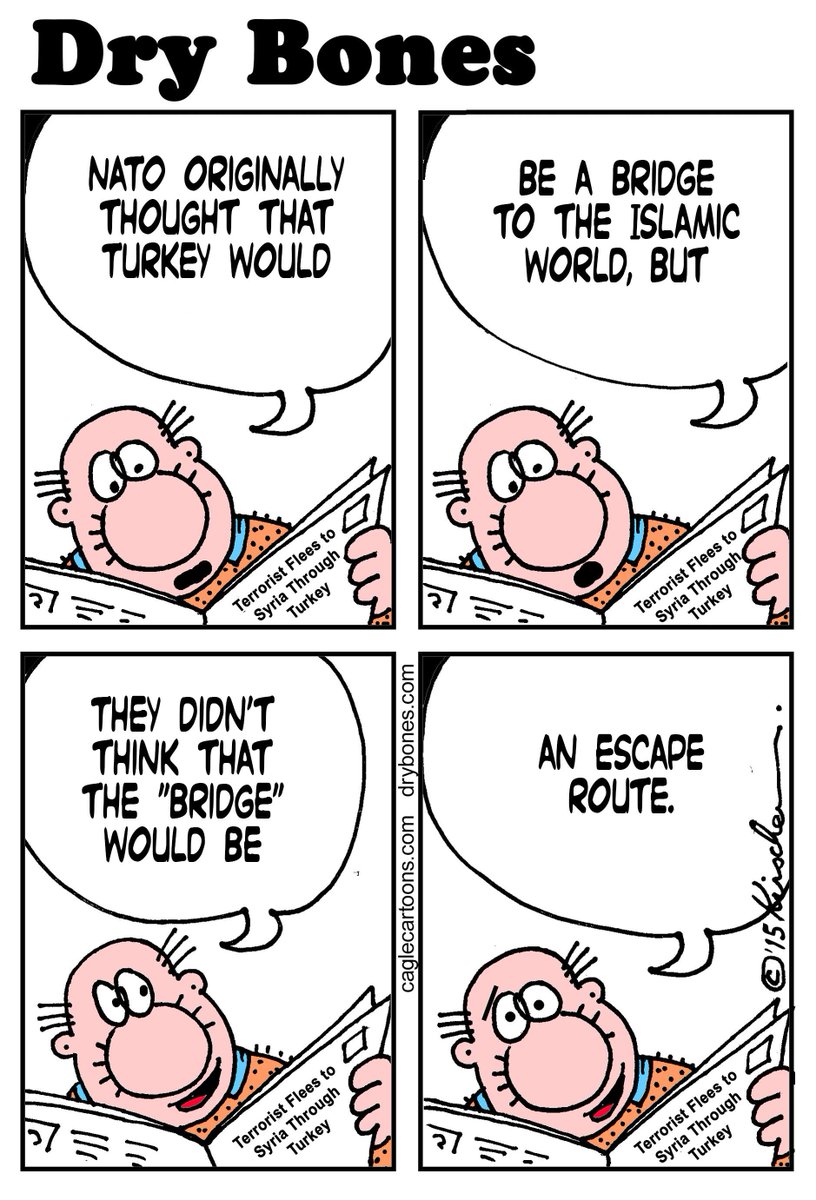
 Judean Rose, Opinion, VardaWednesday, February 17, 2021Elder of Ziyoncartoon of the day, humor
Israel and Syria are intensively negotiating a prisoner exchange deal with Russian mediation, in which two incarcerated residents of the Israeli Golan could reportedly be released in exchange for a young Israeli woman who entered Syrian territory by mistake.Not Again: NYT Op-Ed Pushes Utopic, Unrealistic Israel/Palestine Vision
The woman has not been identified. According to Channel 12, she is a 25-year-old formerly Haredi woman from Modi’in Ilit who left the ultra-Orthodox community. It is not clear why she crossed into Syrian territory.
Syrian state media announced on Wednesday: “The exchange is taking place through Russian mediation to liberate the Syrians Nihal Al-Maqt and Dhiyab Qahmuz, the Syrian prisoner from the occupied Syrian Golan, in an exchange during which a young Israeli woman who entered the Syrian territories by mistake will be released. She entered the Quneitra region by mistake and was arrested by the Syrian authorities.”
Prime Minister Benjamin Netanyahu, in an interview with Army Radio, declined to comment on the negotiations but said: “We are working to save lives. I can just say I’m using my personal connections” with Russian President Vladimir Putin to secure her release.
Israel is “at the height of sensitive negotiations” on the issue, he said. “I believe we will resolve it.”
National Security Adviser Meir Ben Shabbat and hostage coordinator Yaron Bloom left Wednesday morning for Moscow to negotiate the release of the Israeli woman, according to Hebrew media reports.
The two prisoners Israel has reportedly been asked to release are residents of the Golan Heights. Israel captured the Golan Heights from Syria in 1967 during the Six Day War and annexed it in 1981. Many residents of the region retain Syrian citizenships and identify as Syrian.
It’s unbelievable how often the very concept of Israel as a regular sovereign state comes under attack in the New York Times, and indeed across the media.
A recent article, titled “Want Israeli-Palestinian Peace? Try Confederation“ by Bernard Avishai and Sam Bahour encourages readers to toy with the concept of Israel as a state like any other and view it as a theoretical plaything that can afford to, “share a capital city, a transportation and urban infrastructure, and a business ecosystem.” Before proceeding with an analysis of this piece, it’s vital to note one fundamental fact: this view is not so much a minority opinion amongst Israelis and Palestinians as practically non-existent.
That the New York Times affords such a perspective means it gains prominence amongst the influential. But while the idea of doing away with Israel as a sovereign state with control over its population and a capital city like any other nation gain currency amongst outsiders, back in the Middle East – where people have to grapple with reality – such impractical ideas are laughed at by Arabs and Jews alike.
The New York Times’ Distortions and Impractical Ideas
Back to the New York Times’ piece. Among the impractical ideas and distortions of reality that the op-ed promotes are:
A “dotted-line border in Jerusalem”
The suggestion that Jerusalem can be split is something many Israelis and Zionists – as well as Palestinians, by the way – have extreme difficulty accepting. For millennia, Jerusalem was a single city. For precisely 19 years, it was divided by an ugly barrier, the frontier between Israel and Jordan. Since 1967, the city has been reunited, and while life is far from perfect, it has become immeasurably better for citizens of both sides. Not least because there are no more no-mans-land zones that citizens cannot approach out of fear of being fired upon by soldiers on the other side.
Nevertheless, Avishai and Bahour suggest that “Confederal institutions would permit dividing sovereignty in Jerusalem with a dotted-line border, actually keeping the city open to all.” As if the presence of armed Palestinian police in Jerusalem’s Arab neighborhoods, with no real border separating them from Israeli citizens, is something Israel could tolerate. Even more so when considering the reality that over 25% of Jerusalem’s Jewish population live in the neighborhoods of Gilo, Pisgat Ze’ev, and Ramot, all of which are on what would be on the Palestinian side.
All told, over a third of Jerusalem’s Jewish population live in such neighborhoods. Trusting the Palestinian security administration with the lives of hundreds of thousands of Jews, or effectively creating Israeli enclaves surrounded by Palestinians with the means of attacking them, and hoping for the best is no more than a wild fantasy.
Bahraini Political Analyst Saeed Al-Hamad: Iran’s Enterprise Is Hitlerian in Nature; I No Longer Trust the Democrats, the American Left of the Wealthy #Iran #Hitler #khamenei pic.twitter.com/jhsSFz2tF1
— MEMRI (@MEMRIReports) February 17, 2021
The New York Times has been accused of whitewashing Turkey’s military occupation of Afrin and the ethnic cleansing of Kurdish people. This surprised many, given that the newspaper has covered other conflicts by giving both sides a voice but when reporting in Afrin it appeared to only give Turkish military occupation officials and pro-Ankara voices a place.
An illegal military occupation. Stolen olives shipped to the occupying power for resale. Far-right settlers rampaging and attacking indigenous communities. Religious persecution. Locals kidnapped in extrajudicial raids, imprisoned in secret military detention centers. Ethnic-cleansing. All of this has happened in Afrin in northwest Syria, an area that was once Kurdish and was invaded and occupied by Turkey and Turkish-backed extremist militias in 2018. Since then, it has been ethnically-cleansed of Kurds, and minority graveyards and religious sites have been ransacked and destroyed. The New York Times is now accused of whitewashing Turkey’s occupation of Afrin in an article on Tuesday.
Experts, activists, former residents and commentators expressed shock at the article online noting that it failed to mention human rights abuses and the displaced people forced out of Afrin. Some compared the article to state-run Turkish media propaganda. For a US press that prided itself on confronting the far-right in the US and critiquing an authoritarian leader, or “speaking truth to power,” the article was slammed for not including any critical or dissenting voices.
Titled “In Turkey’s Safe Zone in Syria security and misery go hand in hand,” the article claims that while Turkey’s invasion three years ago was widely criticized, “today, the Syrians they protect are glad the Turks are there.” The article hints at the fact that 160,000 Kurds were ethnically cleansed. “Thousands of Kurdish families fled the Turkish invasion, along with the Kurdish fighters. In their place came hundreds of thousands of Syrians from other areas, who have swollen the population, taking homes.” Usually, when the indigenous population is expelled and other populations are moved in, it is called ethnic cleansing. In this case, Kurds were removed by Turkey and far-right religious extremist militias it controls, and Sunni Arabs and Turkmen were moved into Afrin.
 Wednesday, February 17, 2021Elder of Ziyonanalysis, Daled Amos
During those eight years [of President Bush], there was no space between us and Israel, and what did we get from that? When there is no daylight, Israel just sits on the sidelines, and that erodes our credibility with the Arab states.
Obama, July 13, 2009
o Clinton called Prime Minister Rabin on January 23 and met with him 2 months later.o Bush called Prime Minister Sharon on February 6.o Obama spoke with Olmert on January 2 (before his own inauguration) and then called Netanyahu on April 1, the day after Netanyahu was sworn in.o Trump spoke with Netanyahu on January 22, and hosted him the following month.
Can you please just give a broad sense of what the administration is trying to achieve in the Middle East? For example, does the administration still consider the Saudis and the Israelis important allies?Her response was a painful attempt to avoid giving an answer:
Well, you know, again, I think, we, there are ongoing processes and internal interagency processes, one that we, I think confirmed an interagency meeting just last week to discuss a range of issues in the Middle East where we've only been here three and a half weeks.
And I think I'm going to let those policy processes see themselves through before we give kind of a complete lay down of what our national security approaches will be to a range of issues.
The new secretary of state, Anthony Blinken, has ‘publicly said the IRGC, the Iranian terror group, should never have been put on [the State Department’s] terror list, because that would “provoke” Iran’. Robert Malley, the chief negotiator of the Iran Deal, is a ‘public, unabashed supporter of the mullahs, an unabashed supporter of Hamas’.
Not forgetting lesser luminaries like Maher Bitar, who used to be on the board of the racist Students for Justice in Palestine and is now the NSC’s senior director for intelligence programs. Or Hady Amr, who used to be national coordinator of the anti-Israel Middle East Justice Network, has written of being ‘inspired’ by the Palestinian intifada, and threatened vengeance after Israel assassinated a Hamas leader. Amr is now deputy assistant secretary of state for Israel-Palestine.
Walter Russell Mead of The Wall Street Journal writes about Biden’s Rough Start With the World, claiming that "this has been one of the shortest and coldest diplomatic honeymoons on record," referring to Biden's boast that "America is back" not being welcomed by US allies quite as enthusiastically as Democrats may have expected. In Europe, American "wokeness" is being rejected by France while Russia and China are being viewed as attractive trading partners by Europe, ignoring Biden's talk of human rights.
And in the Middle East:
Iran is showing no eagerness to ease the administration’s path back into the 2015 nuclear deal. And both Israel and the conservative Arab states resent the American shift in that direction.
After just 4 years of Trump, Biden might just discover that this is no
longer Obama's Middle East.
Or world.
Wednesday, February 17, 2021Elder of ZiyonPeter Beinart
Wednesday, February 17, 2021Elder of Ziyon
As announced previously by CFOS, CFOS commenced a defamation action against B’nai Brith Canada arising out of an April 2018 article published by B’nai Brith in which B’nai Brith alleged that CFOS had promoted an anti-Semitic book tour. This defamation action has now been settled. As part of the settlement, B’nai Brith has agreed to delete the article in question as well as all of its related social media posts and publications. CFOS has likewise agreed to delete its Press Release announcing the litigation.
[T]he suffering of Jesus Christ at the hands of evil political and religious powers two thousand years ago is lived out again in Palestine. The number of innocent Palestinians and Israelis that have fallen victim to Israeli state policy is increasing. Here in Palestine Jesus is again walking the via dolorosa. Jesus is the powerless Palestinian humiliated at a checkpoint, the woman trying to get through to the hospital for treatment, the young man whose dignity is trampled, the young student who cannot get to the university to study, the unemployed father who needs to find bread to feed his family; the list is tragically getting longer, and Jesus is there in their midst suffering with them. He is with them when their homes are shelled by tanks and helicopter gunships. He is with them in their towns and villages, in their pains and sorrows. In this season of Lent, it seems to many of us that Jesus is on the cross again with thousands of crucified Palestinians around him. It only takes people of insight to see the hundreds of thousands of crosses throughout the land, Palestinian men, women, and children being crucified. Palestine has become one huge Golgotha. The Israeli government crucifixion system is operating daily. Palestine has become the place of the skull.
The militants go on to argue that what they are doing is precisely like a soldier in battle who carries a heroic act by storming a club within a military camp and blowing himself up killing soldiers as well as women and children who happen to be enjoying a party. If one looks at it in this context of warfare, then it happens all the time. No war has been free from such acts and its actors were labeled heroes and were awarded medals posthumously. They were not called terrorists. In the West such acts are deemed heroic, but in Islam, due to the close ties between God and country, they are given a religious character and the people involved are considered “shuhada” (martyrs); their act is martyrdom and its prize is paradise rather than a human military medal. When one considers it from this angle, then being engaged in war and the defense of one’s homeland, these militants would argue, the suicide bombings could be a legitimate way of resistance.
A modest crowd of around 100 people gathered in Paris on Sunday afternoon to commemorate the 15th anniversary of the kidnapping, torture and murder of Ilan Halimi, a young French Jew, at the hands of an antisemitic criminal gang in 2006.Why are Jewish groups fighting the IHRA antisemitism definition? - opinion
The emotional ceremony took place at the Jardin Ilan Halimi in the 12th arrondissement of the French capital — a public park where a simple memorial to Halimi that describes him as a “victim of antisemitism” is located. Sunday’s event began with those in attendance observing a minute’s silence in his memory.
The 23-year-old Halimi was kidnapped on Jan. 20, 2006, by a mainly Muslim gang calling themselves “The Barbarians.” Lured into the gang’s hands by a young woman who flirted with him in the cellphone store where he worked as a salesman, Halimi subsequently spent three weeks in captivity, during which he was constantly beaten and burned with cigarettes while tied to a radiator.
Throughout the ordeal, the gang attempted to extort 450,000 Euros in ransom money from Halimi’s relatives, believing them to be wealthy because — as one of the gang members later explained to French police — “Jews have money.”
On February 13, 2006, Halimi was dumped, barely alive and with burns on 80 percent of his body, near a railway track on the outskirts of Paris. Discovered by a passerby who called for an ambulance, Halimi died on his way to the hospital.
After a harrowing three-month trial in 2009, 27 members of the gang were sentenced to lengthy prison terms for their roles in Halimi’s murder. The Barbarians leader, Youssef Fofana, was sentenced to life imprisonment.
Some of those attending Sunday’s ceremony were young children at the time of Halimi’s death and grew up in the shadow of his story.
Over the last year, significant progress has been made in pushing back against online antisemitism.
One of the most notable initiatives, which I began campaigning for in January 2020, is for social media companies to adopt the International Holocaust Memorial Association definition of antisemitism – a widely accepted educational framework which explains classical and modern antisemitism.
From a successful social media campaign (#AdoptIHRA) to a newly announced set of policy recommendations from the Israeli government, the pressure continues to mount on digital platforms to deal with hate speech against Jews.
But instead of getting on board in the fight against bigotry, fringe Jewish groups like Jewish Voice for Peace (JVP), IfNotNow, and the New Israel Fund are using the discussion to politicize antisemitism.
Social media companies have thus far refused to adopt the IHRA definition in full, but through discussions at the nongovernmental and governmental level, Facebook, Twitter, and TikTok have all modified their approach to antisemitism and are engaging in open dialogue. While hate speech against Jews was always forbidden (though not enforced) across platforms, only this year was Holocaust denial banned explicitly on Twitter and Facebook. It’s not enough, but it is a step in the right direction.
Dealing with antisemitism today requires acknowledging that anti-Zionism can be used as an excuse to justify hate speech (and hate crimes), something Facebook has stated it now takes into consideration in its community standards.
Stop Politicizing IHRA.
— Emily Schrader - אמילי שריידר (@emilykschrader) February 15, 2021
"Jewish" organizations lobbying against the #IHRA definition of antisemitism are endangering Jewish communities and enabling #antisemitism in the name of anti-Zionism. pic.twitter.com/9DruVOfknO
For the third time in the last ten weeks, the Guardian has published an attack on the widely accepted IHRA Working Definition of Antisemitism.We're going to make history, again
The latest is an op-ed (“Facebook might censor criticism of Zionists. That’s dangerous”, Feb. 11) by , the deputy director of ‘Jewish Voice for Peace’ (JVP). JVP is a marginal US based anti-Zionist, pro-BDS group that achieved notoriety by partnering with terrorists, as well as launching an antisemitic campaign called ‘Deadly Exchange’, which suggested that American Jews play a key role in perpetuating “racist policing in the U.S.”
Following two introductory paragraph where Wise outlines the problem of far-right and white supremacist antisemitism in the US, she applauds the “broad coalition of progressive organizations, activists, and faith communities are working to dismantle antisemitism along with all other forms of racism and oppression”. If you open the link above, it takes you to a site called United Against Hate, which describes itself as a coalition of groups advocating for “Black and immigrant liberation, Muslim and Latinx freedom, Indigenous power, AAPI security, and Jewish safety”.
However, one of the other member groups of United Against Hate is Mpower Change, led by Linda Sarsour, whose history of employing antisemitic tropes we’ve documented previously. The group, which calls itself “the largest Muslim-led social and racial justice organization in the U.S.”, was widely criticised for encouraging its followers to attend a Juneteenth rally last year that, the group stressed, was open to everyone “minus cops and Zionists.”
Despite the antisemitic baggage of groups she’s affiliated with, Wise then opines that “not everyone claiming to work against antisemitism has Jewish safety at heart”.
This week, we continue making history in terms of developing the sport of judo in Israel and internationally. We, Israel, are hosting the Tel Aviv Grand Slam 2021 – a competition where scoring and prestige alike are of utmost importance ahead of the Olympic Games in Tokyo this summer.
In such a trying year, under the shadow of the coronavirus, with severe restrictions and protocols in place that cannot be deviated from even an inch, the Israel Judo Association under the helm of President Moshe Ponte, has been able to contend with all of the challenges in the way and put us on the world map of Grand Slam tournaments. Tel Aviv, as of today, is like Paris, Abu Dhabi, Tokyo and other prominent cities across the globe – as it opens its doors to one of the most important competitions on the judo circuit along with hundreds of judokas from over 50 countries. The logistical operation is complicated but it's happening, big time!
This year, the tournament carries additional significance due to the arrival of Iranian judoka and dissident Saeid Mollaei, who will compete in the same weight category as my friend, world champion Sagi Muki. It's an agonizing thing to leave your family behind and compete against an Israeli, but the hope is to see them both in the finals. Sport has to be above politics.
I'm entering this tournament as the reigning European champion and after winning a bronze medal at the 2021 World Judo Masters in Doha, Qatar. I'm in peak condition after a successful training camp this past month. On Tuesday, I will enter the COVID capsule in the hotel, where we will train, eat and sleep without being able to go outside or come into contact with people outside the capsule until the competition ends on Saturday. I'm excited and proud to represent Israel here, in my home, the place where I was raised.
 Tuesday, February 16, 2021Elder of Ziyoncartoon of the day, humorTuesday, February 16, 2021Elder of Ziyon
Israel fired several missiles early on Monday targeting areas near the Syrian capital, Damascus, Syria's state news agency reported. An opposition war-monitoring group said the strikes killed nine Iran-backed fighters.The SANA news agency claimed that Syrian air defenses shot down most of the missiles, which it said were fired from Syria's Israeli-occupied Golan Heights.The Britain-based Syrian Observatory for Human Rights, an opposition war monitor with a network of activists on the ground, said the strikes hit positions of the Syrian army's Fourth Division in the mountains near the highway that links Damascus with the Lebanese capital of Beirut. It said another strike hit Syrian army positions in Kisweh, just south of Damascus.The Observatory said that of the nine Iran-backed fighters killed, seven were near the Damascus-Beirut highway and two in Kisweh. Weapons depots were also struck in both areas, it added.
The recent Abraham Accords between Israel and several Arab countries could also trigger the idea that in admitting the State of Israel, NATO would be playing globally, on one hand, and on the other hand, open the doors to further members around the World.
With a solid democracy and values driven society, Israel military capabilities would fit perfectly the present and future needs of the Alliance. The military quality hardware, technology or intelligence would enhance NATO’s existing capabilities. In a moment where NATO’s budget burned share is at the centre of many debates, Israel’s military budget is near the singular value of 4.5% GDP.
To be part of an Alliance, also means that one loses partial autonomy and such issue is remarkably pivotal for a nation that faces singular and constant security challenges. One of the core, if not the main, debates about an Israel NATO membership, will always be focus on NATO’s Article 5 (collective defence) activation over a potential attack from Iran or any of Iran’s proxies, such as the Hezbollah. The odds of such an attack are high and such an event would put the Alliance in a difficult position as this could prompt an armed conflict of years in the Middle East and even some regions in North Africa.
It is also clear that the full membership would not depend only NATO members, especially if Turkey will not veto that same membership, but also in Israel willingness in joining it.
In the balance, if one looks to NATO core values of: “individual liberty, democracy, human rights and the rule of law”; with three essential core tasks: “collective defence, crisis management and cooperative security”; one sees here the natural place for Israel to be part of.
On the opposite side, Turkey’s membership, despite its overwhelming present issues, should remain unchanged even if Ankara will suffer different sanctions from NATO member countries as the US and face high political pressure from Paris or London.
Looking at future picture, it is time to start building on Israel’s full membership to NATO.
In the past, the donor states have at times sought to circumvent the Palestinian Authority, opting instead to finance specific projects. This idea failed because of the mahsubiya method practiced in the PA: a contractor who gets foreign funding for projects transfers part of the money to the “right people” in the PA, thereby serving as a pipeline for the funneling of “kosher” funds to the instigators of terror.Blinken’s Worrisome Golan Heights Hedge
Another problem is the Israeli government, which is well aware of the situation and yet continues to give artificial respiration to the corrupt PA. Following the signing of the Oslo Accords in 1993-1995, many in Israel sobered up and realized that the PA’s continued rule could lead to the growth of a terror state in the West Bank compared to which the dangers posed by the terror state that arose in Gaza would pale into insignificance. But no Israeli government has taken the necessary steps to put an end to the Oslo delusion.
After 15 years with no elections in the PA, it was recently announced that elections would at last be held for the Legislative Council and the presidency, a move that will afford the terror Authority a democratic stamp of approval. The question immediately arose as to whether Hamas will be allowed to run in these elections. Many fear that the democratic process would result in Hamas again winning the majority of seats on the Legislative Council and possibly the presidency as well. But what kind of democracy does not permit a preeminent organization to run in elections that are supposed to be free?
The holding of the elections appears to be fully supported by key officials in the Biden administration: both those who favor the establishment of a Palestinian state because of their blind faith in the two-state solution, and those whose sympathies lie with Muslim Brotherhood organizations in the US and elsewhere. The latter group would see a Hamas victory in the PA elections as a desirable outcome.
Muhammad Aref Massad understands that a terrorist Authority has been set up alongside Israel that could give rise to a terrorist state. When will the policymakers in Israel, Europe, and the US understand this?
On Monday, instead of endorsing President Trump’s 2019 decision to recognize Israel’s claims of sovereignty over the Golan Heights — the disputed territory it seized from Syria in the Six-Day War of 1967 — Secretary of State Antony Blinken hedged. He noted, during a CNN interview, that Israel’s control of the territory is “of real importance, to [its] security. Legal questions are something else. . . . And over time, if the situation were to change in Syria, that’s something we would look at.”
Asked about whether Blinken’s comments should be taken as a sign that he’s open to reversing Trump’s recognition of Israel’s claims, a State Department spokesperson told National Review on Thursday that, “The Secretary spoke to this earlier in the week and we have nothing further.” Although Blinken has also pledged to build on the Abraham Accords and view Jerusalem as Israel’s capital, his decision to leave the Biden administration’s stance on the Golan Heights ambiguous raises serious questions about the new administration’s commitment to Israel, its strongest regional ally, in the face of the growing threat from Tehran.
Downplaying legal recognition of Israel’s Golan claims further strained an alliance weakened by the new administration’s push to reenter the 2015 nuclear deal with Iran. Both Prime Minister Benjamin Netanyahu and his chief rival, Minister of Defense Benny Gantz, immediately pushed back against Blinken’s comments. “The Israeli position is clear. In any possible scenario, the Golan Heights will remain Israeli,” Netanyahu’s office told the Times of Israel earlier this week.
Though Israeli officials may be displeased by Blinken’s comments, they can also rest easy in the knowledge that, for the moment, the U.S.’s official position on the Golan claims has not changed: Reversing Trump’s sovereignty-recognition proclamation would require an official act of unrecognition, a move the administration hasn’t yet said it’s considering. “The Golan is, for the purpose of U.S. policy, part of Israel,” said Eugene Kontorovich, a George Mason University law professor who advised the State Department on the 2019 move. “He doesn’t have to call it part of Israel every time he speaks to make that true.”
The key question concerns the likelihood that Biden formally reverses Trump’s decision. Kontorovich calls Blinken’s comments a “trial balloon,” an effort to see what the domestic and global reaction might be if the administration were to use unrecognition of Israel’s Golan claims as a bargaining chip in negotiations with Iran. “Here they’re playing with something, which was not a card that was theirs to play,” Kontorovich said. “It would just be an extremely radical policy to unrecognize Israel’s sovereignty over the Golan for no productive end.”
Tuesday, February 16, 2021Elder of Ziyonhistory


 Tuesday, February 16, 2021Elder of Ziyon
A major U.S. Reform Jewish group said Friday it strongly opposes a plan by the Jewish National Fund to purchase land in the West Bank for the potential expansion of Israeli settlements in the disputed territory."We have long opposed the proliferation of settlements because they endanger the possibility of a two-state solution," Rabbi Rick Jacobs, president of the Union for Reform Judaism, said in a statement. "We love and support the Jewish and democratic State of Israel, which is why we will continue to strongly oppose policies that undermine the safety, security and moral character of our Jewish homeland."According to a proposal set to be discussed by Jewish National Fund’s directorate on Sunday, it would acquire private land, with priority given to land within settlements, land where construction is expected to face few obstacles, and land adjacent to existing settlements that can be used for their expansion.According to the Union for Reform Judaism, "In the fall of 2019, we blew the whistle and strongly criticized KKL-JNF when we discovered that they were secretly purchasing land in the West Bank. With Sunday’s planned executive committee vote this longstanding Zionist institution plans to make those purchases openly as part of the agenda of the organization’s new right-wing leadership."
Mercaz Olami, the Zionist organization of the Conservative-Masorti movement, said in a sharply worded statement "opposing the move" that it “could irreversibly endanger KKL and our homeland."
The proposed decision, the statement said, “places KKL in a situation which potentially violates international law” and as such, it said, it could “harm” the Jewish communities in the 55 countries with JNF fundraising branches.
Buy EoZ's books!
PROTOCOLS: EXPOSING MODERN ANTISEMITISM


