Nada Elia teaches American Cultural Studies at Western Washington University. She's a frequent contributor to Mondoweiss.
She recently wrote an article in Middle East Eye that shows both her ignorance and her antisemitism.
After Israel’s interior ministry recently announced that members of the Jewish community of Uganda are not allowed to immigrate to Israel, many progressive Israelis and diaspora Jews denounced the decision as racist.
Of course it is; racism is a defining characteristic of Zionism, which privileges one ethnic group over others. The decision is also in keeping with the virulent anti-Black racism plaguing Israel, equalled or surpassed only by the country’s anti-Palestinian racism.
As anyone with even a passing knowledge of Israel understands, this decision by the Interior Ministry has nothing to do with the ethnicity of the Ugandans. It is because the State of Israel only recognizes conversions done by Orthodox rabbis, and the Abayudaya Ugandan community was converted by Conservative Jewish rabbis.
One can argue about whether Israel should accept non-Orthodox movement conversions, but this is not at all an issue of ethnic superiority or racism. If it was, then Israel would not have welcomed over 100,000 Ethiopian Jews.
Anyone who visits Israel can also see that there is no "virulent anti-Black racism" there; an entire generation of Hebrew-speaking Ethiopian Jews have integrated into society and no one blinks an eye. There is some racism similar to every single other Western nation and it is not condoned by anyone.
So why does Nada Elia lie?
Because calling someone a racist is the worst insult that one can hurl today. And Nada Elia delights in calling Israel (meaning, the Jews of Israel) racist. As a pejorative, it is the Leftist equivalent of "kike."
"Ethnic cleansers," "colonialists," "racists," "apartheid," "white supremacists" - all of these terms are conscious insults against Jews and only Jews when referring to Israel. They are the modern progressive versions of "sheeny," "Christ-killer" and "Shylock."
Calling Israeli Jews "Nazis" - which is what the critics of the IHRA definition condone - is the direct moral equivalent, and designed to cause the exact same pain, as using the other "N" word against Black people.
In a way, these insults are worse, because they pretend to be portrayals of the truth about Zionist Jews, and may be used in polite company. The main argument against saying these slurs as antisemitic is that, in the twisted minds of the haters, they are accurate. Entire papers are written justifying Israel being called an "apartheid" state or a "racist" state without showing the obvious counterexamples that prove the arguments are nothing but insults with no basis in reality.
The IHRA recognizes this and portrays these slurs accurately. Modern antisemites like Nada Elia pretend that the insults are so obviously true that they are barely worth proving.
On Monday, Israel and Kosovo formally established diplomatic ties. At that time, Kosovo recognized Jerusalem as Israel’s capital and formally requested to open an embassy there.
This is especially significant because Kosovo is a Muslim-majority state and it is European.
Since then, there has been almost no reaction from Israel's usual critics. The hysterical condemnations that followed the UAE and Bahrain announcements are nowhere to be seen today.
The Palestinian Authority did not issue a statement.
The Arab League remained silent.
Some Arab newspapers published wire service versions of the story, with no comment for or against.
The UN refused to condemn the decision when it first was announced in September - even though it is in direct violation of UN Security Council resolution 478 (1980).
The only negative reactions came from Hamas - and the EU.
On Wednesday, Hamas condemned the recognition of Israel and Jerusalem as its capital, saying that it was a violation of international resolutions and humanitarian covenants.
The EU foreign service issued a veiled threat against Kosovo, saying, "Kosovo has identified EU integration as its strategic priority. The EU expects Kosovo to act in line with this commitment so that its European perspective is not undermined."
Except for Turkey, no one else expressed any opposition to the Jerusalem announcement. The new Biden administration didn't comment on the Jerusalem part, but it welcomed the agreement, with a tweet from the State Department spokesperson congratulating Israel and Kosovo.
This lack of reaction to the embassy announcement is in itself a big deal. Arab opponents of Israel have realized over the past year that their screaming is not only ineffective, but counterproductive - they can no longer force the UN to issue condemnations whenever they want. They would rather not take a position on Kosovo than show how impotent they are.
It is that impotence that is forcing them to be silent. They cannot get the Arab League to do what they want. They cannot shame a Muslim state to do what they want. They cannot even force Arab states to do what they want.
The only allies the haters of Israel have left is the EU.
In Ma'an, Dr. Rafiq Al-Husseini writes an analysis of the political moves Israel is making to keep American pro-Israel in the Biden era.
In the middle of the article, he writes:
Biden is the second Catholic to become President of the United States after John F. Kennedy, who did not tolerate Ben-Gurion at all. [Kennedy] had threatened him in 1963 to impose a boycott on Israel if it did not commit to disclosing its nuclear program, and his assassination was carried out by unknown hands a few weeks later!
Kennedy did want to make sure that Israel's nuclear program would remain peaceful and there was a series of letters between US and Israeli leaders from 1962 through after Kennedy's assassination. I am unaware of any threat to boycott Israel by the US, and that seems to be made up.
Husseini's clear implication, though, is that Israel was behind the murder of Kennedy.
Which fits in well with the conspiracy mindset of many Palestinians.
We must educate ourselves and our communities to recognize anti-Semitism in its many forms, so that we can call hate by its proper name and take effective action. That is why the International Holocaust Remembrance Alliance’s working definition of anti-Semitism, with its real-world examples, is such an invaluable tool. As prior U.S. Administrations of both political stripes have done, the Biden Administration embraces and champions the working definition. We applaud the growing number of countries and international bodies that apply it. We urge all that haven’t done so to do likewise. And we commend OSCE’s Office for Democratic Institutions and Human Rights (ODIHR) for using it.
When she said "with its real world examples" she said in no uncertain terms that saying Israel has no right to exist, or calling Israel an apartheid nation, is antisemitic.
This is a huge blow to the progressive groups who have been trying to set the Biden administration agenda.
Americans for Peace Now (APN) is disappointed at the Biden administration's support of the International Holocaust Remembrance Alliance (IHRA) Working Definition of Antisemitism, as expressed yesterday by Deputy Assistant Secretary of State Kara McDonald.
We at APN applaud the Biden administration's commitment to fighting antisemitism and are committed to doing whatever we can as part of this effort. But we believe that the IHRA Working Definition is the wrong vehicle for such action.
They say that the examples used, including "claiming that the existence of a State of Israel is a racist endeavor," "applying double standards by requiring of it a behavior not expected or demanded of any other democratic nation," "using the symbols and images associated with classic antisemitism (like the blood libel) to characterize Israel or Israelis" and "drawing comparisons of contemporary Israeli policy to that of the Nazis" is not antisemitic.
As with virtually every critic of the IHRA, APN lies about what it says:
Americans for Peace Now is proudly pro-Israel. And because we care about Israel, we denounce government policies that we believe are detrimental to Israel's future and wellbeing. Doing so is not antisemitic. And criticism of Israeli policy, including the occupation, whether by Jews or non-Jews, is not automatically antisemitic. IHRA's definition, however, uses a broad brush to paint legitimate criticism of Israel and Israeli government policies as exactly that.
The IHRA says the exact opposite to what they claim. "criticism of Israel similar to that leveled against any other country cannot be regarded as antisemitic."
Why does Americans for Peace Now and its far-Left supporters have to lie? Because the truth is not on their side.
Why do they have to denounce the best definition of antisemitism? Because they condone some kinds of antisemitism..
The antipropaganda issue is a complex one, which people know very little about. The answer to the above two questions requires spelling out a number of key aspects in some detail. Perhaps the most important is that such a private agency would have to collaborate closely with the Mossad, the domestic security agency Shabak, the military intelligence agency Aman, and the Israel National Cyber Directorate. These are all government agencies, which cannot disclose state secrets to a non-government body.
I raised the idea of the anti-propaganda agency for the first time in my book, The War of a Million Cuts, The Struggle Against the Delegitimization of Israel and the Jews, and the Growth of New Anti-Semitism, which was published in 2015. At the time I consulted with a number of people who were somewhat familiar with the field. We estimated the annual budget for a properly functioning state anti-propaganda agency to be approximately US$250 million. Even for a number of the largest private pro-Israel donors together, this is a very large amount.
Yet there are further aspects that differentiate a state anti-propaganda agency from an aggregate of private pro-Israel bodies. The American CAMERA organization is an example of a pro-Israel organization that does very good work in exposeng media distortions in the US and some other countries such as Great Britain. One of its executives follows the Guardian and regularly depicts the many fallacies about Israel in its articles. His rhetoric, however, has to be restrained. The same is true for another valuable organization active in this area, Honest Reporting.
An Israeli anti-propaganda agency would operate in a very different way. It would start from the realization that the Guardian is an extreme anti-Israel paper. It can be considered a part-time enemy of the country. The anti-propaganda agency would not spend time pointing out to the public what is wrong in articles in the Guardian, identifying lies, or noting instances where this newspaper mobilizes extreme anti-Israelis including Jews and Israeli hate mongers against the state such as the head of the Israeli B'zelem organization.
Instead, the Agency leaders would ask themselves: “How are we going to damage this enemy as fast as possible with minimal effort. The originator of such damage could be open or hidden. The answer to these questions is not very difficult but disclosing it here would be counterproductive.
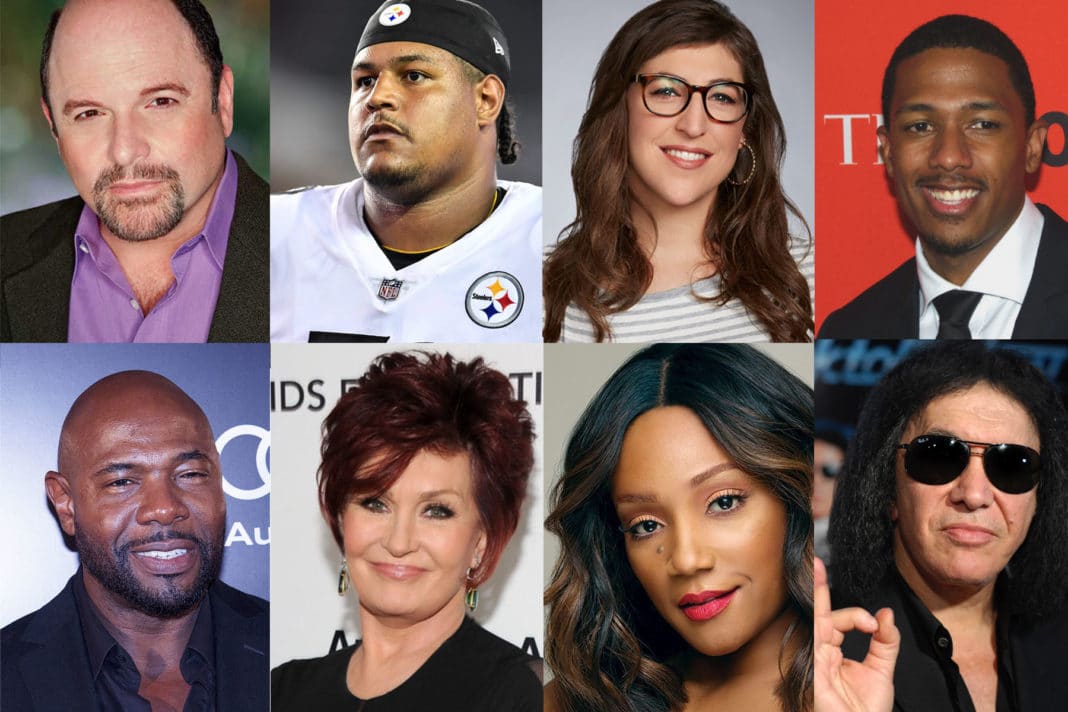
More than 170 leaders of the entertainment industry released a unity statement on Feb. 1 after launching the Black-Jewish Entertainment Alliance (BJEA), a joint initiative by Black and Jewish entertainment industry professionals devoted to countering racism and anti-Semitism.
In the face of institutional racism and rising anti-Semitism the members of the Alliance feel it is critical to stand together and support one another.
Signatories of the statement include Billy Porter (“Pose”), Mayim Bialik (“Call Me Kat”) Jeremy Piven (“Entourage”), Sharon Osbourne, Tiffany Haddish, Nick Cannon, Jason Alexander (“Seinfeld”), Co-chairman & CEO of Warner Records Aaron Bay-Schuck,, Antoine Fuqua (Director/Producer), President of Motown Records Ethiopia Habtemariam, CEO/Chairman of Columbia Records Ron Perry, Dulé Hill (“The West Wing”) The late-Larry King, Gene Simmons, Pittsburgh Steeler Zach Banner and Jeff Ross among many others.
“The Black and Jewish communities, who have a long history of supporting and working together, are so much stronger when we stand together in the fight against hate,” said Aaron Bay-Schuck, Co-Chairman & CEO of Warner Records. “This Alliance will elevate voices in the entertainment community that can help the public to better understand the causes, manifestations, and effects of racism and antisemitism, ensuring that our industry is doing its part to be a voice for hope, unity, and healing in our country.”
While many organizations combat anti-Semitism and racism individually, the Alliance will aim to create a unified voice against both. It will host programming to highlight their common mission to fight hate and facilitate collaborative events to build solidarity between the Black and Jewish communities. They will also work to elevate voices within the entertainment community to help the public better understand the causes, manifestations and effects of institutional racism and anti-Semitism.
The unity statement (which can be read in full here) starts by acknowledging the “subjugation and persecution” that both Black and Jewish Americans continue to face in the U.S. daily, and continues with a promise to condemn hate when they see it take place.
American Jewish Committee (AJC) and the U.S. Conference of Mayors (USCM) announced today the launch of a national effort to combat antisemitism. The two organizations, which have partnered on other projects, are calling on mayors across the country to sign a statement declaring that antisemitism is incompatible with fundamental democratic values.
“Antisemitism is a growing societal menace, it comes from multiple sources, and mayors are uniquely positioned to lead their cities in taking concerted steps to fight it,” said AJC CEO David Harris. “By launching this joint effort on International Holocaust Remembrance Day, we recall the darkest period of genocide against the Jewish people, and the constant need for vigilance to guard against any and all forms of antisemitism.”
“In the last few years we have seen a significant increase in hate crimes directed at individuals and institutions based on faith, with the biggest increase among these incidents having been those directed at Jews,” said Conference of Mayors CEO and Executive Director Tom Cochran. “We have always called on mayors to speak out against hate crimes when they occur, and the statement we are inviting mayors to sign today provides a way for them to register their opposition to the dramatic increase in antisemitism we have experienced in our country and work together to reverse it.”
Mayors United Against Antisemitism
The AJC-USCM initiative comes as incidents of antisemitism, some of them violent, continue to rise across the United States, confirmed in FBI reports and AJC public opinion surveys. American Jews, who make up less than 2% of the American population, were the victims of 60.2% of anti-religious hate crimes, according to the FBI 2019 Hate Crimes Statistics report.
AJC’s 2020 State of Antisemitism in America report found that 88% of Jews considered antisemitism a problem today in the U.S., 35% had personally been victims of antisemitism over the past five years and 31% had taken measures to conceal their Jewishness in public. Moreover, the AJC report revealed that nearly half of all Americans said they had either never heard the term “antisemitism” (21%) or are familiar with the word but not sure what it means (25%).
Rabbi Dr. Abraham J. Twerski (Z”L) died this week, age 90, one
more in a long line of important rabbis to succumb to COVID-19. The loss of
Rabbi Twerski to the Jewish people is, of course, enormous. But for those of us
from Pittsburgh, the loss is more personal, more poignant. Rabbi Twerski was a
local celebrity, someone who made us proud, and it didn’t matter whether or not
you were Jewish.
He was a symbol of tolerance, because everyone knew this scion
of several Hassidic dynasties worked at St. Francis Hospital, alongside the
nuns. And he was a symbol of sweetness to all who suffered from addiction.
Because he understood you, and cared about you. He had compassion.
Rabbi Twerski became an authority on the subject of
addiction. He was known to pop into local AA meetings and to him, it was
probably no big deal. But everyone in those meetings knew it was an honor to
have him there. They felt it, and they loved him for just being there alongside
and among them, as if he were one of them. More importantly, I think they felt
he loved them. Their religion didn’t
matter. They were people who were suffering, and he cared. He wanted to help.
Rabbi Twerski was real. He retained his Milwaukee accent to
the end. And he didn’t mind using secular culture to make important points.
Among the more than 60 books he authored were two books (see HERE
and HERE)
illustrated with Charles Schultz’s Peanut comic strips, intended to serve as commentary
to the Twelve Steps. These books with their comic strips made the steps more
accessible and somehow more possible, to just plain folks.
Rabbi Twerski had a face that shone like an angel. When I
would see him, in person, or in a photo or video—it didn’t matter which—I always thought
of the verse from Ethics of the Fathers (1:15) that describes sever panim yafot: a pleasant
countenance.
Shammai says, "Make your Torah study regular; say
little and do much; and greet every person with a pleasant countenance."
Some translate “pleasant countenance” as a smile. But it’s
that and something more: it’s the thing that shines from a face of goodness and
kindness. An extra-special something that emanates from beyond what we see on a
face or in a facial expression. I can recall numerous articles in local
Pittsburgh papers describing Rabbi Twerski as “saintly.” But what he had was sever panim yafot. Rather than the face
of a saint, he had the face of an angel.
One of the most striking things about Rabbi Twerski is that
he was balanced. He stressed
self-esteem while projecting modesty and humility. In 2019, I included a clip
of Rabbi Twerski speaking at the Mayanei HaYeshua Medical Center in Bnei Brak, in my Rosh
Hashana roundup. He spoke about the right way to raise a child: not to
punish, but to increase self-esteem. Rabbi Twerski illustrated the concept with
several stories, including a personal anecdote of a minor misdeed as a young
boy, and how his father handled the matter. The story hit all the right notes
for me as a mother, and as a person, though I’d heard it before. These precious
Rabbi Twerski stories were all a part of growing up in Pittsburgh.
Rabbi Twerski’s stories were a joy to hear and always left
you with a little shock of recognition: "Yes! That’s the thing. The right way to
respond, to behave, in response to a sticky situation."
And the stories were
also just plain funny. They changed depending upon who was doing the retelling.
But also because sometimes Rabbi Twerski told you a little bit more of the story. So you
never minded hearing a well-loved Rabbi Twerski tale, retold. It was all
part of the lore, and yet there was no mystique. He was a completely open book, a
very beautiful, humorous, light-hearted, yet meaningful and impactful book.
My dear friend @MyShtender emailed Rabbi Dr. Abraham J. Twerski about the Christmas play story.
He responded with the details.
And frankly it’s even better than I remembered it.
I was curious to see what the Pittsburgh
Post-Gazette would write about this favorite son, but I hadn’t counted
on learning something new: Danny Thomas was instrumental in enabling Rabbi
Twerski to complete his medical studies.
Married and ordained by age 21, he worked as an assistant
rabbi in the Milwaukee congregation of his father, Rabbi Jacob Twerski.
But with psychiatry and psychology on the rise in the 1950s,
“I noticed that people weren’t flocking to me for counseling the way they had
to my father,” he later recalled in Pittsburgh Quarterly. “I decided that if I
wanted to be the kind of rabbi my father was, I had to become a professional.
So I went for broke, going to medical school to become a psychiatrist.”
He was going for broke almost literally.
He and his wife, Golda, already had a growing family. Even
with help from members of his congregation, he fell behind on tuition. Then a
gift of $4,000 arrived from an unexpected source, he wrote — the actor Danny
Thomas, who had read a newspaper article about the young rabbi struggling to
get through medical school at Marquette University. (Time magazine, too, caught
interest early, profiling the “Rabbi in White” in 1959.)
Special pictures shared with my by my dear friend @shuaros.
Rabbi Twerski, from beginning to end, was a healer.
But back to Pittsburgh, St. Francis, and the nuns. Rabbi Twerski led the psychiatry unit at St. Francis Hospital for 20 years, and then founded Gateway Rehabilitation Center. In a 1991 Post-Gazette article, Rabbi Twerski estimated he had worked with some 30,000 alcoholics, and he was far from finished with his work. It was an awesome source of pride to Pittsburghers that an august rabbi could work together with nuns day in and day out with no awkwardness, but a great deal of goodwill and harmony. The rabbi chronicled this story of coexistence in The Rabbi & the Nuns. In the days that followed his death, fellow Pittsburghers were scanning and sharing vignettes from the book.
Aside from the unexpected discovery that Danny Thomas helped Rabbi Twerski go to med school, there was a second surprise: Rabbi Twerski was the composer of the popular Jewish tune Hoshea et Amecha. “Save Your people, and bless Your inheritance; and tend them, and carry them forever.” Psalms 28:9.
Everyone knows this song. It’s sung everywhere, for every occasion. But I’d never known the song originated with Rabbi Twerski. And now I’ll always think of him when I hear this song.
It was all part of Rabbi Twerski’s perfect balance of humility, modesty, and self-esteem that he asked that there be no eulogies at his funeral. He requested only that mourners sing the melody he composed. It was like he was saying: "This is how I want to be remembered. I want to be remembered as the guy who made a holy song acknowledging that salvation and sustenance come from God alone."
The song he’d written some 60 years ago, said Rabbi Twerski, had made many Jews happy, and that is what he wanted to take with him to the world of truth.
Rabbi Twerski requested that he should not be eulogized.
Instead he asked for a song to be sung.
“Save and bless Your very own people; tend them and sustain them forever.”
The watchdog organization UN Watch published its first-ever report on Monday detailing the strong anti-Israel claims made at the United Nations Human Rights Council (UNHRC) by various countries.
The release of the report comes amid the 46th session of the UNHRC, which is scheduled to take place on February 22 in Geneva and will run until March 23.
The 58-page report titled “Agenda Item 7: Country Claims & UN Watch Responses” focuses on how claims put forward against Israel by notorious human rights abuses, such as the Palestinian Authority, Syria, North Korea, and dozens of other council members that frequently accused Israel of various crimes and human rights violations.
Among the claims made against Israel at the UNHRC include Israel hindering the Palestinians in their fight against COVID-19, Israel occupying Palestinian land, Israel committing apartheid against the Palestinians, damaging holy sites, and the blockade of Gaza being illegal.
Under Agenda Item 7, Israel is the sole country discussed at the council, while all the other 193 countries in the world are addressed under Agenda Item 4. Likewise, the report notes that no special agenda items were filed on Iran, Syria, North Korea, and other prominent human rights abusing countries.
“Israel has become a convenient punching bag and scapegoat for non-democratic states, many of them members of the UNHRC such as Cuba, Pakistan, and Libya, to divert attention away from their own gross and systematic human rights abuses," said UN Watch Executive Director Hillel Neuer in response to the report.
At the same time, the report notes that all Western countries have refused to participate in the Item 7 debate, due to the claim it is biassed against Israel.
A Molotov Cocktail was thrown at a synagogue in the Golders Green neighborhood of London Tuesday.
Police cordoned off the area around the Munks Beit Midrash after a suspicious individual was spotted at the site. Footage from the scene showed firefighters attempting to put out a small fire near the building.
Local councilor Alex Prager wrote on Twitter that "Golders Green Road is closed due to a security incident. Police and fire brigade on site. Appears to have involved a molotov cocktail next to a synagogue on The Riding."
Police stated that the incident is not believed to be related to terrorism.
Breaking 🚨 news out of London - Fire happening, molotov cocktail thrown near the Golders Green synagogue.
Men in the video can be heard asking "why did he wait all that time to throw that little bottle?"
Pakistan’s Supreme Court on Tuesday ordered the Pakistani-British man acquitted of the 2002 gruesome beheading of American journalist Daniel Pearl off death row and moved to a so-called government “safe house.”
Ahmad Saeed Omar Sheikh, who has been on death row for 18 years, will be under guard and will not be allowed to leave the safe house, but he will be able to have his wife and children visit him.
“It is not complete freedom. It is a step toward freedom,” said Sheikh’s father, Ahmad Saeed Sheikh, who attended the hearing.
The Pakistan government has been scrambling to keep Sheikh in jail since a Supreme Court order last Thursday upheld his acquittal in the death of Pearl, triggering outrage by Pearl’s family and the US administration.
In a final effort to overturn the acquittal, Pakistan’s government as well as the Pearl family filed an appeal to the Supreme Court, asking it to review the decision to exonerate Sheikh of Pearl’s murder. The family’s lawyer, Faisal Siddiqi, however, said such a review had a slim chance of success because the same Supreme Court judges who ordered Sheikh’s acquittal sit on the review panel.
The US government has said that it would seek Sheikh’s extradition if his acquittal is upheld. Sheikh has been indicted in the United States on Pearl’s murder as well as in a 1994 kidnapping of an American citizen in Indian-ruled sector of the divided region of Kashmir. The American was eventually freed.
Q Thank you, Jen. Two quick foreign and one domestic, if that’s okay.
Can you confirm officially that Robert Malley has been appointed Special
Envoy for Iran? Is that —
MS. PSAKI: I can. I believe it was announced this morning. Yes? Or I
guess I can confirm it here too for you.
Q That would be great. And then the — as you know,
settlements have been a major obstacle to getting the Palestinians back
to the negotiating table. Would President Biden consider it —
does he believes settlements are — should be halted in the West Bankso that the Palestinians will come back?
MS. PSAKI: I don’t have any new comments from President Biden on this
or the current circumstance. He’s obviously spoken to this particular issue
in the past and conveyed that he doesn’t believe security assistance should
be tied. But I don’t have anything more for you on the path forward toward a
two-state solution. [emphasis added]
The journalist's question contains 3 mistaken assumptions -- assumptions that
at this point have also been accepted without question by the media as fact.
Assumption #1: Settlements are an obstacle to the Palestinian Authority
coming to the negotiating table.
When Obama came to power, he is the one who announced that settlement
activity must be stopped. If America says it and Europe says it and the
whole world says it, you want me not to say it?
Settlements are only one of the six issues to be negotiated by Israel and
the Palestinians according to the original Oslo Accords from 1993. To single
out the issue of settlements ahead of any negotiations while ignoring other
bilateral issues constitutes a fundamental distortion of these signed
agreements.
Yet this distortion has taken hold, including in the minds of the journalists
who are supposed to be in command of the facts.
Assumption #2: Israel should make unilateral concessions
Why should the assumption be, as this journalist clearly believes, that
unilateral concessions by Israel owes it to the Palestinian Arabs -- and the
peace process itself -- to make immediate sacrifices?
Why does nobody suggest a freeze on Abbas's pay-to-slay policy that
encourages terrorism and the murder of Israelis?
In fact, we have already seen Israel commit to a freeze in the settlements
in 2009, in a sign of good faith that Abbas would come to the negotiating
table.
To the contrary, when Israeli prime minister Benjamin Netanyahu implemented
a 10-month security freeze in order to coax the Palestinians to the
negotiating table, Abbas essentially responded with a 9-month
negotiating freeze. And after the moratorium on Israeli building expired, he again
refused
to talk peace.
Those unilateral concessions to the Palestinian Arabs do not work.
Assumption #3: Settlements are being built
The building of Israeli settlements is supposed to be a a major obstacle --
and that is a claim that was made over and over by the Obama administration:
Back in 2014, in an interview with Jeffrey Goldberg about his Middle East
policy, Obama claimed:
we have seen more aggressive settlement construction over the last
couple years than we've seen in a very long time.
On December 28, 2016, following the US abstention that allowed the passing of UN
Resolution 2334,
then-Secretary of State Kerry claimed, "We’ve made countless public and private exhortations to the Israelis to stop
the march of settlements."
In a speech Biden gave before J Street in April 2016, he copied that heated rhetoric, condemning "the actions that Israel’s
government has taken over the past several years –
the steady and systematic expansion of settlements..."
o There were 228 settlements -- not tens of thousands
o What Kerry calls a march of settlements in 2016 is 3
settlements in 2012 -- with none from 1990 till then and none from the
end of 2012 to 2016 when Kerry made his claim
o If you look at what is actually going on, you see the
issue is not the building of an expanding number of settlements, but of
homes inside those settlements.
According to data from the Housing and Construction Ministry, an average
of 1,554 houses a year were built in the settlements from 2009 to 2014 —
fewer than under any of his recent predecessors.
By comparison,
the annual average was 1,881 under Ariel Sharon and 1,774 under Ehud
Olmert. As for Ehud Barak, during his single full year as prime minister,
in 2000, he built a whopping 5,000 homes in the settlements.
So:
o Israeli settlements are not the obstacle to negotiations,
they are one of the issues to be discussed at the negotiations
o There is no justification for Israel to concede on a
negotiating point, while Abbas merely pockets those concessions
o Settlements are not expanding. Houses within the
settlements are being built to meet the need.
There was a time when journalists asked the kinds of questions that kept
the administration on its toes -- attacking the points,
not the people presenting them.
Of course, that would require a certain level of knowledge as well as a
willingness to challenge the common perception.
MR. KELLY: Well, I would say that we’ve gotten both sides to
commit to this goal. They have – we have – we’ve had a intensive round or
rounds of negotiations, the President brought the two leaders together in
New York. Look --
QUESTION: But wait, hold on. You
haven’t had any intense --
MR. KELLY: Obviously --
QUESTION:
There haven’t been any negotiations.
MR. KELLY:
Obviously, we’re not even in the red zone yet, okay.
QUESTION:
Thank you.
MR. KELLY: I mean, we’re not – but it’s – we
are less than a year into this Administration, and
I think we’ve accomplished more over the last year than the previous
administration [under President George Bush] did in eight years. [emphasis added]
QUESTION: Well, I – really, because
the previous administration actually had them sitting down talking to each
other. You guys can’t even get that far.
MR. KELLY: All
right.
QUESTION: I’ll drop it.
The question is, who in the media is both willing and able to keep the
Biden administration honest about its Middle East policy now.
In the past year many parents started homeschooling their children. They need resources, and there are a number of online textbooks that are free and look professional.
I looked at two world history resources. One is Students of History, which has free resources plus full lesson plans for a fee. The other is an online world history textbook for 7th graders that adheres to California standards.
In both resources, Judaism is a footnote and the Kingdoms of Judah and Israel are ignored. The Bible is barely mentioned. But Islam is featured with an entire section in both, and Mohammed does not wage a single war - he only defends himself while Islam spreads, magically.
In Students of History, the origins of Judaism are presented skeptically and as a derivative of Zoroastrianism.
The first prophet and founder of Judaism is Abraham. Another main prophet is Moses who is believed to have led the Hebrews out of slavery in Egypt and wandered the Sinai peninsula’s desert for 40 years.
But the chapter on the origins of Islam say, flatly, that Archangel Gabriel spoke to Mohammed:
When Muhammad was 40 years old he began hearing voices and seeing visions of divine angels. To better understand these visions he would go to Mount Hira and meditate. On one such journey in 610, the Archangel Gabriel appeared to him and told him that there was only one god, Allah, and he had chosen him as a prophet.
Mohammed doesn't wage a single war in that chapter:
Muhammad would continue to have these revelations and began preaching his message. He soon gained many followers however, his belief in only one god upset the people who worshiped many gods. They were afraid that Muhammad’s teachings would upset the pagan gods that protected their trade.
In 622, Muhammad, his family, and his followers became persecuted for their beliefs and had to flee Mecca. The flight from Mecca to Medina is called the Hijra. They were welcomed into the city of Medina and were able to freely practice their religion. There the first mosque was built and he and his followers would pray towards Mecca.
At this time the pagans in Mecca tried to go to war with the Muslims in Medina. After several battles the Muslims defeated the pagans, and in 629 Muhammad returned to Mecca with 1500 converts and took control of the city. Over the next 2 years most of the Arabian Peninsula converted to Islam. Muhammad died in 632 as the effective leader of Islam and ruler of Southern Arabia.
Early in the first century AD a new religion, Christianity, appeared in Rome. At first the Romans saw the Christians as a branch of an older religion, Judaism. They didn't anticipate that Christianity would become a major force in the empire.
In its chapters on Islam it does mention that some of it was derivative from Judaism and Christianity.
The life of Mohammed is presented as heroic:
Muhammad Becomes a Prophet
A man named Muhammad brought a different religion to the people of Arabia. Historians don't know much about Muhammad. What they do know comes from religious writings.
Muhammad was born into an important family in Mecca around 570. Muhammad's early life was not easy. His father, a merchant, died before he was born; and his mother died later, when he was six.
With his parents gone, Muhammad was first raised by his grandfather and later by his uncle. When he was a child, he traveled with his uncle's caravans, visiting places such as Syria and Jerusalem.
I have never seen any source that says Mohammed visited Jerusalem.
The book then describes Islam as a socialist antidote to evil capitalism.
The caravan trade made Mecca a rich city. But most of the wealth belonged to just a few people. Poor people had hard lives. Traditionally, wealthy people in Mecca had helped the poor. But as Muhammad was growing up, many rich merchants began to ignore the poor and keep their wealth for themselves.
...Another of Muhammad's teachings
also worried Mecca's wealthy merchants.
Muhammad said that everyone who
believed in Allah would become part of a
community in which rich and poor would
be equal. But the merchants wanted to be
richer and more powerful than the poor
people, not equal to them.
Muhammad also taught that people
should give money to help the poor. However, many wealthy merchants didn't want
to help the poor. Instead, they wanted to
keep all of their money. Because many of
the people in Mecca didn't want to hear
what Muhammad had to say, they rejected
his teachings.
At first Muhammad did not have many
followers. Mecca's merchants refused to
believe in a single God and rejected the
idea of equality. They even made Muhammad leave Mecca for a while. Eventually,
however, Muhammad's teachings began to
take root.
This implies that the Jews who opposed Mohammed were also selfish rich people who didn't care about the poor, and they had no valid reason to oppose someone who was usurping their religion.
The spread of Islam is described as peaceful and voluntary, with fighting only when Mohammed was attacked.
Slowly, more people began to listen to
Muhammad's ideas. But as Islam began
to influence people, the rulers of Mecca
became more and more worried. They
began to threaten Muhammad and his
small group of followers with violence.
They even planned to kill Muhammad. As
a result, Muhammad had to look for support outside of Mecca.
A group of people from a city north of
Mecca invited Muhammad to live in their
city. As the threats from Mecca's leaders got
worse, Muhammad accepted the invitation. In 622 he and many of his followers,
including his daughter Fatimah, left Mecca and went to Medina (muh-DEE-nuh).
Named after Muhammad, Medina means
"the Prophet's city" in Arabic, the language
of the Arabs.
Medina just means "city," although it was known at the time as "al-Madīnah an-Nabawiyyah," "the city of the prophet."
Muhammad's departure from
Mecca became known in Muslim history
as the hegira (hi-JY-ruh), or journey.
Muhammad
taught that there
was only one
God.
Muhammad's arrival in Medina holds an
important place in Islamic history. There
he became both a spiritual and a political
leader. His house became the first mosque
(MAHSK), or building for Muslim prayer.
The year of the hegira, 622, became so
important to the development of Islam
that Muslims made it the first year in the
Islamic calendar.
According to Islamic belief, in Medina Muhammad reported new revelations
about rules for Muslim government, society and worship. For example, God told
Muhammad that Muslims should face
Mecca when they pray. Before, Muslims
faced Jerusalem like Christians and Jews
did.
Christians didn't face Jerusalem in prayer - they faced east no matter where they were.
Muslims recognized the importance
of Mecca as the home of the Kaaba. They
believe the Kaaba is a house of worship
that Abraham built and dedicated to the worship of one God.
As the Muslim community in Medina grew stronger, other Arab tribes in the
region began to accept Islam. However,
conflict with the Meccans increased. In
630, after several years of fighting, the
people of Mecca gave in. They welcomed
Muhammad back to the city and accepted
Islam as their religion. Muslims all
over the world
still look toward
Mecca when they
pray.
In Mecca Muhammad and his followers destroyed the statues of the gods and
goddesses in the Kaaba. Soon most of the
Arabian tribes accepted Muhammad as
their spiritual leader and became Muslims.
Mohammed was a warrior. Islam spread by the sword. Muslims are proud of this. Yet this part of Islamic history is erased.
Similarly, Islam is treated as if it was the first religion to come up with the idea of charity or kindness towards the poor and strangers.
Also, saying that Islam supports equal rights is true - for Muslims. The text doesn't describe how Islam regards non-Muslims.
These textbooks have severe problems in both their content and their omissions. Almost certainly most written textbooks nowadays have similar shortcomings. And this is what is being taught to the next generation.
On Sunday, the independent Palestinian Al Ghad al-Arabi channel interviewed Israel's Defense Minister Benny Gantz.
What he said wasn't as important as the fact that the interview happened at all.
Palestinian factions have denounced the interview, calling it "illegal" and "normalization."
Islamic Jihad said in a press statement, "Hosting the occupation ministers or any Zionist figures on the Arab media is unacceptable, condemned and unacceptable, whatever the justifications."
The Palestinian Journalist Bloc considered this "a dangerous moral slip, and a blatant encroachment on our Palestinian people, the peoples of our nation, and the world's free people." and called for all Arab media to abide by the decisions of the Arab Journalists Union "to fight media normalization with the occupation and its institutions, as it carries a danger to our people and their rights.." It called for an apology.
The Union of Arab Journalists called for rejecting this "unacceptable normalization act with no justification," stressing that it disregards the sacrifices of our Palestinian people and contributes to beautifying Israel's image before the world at the expense of the suffering of the Palestinian people and their just cause.
The Democratic Press Association expressed its rejection of this "blatant normalizing participation on the Al-Ghad TV screen."
The government media office in Gaza also condemned Al-Ghad TV, saying "Gantz had stained his hands with the blood of our Palestinian people" and said that "such hosting of figures from the occupation state goes beyond the professional and national Arab dimension, which affects the feelings of millions of supporters of the Palestinian cause."
The Palestinian Media Group emphasized its rejection and strong condemnation of the Al-Ghad Al-Arabi channel, "which indicates the submission to which some Arab media outlets have reached, which insist on walking in the orbit of treacherous normalization of the just Palestinian cause."
The condemnations were so widespread that Al Ghad al-Arabi issued a statement on Monday night during its broadcast, saying that it is an independent and neutral Arab channel that deals with Arab and Palestinian affairs and it intends to continue its professional mission and its commitment to the usual professional rules in media work.
The fact that it didn't apologize is almost as a big a deal as doing the interview to begin with. It shows that even Palestinian solidarity in matters like this is cracking.
The New Israel Fund, along with a series of other “progressive” organizations in the United States that make up the Progressive Israel Network – including J Street, Americans for Peace Now, Habonim Dror North America and Hashomer Hatzair World Movement – put together a petition ahead of Joe Biden’s entry to the White House. It calls on the U.S. government not to adopt the working definition of antisemitism formulated by the International Holocaust Remembrance Alliance and already adopted by more than 10 countries (including Muslim-majority countries like Bahrain and Albania, with Morocco also on the way). The signatories say the definition is overly broad and so will allow the fight against antisemitism to be exploited to “suppress legitimate free speech, criticism of Israeli government actions, and advocacy for Palestinian rights.”
What specifically bothers the authors of the petition? They object to the section that cites as an example of antisemitism the assertion that “the existence of a State of Israel is a racist endeavour.” The “existence” of Israel, mind you, is not this or that government policy. In other words, the petition’s authors wish to legitimize the ideas that stood behind the UN Security Council’s despicable 1975 resolution that “Zionism is racism.” So despicable that even the UN, not exactly the most Israel-friendly forum, decided to rescind it in 1991.
Amos Oz used to say that whoever thinks that all peoples deserve the right to self-definition, except the Jews, is antisemitic. By this definition – from the most important intellectual the Israeli left has ever had, not the IHRA – the New Israel Fund and its partners are not seeking to distinguish legitimate criticism from anti-Jewish racism, but rather to advance the legitimation and normalization of antisemitism.
So as to remove any doubt, the petition they’ve signed clarifies not just what it aims to legitimize, but whom in particular: “Secretary of State Pompeo’s State Department’s unambiguous declarations that ‘anti-Zionism is anti-Semitism’ and that ‘the Global BDS Campaign [is] a manifestation of anti-Semitism’ represent a harmful overreach.” The radical left often tends to blur the line between those who oppose the occupation and support the two states for two peoples solution, and those who do not recognize the nation-state of the Jewish people’s right to exist and believe that Zionism is a regrettable historic aberration, an illegitimate colonialist enterprise that must be rolled back.
But of course J Street is so committed to combating Antisemitism, that it is refusing to support the most widely accepted international definition of Antisemitism. Make sense? https://t.co/qvx0sMeqmh
January was marked by unprecedented political unrest in the US, following the presidential election and rioting in Washington. The incoming Biden administration has not yet articulated its policy regarding antisemitism or BDS, but certain aspects are becoming clearer. Incoming Secretary of State Antony Blinken stated during his confirmation hearing that he and the Biden administration are “resolutely opposed to BDS.” Nominee for US Ambassador to the United Nations Linda Thomas-Greenfield stated in her confirmation hearing that BDS is “unacceptable,” “verges on antisemitic,” and “it’s important that they not be allowed to have a voice at the UN, and I intend to work against that.”
According to one report, a Trump-era initiative to list BDS groups has been sidelined because of the transition, and internal State Department opposition. The stance of new Education Department appointees on BDS remains unclear.
Concern is rising with regard to lower-level nominees. The nomination of a former member of Students for Justice in Palestine, Maher Bitar, to head intelligence activities at the National Security Council is especially alarming. Bitar had served in the Obama administration as Director for Israeli and Palestinian Affairs, as well as a lawyer for UNRWA, before becoming General Counsel for the House Intelligence Committee. A nominee for Assistant Attorney General for Civil Rights who espoused troubling beliefs in college, including the idea that Jews were responsible for the slave trade, unconvincingly characterized her previous stance as satire but also denounced antisemitism.
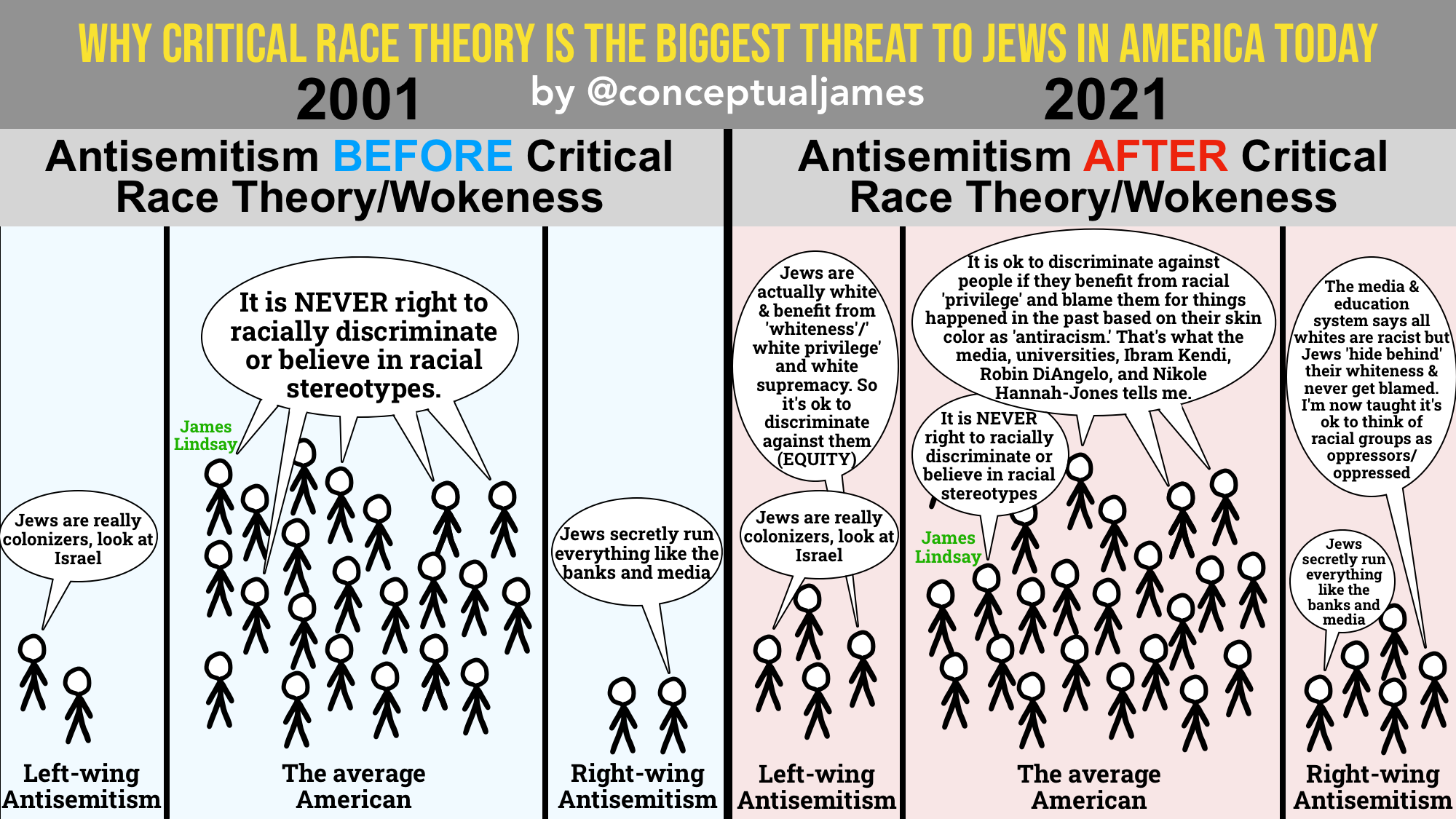
The new administration has revoked the Trump administration’s Executive Order banning “Critical Race Theory” training in Federal agencies and for Federal contractors (a move that had already been blocked by a Federal court).
The use of ethnic studies and “racial equity” by the BDS movement to generate antisemitism was demonstrated by the California “ethnic studies” curriculum — and also by comments from a University of California Riverside professor that “Most California public education administrators don’t understand how Zionism politically toxified our schools and curricula. It prevents us from teaching historical material about entire populations. This must not continue.”
This blog may be a labor of love for me, but it takes a lot of effort, time and money. For 20 years and 40,000 articles I have been providing accurate, original news that would have remained unnoticed. I've written hundreds of scoops and sometimes my reporting ends up making a real difference. I appreciate any donations you can give to keep this blog going.
Tunisian customs around Tisha B’Ab
-
Tonight marks the start of Tisha B’Ab, the most solemn day of the Jewish
year, when Jews fast to mourn the destruction of the two Temples in
Jerusalem, a...
Unity on Tisha B'Av 2026
-
Tomorrow, Wednesday at sunset, Tisha B'Av begins. It is the saddest day
on the Jewish calendar and is a fast day for observant Jews. All food and
enter...
Elder of Ziyon
-
Love of Israel is in no way contradictory to love of America. American Jews
are very appreciative to live in a country that is not only welcoming of
Jews b...
Now What?
-
Today, Jews cannot walk down the street in North America, Europe, or even
Australia without the possibility of being spat on, beaten, or even
murdered. Cou...
Closing Jews Down Under Website
-
With a heavyish heart I am closing down the website after ten years.
It is and it isn’t an easy decision after 10 years of constant work. The
past...
‘Test & Trace’ is a mirage
-
Lockdown II thoughts: Day 1 Opposition politicians have been banging on
about the need for a ‘working’ Test & Trace system even more loudly than
the govern...

 Wednesday, February 03, 2021
 Elder of Ziyon