
 Wednesday, March 18, 2020

From Ian:
JCPA: Enforcing Compliance with COVID-19 Pandemic Restrictions: Psychological Aspects of a National Security Threat
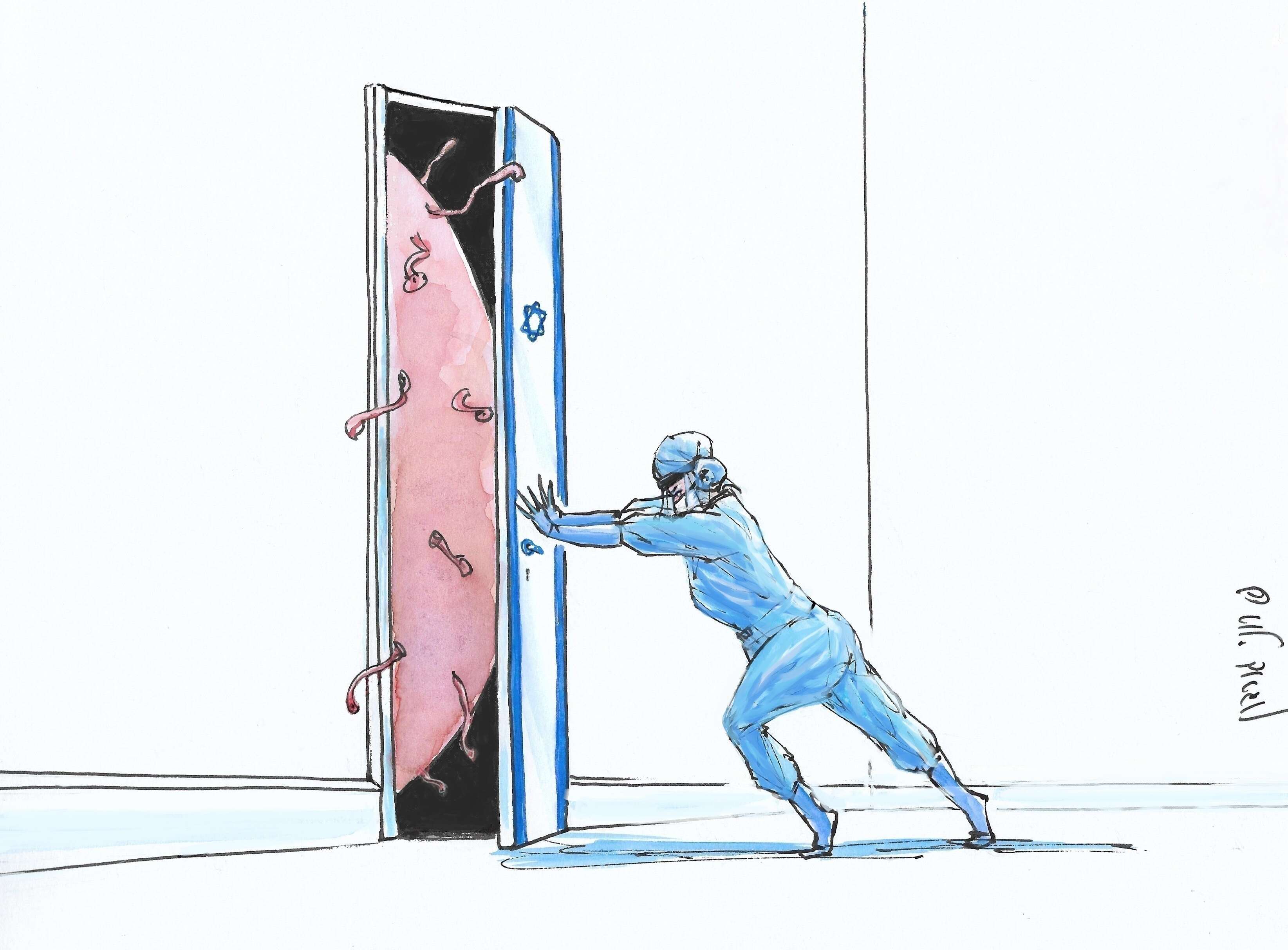
Israel has not lost anybody to COVID19, but that will not go on, warns Netanyahu
'I survived the Nazis, we'll get through this'
JCPA: Enforcing Compliance with COVID-19 Pandemic Restrictions: Psychological Aspects of a National Security Threat
As the world faces the threat of the coronavirus (COVID-19), many commentators and national leaders around the world are beginning to recognize it as a genuine national security threat.'Total lockdown inevitable' says Erdan as coronavirus patients reaches 433
In human behavior terms, however, the threat is not from an external enemy but from citizens who refuse to comply with guidelines and instructions and fail to change their behavior to adapt to the developing situation. With the coronavirus, the individual refusing to comply is an active and ongoing threat to others as well as or sometimes more than to themselves.
The obvious threats are the outright refusers. From a psychological perspective, these are people who are either oppositional in their attitude or in denial regarding the effects of their refusal. While the former understand that by intentionally violating guidelines they are creating risk for others, the latter deny it, at times adopting an "it won't happen to me" attitude.
Classifying the refusers' behavior as a risk and treating them as a genuine threat is a national priority. Since the cadre of those who intentionally or unintentionally put the public at risk cannot be eliminated solely through education and social pressure, law enforcement and government authorities may have to intervene.
While understandably not popular with those that value the protection of civil liberties, the suspension of these protections in times of national emergency may prove to be central in reducing mortality, as well as in limiting the economic consequences of a protracted battle with an unseen enemy hiding in a friendly population.
As of Wednesday afternoon, 433 people in Israel have been confirmed positive to the coronavirus, the Health Ministry informed, with six new cases registered since the previous update.
Earlier in the day, the Ministry revealed that the number of patients had spiked in the country, with over 100 new people confirmed positive in the previous 24 hours.
Moreover, it was announced that over 2,200 tests were performed on Tuesday, more than double the amount of the previous days, highlighting a significant rise in the number of tests executed.
Minister of Public Security Gilad Erdan said on Wednesday morning that a total lockdown in Israel is inevitable given the situation of the novel COVID-19.
Erdan instructed the police and other security forces in Israel to prepare for the decision of a total lockdown in a phone call with the heads of internal security bodies throughout the country on Tuesday evening.
Of the 427 people infected in Israel as of Wednesday morning, 236 are hospitalized, 26 are in the process of being hospitalized, 71 are isolated at home or in a designated hotel, and 83 tested positive but the decision on how to treat them is yet to be made, while 11 already recovered and were discharged.
Heartfelt message of solidarity from #Israel's @PresidentRuvi to Jewish communities in the Diaspora, in wake of #CoronaVirus pandemic:https://t.co/hwZICVZTU8
— Arsen Ostrovsky (@Ostrov_A) March 18, 2020
Israel has not lost anybody to COVID19, but that will not go on, warns Netanyahu
'I survived the Nazis, we'll get through this'
"I'm 85 and live in Tel Aviv. I was born in Galicia, which is now Ukraine," Shosh Trister tells Israel Hayom.
During the Holocaust, she says, she and her family were sent to a labor camp, from which they escaped and managed to make it back to the area where they had lived. They found various hiding places – including the forest, and with gentile families.
"For two years, we lived underground, nine people underneath a pigpen," Trister says.
In 1950, Trister made aliyah.
"At first, we lived in a ma'abra [immigrant camp] in Kfar Saba. Mom and Dad got typhus there and were hospitalized. I remember it as a very hard time, because I was far away. I thought it would be a day or two, but it was a few weeks. After the Holocaust, it was a major blow. I stayed in tent and cried."
Now, as the novel coronavirus outbreak is posing a new kind of threat to the Israeli population, Trister is confined to her home.
"It's very hard for me. Hard isn't the word – the distance makes me cry. When I'm alone, I remember the loneliness, my mother and father, and my husband, Shlomo, who died four and a half months ago," she says.
"I'm used to being an active person, going out, speaking to students, painting. Every day, I [usually] walk to our local community center and meet my friends. Now, I'm forced to stay home alone. Every morning I exercise on at home, water the plants, take care of the apartment, and then I sit down to write or paint my memories.
"I have a son who takes care of me. He comes and does my shopping. The rest of the kids also call, but it's terribly hard not seeing them."
Despite everything she has experienced in her life, Trister says she is "an optimist by nature."
"What we went through dwarfs everything. We might be stuck at home, but we have the freedom of being in Israel. We survived the Holocaust. In the end, we won. We'll beat corona, and get through it. We are strengthening everyone around us and taking strength from them. It will all be over – they'll find a cure and we'll go back to our daily routines. We overcame everything, and so will you – we owe it to future generations.




.jpg)


