Wednesday, March 31, 2021


Exodus” was a fitting selection for Merriam-Webster’s Word of the Day feature for March 28, the first day of the Jewish festival of Passover (Pesach). Pesach, after all, celebrates the miraculous Jewish exodus from Egypt, where the Jews were subject to the worst human rights abuses and constrained from observing their religion for 430 years. Perhaps less fitting than the selection of that particular word on that particular day, were the two word definitions on offer, neither of which, it might be said, referred to the event as such: the Jewish Exodus from Egypt, the anniversary of which is celebrated on Passover. Aside from this omission, the first definition conflates “Jewish and Christian Scripture,” in effect, robbing the event of its distinct Jewish character and identity on the day commemorating the Exodus, Passover.

Definition

1 capitalized : the mainly narrative second book of canonical Jewish and Christian Scripture

2 : a mass departure : emigration

The first Merriam-Webster definition tells us that capitalized, "Exodus" refers to a book of shared provenance. The Jewish name for this book, however, is not "Exodus" but "Shmot," a Hebrew word meaning "Names," as the book begins with the names of the first group of Jews who went down to Egypt. "Exodus" on the other hand, is a word that has its origins in Greek and Latin, one more apparent attempt at erasing that book's Jewish provenance.

For believing Jews, the Torah was given only to Jews, and the Exodus, referred to by Jews in Hebrew as "Yetziat Mitzrayim" (liberation from Egypt) was a miracle performed for the sole benefit of the Jewish people, with God’s direct, divine intervention: "Va-yotzienu Hashem Elokeinu misham be-yad chazaka u-be-zeroa netuya u-be-mora gadol u-be-otot u-be-moftim" – "God liberated you with a strong hand, and with an outstretched arm, and with impressive revelation, and with signs and miracles."

Despite the fact that the Exodus is a singular event that is specific to the Jewish People, Merriam-Webster suggests (on Pesach Day!) that Jews and Christians share the same book and apparently the same event as equals. This flies in the face of basic Jewish theology, displaying what some might call a callous disregard for Jewish history and belief. The second Merriam-Webster definition for "Exodus" milks the meaning out of the word still further, by leaving the Bible altogether and making generic reference to mass emigration.

In effect, Merriam-Webster tells us what "Exodus" means on Passover Day, without actually telling us what it means. Some might call this "goy-splaining." Merriam-Webster supplies the general public with two definitions for the word "Exodus," with neither referring to the Jewish miracle. One could argue that these two definitions are therefore offensive, as they serve to erase the special Jewish character of the day. This Word of the Day feature, in its seeming innocuousness, is an expression of  cultural and religious appropriation


But back to "Exodus." Having read the definitions, we arrive at the “Did You Know?” word trivia section. Here, the idea is introduced for the first time that the Exodus relates to the Jewish liberation from Egypt. It is explained to us, however, that the word has evolved, and now refers to "any mass departure." 

Did You Know?

The Biblical book of Exodus describes the departure of the Israelites from Egypt, so it's no surprise that the word has come to refer more generally to any mass departure. The word itself was adopted into English (via Latin) from Greek Exodos, which literally means "the road out." 

Merriam-Webster then helpfully offers two contemporary examples to show how the word no longer means what it once meant: the Jewish liberation from Egypt:

Examples

"Much has been made of the 'Silicon Valley Exodus.' The conventional wisdom holds that the discovery of feasible remote work arrangements during this pandemic has employers—and their employees—fleeing the Bay Area for more affordable destinations." — Sam Liccardo, The San Francisco Chronicle, 6 Feb. 2021

"Throughout the pandemic, there has been an uptick of people vacating the city in exchange for more space in the suburban and rural outskirts of the Greater Toronto Area…. According to a report from Statistics Canada, from July 2019-July 2020, Toronto saw an exodus of 50,375 people moving to other regions and provinces." — Natasha Philpott, Bradford (Ontario) Today, 7 Feb. 2021

To summarize, only in the trivia section appended to this Word of the Day feature does Merriam-Webster at last deign to tell us that the Exodus was an event specific to the Jewish people (though the word "Jewish" is not actually there). We are informed moreover, despite a millennia of the annual Passover seder performed by Jewish people all over the world to celebrate the event, that the word “Exodus” now refers “more generally to any mass departure.” Examples of how the word "Exodus" is applied today, relate to contemporary events, such as the pandemic, and how people have fled to better work opportunities and more affordable conditions. (What they aren't doing: fleeing from cruel taskmasters who work them to death building pyramids out of mud while denying them religious freedom.)

It is of course true that words evolve. But the word "Exodus" still signifies the Jewish liberation from Egypt, even today. This is not a footnote appended to a word definition, but a Jewish reality. We reference yetziat mitzrayim several times a day in our daily prayers. Every Jew is commanded, moreover, to tell the story of yetziat mitzrayim on Passover: וְהִגַּדְתָּ֣ לְבִנְךָ֔ בַּיּ֥וֹם הַה֖וּא לֵאמֹ֑ר בַּעֲב֣וּר זֶ֗ה עָשָׂ֤ה יְהוָה֙ לִ֔י בְּצֵאתִ֖י מִמִּצְרָֽיִם׃ And you shall explain to your son on that day, ‘It is because of what the LORD did for me when I went free from Egypt.’ (Shmot 13:8)

That is, in fact, the entire purpose of the Passover seder. To suggest that yetziat mitzrayim no longer has the same (read Jewish) meaning is cultural appropriation, today a most sensitive subject. From Wikipedia:

When cultural elements are copied from a minority culture by members of a dominant culture, and these elements are used outside of their original cultural context—sometimes even against the expressly stated wishes of members of the originating culture – this is cultural appropriation.

Cultural appropriation is not only a sensitive subject, but a popular one, and the reason Reem Kassis was paid by the Washington Post to write a piece called “Here’s why Palestinians object to the term ‘Israeli food’: It erases us from history.”


Kassis concludes that Israeli Jews, in an act of cultural appropriation, obscure the true origins of such Middle Eastern standbys as hummus and falafel by calling them “Israeli”:

Dubbing these dishes Israeli in name does not erase the origin of their components or that most of them still come inside or alongside a Palestinian culinary artifact. The irony, though, is that the newly constructed Israeli food culture prides itself on being a byproduct of many influences and immigrant forces while failing to highlight the most important influence — that of the local Palestinian food culture.

It matters little that there was never a sovereign state called "Palestine" and therefore, there can be no such thing as "Palestinian" nationality or heritage. Because Kassis is using sleight of hand. The writer is using the language and words of cultural appropriation to assert a lie with the end goal of appropriation: in this case, the appropriation of Jewish land. 

Shivani Persad wrote an op-ed for Cosmopolitan called “You Can’t Say Black Lives Matter if You’re Still Appropriating Black Culture.” Persad, reminiscing over a Twitter thread in the days following the murder of George Floyd says that white people “actively appropriate Black culture” when they post about police brutality “as if they are not also implicated in this system of oppression.”

Persad, in effect, is telling us that there are separate rules for white people, for white behavior, for the words white people are allowed and not allowed to use. And scores of white people believe her, falling in with her suggested mode of behavior and speech. They are no longer allowed to protest brutality, because they are white.

Like Kassis, Persad stands as the accuser, the morality police, dictating a new behavior while accusing others of cultural appropriation, inventing the language as she goes along, but using those words with authority and picking and choosing the acceptable definitions. In both cases, accusations of cultural appropriation are bogus. We are allowed to call the melting pot cuisine that developed during thousands of years of dispersion: "Israeli." Whites are allowed to speak out against police brutality. Neither is a case of actual cultural appropriation.

Language, it is clear, is probably the most important tool in the arsenal of cultural appropriation, whether that appropriation is actual or tactical. We have, for example, the issue of individuals appropriating Holocaust language for the purpose of referring to any event deemed onerous or unpleasant. Anti-vaxxers like to say, for example, that in "forcing” people to be vaccinated, this or that government is "just like the Nazis." The Never Trumpers like to say that "Trump is Hitler," referencing his policies on illegal immigration and the wall he built, as if the policies and the construction of a wall were at all comparable to the predicament faced by the Jews of Europe during the Holocaust (P.S. They are not.)

Appropriating the language of the Holocaust is offensive because the Holocaust was a singular event. It was the only time millions of one people were rounded up and shoved into ovens, gassed and burned. And if something is “like” the Holocaust, then the Holocaust must not have been all that special or horrific, after all. Not to mention that the Holocaust had the effect of nearly decimating the Jewish people. The Holocaust was the Final Solution. It was Jewish genocide,

In a similar vein, albeit with a much happier outcome, yetziat mitzrayim, the "Exodus," was a singularly Jewish event. Using the Greek/Latin word, and superimposing a new meaning over even that word, on the holiday that commemorates that day, is a terrible thing--if we will only have the courage to tell the truth. A Jewish person would be within their rights to find it unacceptable to refer to "Exodus" as a shared book--our book is Shmot--or as a general mass emigration from Silicon Valley for economic reasons. This is the language of cultural appropriation. It's taking something Jewish and making it about something else, with the authority of the language people: Merriam-Webster.

But one could also argue that cultural appropriation, as an idea, is only a pop trend. Something that serious people don’t spend even five minutes of their day to consider. And yet, perhaps we Jews should consider this issue of cultural appropriation by others, from a perspective of Jewish strength and pride, to assert and protect our rights as a people with a distinct culture and tradition. This leads to still more intriguing thoughts and questions:

Are Jews allowed to take umbrage when the word “Exodus” is used to refer to both Jewish and Christian Scripture? Or is that just silly?

Is it permitted for us to take offense when people unwittingly refer to “shared Judeo-Christian heritage?” Or should we shut up and adopt the accepted norm: that imitation is the sincerest form of flattery?

May we take exception when the language of the "Exodus," a miraculous Jewish event, is used by Merriam-Webster to refer to mass emigration from Silicon Valley for economic purposes—and on Pesach, of all days? Or should we just wave this away as an insignificant and unintended faux pas?

But the most important question is this: At a time when other minorities are standing against the perceived injustice of cultural appropriation, when do the Jewish people get to do the same? Should everything that is ours be shared and generalized for public consumption? Are our history and our miracles free for the taking?

When do the Jews get to stand up for themselves. When do we stand up for our history, and our culture?

Or is cultural appropriation something that Jews alone must never be allowed to protest?


From Ian:

Vic Rosenthal: The Invisible War
I’ve written before about the European Union’s intervention in Judea/Samaria, how our “friends” in Europe pour massive amounts of money into illegal Palestinian development in Area C – the part of the territory that is supposed to be under full Israeli control according to the Oslo Accords. Control of these areas is absolutely critical for the defense of the State of Israel, both against Palestinian terrorism and against invasion across our borders.

Area C had very few Arab residents, and contains virtually all of the Jewish communities outside the 1949 armistice lines. Although President Trump’s “Deal of the Century” encouraged Israel to extend Israeli law to much of this area, it did not happen – to a great extent because of the chaos brought about by successive elections, and PM Netanyahu’s preoccupation with his legal problems.

Palestinians and their supporters typically falsely accuse Israel of precisely the evil intentions that they themselves hold toward us, and this is no exception. One hears no end of talk of “creeping annexation,” in which Jewish settlements are said to be inexorably capturing “Palestinian land,” while Israel torpedoes attempts to reach a negotiated settlement to end “the occupation.” But the reality is precisely the opposite: the Palestinian Arabs are increasingly appropriating land and building illegal settlements in Area C.

Thanks to the ever-vigilant European-funded left-wing Israeli NGOs like B’Tselem and others, with the cooperation of Israel’s Supreme Court and other elements of the judicial system, there has been very little, if any, growth in the area occupied by Israeli communities in Judea and Samaria for decades. But Palestinian construction, agricultural development, and conversion of state land into what the courts will declare “private Palestinian land” is flourishing in Area C, paid for by money from Europe and Qatar.

The motivations of the EU, which has adopted the Palestinian cause as its own, are manifold. There is the influence of Europe’s growing Muslim population. There is the lingering effect of decades of Soviet anti-Israeli propaganda. There is the residual guilt over European colonialism (the European Left is wedded to the view that Israel is a colonial power), and of course over their cooperation with the Nazis. By equating Israel with the Nazis that they allowed (and sometimes helped) to murder the Jews of Europe, and then opposing us, they expiate their guilt.

But regardless of its causes, this is war, a war to conquer and occupy territory, and part of a long-time campaign to end Jewish sovereignty altogether. It is being fought with money and not guns, but ultimately it will come to that. It’s a war that doesn’t make headlines, and a war that’s invisible to most of our people and politicians. Our opponent is an axis that includes some of the richest nations in the world, who are allied with our bitterest enemies. And it appears that the new government of our formerly most important ally, the US, is sympathetic to their cause.


In return to pre-Trump norm, State Dept report refers to ‘occupied’ territories
In a partial return to a pre-Trump era norm, the US State Department’s annual report on human rights violations around the world published today refers to the West Bank, Gaza Strip, East Jerusalem and the Golan Heights as territories “occupied” by Israel.

However, the Biden administration does not go as far as to title the specific chapter in the 2020 Country Reports on Human Rights Practices “Israel and the Occupied Territories,” as had been the custom for decades until the Trump administration, led by former US ambassador to Israel David Friedman, pushed to have it altered to say “Israel” followed by a list of the disputed territories.

In the 2017 report, the chapter was titled “Israel, Golan Heights, the West Bank and Gaza. After then-US president Donald Trump recognized Israeli sovereignty over the Golan Heights, the 2018 and 2019 reports dropped that territory from the section title.

The 2020 report — the first during the Biden administration — uses the same chapter label from the previous two years, “Israel, the West Bank and Gaza.”

In addition to changing the chapter title, the Trump-led State Department dropped almost every mention of occupation from the 2017, 2018 and 2019 annual reports. The 2016 report was published in the early months of Republican administration, while the more moderate Rex Tillerson was secretary of state and before Friedman began his stint as ambassador. The 2020 chapter states that it “covers the West Bank, Gaza, and East Jerusalem territories that Israel occupied during the June 1967 war.”
Debunking the Fake History of Palestine & Israel
Ever wondered where the Palestinians came from and when the term “Palestine” was first used to refer to the land of Israel? Find out on today’s show.

Experience the Aaronic Blessing live from the Western Wall during Passover. Get a tour of the Temple Mount with former Knesset Member and Rabbi Yehuda Glick during Unleavened Bread and Firstfruits.

Afterwards, Joshua and Luke dive into a hard-hitting segment on the real history of the land of Canaan. Who was here first, the Arab or the Jew? When do we first hear the term Palestinian and Palestine?

You might be surprised that “Palestinians” did not refer to Arabs in the 1940s and 1950s.

Want to equip yourself with the facts of the land of Israel and the history of her people? This show can do just that.
  • Wednesday, March 31, 2021
  • Elder of Ziyon
The reaction of the BDS crowd to the "Jerusalem Declaration on Antisemitism" - which was embraced by actual antisemites and their enablers - was that, while it is much better than the IHRA that they hate so much, it isn't enough.

The BDS Movement is upset that JDA says “Portraying Israel as the ultimate evil or grossly exaggerating its actual influence” might be a “coded way of racializing and stigmatizing Jews.”  According to BDS, in "the absolute majority of cases related to defending Palestinian rights such inference would be entirely misplaced." 

Meaning, Israel really is the ultimate evil, and how dare anyone disagree!

“Applying the symbols, images and negative stereotypes of classical antisemitism … to the State of Israel” is perfectly OK according to the BDS Movement, and it is offensive to say otherwise.

“Denying the right of Jews in the State of Israel to exist and flourish, collectively and individually, as Jews, in accordance with the principle of equality” is also not antisemitic according to BDS. Really! They say that Jews have no rights to live in the land because it is all Palestinian Arab land, and therefore any talk about "equality" between Jews and Arabs is really a code word for colonialism. Jews have no rights to live in their ancestral homeland, according to these bastions of liberalism.

Perhaps the best summary of the immorality of the BDsers on justifying antisemitism comes from this quote:


In English, this means that Palestinians should have the right to call Jews Nazis, baby-killers, genocidal maniacs, poisoners of wells, and people who harvest Palestinian organs and blood for satanic rituals - because if that is what Palestinians believe, it is legitimate opinion and cannot be called antisemitic.

In the end, the Israel haters want a "get out of jail" free card to engage in the most vile Jew hatred, because there is a Palestinian exception to antisemitism.


  • Wednesday, March 31, 2021
  • Elder of Ziyon


Lately, it seems, everyone wants to define antisemitism.

For years since the International Holocaust Remembrance Alliance issued its Working Definition of Antisemitism, which accurately included examples of antisemitism that manifested itself as hatred towards Israel, that definition has been under attack from anti-Zionists. But  only recently has that crowd attempted to come up with their own definition - the Jerusalem Declaration on Antisemitism.

Meanwhile, another group - the Nexus Task force - tries to replace the IHRA definition with a more watered down version that, like the JDA, focuses nearly as much on what they say antisemitism isn't (criticism of Israel) rather than what it is.

The three definitions referred to each have a core component, yet each one of those definitions are lacking, hence the need for each of them to add explanations and examples.

The IHRA:
Antisemitism is a certain perception of Jews, which may be expressed as hatred toward Jews. Rhetorical and physical manifestations of antisemitism are directed toward Jewish or non-Jewish individuals and/or their property, toward Jewish community institutions and religious facilities.
This is lacking. It is not at all obvious that this includes attacks on Israel as a Jewish state - it would be a stretch to say that Israel is  community institution or religious facility. The IHRA's examples are excellent but the definition itself doesn't cover them.

JDA:
Antisemitism is discrimination, prejudice, hostility or violence against Jews as Jews (or Jewish institutions as Jewish).

This is worse. Attacks on Judaism aren't covered. Although listing "discrimination, prejudice, hostility or violence" is an improvement over IHRA's "hatred."

Nexus Task Force:

Antisemitism consists of anti-Jewish beliefs, attitudes, actions or systemic conditions. It includes negative beliefs and feelings about Jews, hostile behavior directed against Jews (because they are Jews), and conditions that discriminate against Jews and significantly impede their ability to participate as equals in political, religious, cultural, economic, or social life.

As an embodiment of collective Jewish organization and action, Israel can be a target of antisemitism and antisemitic behavior. Thus, it is important for Jews and their allies to understand what is and what is not antisemitic in relation to Israel.

This is lengthy and it also treats hate of Israel as a special case of antisemitism, when it is a core example.

I decided to enter the fray.

I wanted to create a definition that could stand alone without examples and that would be short enough to fit in a tweet, a definition that includes all kinds of antisemitism and excludes what isn't, one that doesn't treat hatred of Israel as a special case of antisemitism with different rules than other types.

Here is what I came up with. (The line breaks are deliberate to make it easier to read and understand.)
Antisemitism is
hostility toward
denigration of or 
discrimination against 
Jews 
as individual Jews
as a people
as a religion
as an ethnic group or 
as a nation (i.e., Israel.)
Some Jews identify as being part of the Jewish religion, some are atheists but identify with the Jewish people, some as an ethnic group, some as Zionist - part of the Jewish nation. All of these are legitimate aspects of Jewishness, and attacking any one of them is antisemitic, no matter how individual Jews identify.

 Judaism is multifaceted, and unfair attacks on any of these facets is antisemitism, no matter how individuals feel. 

Attacking Jews as a religious group is clearly antisemitic even to Jews who don't adhere to the religion. Likewise, attacking the Jewish state is just as antisemitic as attacking Jews as a people. Why distinguish between different aspects of Jewishness? A thoroughly secular Israeli who only identifies as Jewish through his Zionism is as much a Jew - and as much a target for antisemitism - as an atheist Jew in America whose Jewish ties comes from lox and bagels. An attack on one is an attack on all. 

People who reject Israel as the Jewish state have no right to exclude Israel as an expression of Jewishness and target for anti-Jewish hate any more than people who reject Judaism as a religion can exclude religious Jews from a definition of what Jewishness includes. Roughly half of all Jews now live in Israel and the vast majority of the rest support Jewish nationalism, so the rejection of Zionism by a small minority has no bearing on the fact that Israel is just as much a component of Jewishness today as keeping Shabbat or speaking Yiddish.

The word "denigration" is important. Denigration specifically means unfair criticism. It excludes legitimate criticism - not only of Israel but of Judaism as a religion, or Jews as a people. Israel is not a special case - it is a specific manifestation of Jewishness today and should be treated no better or worse than any other manifestation.  No further caveat or example is necessary.

Hostility towards Israel as a state is no more legitimate than hostility towards Jews as a people or as individual Jews. Hostility towards Israel is not about legitimate grievances - which would be anger at decision makers or leaders, not the entire state.

Discrimination against Israel is no different from discrimination against Jews as an ethnic group or as a people. Saying that Israel cannot be on certain UN committees, or considered a part of Asia in international forums, or that it is the only nation whose supposed crimes make it and its people subject to boycotts, or that somehow Jewish nationalism is pernicious when every other ethnic nationalism is accepted - all of those are discrimination and bigotry. When seen through this lens, it is obvious that all of those are antisemitic attacks on the Jewish state because it is Jewish. 

Perhaps I didn't spend months with dozens of experts to come up with this definition, but I (modestly) think that this has great advantages the others. 

I welcome all constructive criticism.

UPDATE: I modified this definition slightly to include Holocaust denial, the Khazar theory and other historical lies that pretend to be legitimate research. That is now on the graphics above.


  • Wednesday, March 31, 2021
  • Elder of Ziyon
Israel haters are ecstatic over one result of a recent Gallup poll that shows that, for the first time, a majority of Democrats support the US pressuring Israel to resolve the conflict.


It is a significant result, but other parts of the poll are quite a bit better for Israel than the haters want you to realize.

Some other results:

75% of Americans have a favorable opinion of Israel - a steady rise from 47% in 1992 (although in 1991 there was a huge bump for Israel during the first Gulf war, the only year that more than 75% of Americans had a favorable opinion of Israel - for not defending itself.)

64% of Democrats have  favorable opinion of Israel, far more than the 38% who have a favorable opinion of the Palestinian Authority. This is most definitely not something that Mondoweiss or IfNotNow wants to trumpet.

If you look at enthusiasm, the people who love Israel (very favorable opinion) outnumber those who hate Israel (very unfavorable opinion) by 26%-6%. This is opposite to the Palestinian Authority, where only 5% love it and 24% look at it very unfavorably. 

As Gallup summarizes:
Israel enjoys an enormous advantage over the Palestinian Authority in Americans' favorable ratings toward the two groups. Against that backdrop, Americans are also inclined to say they sympathize more with the Israelis than the Palestinians in the Mideast conflict. This aligns with decades of U.S. foreign policy that has stood by Israel at the United Nations and with foreign aid.
So when the haters cherry pick one statistic from many, it is important to remember that the United States remains very pro-Israel - and in some ways it is the most pro-Israel it has been in three decades.


Tuesday, March 30, 2021

From Ian:

Are Educated People More Anti-Semitic?
A foundational principle of the fight against hate in America is the belief that intolerance in general, and anti-Semitism in particular, are functions of ignorance that can be solved with education. We see evidence of this whenever concerns about intolerance or anti-Semitism become more salient. Proposed solutions frequently feature improved Holocaust education or expanded diversity, equity, and inclusion training. Profiles of anti-Semites tend to feature rural whites or urban minorities from low-educational backgrounds. Well-educated people tend to feel secure in their higher-class status and imagine that the dangers of intergroup hatred are concentrated elsewhere.

Indeed, widely cited studies of anti-Semitism support the conviction that it is associated with low levels of education. For example, the Anti-Defamation League’s Global 100 survey of anti-Semitism worldwide found that “among Christians and the non-observant, higher education levels lead to fewer anti-Semitic attitudes.” The survey, which included Iran and Turkey, found “the opposite is true among Muslim respondents …” Yet excluding school systems that may explicitly teach hatred toward Jews, education does appear to reduce anti-Semitism. After reviewing several studies, the sociologist Frederick Weil concluded that “the better educated are much less anti-Semitic than the worse educated in the U.S., and no other measure of social status (e.g., income, occupation) can account for this relationship.”

A large problem with this widely held belief—which has dominated the American Jewish community’s approach to combatting hatred since the days of Louis Brandeis—is that it depends on survey questions that probably fail to capture anti-Semitism among the well-educated. For the most part, these studies measure anti-Semitism simply by asking respondents how they feel about Jews, or by asking whether they agree with blatantly anti-Semitic stereotypes. But educated people, being experienced test takers, know these to be “wrong” answers.

For instance, a recent survey designed to gauge anti-Semitism on college campuses was based on respondents’ level of agreement with statements like “Jews have too much power in international financial markets” or “Jews don’t care what happens to anyone but their own kind.” Sophisticated respondents may be more likely to detect what they are being asked and give socially desirable answers that might fail to reveal a more nuanced degree of anti-Semitism. The belief that anti-Semitism is associated with lower levels of education may therefore be a function of who gets caught by surveys, rather than based on an accurate relationship between education and antipathy toward Jews.

To test this hypothesis, we developed a new survey measure based on what the human rights activist and former Soviet refusenik Natan Sharansky identifies as a defining feature of anti-Semitism: the double standard. We drafted two versions of the same question, one asking respondents to apply a principle to a Jewish example, and another to apply the same principle to a non-Jewish example. Subjects were randomly assigned to see one version or another so that no respondent would see both versions of the question. Since no one would see both versions of the question, sophisticated respondents would have no way of knowing that we were measuring their sentiment toward Jews, and no cue to game their answers.
Can a college student back Israel?: Jewish students face widespread hostility
Ever since I co-founded the social-media-based organization Jewish on Campus, I have been constantly asked why the stories of anti-Semitism we post are done so anonymously. While I would love to be leading a movement with the names and images of those whose stories I tell at the forefront, we face an unfair reality where I must ask myself: “If this platform were not anonymous, would anyone come forward?”

With a scroll of our Instagram page, the answer is clear. At Columbia University, Jewish students were spat on and called murderers on their way to class, and professors have told their students anti-Semitism is no longer an issue. At Cornell, a student assembly member was threatened to be outed to his family if he did not vote for BDS (boycotting, divesting from, and sanctioning Israel). At USC, the student body vice president resigned from her position after being the victim of bullying and harassment for her identity as a Zionist. At Tufts, a student judiciary member was silenced when discussing an unquestionably anti-Semitic referendum because his Jewish identity allegedly made him biased.

There is no question about what will happen if a student is open about supporting Israel’s right to exist, or even open about their Jewish identity; the precedent has been set. Those who choose to remain silent out of fear and pressure are constantly reminded that their views are not welcome. When we try to protect our communities from this blatant discrimination, our efforts are smeared as attempts at censorship, and infringements on academic freedom and freedom of speech. Faculty biases and student body bigotry are not addressed. At the end of February, hundreds of scholars defended David Miller, a lecturer at University of Bristol, on that premise after he called Jewish students “pawns” of the Israeli government.

If academic freedom is suppressing the opinions of Jewish students like myself, in seminars, lecture rooms, and extracurricular clubs, wouldn’t that be antithetical to the concept of academic freedom in and of itself? See, the truth is that academic freedom is not for me. It is not for conservatives, it’s not even for liberals, and quite definitely not for Zionists. Academic freedom is the freedom to have the correct opinions. Right and wrong, good and bad, and no in-between — these have already been decided for us. Our job is to accept them without question. This “academic freedom” is not freedom at all.


David Collier: The Jerusalem Declaration on Antisemitism – harmful to Jews
The politicised definition
Three of the authors, Elissa Bemporad, Alon Confino and Derek Penslar wrote an introductory article in the Forward. Written in the article are the words that expose the Jerusalem Declaration for the insidious, hard-left and dangerous document that it really is. This is the fourth paragraph in the article:


This paragraph makes the authors sound like hard-left Corbynites. They accept there may be some problem with antisemitism on the left, but they want us all to deal with the real antisemitism – the ‘most dangerous threat’ – which is on the right. That is undeniably a politically loaded statement that immediately exposes the true intentions and political leanings of the authors. It is also demonstrably not true.

The most dangerous threat to Jews today comes from Islamist antisemitism – which notably the authors do not even reference. And because Islamist antisemites in the west, if they do vote, tend to ally with hard-left political elements, this has created a very potent and dangerous alliance.

Beyond the threats of white supremacy, the authors clearly do not understand modern antisemitism at all – and they show themselves to be little more than political activists who have taken it upon themselves to protect their own section of the political spectrum by selling out the majority of Jews.

Two of those authors-
Alon Confino has drawn parallels between the Holocaust (the industrial slaughter of the Jewish people) with the Nakba (the result of a tiny civil conflict that the Arabs sought and lost). Confino was one of the Israeli academics who tried to STOP Germany from introducing anti-BDS legislation. He also signed a letter calling on Tel Aviv University to boycott excavations in the City of David, suggesting the work was attempting to ‘Judaize the area’.

Elissa Bemporad signed a letter attacking Israel for blocking prominent BDS activists from entry into the country. Why on earth should any nation let foreign nationals enter, when their only intention once inside, is to do that nation harm?
Why IHRA Antisemitism Definition Does NOT Stifle Debate on Israel


  • Tuesday, March 30, 2021
  • Elder of Ziyon
Last week, there were a series of anti-Israel resolutions at the UN Human Rights Council in Geneva, mostly under their permanent Agenda Item 7: "Human rights situation in Palestine and other occupied Arab territories."

The voting has continued to be one-sided against Israel, as it always has been ever since the antisemitic UNHRC began.

However, some nations have been wavering a little in voting for these absurd resolutions.

The UN, and specifically the UNHRC, is one of the last remaining reliable places that Palestinians can draft venomous resolutions without fear of having them challenged, no matter how nutty - like saying that the Arab residents in the Golan Heights have fewer human rights than they would under Syrian rule.

So when that bulwark of Jew-hatred gets challenged, and previous supporters of these resolutions change to abstain or oppose them, the Palestinian Authority responds with fury.

Mahmoud Abbas instructed the undersecretary of the ministry of foreign affairs, Amal Jadu, to summoned the envoys from Bulgaria, Britain and the Czech Republic, who apparently didn't vote according to Palestinian edicts of how the entire world must vote.

"Jadu expressed the Palestinian leadership's shock at this negative change, which constitutes a flagrant aggression against the inalienable rights of the Palestinian people...She indicated that this change reinforces a culture of impunity and accountability, rather than for these countries to pressure Israel to end its long-term colonial occupation of the Palestinian land."

Plenty of nations - including France, Germany, Netherlands and Italy - voted reflexively for these anti-Israel resolutions, as always.

Perhaps Israel should start summoning some ambassadors and ask them some questions. 


From Ian:

David Singer: End Netanyahu-hatred – start advancing Israel’s national interest instead
It is surely time for Netanyahu-haters - Gideon Sa'ar, Naftali Bennett and even Avigdor Liberman - to end their feuds with Prime Minister Benjamin Netanyahu by joining a national right-wing coalition Government - headed by Netanyahu - to advance Israel’s national interest in Judea and Samaria – with the backing of a comfortable parliamentary majority.

Three elections held on April 9 2019, September 7, 2019 and March 2, 2020 failed to achieve this objective – principally because Liberman’s hatred of Netanyahu saw him choosing to enter Opposition on all three occasions – and Bennett's joining the Opposition once (and his once not passing the threshhold after splitting from the Jewish Home Party)- rather than joining Netanyahu’s Governments.

The financial cost of holding four elections in 2 years is estimated to be $4.24 billion – a massive waste of money.

This madness needs to end – as pundits ponder the possibility of a fifth election as the sun is still setting on the fourth – which at the time of writing does not appear to have given Netanyahu and his political allies the 61 votes needed to govern in their own right.

Liberman and Bennett and Sa'ar– all leaders of right wing parties - with similar policies and politics to Netanyahu – need to pull their heads out of the sand and join a Netanyahu-led coalition to ensure no fifth election is going to happen.

Israel’s failure to act on President Trump’s Deal of the Century which would have seen the extension of Israeli sovereignty in about 30% of Judea and Samaria allocated to Israel – was a missed opportunity whilst Trump was President. However Trump’s plan, with changes, still remains best the way forward – whether the Biden administration endorses it or not.

Netanyahu, Liberman and Bennett and the parties they head have a common shared interest in seeing this extension of Israeli sovereignty happen.


Jpost Editorial: Israel is ready for an Arab party in the governing coalition - editorial
Abbas himself has indicated that he would be willing to play ball.

“Most of the time, the Arab parties automatically are part of the Left, without considering key issues,” Abbas told The Jerusalem Post in December. “We need to reposition ourselves toward the entire Israeli political spectrum and not one side. We are not in the pockets of the Left or the Right. We need to act within the interests of the Arab society that chose us.”

Abbas said he believed that the only way for Arab citizens to secure government support in their fight for funding against the main problems facing the Arab community – including poverty, gang violence and housing restrictions – is to be part of the government.

It should be noted that neither Ra’am nor the Joint List is a beacon of democracy. Ra’am, the political wing of the Southern Branch of the Islamic movement, follows an ultra-conservative ideology and is virulently anti-gay. And after the Joint List – comprising Balad, Hadash, Ta’al and Ma’an – announced before the election that it would not share votes with any Zionist party, Meretz officials accused it of choosing nationalism and separatism over Jewish-Arab solidarity.

Netanyahu ruled out the idea of Ra’am joining a government in his election campaign, calling the party anti-Zionist, but did not rule out “parliamentary cooperation.” And some Likud lawmakers – including former communications minister Ayoub Kara, who met with Abbas on Saturday – have come out in favor of bringing Ra’am into a Likud-led coalition.

“There is a difference between the Joint List that cut off the Arab public from Israel and the new pragmatic Ra’am that doesn’t deny Israel’s existence and wants to be a partner in national decisions,” Kara tweeted.

After four consecutive elections, though, there needs to be a meaningful change in Israel’s democratic system. The ultimate vision should be full equality for all its citizens and the integration of all its communities. It is with this in mind that we support the idea of including an Arab party for the first time in the Jewish state’s history of almost 73 years – as long it supports the basic tenets upon which Israel was founded.


Interfering in the Israeli elections has been popular among presidential administrations in the US for a while now.

In a quick review in an article for Al Jazeera in 2019, Ha'aretz's Akiva Eldar wrote that US presidents have always meddled in Israel’s elections

He writes that in 1992, President H. W. Bush made the approval of $10 billion in US loan guarantees to Israel conditional on a complete moratorium on settlements. The Bush administration even went a step further:
In his book, The Missing Peace: The Inside Story of the Fight for Middle East Peace, former American chief negotiator Dennis Ross wrote that Bush’s Secretary of State James Baker explicitly urged Arab leaders to keep the post-Madrid negotiation process alive in order to bolster the Israeli peace camp in the upcoming elections.
In 1996, after Shimon Peres succeeded Yitzchak Rabin following his assassination in 1995, Bill Clinton attempted to influence the contest between Peres and Netanyahu.

Clinton admitted this in 2018 in an interview with Channel 10 news, saying that he tried to influence the Israeli elections in the interests of Israeli-Palestinian peace, as he put it: "consistent with what I believed to be in Israel’s interest." Clinton never spells out exactly what he did in order to sway the election in Peres's favor, but that didn't stop Times of Israel from speculating:
However, having spoken at Rabin’s funeral in November 1995, Clinton in March 1996 hosted a so-called “summit of the peacemakers” in Egypt with regional leaders including Peres — who had taken over as prime minister after the assassination — Egypt’s Hosni Mubarak, Jordan’s King Hussein and Palestinian leader Yasser Arafat. Clinton then visited Israel, which was being battered by a wave of Palestinian suicide bombings. In April, he hosted Peres at the White House, where the two signed a joint declaration on combating terrorism.
It made no difference. Netanyahu squeaked out a narrow win.

Years later, in 2016 during Obama's second term, a US Senate inquiry revealed that State Department funds in the amount of $350,000 had been used indirectly in order to organize election campaign efforts intended to defeat Netanyahu in the previous year’s election.

Eldar includesTrump in the list of presidents who tried to influence Israel's elections. He notes that Trump formally recognized Israel's claim to the Golan Heights just weeks before the elections. 

But Eldar's gripe is not that past presidents have tried to influence Israel's elections -- instead, he is annoyed that "Trump is the first one that is doing so without any consideration for the prospects of peace." 

It wasn't till later that the novelty of Trump's approach became clearer, that it might be possible to create a path towards peace by influencing the Arab countries in Israel's neighborhood.

And now that Abbas has declared that there will be Palestinian Arab elections in May and July, there seems to be some interest in influencing those elections as well. 

This month, the head of the Political Science Department at a university in Gaza has an op-ed in Al Jazeera claiming Foreign interference in the Palestinian elections, with 2 Palestinian officials quoted accusing both Arab and foreign countries of poring in money in order to influence the elections. 

The reason for the elections, to begin with, comes from the US and the EU. 

From the perspective of the Biden administration, which is itching to get back to the old, familiar 2 state solution formula, now would be a good time to finally have those long-overdue elections and give the Palestinian government some legitimacy and jumpstart the peace process. It might help also to provide some distraction from Abbas's refusal to stop the pay-to-slay program for terrorists, as the Biden administration plans to renew funding for the PA, which itself may be counter to the Taylor Force Act. For its part, the EU has threatened to cut off funding to the PA if they try to cancel the elections.

But pushing for Palestinian elections is a cynical move. 

When US presidents have tried to influence Israeli elections, it has been with a certain dynamic in mind. The goal was to manipulate a government that would be more receptive to pursuing peace in general and the 2 state solution in particular. In contrast, there is no interest in any dynamic in the push for Palestinian elections. Unlike Bush, who used threats to manipulate Israeli policy on settlements, there is no attempt to force Abbas to stop stipends for terrorists.

Neither is there even an attempt to get Abbas to commit to peace talks with Israel.

All that the US (and the EU) are interested in is the aura of legitimacy that new elections will give what they assume will be a new Abbas regime. 

The Arab countries, such as Egypt and Jordan do not share that optimism, are know that they are the ones who are going to have to deal with the consequences of such an election.

Egypt's fear is that like last time, the elections are going to include Hamas, and as a branch of the Muslim Brotherhood, a Hamas victory will strengthen that group in Egypt at a time when the government there is working to deny the Brotherhood legitimacy. From Jordan's perspective, a Hamas victory is likely to have repercussions in Jordan and cause added instability there.

UAE is also trying to have influence. but not for the sake of controlling the outcome. Instead, the emirates see an opportunity to further solidify their relations with Israel on the one hand, while ensuring US support on the other.

Just how likely is a Hamas victory?

According to the op-ed, there are internal divisions and potentials defections within Fatah, making the re-election of Abbas less than a sure thing, and making the threat of a Hamas victory a possibility. One name mentioned as a challenger to Abbas is Marwan Barghouti, the Fatah leader serving multiple life sentences in an Israeli prison. Neither is there a consensus about the Fatah candidates for the Legislative Council.

Considering the original error of allowing Hamas to participate in the 2006 elections, -- leading to their victory in Gaza and the bloody coup that led to the ouster of Abbas and Fatah from the area -- one has to wonder about the wisdom of those elections at this time.

Even granted that the Biden administration is eager to return to the pursuit of a 2 state solution instead of supporting the Abraham Accords, is it worth risking the instability that will result from a Hamas win?


  • Tuesday, March 30, 2021
  • Elder of Ziyon


In 2007, a huge controversy erupted over the publication of a book in Italian, Bloody Passovers: The Jews of Europe and Ritual Murders, by Ariel Toaff. The book argued that it might be true that in some cases, Jews may have really engaged in ritual slaughter of Christian children - even for use in Passover matzoh. 

Toaff's main scholarship seems to have been to reveal that some Ashkenazic rabbis allowed the use of dried blood as an ingredient for medicines that Christians used as well  - blood that came from willing, living donors. He goes beyond that to speculate, based on very dubious theories, that some extremist Jewish sects may have used this powder in Passover ceremonies.

The 3000 copies of the book were sold out immediately, but at the time hardly anyone actually read it. The book was ripped apart by most historians as a poor example of research, elevating hints and unreliable sources as proofs and accepting the testimonies of Jews under torture as proof.
He moves from one source to another, in a cavalier fashion, “going back to the Trent trial and moving on to the events in Norwich, to an iconographic study of sixteenth century haggadoth and to the rituals associated with the Seder, to end with the sad and grotesque adventure of a German Jew, a painter of miniatures, implicated by pure chance in the events at Trent.”49 Toaff’s style is lively, reminiscent of tabloid sensationalism. Readers may find themselves agreeing with the accusers as the author goes out of his way to address himself to “a public accustomed to screen violence in the movies. ... Readers of Toaff’s story encounter colorful protagonists whose psychology is simple: ‘Jewish adventurers engaged in illegal dealings,’ ‘a clever physician from Candia,’ ‘a strange young painter,’ a German rabbi who performs circumcisions (the Cutter!), ‘Jewish children handed over to the dangerous blade of his knife.’ And, why not, cannibalism, leprosy, suicide, buckets of blood.”50 Toaff erases the distinction between true and false. “This book is a tragedy. It is filled with half truths, a mixture of testimonies and points of view that are not believable. The way in which this book is written encourages the non specialist reader to reach conclusions of a very serious nature.”51
However, one historian praised the book. 

Two days before publication, Sergio Luzzato wrote a full page review in Corriere della Sera where he says that “in a large region where German was spoken, between the Rhine, the Danube and the Adige, some Jews really performed human sacrifices several times.” Luzzatto calls Toaff’s book as "magnificent history." He says Toaff "displays an extraordinary mastery in the fields of history, theology and anthropology.” He praises Toaff's bravery: "After the tragedy of the Shoah, it is understandable that the blood libel should have become a taboo topic. Further, that it had become the clearest proof, not of the perfidy of the accused, but of the judges’ racism. Today only an act of unheard of intellectual courage could have led to the reopening of the case. The starting point of the investigation is a question as precise as it is delicate: when the question of the crucifixion of children on the eve of Passover and the mixing of their blood in the making of matzot comes up, are we talking of myths, of ancient and ideological beliefs, or are we talking about rituals, that is to say, real events, prescribed by the rabbis? Now this question has been courageously answered.”

As bad as Toaff's actual book was, Luzzato's review misrepresented it to imply that it said things beyond what Toaff actually wrote. 

Two weeks later, Luzzato doubled down in that same newspaper, saying that testimonies of Jews under torture does not automatically make their words untrue.

In many ways, Luzzato was the main person responsible for the revival of the blood libel in the 21st century. His review and later article gave fuel to antisemites, elevating a poorly researched book that probably would have sunk into obscurity without him and promoting the blood libel as potentially being true.

Luzzatto is one of the signatories of the "Jerusalem Declaration on Antisemitism." 

Someone who doesn't seem to even understand his role in antisemitism, and who even promoted the most vicious example of antisemitism in the Middle Ages, is endorsing a definition of antisemitism that is embraced by other antisemites. 


  • Tuesday, March 30, 2021
  • Elder of Ziyon


On Monday, Palestinian foreign minister Riyad Al-Maliki called on the European Union to pressure Israel to enable Arabs in Jerusalem to vote in the planned upcoming elections, so they can assert sovereignty over Jerusalem.


In 2006, after being pressured by President Bush, Israel allowed Arabs in Jerusalem to vote in those elections by setting up absentee ballot boxes in post offices - Palestinians could pretend that the post offices were actual voting locations and Israel could say they were just post offices and the absentee ballots were collected and sent to West Bank voting locations. 

There is no reason not to maintain the same system this year if elections are actually held, but the Palestinians know that the EU really wants to see elections and the PA can threaten that they won't occur unless Jerusalem is treated like the rest of the territories. 

A Hamas spokesman said that he thought there was a 40% chance that the legislative elections will be delayed.


Monday, March 29, 2021

From Ian:

As Passover begins, Jews feel unwelcome in the EU
Passover, which commemorates the Hebrews' liberation from enslavement in ancient Egypt, begins this weekend. But many European Jews don't feel like celebrating. Many feel that their religious freedoms are being eroded.

Archbishop Paul Gallagher, the Vatican's foreign minister, recently said pandemic safety measures had curtailed religiou freedoms. In his video, published to coincide with the 46th Regular Session of the Human Rights Council in Geneva, Gallagher said state public health policies are infringing peoples' ability to exercise their human rights.

Gallagher's statement struck a chord: Religious communities across the world have changed the way they worship during the pandemic. Alas, restrictions of the fundamental right to religious freedom are not a new phenomenon.

In some case, the coronavirus pandemic has served as a pretext to restrict worship. Jews in the European Union are deeply troubled by this development.

'United in diversity?'
For over a decade, the European Union has been preoccupied with itself and in permanent crisis mode, seemingly forgetting its much touted motto "united in diversity." The United States, in contrast, is much more outward looking. Speaking at an OSCE expert summit last month, US Deputy Assistant Secretary for Democracy, Human Rights, and Labor Kara McDonald gave an outlook regarding President Joe Biden's agenda on tackling Anti-Semitism.

The good news is that Biden plans to intensify the US's fight against anti-Semitism in accordance with the definition of the International Holocaust Remembrance Alliance. Much more surprising, however, were McDonald's observations concerning Jewish life in Europe today. Europeans should take her concerns seriously.

McDonald said Jewish communities in numerous countries were confronted with planned and actual bans on religious practices such as ritual animal slaughter and circumcision of male babies.
Almost all remaining Jews in Yemen deported - Saudi media
The last three Jewish families in Yemen were deported by the Iranian-backed Houthi rebels, leaving only four elderly Jews in the country, the London-based Saudi daily Asharq Al-Awsat reported over the weekend.

The move marks the virtual end of a 2,600-year-old Jewish community in Yemen.

The families, totaling 13 people, told Asharq Al-Awsat that they were now searching for a new home. The families had resisted leaving, but finally agreed after the Houthis made their departure a condition for the release of Levi Salem Marhabi, a Jew who was captured by the rebels about six years ago.

“They gave us a choice between staying in the midst of harassment and keeping Salem a prisoner, or leaving and having him released,” one of the deported Jews told Asharq Al-Awsat. “History will remember us as the last of Yemeni Jews who were still clinging to their homeland until the last moment.”

Marhabi was arrested by the Houthis for helping a Yemeni Jewish family move an old Torah scroll out of the country. Despite a court ruling that he was innocent and should be released, he was reportedly held as a bargaining chip, according to the daily.

Similar reports have been denied as false in the past.
Winston Churchill in Palestine – 100 years on
Two days later, he planted a tree at the site on Mount Scopus of the future Hebrew University, telling the assembled dignitaries, “My heart is full of sympathy for Zionism. The establishment of a Jewish National Home in Palestine will be a blessing to the whole world.”

The next day, Churchill received a delegation from the Congress of Palestinian Arabs whose 35-page protest against Zionist activity included a variety of antisemitic tropes: “The Jew is clannish and unneighborly. He will enjoy the privileges and benefits of a country but will give nothing in return.”

Churchill vigorously rejected their assertions, saying:
“It is manifestly right that the Jews should have a National Home where some of them may be reunited. And where else could that be but in this land of Palestine, with which for more than 3,000 years they have been intimately and profoundly associated.”

Churchill told the Jewish delegation which followed:
“The cause of Zionism is one which carries with it much that is good for the whole world, and not only for the Jewish people; it will bring prosperity and advancement for the Arab population.”

Before returning to Cairo the evening of March 30, Churchill visited the then twelve-year-old Jewish town of Tel Aviv, meeting with its Mayor Meir Dizengoff, and the agricultural settlement in Rishon LeZion. On his return to London, he told the House of Commons:
“Anyone who has seen the work of the Jewish colonies will be struck by the enormous productive results which they have achieved from the most inhospitable soil.”

Churchill hoped that the Jews of Palestine – and the Jewish majority state that he envisaged might someday grow out of it – would live in a peaceful and productive relationship with their Arab neighbors.

This aspiration has been partially realized in a cold peace with the major states with whom Israel fought three wars after 1948, and now a newly warmer one with the Gulf states. Nonetheless – one hundred years after his visit – he would find that peaceful co-existence between the peoples living within the borders of what was then Mandatory Palestine remains challenging and uncertain.

Friday, March 26, 2021

  • Friday, March 26, 2021
  • Elder of Ziyon


Wishing all of you a chag kosher v'sameach!

Being in the Diaspora, I will not be blogging, or tweeting, until Monday night. Wish me luck!


From Ian:

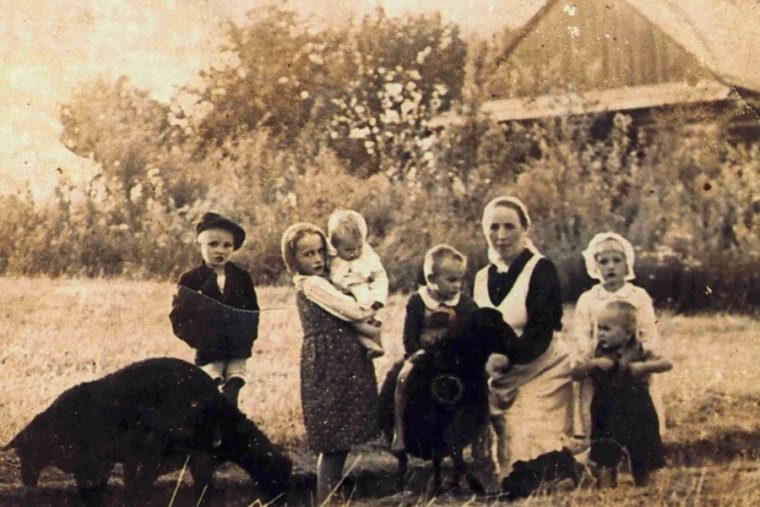
Polish Catholic family, killed by Nazis for helping Jews, on path to beatification
Early on March 24, 1944, a Nazi patrol surrounded the home of Józef and Wiktoria Ulma on the outskirts of the village of Markowa in southeast Poland. They discovered eight Jewish people who had found refuge with the couple and executed them.

The Nazi police then killed the pregnant Wiktoria, who was 32 years old, and her 44-year-old husband. As the couple’s children began to scream at the sight of their murdered parents, the Nazis shot them dead too: Stanisława, 8, Barbara, 7, Władysław, 6, Franciszek, 4, Antoni, 3, and Maria, 2.

It is thought that Wiktoria went into labor during the massacre as a witness later said that he saw a newborn baby beside her body.

Now, 77 years later, the sainthood causes of Józef and Wiktoria -- known as the “Good Samaritans of Markowa” -- are advancing.

Polish Catholics marked the anniversary of their deaths at a morning Mass in the parish of St. Dorothy in Markowa, in Przemyśl archdiocese. Archbishop Adam Szal of Przemyśl presided.

The liturgy also fell on the National Day of Remembrance of Poles Rescuing Jews under German Occupation.

The archbishop expressed delight at the progress in the causes of the couple, who are currently known as Servants of God, a title used at the start of canonization processes.

“We give thanks for the example of the Ulma family’s life. Their gift of life is a sign for us that sometimes we have to sacrifice our lives to save other people. Today we are asking for the gift of their beatification,” he said.

In his homily, Fr. Witold Burda, postulator of the causes, praised Józef and Wiktoria as a model for Christians.

“The Ulmas put God’s law in the first place every day,” he said.

Referring to surviving photos of the family, he said: “The smile of the children in the photos touches me. These children felt safe, loved by mom and dad.”
Google Maps found to be hosting over 150 anti-Semitic reviews of Auschwitz
Google was found to be hosting over 150 anti-Semitic reviews for the Auschwitz-Birkenau extermination camp on Google Maps, according to a report by the Guardian on Thursday. The tech giant has since removed most of them.

The report said 153 anti-Semitic comments were found for the memorial site on Google Maps, 93 of them made anonymously.

Posts such as “Heil Hitler” and “It’s a shame the SS was disbanded so long ago,” had been hosted for months and in some cases years, the Guardian said.

For instance, “Showers were a great experience, Anne Frankly I’m glad I came” and “Good place to go if you want to lose weight fast” had been on the service for four and nine years respectively, according to the report.

Many of the reviews were left by accounts posing as infamous Nazi leaders, such as Adolf Hitler and SS commander Michael Wittmann.

The Guardian said it attempted to use Google’s “flag as inappropriate” function, yet more than 24 hours later, the majority of the 153 offending reviews remained online. After the paper contacted Google, all but two were removed.

There are nearly 7,500 reviews of the site on Google Maps. Most are respectful.

A spokesperson for Google told The Guardian that the company was “appalled by these reviews on our platform and are taking action to remove the content and prevent further abuse.

“We have clear policies that prohibit offensive and fake reviews and we work around the clock to monitor Maps. In this case, we know we need to do better and are working to evaluate and improve our detection systems,” Google added.
Canadians Who Exploit the Holocaust as a Rhetorical Cudgel Deserving of Contempt
In the wake of the horrors of the Nazi Holocaust against European Jewry in 1945, activists and educators around the world committed that “never again” would the world witness such an inhumane massacre of innocent civilians, regardless of their faith, ethnicity, colour, orientation or any other factor. In fact, even the term “never again” became a phrase widely associated with the Holocaust, imploring future generations to never let genocide re-occur.

And while, tragically, the 1994 genocide of nearly one million members of the Tutsi ethnic group in Rwanda is a reminder of humanity’s failure to act on “never again”, here in Canada, even more fundamental lessons of the Holocaust have been forgotten, barely 75 years after it ended.

One of the most fundamental lessons of the Holocaust is, of course, the commitment to never let it happen again, but one of the key ways for that to happen is for the Holocaust to be trivialized, analogized and appropriated, efforts which serves to diminish what took place and dishonour the memories of those who perished.

Unfortunately, far too often, and in a number of recent incidents in Canadian political discourse, the Holocaust has been bandied about to score political points on a number of different political issues. In so doing, the sheer magnitude of the largest genocide of human beings – the murder of six million Jews – is reduced to false analogies.

On the Internet, Godwin’s law prevails when an online discussion plays out for a prolonged period of time, increasing the probability and likelihood that a comparison involving Nazis or Hitler becomes more likely.

In Calgary, Vancouver and elsewhere throughout Canada recently, COVID-19 protestors, wore yellow Stars of David with the words “mask exempt” and t-shirts were being sold online saying “COVID Caust”. The Nazis forced Jews to wear the Star of David to single out Jews from society and to easily identify them in a multi-pronged plan to systematic murder.

In early March, the Globe and Mail published a column originally titled “I’m channeling Anne Frank’s spirit in lockdown,” before it was changed to “Lessons in Living from Anne Frank,” where contributor Debra Dolan drew criticism for what some felt was a comparison of the difficult restrictions under semi-lockdown due to the coronavirus pandemic, to Holocaust victim Anne Frank, a young Jewish girl who hid from the Nazis in the Holocaust and who died in a concentration camp.
  • Friday, March 26, 2021
  • Elder of Ziyon


Soudia4 is a Saudi news site that seems to be oriented towards religious Muslims. It is most popular in Egypt and Yemen.

One recent article has a list of (probably fake) quotes from Adolf Hitler, treating him as if these sayings are words of wisdom.

It introduces the article with:
Adolf Hitler was born in 1889 AD, and he was the leader of Germany and defeated most of Europe with his special forces, and here we collected some of Hitler's statements.
Some of the quotes are anti-Jewish:
I discovered over time that there is no immoral act and crime against society that the Jews aren't involved with.

I managed to wipe out nearly all the Jews of the world, but I left some to understand the reason for their destruction.
This same list has been in other Arabic sites. 


From Ian:

Dore Gold: Recalibrating the diplomacy of Middle East peace
THE MOST REVOLUTIONARY part of their proposals involve a recalibration of Palestinian national goals. They admit that chances of securing “hard” sovereignty,” on the basis of “full and complete control over land, borders and resources” is remote. They clearly have no use for the resolutions of the UN General Assembly that only reaffirm ideas based on the “self-defeating chimera of hard sovereignty.”

Their hope is that by moderating Palestinian goals in the direction of what they call “soft sovereignty,” other arrangements might become possible. They depart from the conventional notion of a two state solution but rather look to multilateral arrangements, such as a trilateral model for the West Bank.

The Abraham Accords open up a whole new model for discussing alternative solutions. It would not be far-fetched for Abu Dhabi to sponsor a discussion among relevant players about how federalism has worked for them in the United Arab Emirates. Federalism could be exactly the framework for the soft sovereignty that Agha and Khalidi propose.

What Agha and Khalidi don’t consider is how strategic military factors could shape this discussion. The Gulf states could embrace their model if they were persuaded it could affect the Iranian issue. Years ago, a Palestinian leader commented that when the US fully pulls out from Iraq, the new border between Iran and the Arab world will be the Jordanian-Iraqi border.

But he wondered whether Jordan had sufficient critical mass to block Iranian expansionism by itself. Jordan, in his analysis, would find itself in the position of postwar Germany facing masses of Soviet armor. Only it would have no NATO to back it up.

Given the growing role of pro-Iranian militias today in Iraq, the need to have a regional arrangement once the US goes has grown. If the Palestinians found their place in such an arrangement, undoubtedly the Gulf states would have a greater propensity to work with them in new federal schemes – diplomatically, financially and otherwise.

Agha and Khalidi’s important statement opens the door for a new political discourse in the Middle East. It can only be hoped that their path to a new political realism is seriously considered and not obliterated by those still clinging to worn-out concepts that plainly have not worked in the past.
Pollard: 'I don't regret helping my people and my land'
Q: Looking back, do you regret what you did?

Pollard says he thinks about that a lot but asks what he should regret – helping his people and his land? He says that at his synagogue, there were two flags: a US one and an Israeli one. "That's how I was raised."

Pollard says he does regret not being "more effective," and he regrets that the Israeli government treated him the way that it did, and that the American government used him as a "weapon" against Israel.

But he is not sorry for working for his people and his homeland. He says that given the information he had, he had no other choice. Israel was supposed to have received the intelligence from the US according to an agreement that was in place, but when Israel asked for it, the US said it didn't exist.

Pollard says that denying its existence was "much worse" than not handing it over.

The intelligence was "so critical to our existence," he says. It was intelligence that would win a war and something that could not be neglected.

Esther says, "The gas masks. I like to use this example because it's the easiest for people to understand. Before we had gas masks and chemical antidotes and secure rooms and sealed rooms, we were building bomb shelters, how did we suddenly know to start building bomb shelters and to start getting gas masks and chemical antidotes?

"Because Israel did not want to acknowledge Jonathan, they kept this very quiet. Nobody ever officially explained how we suddenly have gas masks or how we suddenly have security rooms. And if you go in the Education Ministry, and you go into the library and try to find [the] information they teach children in classrooms, there's not a word about him," she says.

Pollard: "There was an incident where Israeli defense officials came through the Pentagon and asked about a certain facility in Iraq that they heard was producing poison gas during the Iran-Iraq war. The Americans told them it didn't exist. We didn't have a satellite at the time, we weren't flying, because it was a war, we weren't flying Phantoms, RFEs over Iraq at the time. Okay, so you trust the Americans. So I was asked to find out before the delegation left. So I found out."

Pollard said he went to the safe house. "I walked in, and my team was standing there, there were three people standing there. A nice big floor. I asked them to move the furniture and I started pulling out evidence at putting it down. It covered the entire floor.

"Yossi Yagur looked at me, I'll never forget this as long as I live, looked at me and said, 'Jonathan, it's sometimes better to deal with reliable enemies than unreliable friends. We were told this doesn't exist.' I said, 'Well, you were lied to.'"

AddToAny

Printfriendly

EoZTV Podcast

Podcast URL

Subscribe in podnovaSubscribe with FeedlyAdd to netvibes
addtomyyahoo4Subscribe with SubToMe

search eoz

comments

Speaking

translate

E-Book

For $18 donation


Sample Text

EoZ's Most Popular Posts in recent years

Search2

Hasbys!

Elder of Ziyon - حـكـيـم صـهـيـون


This blog may be a labor of love for me, but it takes a lot of effort, time and money. For 20 years and 40,000 articles I have been providing accurate, original news that would have remained unnoticed. I've written hundreds of scoops and sometimes my reporting ends up making a real difference. I appreciate any donations you can give to keep this blog going.

Donate!

Donate to fight for Israel!

Monthly subscription:
Payment options


One time donation:

Follow EoZ on Twitter!

Interesting Blogs

Blog Archive