Monday, December 17, 2018

From Ian:
Amb. Alan Baker: The Palestinian Claim to Statehood: An Open Letter to PLO Negotiator Saeb Erekat
Affairs)

Caroline Glick: The U.S. Government Still Thinks Lebanon and Hezbollah Are Different
Amb. Alan Baker: The Palestinian Claim to Statehood: An Open Letter to PLO Negotiator Saeb Erekat
Affairs)
PLO Negotiator Saeb Erekat denounced Australia's recognition of West Jerusalem as Israel's capital, stating that "East Jerusalem, under international law, is an integral part of the occupied Palestinian territory."Palestinians: Shooting a Pregnant Woman and Lying
Since we had worked together on the 1995 Oslo Interim Agreement, I responded on Twitter: Saeb - you're not a lawyer. There's no violation of international law in recognizing Jerusalem as Israel's capital. You seem to confuse international law with UN resolutions which are not international law.
Permit me to remind you and your colleagues of some basic facts and truths: A Palestinian state does not exist because it cannot fulfill the accepted international law criteria for statehood.
The fact that the PLO is committed by the Oslo Accords to negotiate with Israel on the issue of the permanent status of the territories is indicative of the fact that permanent status has not yet been agreed upon, and thus there can be no Palestinian state.
Basing their claim to statehood on a 2012 non-binding General Assembly resolution is totally flawed, manipulative, and misleading. The General Assembly is not empowered to establish states.
Since the PLO is not a state, it therefore cannot be party to the Rome Statute of the International Criminal Court (ICC), which is specifically open only to states. The fact that the Palestinians politically manipulated the UN and ICCÂ into viewing them as a state is legally flawed and has yet to be reviewed juridically.
Rather than going to such great efforts to manipulate and abuse the international community, and trying to bypass the negotiating process, the Palestinians need to restore their credibility as a viable negotiating partner and return to that process immediately.
Consider, for example, what PLO Secretary General Saeb Erekat, who describes himself as the "chief Palestinian negotiator," had to say about the Israeli authorities' pursuit of the terrorists. Erekat, in a bizarre statement, claimed that the Israeli "intrusion into Ramallah was carried out with the backing of US President Donald Trump." Erekat, too, called on the international community to hold Israel accountable for its "crimes" and to provide international protection for the Palestinians.
What is strange about Erekat's statement is that he is suggesting that Israel needed permission from Trump to send its troops into Ramallah to catch the terrorists who murdered three people. What is also strange is that Erekat believes that the Israeli attempt to capture terrorists is a "crime" for which Israel should be held accountable in the global arena.
Yet, the bizarre PA statements continue. Take the remark made by Osama Qawassmeh, a senior Fatah official and spokesmen, who claimed that the Israeli military operation in Ramallah was actually aimed against Abbas himself. For Qawassmeh, the Israeli army "stormed" Ramallah because of Abbas's rejection of Trump's yet-to-be-announced plan for peace in the Middle East. As if that were not enough, the Fatah official went on to argue that the Israeli army's attempt to catch the terrorists was also linked to Abbas's opposition to a recent US resolution at the UN General Assembly that condemns Hamas for repeatedly firing rockets at Israel and inciting violence.
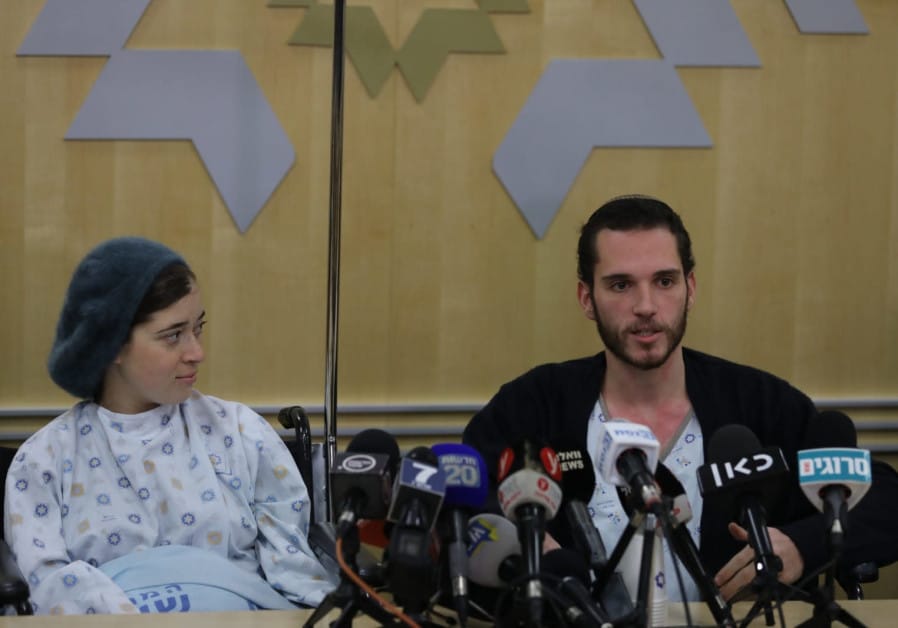
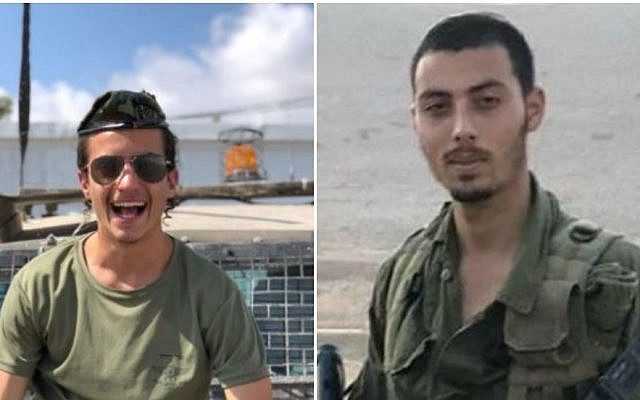
This absurd charge reflects the twisted logic of Abbas and his representatives in Ramallah. For them, the real problem is not the shooting of a pregnant woman or the killing of two soldiers. Instead, the Palestinian leaders, including Abbas, are pointing an accusatory finger at Israel for having the audacity to send its soldiers to capture Palestinian terrorists and prevent additional attacks against Israeli citizens. Needless to say, the Israeli soldiers who entered Ramallah never went close to Abbas's office or home and certainly had no intention of targeting him or any of his officials. In fact, not a single Palestinian Authority or Fatah official was arrested or harmed by the Israeli troops.

Caroline Glick: The U.S. Government Still Thinks Lebanon and Hezbollah Are Different
According to the Israeli media, during his meeting with Secretary of State Mike Pompeo in Brussels last Monday, Israeli Prime Minister Benjamin Netanyahu asked for the U.S. to impose an economic embargo on Lebanon.
Pompeo reportedly rejected Netanyahu’s request.
The meeting between the two men took place on the eve of Israel’s initiation of Operation Northern Shield last Tuesday. The operation is a military effort geared towards sealing Hezbollah’s offensive subterranean attack tunnels. It follows Israel’s stunning revelation that it had discovered the locations of Hezbollah’s attack tunnels, perhaps Hezbollah’s most secret undertaking.
According to Netanyahu, Hezbollah launched its offensive tunnel project in 2014. The existence of the tunnel program was known to almost no one in the organization.
Hezbollah’s tunnels traverse the border between Lebanon and Israel. Hezbollah reportedly intended to have the tunnels serve as a means to invade Israeli territory rapidly and undetected. It is the declared goal of Hezbollah to conquer northern Israel in its next war against the Jewish state.
The Trump administration’s rejection of Israel’s request to impose economic sanctions on Lebanon signals that it supports Israel’s efforts to neutralize the threat that Hezbollah poses, with its powerful army and massive arsenal of short and long range missiles. But — like the Bush and Obama administrations before it — it rejects Israel’s interpretation of the relations between Hezbollah and the Lebanese government and armed forces.
The disparity between the U.S. and Israeli positions on the nature of Hezbollah’s relationship with the Lebanese government and Lebanese Armed Forces (LAF) emerged during the Second Lebanon War in 2006. At that time, then-Secretary of State Condoleezza Rice demanded that Israel not attack Lebanese government targets. This despite the government’s open support for Hezbollah and the LAF’s assistance to Hezbollah during the war, particularly through the provision of targeting data for Hezbollah missile crews.