QUESTION: Thank you. Just to be redundant on the issue of occupation of the West Bank and East Jerusalem, why can’t you say it is occupied, without all the caveats? Can you say that it is occupied, that you acknowledge that position? It’s been like this since 1967.MR PRICE: Well, Said, and that’s precisely what I said yesterday.QUESTION: Right.MR PRICE: It is a historical fact that Israel occupied the West Bank, Gaza, and the Golan Heights after the 1967 war. That’s precisely why the 2020 Human Rights Report uses that term in the current context of the West Bank. It has been the longstanding position of previous administrations of both parties over the course of many decades. Do we think that the West Bank is occupied? Yes.
Friday, April 02, 2021
Elder of Ziyon
Friday, April 02, 2021
Elder of Ziyon
We drafted two versions of the same question, one asking respondents to apply a principle to a Jewish example, and another to apply the same principle to a non-Jewish example. Subjects were randomly assigned to see one version or another so that no respondent would see both versions of the question. Since no one would see both versions of the question, sophisticated respondents would have no way of knowing that we were measuring their sentiment toward Jews, and no cue to game their answers.When we administered these double-standard measures in a nationally representative survey of over 1,800 people, our results differed widely from the conventional view about the relationship between education and anti-Semitism. In fact, we found that more highly educated people were more likely to apply principles more harshly to Jewish examples. By preventing subjects from knowing that they were being asked about their feelings toward Jews, we discovered that more-highly educated people in the United States tend to have greater antipathy toward Jews than less-educated people do.
The methodology was brilliant:
The first item asks whether “the government should set minimum requirements for what is taught in private schools,” with Orthodox Jewish or Montessori schools given as the illustrating example. The second item asks whether “a person’s attachment to another country creates a conflict of interest when advocating in support of certain U.S. foreign policy positions,” with Israel or Mexico offered as illustrating examples. The third item asks whether “the U.S. military should be allowed to forbid” the wearing of religious headgear as part of the uniform, with a Jewish yarmulke or Sikh turban offered as illustrating examples. And the fourth item asks whether public gatherings during the pandemic “posed a threat to public health and should have been prevented,” with Orthodox Jewish funerals or Black Lives Matter (BLM) protests offered as illustrating examples.
The responses showed that antisemitic attitudes correlated with more education:
We found that respondents with higher education levels are markedly more likely than those with lower education levels to apply a double standard unfavorable toward Jews. Across the four items in which the Jewish and non-Jewish versions of questions seemed the most similar, and which the overall sample answered roughly in the same way, subjects with college degrees were 5 percentage points more likely to apply a principle harshly to Jews than to non-Jews. Among those with advanced degrees, subjects were 15 percentage points more unfavorable toward Jewish than non-Jewish examples.
The authors have no idea why there should be such a correlation. They theorize that perhaps universities are teaching facts without any anchoring in morality, and somehow this helps antisemitic attitudes.
They are looking at the wrong place to find the answers.
The antisemitism is directly correlated to the amount of anti-Zionism they are exposed to on campus! The more that they hear that the Jewish state is racist and apartheid and Nazi-like, the more they absorb the idea that Jews are bad people who deserve to be treated worse than others.
One indication comes from another recent survey, the Gallup poll that looked at American attitudes towards Israel and Palestinians. The results show a strikingly similar correlation between education and anti-Israel attitudes that the first survey showed between levels of education and antisemitic attitudes.
In the Gallup poll, favorable opinions about Israel decreased with higher levels of education. The high school or lower respondents preferred Israel over the Palestinians by a 65%-20% margin; the college graduates had a 51%-32% preference for Israel. On the question of which side should be pressured more, the results were even starker: for the less educated, 53%-26% said to pressure the Palestinians more, for the college graduates 45%-32% said to pressure Israel more.
It seems quite probable that the attitudes of students towards Jews will correspond with their attitudes towards Israel. A landmark 2017 survey by Amcha concluded:
Schools with instances of student-produced anti-Zionist expression, including BDS promotion, were 7 times more likely to have incidents that targeted Jewish students for harm than schools with no evidence of students’ anti-Zionist expression, and the more such anti-Zionist expression, the higher the likelihood of incidents involving anti-Jewish hostility.
The Gallup poll didn't ask about postgraduate attitudes towards Israel, only "no college," "some college" and "college graduate." But the trend is there and almost certainly it mirrors the antisemitic trend found by the authors of the Tablet article.
It isn't the additional classroom instruction that makes people more antisemitic. It is additional exposure to the anti-Israel narrative and propaganda subconsciously makes people more likely to be antipathetic to Jews.
Thursday, April 01, 2021
Elder of Ziyon
Winstanley
Prior to the rise of Christianity as the established religion of the Roman Empire, Judaism was very much a proselytising faith. As such, it spread widely all over the Mediterranean basin, into Egypt and further afield. Indeed, as late as the eighth century CE, the ruling classes of the Khazar Empire (a confederation of Turkic-speaking tribes in what is today the south-eastern part of European Russia) apparently converted en masse to Judaism.As such, it is illogical to suppose – as Zionists do – that the ancestral "homeland" of all Jewish people in the world is Palestine. Such a view is actually anti-Semitic.
Thursday, April 01, 2021
Elder of Ziyon
Winstanley
As Israeli historian Shlomo Sand describes in his book The Invention of the Land of Israel, before the Zionist movement, Palestine was never viewed by Jewish communities around the world as their homeland.
Thursday, April 01, 2021
Elder of Ziyon
Winstanley
With the rise of Zionism – a European settler-colonial movement founded at the end of the nineteenth century – a new term was invented to describe Palestine: the "Land of Israel". Before then, the word "Israel" had generally been used only as a synonym for the Jewish people, as in the Biblical phrase "Children of Israel".
Thursday, April 01, 2021
Elder of Ziyon
Winstanley
In reality there is only one country between the River Jordan and the Mediterranean Sea. It is called Israel at the moment, which is an apartheid state whose laws privilege Jews over everybody else. Historically, prior to 1948, the only name ever used for all of this territory was Palestine.
He is lying and he knows he is lying. Besides the Kingdoms of Judah and Israel, it was also called Canaan. No one called it Palestine before the second century AD.
The Torah calls it simply "The Land." This pre-dates any mention of "Palestine."
Not only that, but whenever people referred to Palestine before 1922, they meant the lands of the Twelve Tribes of the Children of Israel. The word "Palestine" in the vernacular meant the areas controlled by Jews in Biblical times - including parts of today's Jordan.
Winstanley is an idiot.
Cornell West, Campus Politics, and BDS
One of the most notable BDS related developments in March was the claim by Harvard Divinity School professor Cornell West that he was “denied tenure” as a result of his support for “Palestinian rights” and an organized effort by pro-Israel forces. West, 67, had been teaching at Harvard for five years as a non-tenure track professor of practice, and had been offered a 10-year contract and substantial raise. He rejected this and announced his return to Union Theological Seminary.Lies in the cognitive war against Israel Part 2
West blamed the “powers that be at Harvard” for his failure to be moved to a tenure track position, and stated, “In my case, my controversial and outspoken views about and critiques of empire, capitalism, white supremacy, male supremacy, and homophobia are tolerated, but any serious engagement around the issues of the Israeli occupation are rendered highly suspect and reduced to anti-Jewish hatred or prejudice.”
While claims that anti-Israel faculty are being denied tenure are not uncommon, this incident has the appearance of using the accusation as a means of blackmailing a university during a contract renegotiation. West received considerable support from student and faculty groups, which accepted his claims without question.
Responding to criticism, West stated his willingness to debate the issue, but then failed to accept an invitation to do so.
Celebrity academics using BDS and “Palestine” as tools for their own careers and left-wing bona fides is increasingly common. The emerging accusation “progressive except for Palestine” is a gloss on the title of Marc Lamont Hill’s new book, and is now regularly repeated in various settings.
In Britain, the parallel case of Bristol University’s David Miller, long accused of abusing students and of promoting elaborate antisemitic conspiracies, has finally produced a university investigation. Not surprisingly, hundreds of academics have expressed support for Miller, even as a separate police investigation has been opened against him regarding “a hate crime or hate incident taking place during lectures at the University of Bristol.”
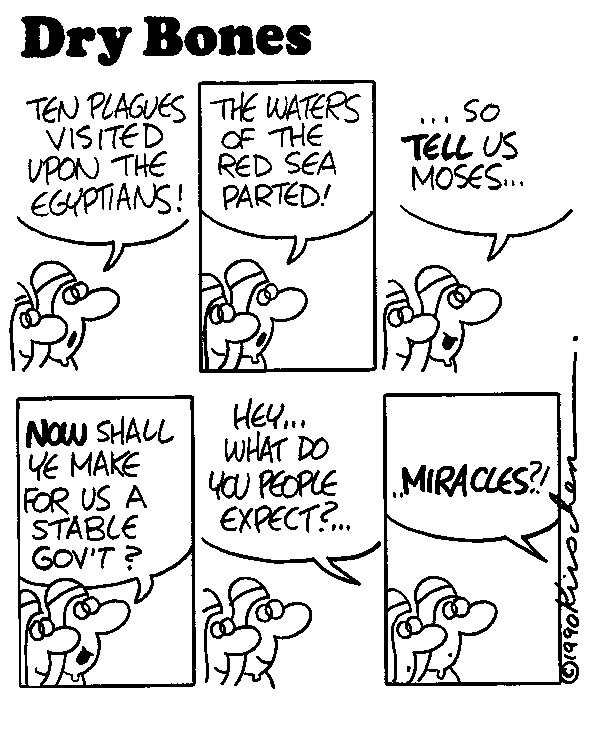
The Lie of Israelis Being the New NazisIsrael to pay for 10 Plagues?
When SJP activists and their invited speakers demonstrate against Israel, their speech and literature is peppered with allegations about Israel’s alleged “crimes against humanity, “massacres,” genocide,” and, echoing comments by Turkey’s prime minister Tayyip Erdoğan, in their treatment of the Palestinians, Israel has demonstrated that “. . . their barbarism has surpassed even Hitler’s.”
The Nazification of Israelis—and by extension Jews—is both breathtaking in its moral inversion and cruel in the way it makes the actual victims of the Third Reich’s horrors a modern-day reincarnation of that same barbarity, at once ahistorical, disingenuous, and grotesque in its moral and factual inaccuracy.
What is the purpose of this grotesque campaign to transmogrify the Jewish state into the Third Reich? The insidious answer is that once Israel has been tarred with the libels of racism and Nazism, the Jewish state has been made an international outlaw, a pariah, losing its moral right to even exist—exactly, of course, what its foes have consistently sought.
What is more troubling is that the characterization of the Israeli as Nazi is a trope now promulgated by Western elites and so-called intellectuals, including a broad contingent of academics who are complicit in, and in fact intellectual enablers of, the campaign to defame Israel by Nazifying its people and accusing Jews again as being the world’s moral and existential enemies as demonstrated by their oppression and brutality toward the 'long-suffering Palestinians'.
Thus, campus anti-Israel hate-fests sponsored by radical student groups have such repellant names as “Holocaust in the Holy Land,” “Israel: The Politics of Genocide,” or “Israel: The Fourth Reich,” creating a clear, though mendacious, linkage between Nazism and Zionism—clear examples of both Holocaust minimization and inversion and both contemporary versions of anti-Semitic thought and expression.
That same trope is repeated and reinforced by other academics, such as Richard Falk, professor emeritus of International Law and Policy at Princeton University and the UN’s former, preposterously-titled “Special Rapporteur on the situation of human rights in the Palestinian territories occupied since 1967,” who wondered aloud if it was “an irresponsible overstatement to associate the treatment of Palestinians with this criminalized Nazi record of collective atrocity?” on the part of Israel, and then quickly answered his own question by saying, “I think not.”
Bible study meets modern litigiousness in a story that may one day yield a riveting courtroom drama.
Ahmad al-Gamal, an Egyptian columnist for Egyptian daily Al-Yawm Al-Sabi, advocated in the newspaper on March 11 that Egypt sue the State of Israel for damages caused by the 10 Biblical plagues,
“We want compensation for the plagues that were inflicted upon [us] as a result of the curses that the Jews’ ancient forefathers [cast] upon our ancient forefathers, who did not deserve to pay for the mistake that Egypt’s ruler at the time, Pharaoh, committed,” the cranky journalist wrote, according to a translation provided by the Middle East Media Research Institute.
According to the Biblical Book of Exodus, the Egyptian king prevented Moses from liberating the Jews and leading them out of Egypt.
The plagues that summarily struck Egypt in consequence included the Nile turning into blood, an outbreak of lice, diseased livestock, boils, and so on, culminating in darkness and the deaths of all Egyptian firstborn males. The telling of the tale features prominently in the Jewish observance of the spring holiday of Passover.
“For what is written in the Torah proves that it was Pharaoh who oppressed the children of Israel, rather than the Egyptian people,” Gamal continued, “[But] they inflicted upon us the plague of locusts that didn’t leave anything behind them; the plague that transformed the Nile’s waters into blood, so nobody could drink of them for a long time; the plague of darkness that kept the world dark day and night; the plague of frogs; and the plague of the killing of the firstborn, namely every first offspring born to woman or beast, and so on.”
Gamal also pressed suing Israel for the “precious materials” used by the ancient Israelites in order to construct their desert tabernacle.
“We want compensation for the gold, silver, copper, precious stones, fabrics, hides and lumber, and for [all] animal meat, hair, hides and wool, and for other materials that I will mention [below], when quoting the language of the Torah. All these are materials that the Jews used in their rituals. These are resources that cannot be found among desert wanderers unless they took them before their departure.”
Thursday, April 01, 2021
Elder of Ziyon
cartoon of the day, humor
Thursday, April 01, 2021
Elder of Ziyon
humor, Preoccupied
New York, April 1 - For at least the sixth time this week, a group of activists opposed to the existence of a Jewish state just happened to express the same positions and promote the same attitudes as those who deny the government of China is suppressing and erasing Uighur Muslim culture despite overwhelming evidence it is occurring, and as those who support the mass-murdering, corrupt, terrorist-harboring regime governing Syria, a situation that has caught the activists by surprise, having happened only about a billion times over the last decade.
Ali Abunimah of Electronic Intifada voiced his surprise yet again Thursday that his political and ideological bedfellows deny as he does the seriousness of China's systematic violation of Uighur human rights, including forced labor, forced sterilization, mass incarceration, and other abuses. He also expressed wonderment that so many of his fellow anti-Zionist-not-antisemites also stan Syrian strongman Basher Assad as he does, and either justify, downplay, or ignore, as Abunimah does, the dictator's hand in the deaths of half a million Syrians over the course of the ongoing civil war in that Arab republic.
"I was just discussing this with some buddies from the UK Labour Party the other day," recalled Abunimah. "We all seem to agree on the same points again and again: that Israel is an Apartheid state that must be destroyed; that China has done nothing but improve the lives of the Uighurs, and that Basher Assad has killed no one but Islamist extremists."
"That coincidence is remarkable enough," he continued. "But then when you also figure into it the uncanny prevalence of Holocaust minimization - if not outright denial - in our respective ranks, well, that's just bizarre. I don't know what to make of it. We're all just so morally... consistent, I guess, is the word."
A member of the far-left segment of Labour's constituency offered an analysis of the intriguing phenomenon. "Diverting attention for even a short time from Palestinian grievances risks undermining the Left as a whole," explained Asa Winstanley. "Acknowledging a so-called 'genocide' taking place in Xinjiang would threaten to overshadow the paramount status that eliminating Jewish sovereignty and security must have for all true progressives. The same goes for the situation in Syria: allowing the world's attention to stray from Israeli ethnic cleansing of Palestine - a cleansing so thorough that the Palestinian population has increased tenfold since Israel was established - can only end badly. These shared sensibilities govern the overlapping positions of our disparate groups."
Walter Russell Mead [WSJ]: How to Bring Peace to the New Middle East
The old Middle East peace process is dead: The Israeli-Palestinian dispute no longer dominates the regional agenda. The old peace process developed at a time when the U.S. had no serious rival for world leadership, the Middle East mattered more to the global economy than it does today, and Arab states were more powerful in the region than they are now. Under those circumstances, promoting the peace process was a necessary aspect of America's diplomatic balancing act that helped maintain Washington's alliances with the Arab world while supporting Israel.Saudi Journalist: Arabs And Jews Should Stop Fighting, Start Cooperating
Since then, the leading Arab states have either fallen into chaos (Syria and Iraq) or become so worried about Iran that they have little energy to devote to the Palestinian cause. At the same time, Israel's attractiveness as a trading partner and source of technology and investment has dramatically increased. Any signal that the Biden administration intends to return to President Obama's Middle East policy would likely drive the Arabs and Israelis more closely together and increase the Arab states' willingness to overlook the Palestinians.
A new peace process would entail engaging the increasingly robust Israeli-Arab entente to resolve the dispute between Israelis and Palestinians, with a credible U.S. commitment to regional security against Iran as the cornerstone of a new Middle East reality.
Against the backdrop of the normalization agreements between Israel and several Arab states, Prof. Safouq Al-Shammari, a Saudi physician, researcher and journalist, published a two-part article in the government daily Al-Watan, in which he called to stop the wars between the Arabs and Jews, strengthen the ties between them and cooperate with them in improving the state of the Middle East. Al-Shammari noted that, despite being a small minority in the world, the Jews have made great scientific achievements and significant contributions to mankind, including to the Arab world. Stressing that, throughout history, there was friendship between Arabs and Jews, and that today the conflict between them is confined to the issue of Palestine, he called to distinguish between Zionism and the state of Israel on the one hand and the Jewish people on the other, and to renew the historic ties between the Arabs and their Jewish cousins - in particular the Jews of the U.S. and Europe. This is especially crucial today, he said, in light of Iran's threat to perpetrate a second holocaust against both the Arabs and the Jews. Al-Shammari added that economic cooperation between the Gulf and the Jews of America - who include many of the world's largest tycoons - could boost the economic revolution that is already taking place in the Gulf, and this, in turn, could benefit the region at large and accelerate the resolution of the Palestinian problem.
It should be noted that Al-Shammari's first article sparked angry reactions from Arabs on social media who spoke against the Jews and urged him to support the Arabs rather than the Jews.
The following are excerpts from Al-Shammari's two articles.
Inventions Of Jewish Scientists Have Saved Billions Of Lives
In the first part of his article, Al-Shammari wrote: "Jews constitute 0.2% of the world's population, but 20% of the Nobel Prize winners, [that is,] 100 times their proportion in the population. Some 40% of the Nobel winners in economics are Jews, and 26% of the Nobel winners in physics and medicine. [Many people] are perhaps unaware that [the Jewish] Ernst Chain was a partner of [Alexander] Flemming in discovering the antibiotic properties of penicillin and thereby saving the lives of millions, or that the discoverer of the hepatitis C virus was a Jew. [They may also be unaware] that many inventors of vaccines were Jews, as was the discoverer of blood types, and the list goes on and on. Some assess that Jewish medical scientists saved the lives of 2.8 billion people with their discoveries and inventions. In the field of physics, the [world's] greatest physicist was Albert Einstein. And lest you think that [this list merely proves that] the West panders to the Jews, [let me add that] a quarter of the winners of the Japanese Kyoto Prize - one of the most prestigious prizes in science and literature - have [also] been Jews.
"The conflict between the two cousin peoples, the Jews and the Arabs, is relatively new… The resentment built up over decades of wars between the Arabs and Israel forms a kind of barrier… [but] we must distinguish between the Jews and Israel, and between the Jewish people, who are [our] cousins, and the Zionist political movement. There is a difference between people and political [movements]. There are [surely] Arab political movements that [you, the reader,] disagree with, but this does not mean that [you] disagree with all Arabs. This is also true with regard to the Jews.
"Sadly, this resentment, and the confusion between Jews and Zionists, caused the Jews to emigrate from the Arab countries after [living there] for centuries…and we [thus] lost an important component [of our societies]. Iraq lost its Jews, including the first finance minister of modern Iraq, Sassoon Eskell… who served five terms in this capacity, and is known, among other things, for refusing to grant the Iraqi king 20 dinars for building a fancy residence on the grounds that the parliament had not approved this. Some Arab countries have Jewish ministers and officials even today, such as Serge Berdugo, [a former Moroccan minister of tourism and a leader of the Jewish community there], and André Azoulay, [a royal advisor] in Morocco.
"Know that Arabs and Muslims respected their Jewish cousins throughout history. Abdelkader Ben Ghabrit, founder of the Muslim Institute of the Paris Mosque, saved hundreds of Jews from the Nazis by providing them with [forged] papers certifying them as Muslims. Hundreds of thousands of Jews lived for centuries in the Arab countries [and were treated well there], in contrast to the humiliation they suffered in the Western ghettos in those days…
Thursday, April 01, 2021
Elder of Ziyon
analysis, Daled Amos
o occupies parts of Syria
o has influence in Iraqo is pushing back against Iran’s influence in both Damascus and Baghdado has increased military operations against Kurds in Iraqo has inserted itself in Libya’s civil waro intervened in the dispute between Armenia and Azerbaijan over Nagorno-Karabakho are eyeing expanded roles in both the Horn of Africa and Lebanono supports for the Muslim Brotherhoodo claims to have a say in Arab politics.
In fact, it could lead to larger and more dangerous regional arms races and wars that the United States neither wants nor can afford to get entangled in. So, it behooves U.S. foreign policy to try to contain rather than stoke this new regional power rivalry.
Israel, too, has expanded its footprint in the Arab world. In 2019, Trump recognized Israel’s half-century-old claim to the Golan Heights, which it seized from Syria in 1967, and now Israeli leaders are planning out loud to expand their borders by formally annexing parts of the West Bank.
Turkey’s current regional posture—extending into Iraq, Lebanon, Syria, and the Horn of Africa while staunchly defending Qatar and the Tripoli government in Libya’s civil war—is in direct conflict with policies pursued by Saudi Arabia, the UAE, and Egypt.
This all suggests that the driving force in the Middle East is no longer ideology or religion but old-fashioned realpolitik. If Israel boosts the Saudi-Emirati position, those who feel threatened by it, like Qatar or Oman, can be expected to rely on Iran and Turkey for protection. But if the Israeli-Arab alignment will give Iran and Turkey reason to make common cause, Turkey’s aggressive posture in the Caucasus and Iraq could become a worry for Iran. Turkey’s military support for Azerbaijan now aligns with Israel’s support for Baku [Azerbaijan], and Iran, Saudi Arabia, and the UAE have found themselves in agreement worrying about the implications of Turkey’s successful maneuver in that conflict.The analysis starts off with a description of Turkey and Iran making common cause against Israel, Saudi Arabia and the UAE, but ends with Israel and Turkey with a common interest in Azerbaijan while Iran worries -- along with the Saudis and the UAE -- about Turkey.
As these overlapping rivalries crisscross the region, competitions are likely to become more unpredictable, as will the pattern of tactical alliances.
Biden’s animus toward Mohammed bin Salman over the killing of the Saudi dissident journalist Jamal Khashoggi, and in general over human rights violations in the kingdom as well as the UAE and Egypt, is actually cementing ties.Or he may be undercutting what Israel can offer potential Arab allies:
Other Israeli analysts said they worried Israel may lose its leverage in the Gulf under Biden’s presidency. For decades, Arab nations have eased ties with Israel to seek U.S. pardons for their excesses at home. But as Israel itself is under the Biden scanner now, it can hardly put in a word for them.
Thursday, April 01, 2021
Elder of Ziyon
In a partial return to a pre-Trump-era norm, the US State Department’s annual report on human rights violations around the world published on Tuesday referred to the West Bank, Gaza Strip, East Jerusalem and the Golan Heights as territories “occupied” by Israel.
This section of the report covers the West Bank, Gaza, and East Jerusalem territories that Israel occupied during the June 1967 war. In 2017 the United States recognized Jerusalem as the capital of Israel. Language in this report is not meant to convey a position on any final status issues to be negotiated between the parties to the conflict, including the specific boundaries of Israeli sovereignty in Jerusalem, or the borders between Israel and any future Palestinian state.Saying that Israel occupied the territories during a war - which it did - is not at all the same as saying that these are "occupied territories" today, and the report avoids using that phrase completely, except in quotes from NGOs.
QUESTION: I want to know, do you guys believe that the West Bank is occupied by Israel or not?AMBASSADOR PETERSON: So we have presented the section as we have stated in previous years. This Human Rights Report refers to the commonly used geographic names of the area the report covers. So Israel, West Bank, and Gaza. This is intended to delineate geographic areas and puts them in alignment with – puts these reports in alignment with the rest of the report.
It is a historical fact that Israel occupied the West Bank, Gaza, and the Golan Heights after the 1967 war. That’s precisely why the 2020 Human Rights Report uses that term in the current context of the West Bank. It has been the longstanding position of previous administrations of both parties over the course of many decades. Do we think that the West Bank is occupied? Yes.
Elder of Ziyon