Tuesday, March 23, 2021

From Ian:
How The Equality Act Would Legalize Religious Bigotry
How The Equality Act Would Legalize Religious Bigotry
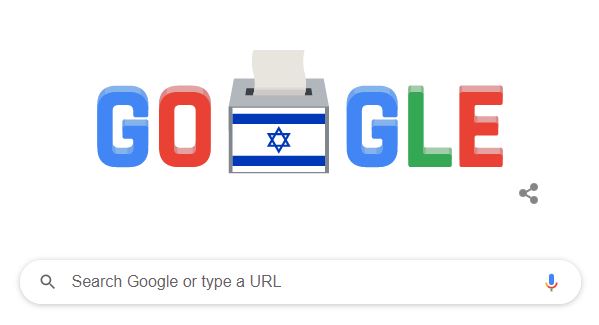
The Founding Fathers recognized freedom of expression and religious liberty as core elements of diversity and tolerance. Now, nearly 250 years later, Congress is acting to stamp them out, ushering in a new era of government-sanctioned anti-religious bigotry.For Election Day: The famous 1961 debate over the claim that the 'Jews are a fossil race'
While no one could argue this is motivated by anti-Jewish bias in particular, the disproportionate repression of Jewish religious practice — by a law unironically billed as an “Equality Act,” no less — is far too significant to ignore.
On Jan. 1, 2020, almost three months before COVID-19 limits on gatherings, more than 100,000 observant American Jews filled MetLife Stadium in New Jersey, the Barclays Center in Brooklyn, and other locations across the country for a unique gala honoring religious education. Called simply “The Siyum,” meaning “the completion,” it honored the tens of thousands of religiously motivated men — and significant number of women — who completed a seven-and-a-half-year cycle studying the Oral Torah.
The Siyum celebrates not only education, but Jewish resilience in the face of persecution. The 2,711-day cycle was first set in motion in Poland in 1923, where the first Siyum ensued in 1931. In 1945, the main venues of the third Siyum were in Israel, but, incredibly, one was also held by Holocaust survivors in a displaced persons camp in Germany. Since 1990, the largest celebrations have taken place in the United States, each exponentially larger than the one before it.
But now the Land of Liberty might never allow another. With the Equality Act, Congress is waging a legislative effort to prohibit the next Siyum, scheduled to take place in June 2027, and other such “discriminatory” violations of human rights. Under the Act, observant Jews will no longer be legally permitted to gather to celebrate religious education, or any other occasion, in accordance with their beliefs.
The reason is simple: not only prayer services, but family lifecycle events of all kinds — from circumcisions to bar mitzvahs to weddings to funerals — are commonly divided by biological sex in traditional Orthodox Judaism. This is true whether or not ceremonies are held in synagogues.
Whether in restaurants, catering halls, funeral homes, or elsewhere, all of these gatherings are often observed in what the law describes as “public accommodations.” Every major Siyum event over the past century has observed this same strict separation of the sexes. The Equality Act would ban them all.
Recently, Melanie Phillips wrote in an article posted on Arutz 7 "...The controversy started with a tweet by the Labour Party’s deputy leader, Angela Rayner, congratulating the new head of the Scottish Labour Party, Anas Sarwar, on his appointment. Rayner described Sarwar, who is of Pakistani descent, as “the first-ever ethnic minority leader of a political party anywhere in the U.K.”Swastikas in Damascus
Sarwar is certainly the first Muslim or Asian leader of a political party. But there have been four Jewish party leaders in the United Kingdom—from Conservative Prime Minister Benjamin Disraeli in the 19th century to Labour Party leader Ed Miliband in the last decade.
...This erupted on the BBC’s daily show, “Politics Live,” which chose to respond to protests from British Jews over Rayner’s remark by hosting a discussion with a title card: “Should Jews count as an ethnic minority?”
To many Jews, even to ask this question was demonstrably absurd. How could they not be counted as such? And why were non-Jews suddenly presuming to tell Jews what they were or were not?
Back to the 1961 debate
The claims that Jews are not an ethnic minority are not new, I would like to describe a debate that happened in 1961 at Montreal's McGill University and became world famous - what we today would call viral - with recordings still existing. It was between the famous historian Dr. Arnold Toynbee, professor at the London School of Economics, and Israeli Ambassador to Canada Rabbi Dr. Yaakov Herzog. Herzog's brother, Chaim Herzog, would later become the sixth president of Israel. He was also the son of the second Ashkenazi chief rabbi, Yitzhak Herzog.
The debate probed among other topics whether Jews today are a vibrant continuation of a people rooted in antiquity. Rabbi Yisroel Meir Lau describes the debate in which Toynbee described the Jews as a fossil race.
"Dr. Toynbee insisted that Israel is not truly a nation, and does not deserve a state. The Jews, he claimed, are a religious sect with a mission to guide mankind in monotheism, morals and ethics in the Diaspora, but are not a nation. Permit me to use an imaginary voyage to develop a point made by Dr. Herzog."
A new death notice appeared in a Lebanese village north of Beirut last September, glued to a public wall. As residents of the village went about their days, some of them probably stopped, out of habit, to read the name of the man who had recently died. It would have been a scene repeated every day in Syrian and Lebanese villages: Those who didn’t know the deceased proceeded to peruse the names of his surviving family members to find out whether condolences were in order.
There was more to this particular death notice, however, than the news of the death itself. People took pictures of it and posted it to social media, where it immediately went viral. Incredulous, people read the name of the deceased man, written in big, bold font in the center of the poster: Hitler Zakhia Bassil.
Not much was shared about Mr. Bassil himself. But the names of his sons, Adolf and Addie, hinted at something of a family tradition. I was aghast when a photo of the poster reached me via WhatsApp, from a friend looking for a laugh.
I spent my life between Aleppo, Damascus, and Beirut before moving to Paris a year ago. I’ve encountered countless such anecdotes, which seem to be the haphazard leftovers of some combination of enduring government propaganda and a lack of actual World War II and Holocaust education.
Despite the rejection of the ideology by the vast majority of the population in Syria and Lebanon, symbols associated with Nazism were there, out in the open, and having a swastika tattoo or waving a Nazi flag did not land a person in jail or lead to a financial penalty. The first time I remember seeing a swastika was at the all-boys Presbyterian school I attended for 12 years in Aleppo. Al-Saleeb al-Ma’qouf, the Hooked Cross, was one of many symbols that boys would mindlessly carve into their desks, scribble on the walls of the bathroom, or sketch in textbooks. Most of them, I would learn, didn’t even know what the symbol meant. Those who did, didn’t know much.
School management didn’t rush to remove those symbols, or try to ban them, more than they did any other symbol or writing on the wall.