Wednesday, October 16, 2019

From Ian:
How Israel Helps Uphold the U.S.-Backed Liberal International Order

How Israel Helps Uphold the U.S.-Backed Liberal International Order
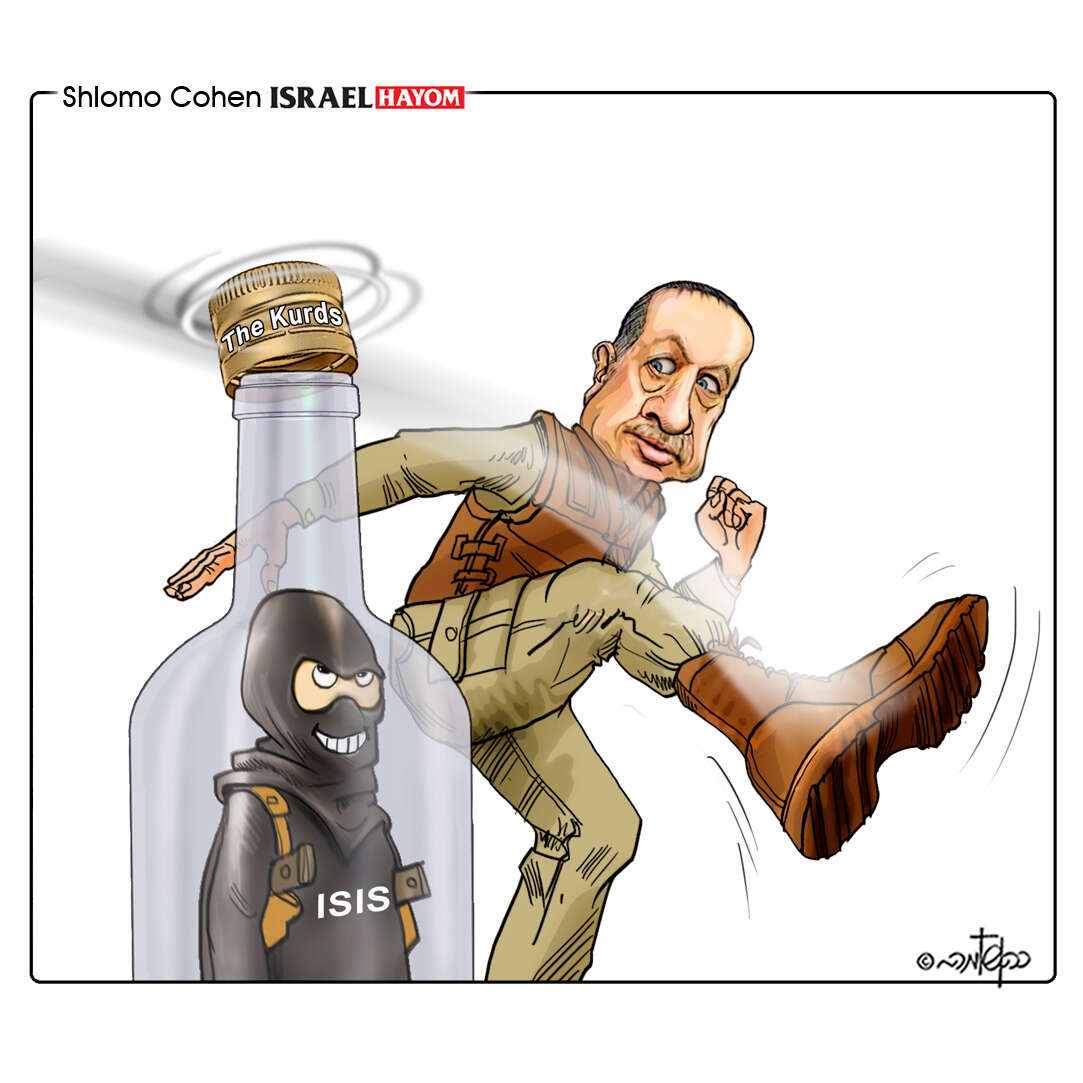
Seeking to reverse decades of diplomatic isolation, and in response to increasing hostility from Western Europe, Jerusalem in recent years has cultivated better relations with a variety of states, including some with unsavory rulers—ranging from the Philippines’ Rodrigo Duterte to Russia’s Vladimir Putin. While such a policy has provoked sharp criticism in some quarters, Seth Cropsey and Harry Halem explain that a small country like Israel does not have the luxury of disdaining potential allies, and, moreover, continues to do much to support American interests and with them the “liberal international order,” such as it is. Take the fraught case of its relations with Russia:Gen. Kuperwasser: The U.S. Commitment to Israel Is Different from Its Commitment to the Syrian Kurds
Small powers such as Israel illustrate the liberal international order’s pathology. The Jewish state in particular feels the existential edge of political competition, having faced annihilation from its inception. Today, Iran is Israel’s greatest adversary. A unique blend of Shiite supremacism and Persian imperial revanchism drives Iran’s leaders to recover Sassanid and Safavid lost glory.
Rather than striking Iran directly, Israel has opted to attack its network of proxies that stretch from the Tigris to the Levantine basin. However, the United States no longer dominates the region’s airspace. Any Israeli action against Iran requires Russian assent as a simple geographical fact. This situation will persist indefinitely, as America shows no desire to challenge the Russian presence in Syria. So Israel must work with Russia if it hopes to combat Iranian expansion—as a matter of course, small powers must search for other options during periods of strategic turmoil, whatever their ideological preferences may be.
The irony is that Israel’s cognizance of Russian interests actually furthers American security goals. Iran poses a threat to the United States irrespective of its alliance with Israel. If a hostile power were to control the Middle East, it could sever the U.S.’s sea lines of communication and supply, preventing effective coordination between American forces and allies in Europe and Asia. Moreover, it could use its oil exports to threaten the reliance of U.S. partners on oil imports, such as Japan.
It is therefore no surprise that the U.S.’s interest in a stable Middle Eastern balance of power has persisted since the 1940s. But the age of imperial dominion has passed. America cannot govern as Britain and France once did. It must work with and through local actors. Critically, every attempt that the U.S., or any Western power, has made to court the “Arab street” has failed irrespective of support for Israel.
IDF Brig.-Gen. (res.) Yossi Kuperwasser, former head of the IDF Military Intelligence research division, told JNS that the strengthening of Muslim Brotherhood-affiliated extremist Sunni forces in northeast Syria "should disturb us." He stressed that Turkey had launched its offensive with "problematic, radical forces."Seth Frantzman: From Iran to Turkey, US browbeaten by 'war' narrative
Kuperwasser predicted that "if the Kurds feel distressed, and American pressure can't stop the Turks, they will try to link up with Assad, as well as with the Russians and the Iranians." The Kurdish-led Syrian Defense Forces (SDF) signed such a cooperation agreement with the Assad regime on Sunday.
While Israel can provide humanitarian assistance to the Syrian Kurds and also apply diplomatic pressure, military intervention is out of the question, said Kuperwasser, director of the Project on Regional Middle East Developments at the Jerusalem Center for Public Affairs.
Kuperwasser insisted that the events in northeast Syria will have no direct repercussions on U.S.-Israel relations. "The depth of the U.S. commitment to Israel is very different" from its commitment to the Syrian Kurds.
He added that while Israel "is acting decisively to prevent an Iranian base in Syria, what is important in this context is that the American economic pressure on Iran continues."
"Despite pinpoint [Iranian] achievements on the ground, the infrastructure of Iran is still eroding. They can't hold on for a long time without money. It all costs money in the end."
During the run-up to the Iran deal in 2015, the main narrative put forward by those who supported it was that if the US did not do a deal then there would be a “war.” During the phone call between Turkish President Recep Tayyip Erdogan and US President Donald Trump, reports indicate, the same “If you don’t do this, there will be war,” threat was used.
US foreign policy has increasing been hostage to the notion that the US must cater to both allies and adversaries to avoid wars. Oddly, those countries, including Turkey and Iran, are able to bluff their way into things by alleging they are prepared for war with the United States. There is no evidence that either country is willing to risk a real conflict with the US, but their threshold for claiming they do is higher than the US, and they have learned that after decades of foreign wars Washington is more cautious about new tensions.
In 2015 the Obama administration presented a claim, through a sophisticated network of op-eds and surrogates sent to speak to media, which argued that “the only alternative to the Iran nuclear deal is war.” An April 2015 piece at The Atlantic noted that the alternative could be a “substantial war.” In May 2018, when Trump left the Iran deal, the BBC reported that a possibility might be a “new and catastrophic regional war.”
Turkey presented the US with a threat that Turkey would begin its operation regardless of the US presence and begin bombing US partners on the ground, the 100,000-strong Syrian Democratic Forces that the US had helped train since 2015 to fight ISIS.
Trump agreed to let Turkey conduct its “long-planned operation” to attack peaceful towns and cities that the US had enjoyed being stationed next to. Turkey has become proficient at using threats against Western powers to get them to do what it wants. It threatened to send 3.6 million refugees to Europe if the EU critiqued its operation. Is it normal for US allies to threaten to send refugees forcefully into their countries to punish them for policies?