Friday, May 11, 2018

From Ian:
Jason Greenblatt: U.S. envoy Greenblatt says Hamas has taken Gaza back to the Stone Age
Jason Greenblatt: U.S. envoy Greenblatt says Hamas has taken Gaza back to the Stone Age
The Israelis have indicated that they want to do more to help the people of Gaza, if they could be assured that additional things they allow into Gaza will not be repurposed into weapons or used to build tunnels to attack Israel. Israel might choose to ease restrictions on travel, if Israel could be assured that those who are crossing into and through Israel will not commit acts of terror or be smuggling weapons or cash to be used for terrorism.Egypt could also do more to help the people of Gaza, but Egypt shares the same legitimate security concerns as Israel. President Abbas and the Palestinian Authority could restore all salaries and payments in Gaza. But President Abbas also has legitimate concerns, even if the steps he has taken are unfortunate and damaging. Certainly, we would not want see the Palestinian Authority running an above-ground government and Hamas running a shadow government below ground. But neither Israel, Egypt nor the Palestinian Authority are the actual cause of the problems; they can only be part of the solution, if given the right opportunity.Melanie Phillips: The elephant in the room is regime change
Deep and pervasive donor fatigue has set in. In the 15 months I have been on the job, I have heard only quick, temporary, small fixes for the people of Gaza. Donors understand that none of us can significantly change the situation in Gaza in the current environment. No one wants to spend money building and rebuilding, only to find what they built is damaged or destroyed in yet another conflict. I have met many people from Gaza – impressive, resilient people. But there will be a limit to what we can do for them while Hamas is in charge. Hamas has managed to bring the people of Gaza, a people with a proud history and great potential, nearly back to the stone ages. What an embarrassment, what desolation, what failure.
I believe that given a real choice, the people of Gaza would reject this failed Hamas experiment. The fact is, Palestinians in Gaza need to be re-united with their West Bank counterparts under a single, responsible Palestinian Authority leadership. The future that Mr. Shammalah says he wants for his children – “a chance to thrive”– is the future we all strive to achieve for Gaza and its children.
Amid the brouhaha over President Donald Trump’s decision to pull the US out of the appalling Iran nuclear deal, the elephant in the room is standing quietly all but unobserved.Seth J Frantzman: ‘House of Cards’: a perfect name for Israel’s anti-Iran campaign in Syria
Trump’s initiative is being either praised to the skies or deplored with dismay. The question being discussed is whether it will force the Iranian regime to abandon its nuclear program in a new deal or precipitate a terrible war.
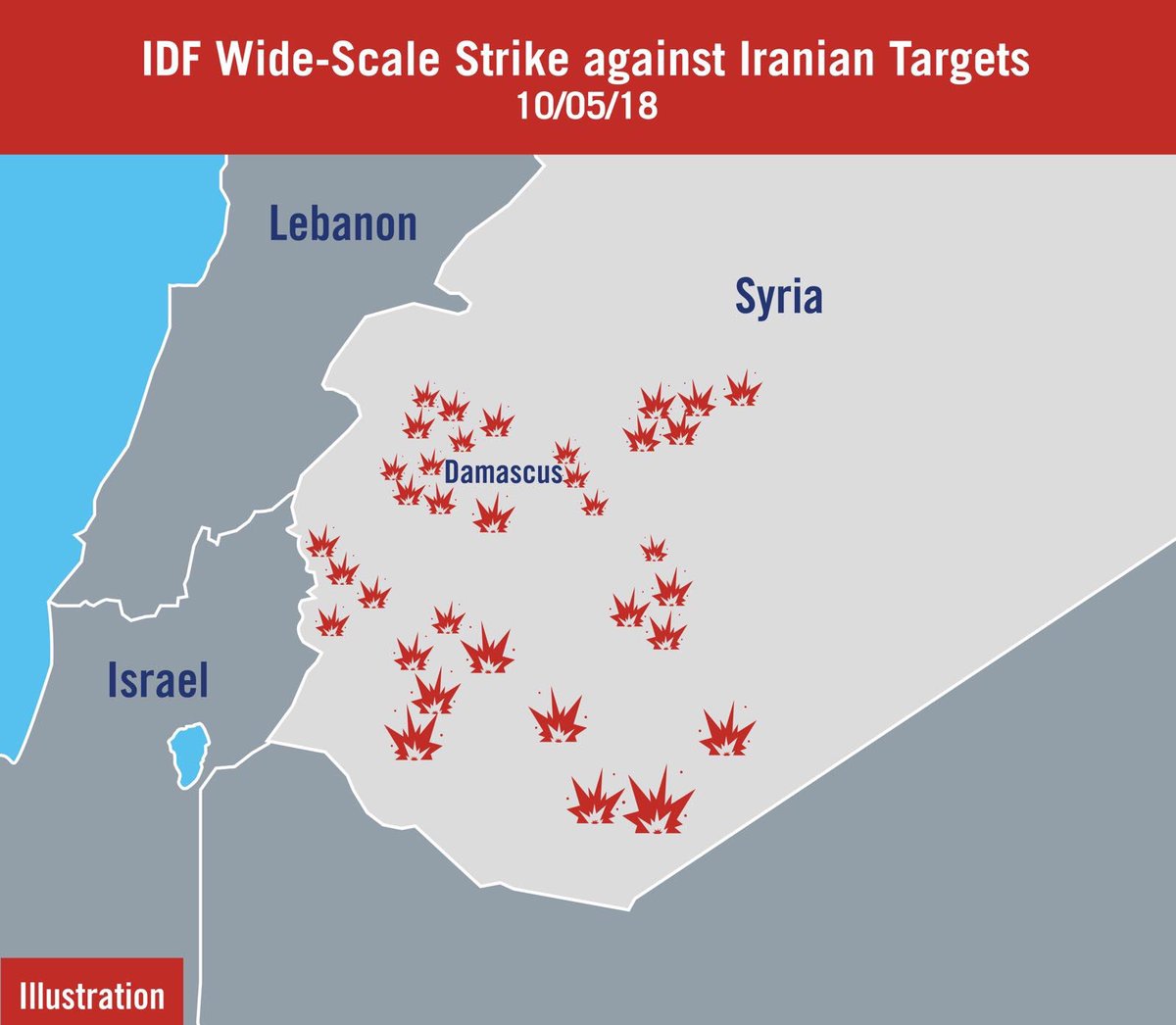
Following Trump’s announcement, an Iranian missile attack on Israeli military bases on the Golan Heights led to heavy Israeli air strikes against Iranian targets in Syria.
There has been an equivalent, although more muted, flap over Trump’s decision to hold face-to-face talks with the North Korean leader Kim Jong-un. The question discussed here is whether this will produce genuine nuclear disarmament by Kim, or whether Trump will be led by his monumental ego up the same garden path along which America has been lured before.
Both lines of thought are surely beside the point. For the elephant in the room is regime change.
Let’s go back to something approaching first principles. The Iranian regime is a menace to the world going far beyond its nuclear ambitions.
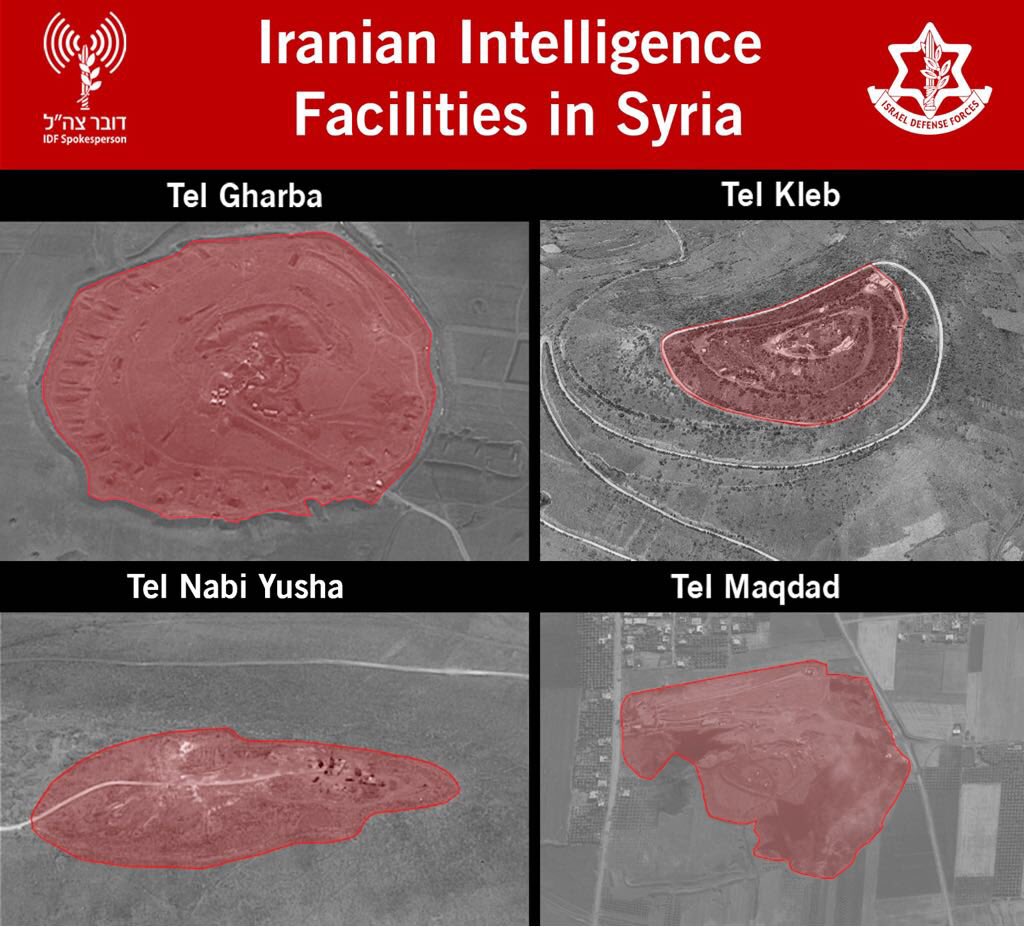
Israel’s airstrikes on Syria overnight on Wednesday has been called “Operation House of Cards,” according to reports. On the surface the reference seems confusing. Iran’s Islamic Revolutionary Guard Corps fired 20 rockets at Israel and in response Israel carried out a massive and complex retaliation targeting more than thirty sites in Syria.
House of Cards may be a reference to the Netflix series or the saying “house of cards.” Here’s why “House of Cards” is a perfect name for the campaign against Iran’s presence in Syria.
Iran has overplayed its hand in Syria
Iran wanted to retaliate against Israel for months but it couldn’t figure out when and how. Its rockets were targeted in various air strikes which Syria’s regime blamed on Israel. Iran also wanted to wait for Lebanon’s elections to end on May 6 and to see if US President Donald Trump would leave the Iran Deal. Then Iran’s IRGC sought to fire only 20 missiles at Israel. Iran thought that Israel would retaliate in kind, a rocket for a rocket. It didn’t realize that it had badly miscalculated and that a massive response would occur. It has badly mismanaged its hand in Syria. But creating so many bases and infrastructure it left itself exposed. Its footprint grew over time, and at each phase of Iran’s growth in Syria it became more exposed, not less exposed. So like a poker player who thought he had a great hand, only to see the river card and realize all hope is lost, Iran now realizes it has a weak hand.
Because Iran's Syria policy could collapse like a House of Cards
Iran has built up an impressive presence in Syria. It’s militias and tentacles wrap around the regime. It has tens of thousands of fighters it recruited. But because it is stretched thin and has invested so much it also has more to lose. This presents a kind of “house of cards.” Iran has built up its networks carefully over time. Huge investments in men and resources. Construction equipment. Convoys. Missiles. Bunkers. Training. And now that house of cards is at risk. Too many provocative moves and Iran could find itself seriously threatened.