Showing posts with label Forest Rain. Show all posts

Friday, December 12, 2025

By Forest Rain


“Don’t worry Ma. See, my arm is fine!”

He knew his arm wasn’t fine. She knew it too.

They both knew there was no way he was staying home. Not after the videos he had seen, not after the emergency message he received, the message all policemen in the area received, the message they thought they would never hear: a call to respond to an invasion.

It didn’t matter that he had a broken shoulder and was scheduled for surgery in a few days. He was trained to defend the innocent, and nothing would stop him.

It was October 7th, and his country needed him.

Sgt. First Class Ran Gvili of the Yasam Special Patrol Unit put on his uniform, took his father’s car, and drove to the police station. He met his team, donned battle gear, gathered weapons and ammunition, and drove straight into the eye of the storm: “The Al Aqsa Flood.”

At the Saad junction, they found themselves in battle with the invaders. They helped party-goers escape the Nova massacre and reach safety. Ran was shot in the leg. He fashioned a tourniquet and battled on. At Alumim, he and other warriors managed to prevent the invaders from entering the kibbutz, saving those sheltering there—but at a terrible cost. The attackers had already slaughtered 22 workers from Thailand and Nepal and taken others hostage. Fourteen people fleeing the Nova party were murdered near the kibbutz, and five defenders of Israel were killed.

We think.

Ran’s brother, also a policeman, assumed Ran was home, learning through the news about friends and colleagues who had been killed. After all, Ran was injured and scheduled for surgery.

When Ran’s phone rang, the battle was raging. His brother was shocked to hear him explain where he was and to learn that he had also been shot in the hand: “Don’t tell our parents. I’m shot, but I’m fine.”

Separated from his team, with a broken shoulder and two gunshot wounds, Ran sheltered from the attackers and passed critical information to the relevant security forces, doing everything he could to bring help to the battle. When the invaders discovered his location, he fought them alone.

The bodies of fourteen terrorists were found at the point where he had been sheltering. Ran was gone.

It took more than fourteen to subdue him and take him to Gaza.

Intelligence officials discovered footage of his unconscious body being taken to Gaza. They informed the Gvili family that the injuries Ran sustained are not survivable—unless given emergency intensive care, which he did not receive. None of the liberated hostages saw him during their captivity.

No one knows for certain what happened to Ran. Until his body is returned, his family clings to the faint hope that this powerful warrior—their Rani—could somehow survive.

He was among the first to race toward the battle and is now the last who has yet to return home. His mother says Ran always made sure everyone else was ok before thinking of himself. It is like him to be last, to make sure everyone else goes first.

Hollywood has nothing on us. Our heroes are real.

I never met Ran, but I have met his mother, Talik Gvili, and seen her in action. She is a hero, a warrior of a different kind. It is no surprise that her son is a hero.

Since October 7th, Talik’s heart has ached for her Rani, but she has devoted her mind to defending our people. She has spoken in the Knesset and around the world, advocating for the release of all hostages through strength. Only victory over Hamas will protect us from future invasions. She says, “I am the mother of a hostage. I do not want to be the grandmother of a hostage.”

One of the most extraordinary moments I have witnessed was between Talik Gvili and Einav Zangauker, mother of Matan, who at the time was held hostage in Gaza. I was accompanying families of hostages to the Knesset, where, during committee sessions, families were given the chance to speak to parliament members and other government officials. Each family spoke in turn; all listened respectfully, no matter what was said or how long it took. Some pleaded with the government officials to save their loved ones. Others explained that they expected their loved ones to be saved in a way that didn’t endanger the future of Israel.

Einav Zangauker unleashed her fear and frustration at the committee head, haranguing him with devastating accusations: “The blood of my son will be on your hands. They will bring him back dead, and you will manage the funeral and the shiva.”

There were some seventy people in the room. We all sat in silence. The more she spoke, the more extreme her words became, and the more everyone cringed, devastated, in their seats.

Until Talik spoke.

It was like magic. I don’t remember her exact words, but with grace and dignity, she broke the torrent of Einav’s rage, refocused her, and calmed her to the point where she got up, walked around the table, hugged Talik, and sat down next to her, holding her hand.

Allowing us all to breathe again.

Talik has rightly received awards and praise for her wise and eloquent advocacy. After one event, I approached her and told her I admired her greatly but needed to correct one huge mistake in her speech. Startled, she focused on me. I said, “You claim that you aren’t a hero, but that ignores what heroes are. They aren’t just warriors in battle; heroes are people who go above and beyond what the average person would do in the same situation.” She looked at me, unmoving. I continued, “When this happened, you could have crawled into bed, pulled the covers over your head, and refused to move. It would have been much easier.”

Her eyes softened. She sighed and nodded. “That’s true. Thank you.”

Hero. Mother of a hero. I wish I could give her a fraction of the strength she has given for all of us, for our safety, for our future. Now her Rani, one of the first to race into the inferno, is the last in Gaza.

We say that “the last one out turns off the light.” Perhaps Ran, the last one out, will be the one who turns off the darkness that has taken over Gaza.

Perhaps he won’t come home until we make sure the darkness is extinguished. There is a job that has yet to be completed... We are responsible for making sure that happens.


Buy EoZ's books  on Amazon!

"He's an Anti-Zionist Too!" cartoon book (December 2024)

PROTOCOLS: Exposing Modern Antisemitism (February 2022)


Thursday, August 21, 2025

By Forest Rain

Ditza Or makes many secular people uncomfortable.

Her clothing marks her as a religious Jew, which, for some, is unsettling in itself. But it isn’t her appearance that disturbs—it’s her words.

Ditza’s son, Avinatan, is being held hostage in Gaza. To most of the world, he is known as Noa Argamani’s boyfriend—the handsome man who, though bigger than his captors, chose to walk into captivity beside Noa because he hoped to protect her.

Noa’s scream of terror, arms stretched out to Avinatan as she was whisked away on a motorbike, was the moment the world saw them both—and the last time she saw him.

Although she has not received a sign of life, Israeli intelligence assures Ditza that Avinatan is alive. And alone. We’ve all seen the videos of the other hostages, starved down to shadows of themselves—concentration camp skeletons. We can only assume Avinatan’s condition is the same.

Imagine, for one moment, what it’s like to be in Ditza’s shoes. What would you say? What would you do if your child was a hostage in the dungeons of Gaza?

We understand the parents willing to burn the world down, to do anything to bring their son home NOW.

Ditza is not one of those parents. She articulates her anguish matter-of-factly, her outward composure unsettlingly incongruent with the horror she describes. As if that weren’t enough, Ditza speaks with blood-chilling clarity, framing the physical nightmare as a manifestation of our struggle—and failure—on the spiritual plane.

Ditza says things we don’t want to hear. The soul recoils, which, to me, seems to be a sign that she is probably correct.

She points out that, 20 years after Jews were forcibly expelled from Gaza in the Disengagement, her son was forcibly dragged into Gaza—to the terror tunnels beneath. Avinatan has never once appeared on the lists of hostages considered for release. He is alone. Starved. Suffering.

And yet, their family name is Or—“Light.”

Ditza explains that she believes souls choose their journey before birth. Avinatan, she says, agreed to this nightmare being part of the story of his life. He chose to play this role in the story of the Nation of Israel. And that, she says, means he has the strength to endure it.

But why? Why must he suffer so? Why must their family suffer so?

Avinatan’s father, Yaron, rarely speaks publicly about his son. He’s worried sick—literally. His heart is struggling to withstand the agony. For this reason, his twin brother (and my friend), Rabbi Shimon Or—who has also suffered health-related stress issues—usually speaks in his stead. Ditza, no less distraught, focuses on the spiritual and less on the political.

How could any mother find meaning in this horror? It would be easier to stay in bed and remain in the dark, but Ditza says we must understand what is happening before we can make it stop.

She speaks because she wants her son back.

Ditza says, the Nation of Israel is meant to be a Light to the Nations. We have a job to do—an obligation to the world as well as to ourselves.

On October 7th, when Israel was attacked with the most revolting and obvious evil, the world looked to us. They expected us to show them what Light does to Darkness. They expected to see good vanquish evil.

But that isn’t what happened.

Instead, we entered a long, grinding war—feeding the enemy, releasing their fighters, allowing them to grow stronger. In doing so, we blurred the line between good and evil. The world, watching, grows confused. Even in Israel, some are confused. Perhaps what they thought was good is not. Perhaps what they thought was evil is acceptable—even reasonable. Justifiable. As a result, confusion is turning to anger: the Jewish people are failing in our mission.

Ditza says that even those who don’t see or believe in the spiritual realm feel it instinctively. They react—and lash out—without consciously being able to articulate why.

She sees two possible choices.

One is surrender. Make a deal, bring home as many hostages as possible, stop the war, save our soldiers. But she rejects this as an illusion—Hamas will never release them all, and such a deal only ensures another, even worse October 7.

The other choice is victory. To vanquish Hamas, reclaim Gaza, and declare sovereignty. To take responsibility for the land that is ours, because no one else can ensure our safety.

Israel, she says, has chosen neither. We have not fought to truly defeat Hamas. We have endangered our soldiers, left our hostages in hell, and failed to ensure that Israelis can safely return to their homes. We have not chosen sovereignty, still hoping someone else will bear responsibility for our future.

And it is this indecision, Ditza says, that is killing us.

Matter-of-factly, she concludes: “My son will remain a hostage in Gaza until we decide.”


Buy EoZ's books  on Amazon!

"He's an Anti-Zionist Too!" cartoon book (December 2024)

PROTOCOLS: Exposing Modern Antisemitism (February 2022)


Tuesday, March 18, 2025

Another Wall? Have You Lost Your Mind?!

This is why liberating the hostages is not enough

 by Forest Rain


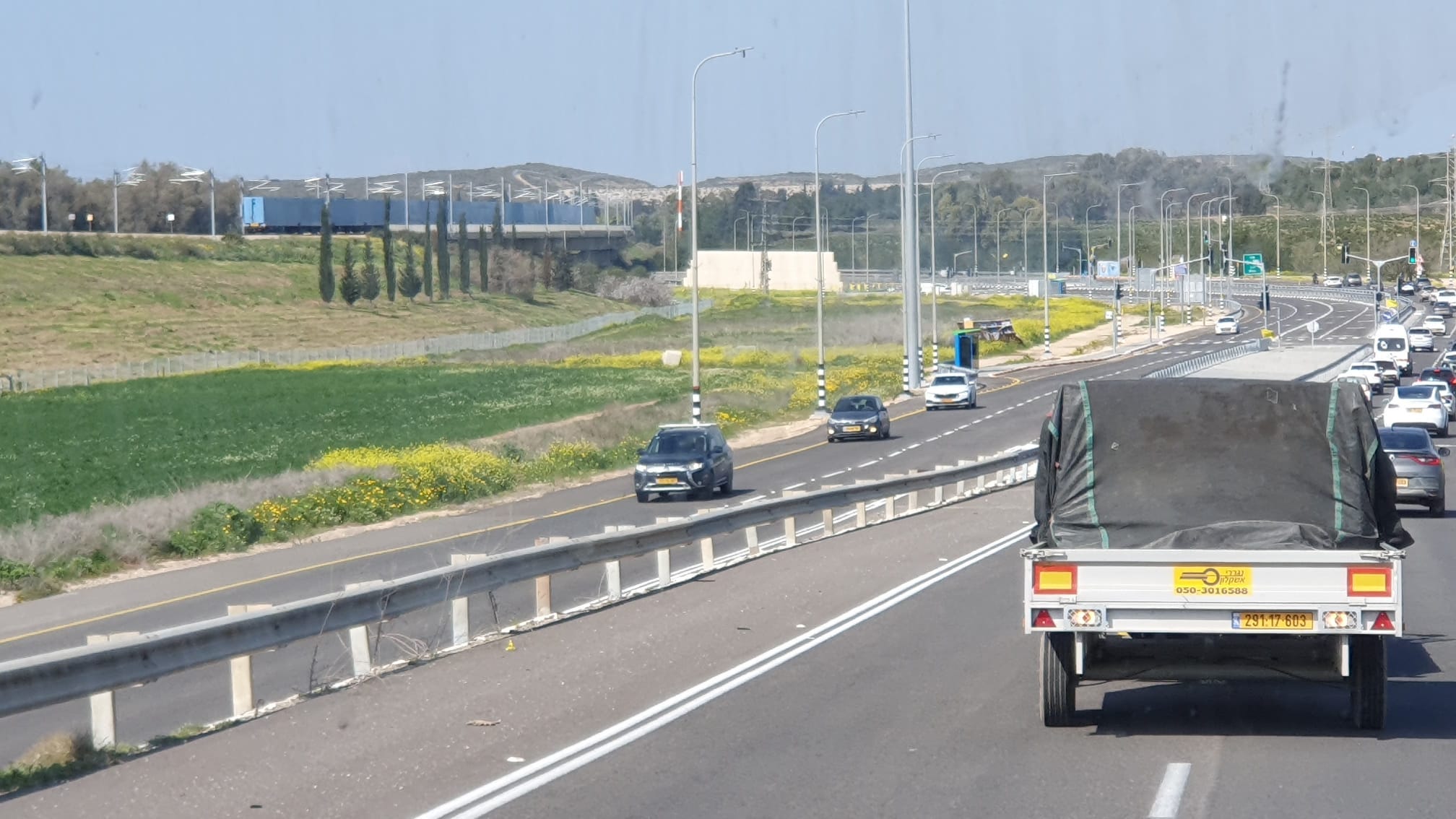
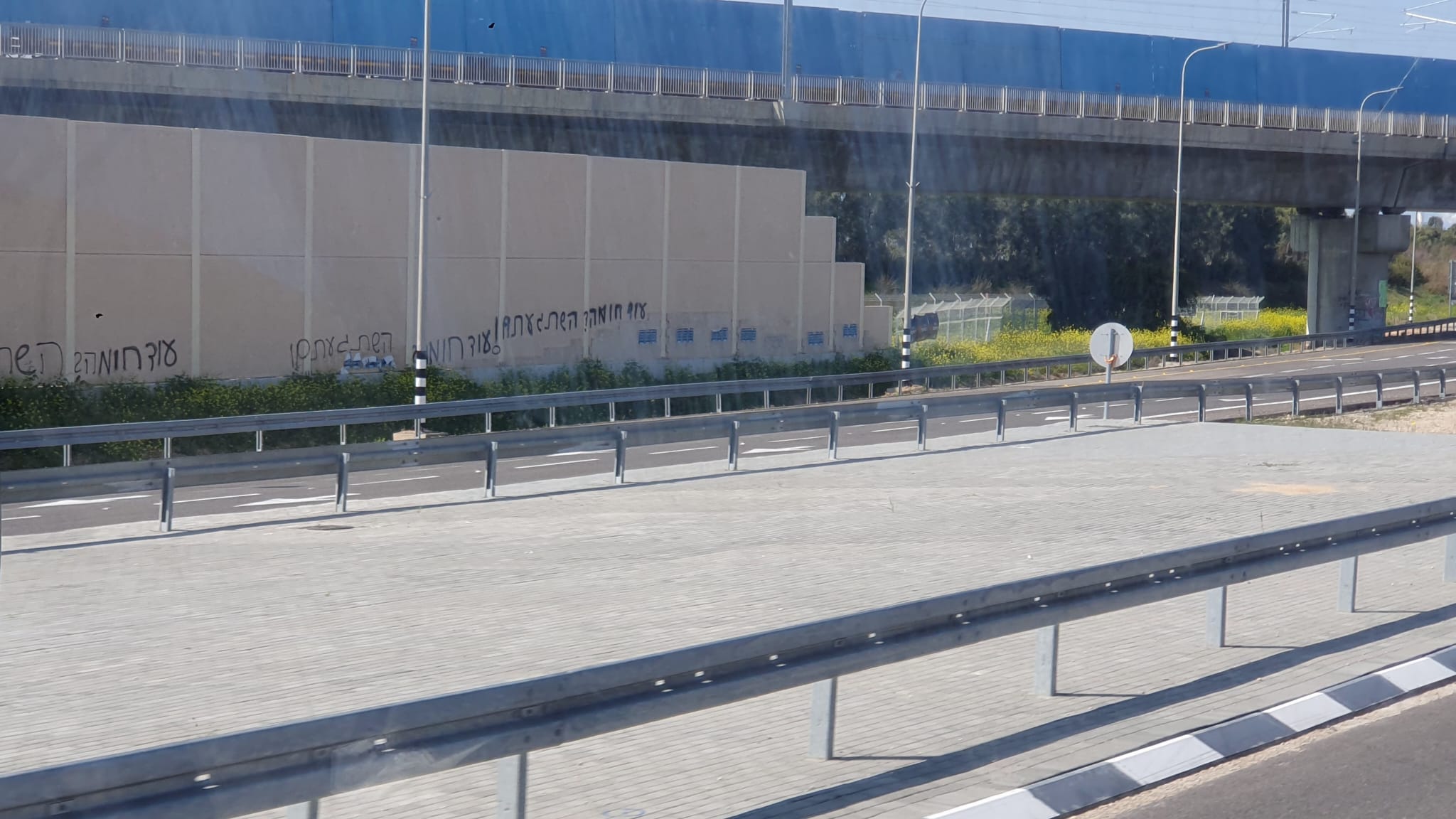
A new wall has appeared along the highway near Israel’s southern town of Sderot.


Since the war began, the train has been forced to take a long detour to reach Sderot because this stretch of track is visible from Gaza—leaving it vulnerable to anti-tank missiles. Now, a wall stands to block the view, ensuring that terrorists in Gaza can no longer take aim at the train—or at least not as easily. Walls don’t erase reality. The terrorists know where the tracks are. They can check the schedule online, just like any commuter.

With enough determination, any wall can be breached.

This wall gives the train something to hide behind. It offers the illusion of security, not real safety. True security doesn’t come from barriers. It comes from eliminating the threat—the people who wake up one morning and decide they want to blow up a train full of Israelis.

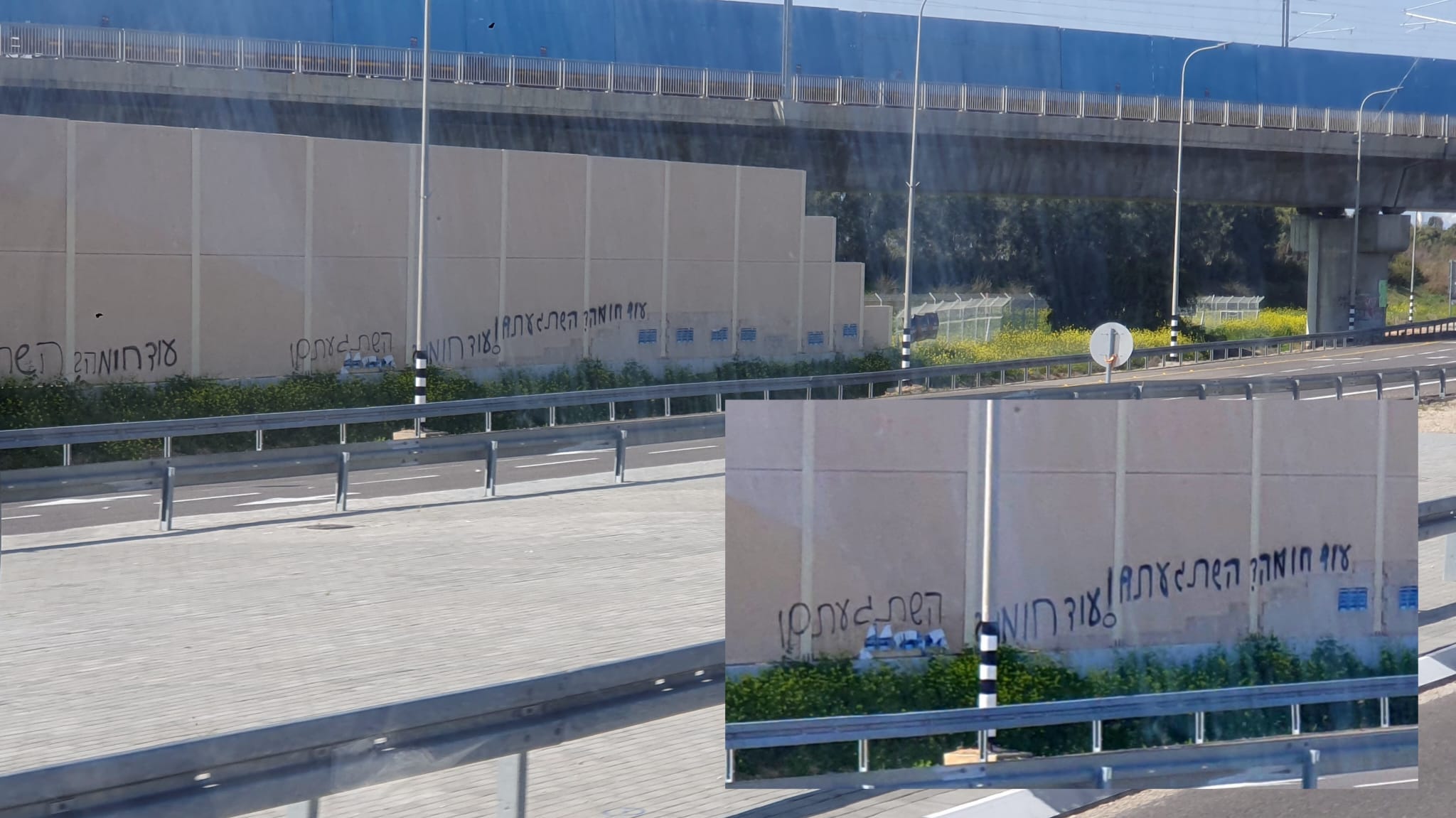
If you get close enough, you’ll see frustration and deep anguish scrawled across the wall in spray paint: “Another wall?! Have you lost your mind?!”


Hiding behind walls didn’t stop the Gazan invasion. In many cases, the bomb shelters families were hiding in became death traps.


The Purpose of the War

When the full horror of the October 7 invasion became clear—the torture, rape, burning, slaughtering, and kidnapping of men, women, children, and the elderly—most Israelis awoke from the Oslo dream of peace with our neighbors. We could no longer afford illusions.

When people declare their intent to kill us, meticulously plan to do so, and seize every opportunity to act on those plans—we must take them at their word.

Most Israelis saw the massacre and burned with rage that became ice-cold clarity: When we said NEVER AGAIN, this is what we meant. Never again would we allow Jews to be slaughtered, tortured, or used as playthings for sadistic monsters who revel in human suffering.

On October 7, Prime Minister Benjamin Netanyahu made it clear: “We are at war—not an ‘operation,’ not a ‘round,’ but war.” Since then, he has repeatedly outlined three war objectives—none of which can be compromised:

  1. Return the hostages—both the living and the dead.
  2. Ensure Israelis can safely return to their homes near Gaza (later expanded to include those displaced from the northern border).
  3. Ensure that Gaza can never again be a threat to Israel.

The Hostages—and the True Measure of Victory

The plight of our hostages has rightfully consumed much of our attention. Everyone—without exception—agrees: we must bring them home. All of them, both the living and the dead. We, the nation and our government, owe this to those we failed to protect on that terrible day.

The Israeli government has gone to extreme—and dangerous—lengths to secure the release of the hostages. Hundreds of terrorists have been freed from our prisons, giving them the opportunity to strike again. For Hamas (in Gaza and Judea & Samaria), this is a victory that gives them enormous prestige, the ability to restructure their chain of command and recruit new fighters (who believe that if caught by Israel, they will be released in future ransom deals. The temporary ceasefire has also given Hamas time to prepare for the next battle. The more time that goes by, the more dangerous it will be for IDF troops.

The government made a calculated choice: to risk the future security of every Israeli to rescue as many hostages as possible now. Truthfully, the supposed future risk is not in the future. It is already here.

And with all that, somewhere along the way, many lost sight of the bigger picture. Rescuing the hostages is our moral duty, but it is not the measure of victory.

Israeli media is flooded with voices—self-proclaimed experts, analysts with impressive titles, and understandably distraught family members—arguing that returning the hostages will be our triumph. that bringing the hostages home is the sole objective. That there is no need for revenge. That the war must end.

These ideas are unacceptable. Completely unacceptable.


The Writing on the Wall

That graffiti—“Another wall?! Have you lost your mind?!”—is a scream for real security.


It declares that it is unacceptable for genocidal monsters to live on our doorstep.

Unacceptable to keep hiding behind walls.

Unacceptable and deadly dangerous to mistake the illusion of safety for real security—when in reality, the enemy is always trying to breach our defenses, to invade and slaughter.

That graffiti is a warning. A warning that if we keep pretending, if we keep avoiding the root of the problem, we will face another October 7.

The story of the Idan family makes this painfully clear.


The Idan Family

The Hamas invaders filmed their atrocities, broadcasting their glee as they tortured, burned, and slaughtered.

The footage from the Idan home is something I will carry with me forever. Watching Gali Idan, in the worst moment of her life, gave me an awe-inspiring lesson in what courage looks like.

When I first saw the video, I didn’t yet know that Tzachi Idan had been taken hostage to Gaza—his hands still soaked in his daughter’s blood.

On February 27, 2025, Hamas returned his body as part of a ceasefire deal, along with the remains of three other Israeli hostages: Itzhak Elgarat, Ohad Yahalomi, and Shlomo Mantzur. Tzachi was laid to rest in Kibbutz Einat, next to his daughter, Maayan.

The video from their home needs to be seen. You do not see any of the violence or bloodshed on screen. What you see is terrible enough - what the family experienced and their response. There are abbreviated versions of this video online because, supposedly, people cannot pay attention longer than a few minutes.

But pay attention we should. Imagine being in their place – because it is only by the grace of God that we were not.

18 year old Maayan was shot in the head, in front of her parents, her then 11 year old sister Yael and 19 year old brother Shahar. Terrorists are in their home and none of them know what will happen next. The Red Alert siren blares repeatedly, warning of incoming rockets.

Gali, a ferocious lioness, trying to protect the lives of her children. Tzachi, his hands soaked with Maayan’s blood, trying to be a stalwart backbone for his family. The children, trying to understand what they are seeing. Shahar quietly asking his mother: Is it over? Is it over?

Watch and put yourself in their place.

https://vimeo.com/1066650024?share=copy#t=0

The invaders took Tzachi to Gaza. His wife and surviving children received intermittent signs of life, a flicker of hope that he could be rescued—until they learned that he was murdered in captivity.

After 510 days, Tzachi’s body was brought home but that is not enough to make it safe for Gali and her children to return home.

How can they?

They know the truth: that their safe room became a death trap. That their sister was murdered. Their father was taken and tortured by the same people who still live just across the border. That those monsters are still there, still dreaming of the next October 7.

How can any Israeli parent bring their children back to live next to Gaza—if Gaza is still full of Gazans?

The war cannot end until it is safe for the Idan family to go home. Until it is safe for all of us to go home. And safety will only come when Gaza is no longer a threat to Israel.

Another wall is insanity. Another wall is an invitation for another invasion, another massacre.

Liberating the hostages is crucial—but it is not the measure of victory. Real safety for every Israeli, ensuring our future, is.


Buy EoZ's books  on Amazon!

"He's an Anti-Zionist Too!" cartoon book (December 2024)

PROTOCOLS: Exposing Modern Antisemitism (February 2022)


AddToAny

Printfriendly

EoZTV Podcast

Podcast URL

Subscribe in podnovaSubscribe with FeedlyAdd to netvibes
addtomyyahoo4Subscribe with SubToMe

search eoz

comments

Speaking

translate

E-Book

For $18 donation


Sample Text

EoZ's Most Popular Posts in recent years

Search2

Hasbys!

Elder of Ziyon - حـكـيـم صـهـيـون


This blog may be a labor of love for me, but it takes a lot of effort, time and money. For 20 years and 40,000 articles I have been providing accurate, original news that would have remained unnoticed. I've written hundreds of scoops and sometimes my reporting ends up making a real difference. I appreciate any donations you can give to keep this blog going.

Donate!

Donate to fight for Israel!

Monthly subscription:
Payment options


One time donation:

Follow EoZ on Twitter!

Interesting Blogs

Blog Archive