 |
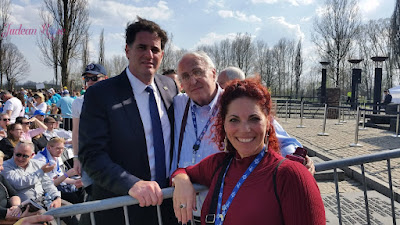
| Guiding Ambassador Ron Dermer on the March of the Living, with Professor Steven T. Katz |
Dr. Elana Yael Heideman has a list of accomplishments so long
it will make your jaw drop, with every last accomplishment earned in the service
of her people and the Jewish homeland. Heideman, CEO and executive director of
the Israel Forever Foundation, is a Jewish
rights activist, historian, leading educator, author, and dynamic public
speaker. Her knowledge of Jewish history and of the Holocaust is both vast and encyclopedic.
If I want to find a specific Holocaust photo and have only a vague memory of what
it depicts, Elana will always know which one I mean and quickly pull it up for
me from her extensive personal archives. After all, this is the woman who
studied for her thesis under famed Holocaust survivor, writer, and Nobel
laureate Elie Wiesel.
Since October 7, I and many others have turned to Dr.
Heideman to gain clarity and understanding of just how this could have happened
to us: how Hamas could have attacked us as we slept, safe in our own land, secure
in the knowledge that unlike during the Holocaust, we had our own Jewish army
to protect us?
Was it all a mirage?
Heideman is the right address to discuss these things: How to make sense of world
indifference to the plight of the Jews, the victim-blaming, the antisemitic campus
protests. Whether to avoid upsetting graphic photos and stories from October 7.
These make it difficult to carry on with our family and professional lives, but
do we even have a right to avoid these things? Don’t we have a responsibility to
bear witness to what has happened for the sake of future generations?
And of course, now that the elections have drawn to their
fiery close, Dr. Elana Yael Heideman will also be the right person to help us
understand the implications of the hateful Nazi label rhetoric so blithely applied
to President Trump by his failed opponent and her fellow Democrats. What can we
do to stand up to this ugly phenomenon of Nazi name-calling in modern day
politics?
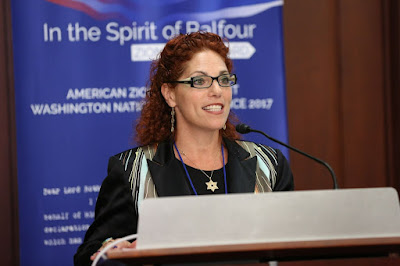 |
| Dr. Elana Heideman |
As a people we are lucky to have Dr. Elana Heideman. Heideman, who made Aliyah in
2005, and today lives in Nes Harim with her 3 beautiful children, is a
visionary. She saw long before October 7 that the global Jewish world needed the
Israel Forever Foundation, “an empowerment and engagement organization that
provides experiential learning opportunities to the global Jewish world to
celebrate, strengthen and mobilize the personal connection and activism of Jewish
People as the nation of Israel.”
Today, we need Heideman and her foundation more than ever. She will always have
something to teach us. Hopefully, this interview will give the reader a taste
of Dr. Elana Heideman’s particular brand of genius.
***
Varda Epstein: You’ve been a Jewish rights activist since
the time you were young. What’s your earliest memory of fighting for Jewish
rights? What are some of the Jewish causes you’ve battled?
Elana Heideman: When I was very young, I encountered not
only Jew-hatred in my middle school in Louisville Kentucky, but also Messianic
Jews for Jesus who were out to persuade, and Holocaust deniers determined to
falsify historical fact.
I can recall various instances where my identity was
challenged, and where I had to think on my feet as to how to address the
twisted misinformation of the people in groups I encountered. I have found that
my pride and confidence as a Jew rooted in Jewish traditional life has aided my
ability to counter each obstacle, including the cadre of self-hating Jews that
have emerged in the past decades.
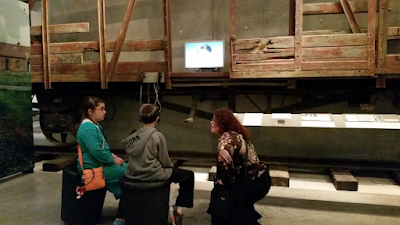 |
| Dr. Elana Heideman teaches children about the Holocaust |
Varda Epstein: Can you tell us a bit about your family
and the milieu in which you were raised? How did your family impact your Jewish
identity and the trajectory your life has taken?
Elana Heideman: Activism is a part of my blood, and my
part in that tradition emerged from a very young age, having watched my parents
serve as prominent leaders fighting for Jewish rights, each in their own way.
In a traditional home, rich with Ahavat Yisrael, I found myself active in more
than one youth movement out of a desire to be involved in the many different
avenues of Jewish expression. In the B'nai B’rith Youth Organization, following
the legacy of leadership set by my parents who met as youth members of BBYO, I
worked my way through chapter offices up to council and the International
involvement. Simultaneously I was active in National Conference of Synagogue
Youth (NCSY) where I was able to explore and embrace aspects of my
religious and spiritual life as a leader. From a very early age I was involved
in program development, something I have continued throughout my career as an
educator, consultant, and transformational guide for young activists and
interns.
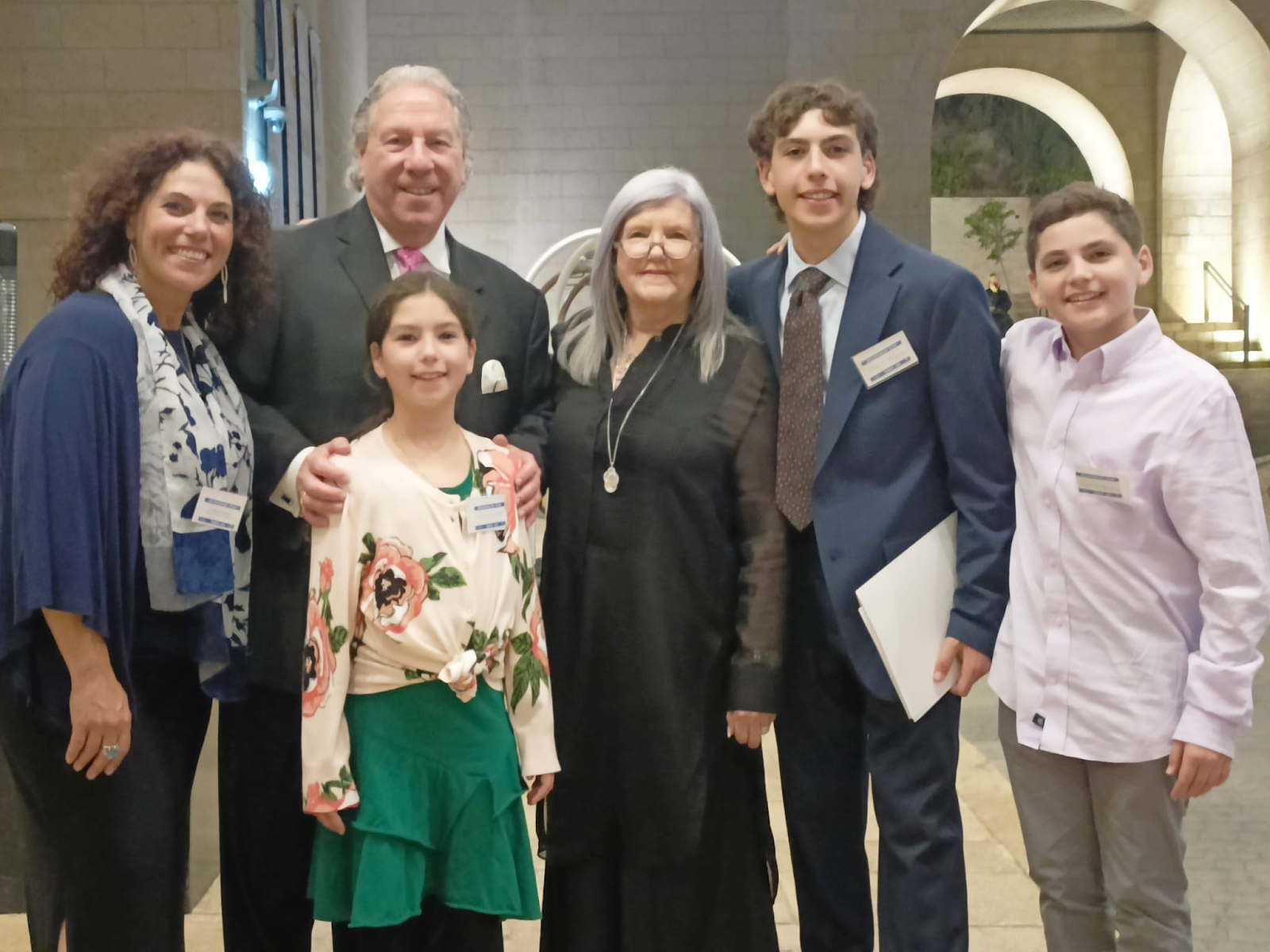 |
| Elana Heideman with her parents and children. |
Varda Epstein: Your specific expertise is in Holocaust
studies and antisemitism. What drove you to choose these specific fields of
study? What is it like to be so constantly immersed in these grim subjects? How
do you stay sane? And what is the impact of all this on your children?
Elana Heideman: From a very young age I was drawn to the
mystery of the Holocaust. I was somewhat fascinated by the experience that each
victim and survivor had to endure. I entered that world through the children's
stories of Terezin, and one of my very first books I ever read at a very young
age was Elie Wiesel's Night. I was immersed; I felt the lives and the
pain of each person I met through his words and those of every book I read and
every survivor I met throughout my life.
My life was directed toward the discovery of how these tragedies could impact
those of us living so many years in its aftermath. Sometimes I wonder if I
chose the topics or if they chose me, but I know that being constantly
immersed in this study is indeed grim. Yet it is also so often a source of
astonishment, even hope and strengthened faith, knowing that even through
all of the nightmares, moment after moment, there are those who lived,
breathed, and died never forsaking their part in the destiny of what it means
to be a Jew.
Sanity is relative. Sometimes I feel I live with a part of
my soul in each of these worlds, but rather than allow it to overwhelm my
senses with sadness or despair, I continue, even after all of these 36-plus
years, seeking out the messages of strength and empowerment that help to
balance the pain that I have inevitably inherited.
I am quite blessed by the openness of my children, that
together we are able to explore many relevant topics on this dark history
without their feeling that such a memory is a burden. Rather, we are able to
talk openly, dissect stories and fears. Especially in light of the October
7th massacre that has awakened in our entire nation a correlation to the
historical Jewish experience of suffering, we have been able to balance
ourselves and never take for granted any element of the courage and resilience
shown during the Holocaust or any other era in history where our people have
been forced to suffer such atrocity. Indeed, my children even have found themselves
strong enough to join me to visit the memorial sites, including Nova, as
we passed one year since the catastrophe, where together we could feel and
consider its meaning in our lives.
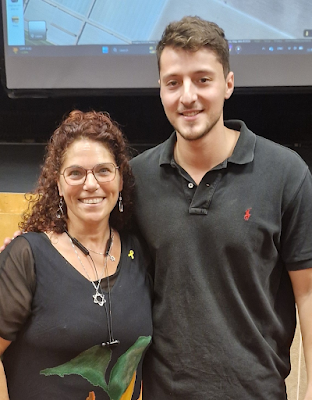 |
| Elana with Atir Vinikov, survivor of Nova who has been sharing his story with Israel Forever |
Varda Epstein: Famed author and historian Elie Wiesel was
your thesis advisor. That’s certainly something most people cannot claim. What
was it like working under Professor Wiesel, himself a Holocaust survivor?
Elana Heideman: I had the great honor of being invited by
Elie Wiesel to study under him for my doctoral research. He was more than just
an advisor, he was my mentor, he was my Rabbi; he was my guide through the past
and towards the future. It was a very powerful experience, every single
encounter leaving an indelible impression on my soul, and of course, on my mind.
He shared details of his own life and his own thinking that enabled me to carry
his voice further as I continue to do now, even years after his passing. As one
of only a handful of doctoral students who studied under his guidance, I am
honored to have filled the unique role of being the only student to focus
specifically on the Jewish Human Experience during the Holocaust. It was not
easy for him, and we would engage in very healthy debates on the analytical
interpretations of the transformation of The Jewish Human Condition in
particular, which I termed “momentary survival.” I was able to engage with my
esteemed master not only as my professor, famed Holocaust Survivor, writer and
eloquent speaker, but also with the young Eliezer that I had met in my childhood
encounter with his life experience. And to this day I am determined to protect
Elie's Echo and to help others learn from his absent voice, especially now at a
time when our people desperately need the guidance that he once offered to our
nation.
While people can no longer hear him in person, it is
essential that we continue to share his voice. I am honored to be
considered his protégée and a carrier of his legacy.
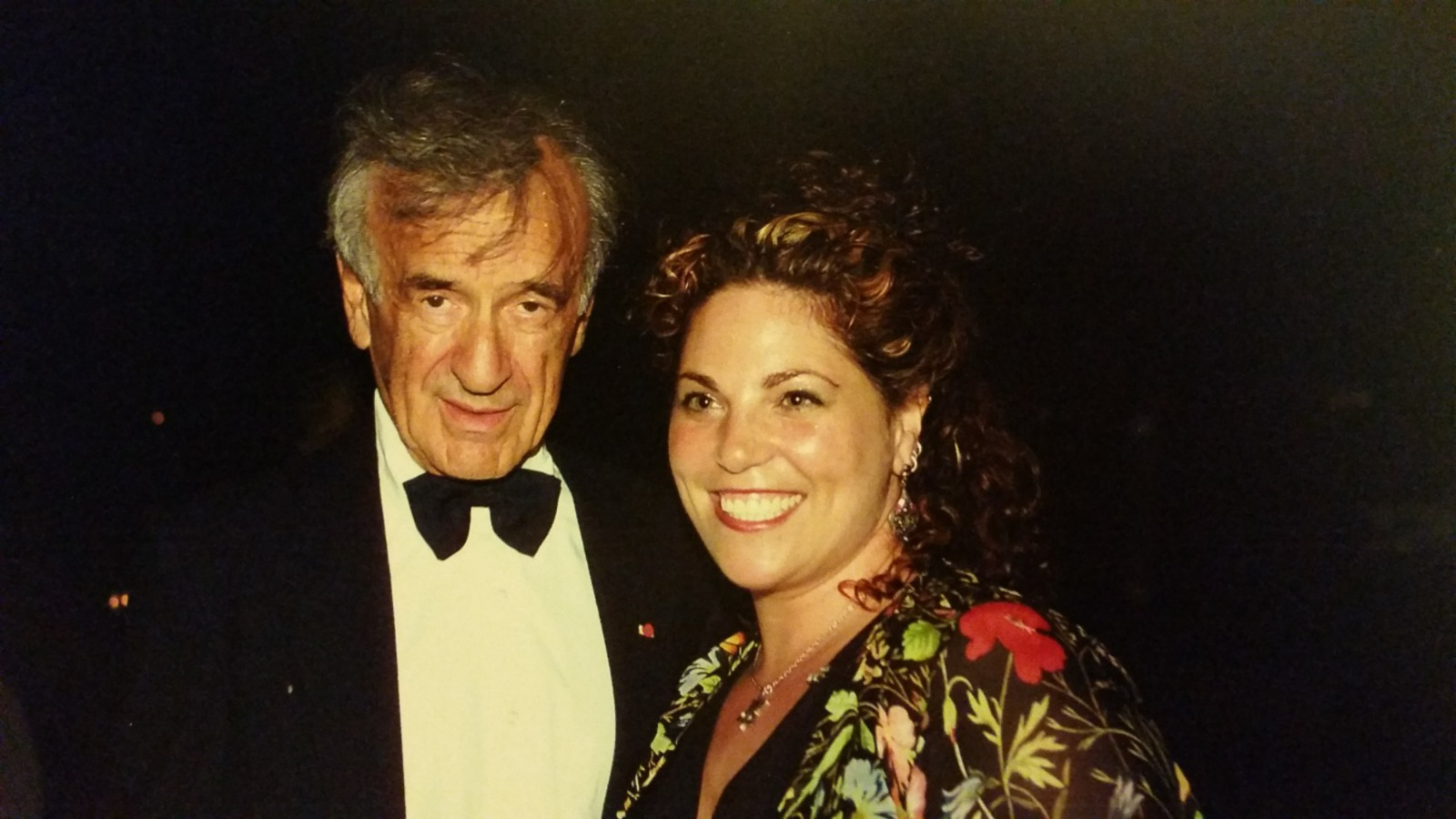 |
| Dr. Elana Heideman with Prof. Elie Wiesel, her mentor and "rabbi" |
Varda Epstein: Can you describe some of the work you’ve
done at/for Yad Vashem, Israel’s Holocaust museum and on behalf of Holocaust
education? From your perspective, why is this work so critical?
Elana Heideman: My work on behalf of Holocaust education
continues every day, and it pulses through the activism work I do on behalf of
our people and our country. I educate educators, I train teachers, and continue
to work with students looking to explore the field for research or other
methods of memory transmission.
I began my work at Yad Vashem as a student, going there for
my endless research efforts and taking part in every program I could get
involved with. I attended their summer courses and went on to become an
educator for the International School of Holocaust Studies and have served as a
private guide for 20 years, providing a most unique and personalized experience
through the Historical Museum. I was a part of an initiative that brought
together teams from Yad Vashem with the United States Holocaust Historical
Museum on applications of academic research to the future of Holocaust memory,
and I have been a mentor for many students who seek to make Holocaust research
and education a part of their future career path. I continue to educate and
train educators and do my very best to encourage creative methods of the
transmission of memory in a purposeful and meaningful way. Most importantly, I
believe the work that we do as historians is, as Elie Wiesel said, our tool in
our fight for Jewish rights and freedom. Those of us who are capable of
translating the messages of history into action for today and the future are
essential as our history and our very existence as the Jewish Nation continues
to be threatened.
October 7 presented an unexpected comparison with the events
of the Holocaust and I have tried to help people contend with the (im)balance
of these atrocities. I am involved in memory efforts in Israel for the future
of the memory of the Simchat Torah massacre, and I am involved with helping
survivors tell their stories onward. I am working with descendants of Holocaust
survivors who suddenly feel their identities shift following this tragedy, and
am helping those who are trying to find their voice in the process of
memorialization and meaning. Along with that comes helping people find clarity
in the relationship between events of the past and those of today, as well as
the warning signs for the future.
Nazism of today does not look or sound like the Nazism of
yesterday, yet people are quick to leap to unrealistic comparisons and sleight
of tongue in name calling. The true lessons of the Holocaust would be a
recognition of the power game of its perpetrators, and the language used to
demonize the Jew and anything and everyone non-Aryan. To use the terms Nazi,
Hitler and, in fact, the term genocide so loosely for political gain, as
has been done about Trump and Netanyahu, and the battle for existence in the
defensive wars of Israel, is irresponsible and inaccurate. We should do better
to retain the integrity of the survivors and the experience of fascist tyranny,
and to recognize the patterns of public manipulation that employ the same fear
tactics as the Nazis
before them. The closest comparison can only be found in the global jihadist
movement for the extermination of Israel and the Jewish nation that has become
the rallying cry of the antisemitic hate fests taking over the streets and
social streams of the world. That is where energy should be directed - to
stopping the trend enabling the violent vitriol that will lead whole societies
into dark and trying times.
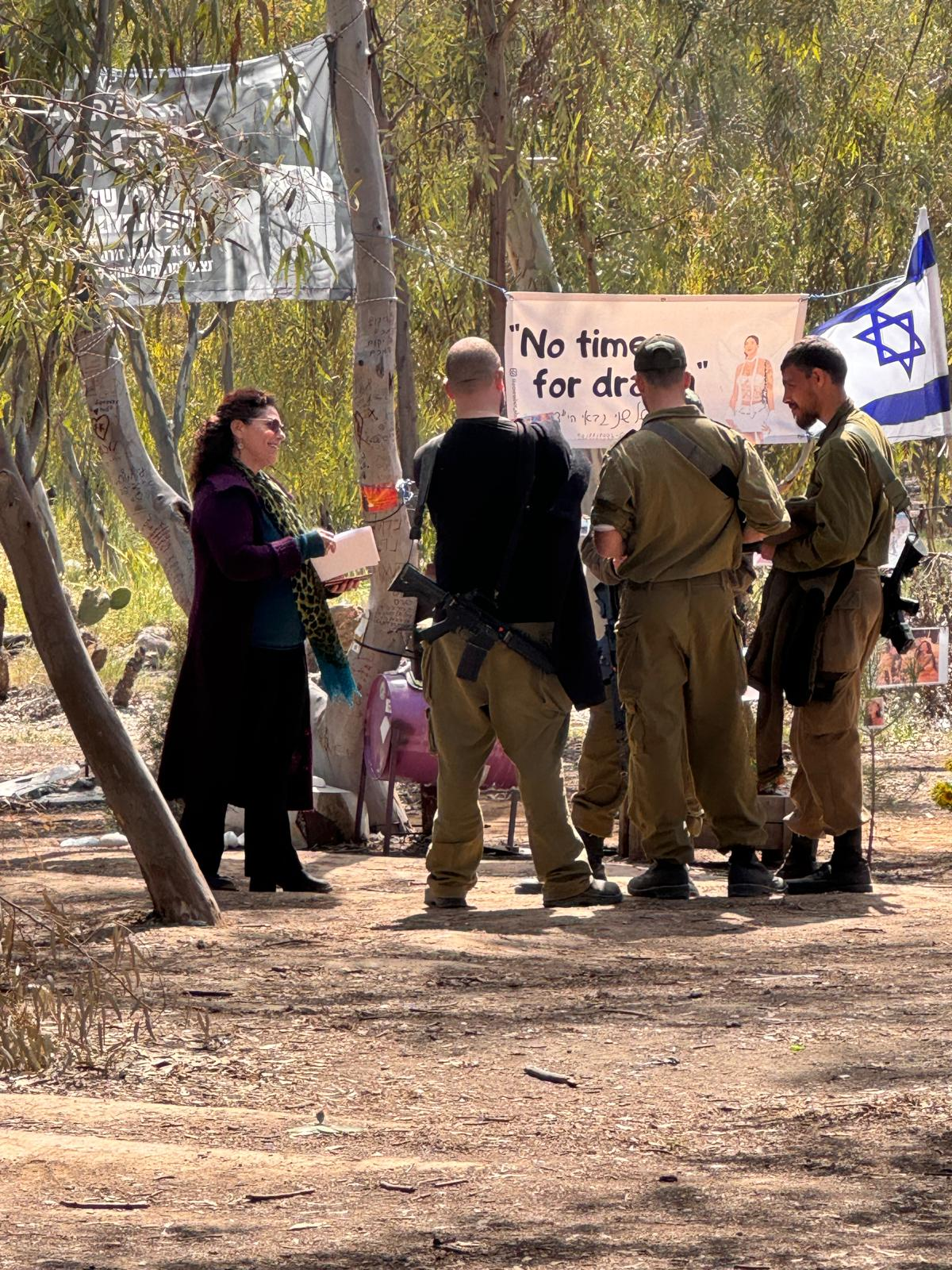 |
| At Nova |
Varda Epstein: Why did you make Aliyah? Do you see Aliyah
as a Jewish imperative?
Elana Heideman: Aliyah for me felt inevitable since my
very first visit to Israel at the age of 13. The experience transformed my life
and my identity, my self-awareness and my motivations. I had postponed my
desired Aliyah for the sake of my academic career, and was blessed with the
opportunity to spend 12 years under the tutelage of Elie Wiesel, but right in
the middle of our learning together I felt a change. Having guided many journeys
to Poland within a short timeframe, it was that last arrival back to America
where I understood this was no longer my home where I could feel at peace,
where my soul was complete. I knew that in order to write the best work and to
do the best teaching I could do for the sake of the future, I needed to be
where I was my best and most complete self, and that was in the land of
Israel.
As we know, making Aliyah is not easy for anyone, but I
found myself so enthralled by the ability to live the miracle and to learn the
language of our people, that I built quite a beautiful and substantive life here
where I now live on a moshav with my three children in the Judean mountains. I
know that Aliyah is not for everyone, however I do wish more people would
consider it so that we can carry on the pioneering dream of our people, those
who lived in exile for too many years. I believe Aliyah could be a greater
ideal for some Jews today, but of course as we've seen throughout history, it
is not easy to pick up an entire life and face the countless challenges of the
cultural, financial, social, and even religious shift that comes along with
such a major move.
I do believe that it should be a Jewish imperative, and
frankly I believe that every diaspora Jewish youth should be obligated to
inherit their birthright as a virtual citizen of Israel, and to serve one
year of either volunteer army service or community service, Sherut Leumi, or
other opportunities. Sadly, not enough of our diaspora family feels that
it is worth the potential sacrifice, no matter how many years we repeat the
phrase “next year in Jerusalem”, or “if I am not for myself who will be for
me”, or singing the songs that remind us that we are all watchmen on the wall.
Unfortunately we will continue to see Aliyah of despair, of escape from the rising
Jew-hatred in every corner of the world.
I pray that Jewish families today and those of the future
will understand that Aliyah by choice is something that we can each make
possible if we dream it. But the dream must be fostered by a sense of shared responsibility
to our homeland, a shared destiny with the ancestors of thousands of years ago
and every generation since. Only then can someone realistically envision taking
on the more difficult life, the many bureaucratic and cultural obstacles.
Building a meaningful life in Israel outweighs so much of the burden of the
obstacles we face because we know that it is the chosen life to be a part of
blossoming and living our land, and being a part of the collectivity of the
nation of Israel as fulfilled in our biblical blessing.
Varda Epstein: Tell us about the Israel Forever
Foundation. What is the mission of this nonprofit of which you are the
executive director, and how did it come to be?
Elana Heideman: Israel Forever was born as an organization
focused on celebrating Israel's centrality in Jewish identity and her
contributions to humanity and civilization. Expanded to become a home for
engagement, inspiration, and empowerment, Israel Forever offers programming,
resources, and consulting for our global community of members, who we recognize
as Virtual Citizens of Israel.
I developed Israel Forever to meet the continuous need of
Jews from all backgrounds and places in the world to feel connected to our
source as Israel and the many dimensions of what that means. This vision
extends to those already involved and also for the unaffiliated and
non-religious. It includes creating opportunities for informal learning to
reach those who lack a community or educational connection.
We cater to the continuously growing needs of the Jewish
world, for those who are unaffiliated, isolated, seeking to deepen their
personal connection, to mobilize their families and friends in creative ways
that help them feel like they're making a tangible difference. We serve as a
partner and often a guide, creating opportunities for learning, activism, and
to bring together those in the diaspora with grassroots efforts in Israel,
helping to not only raise awareness but to increase compassion and connection
no matter how far apart the members of our global Jewish family might be.
We have been active for 14 years in designing content that
meets the needs of educators, parents, community leaders, organizations and
individuals. Since the war, we have been sponsoring Healing Hearts mosaics
therapeutic activities to displaced communities, distributing messages and
packages of support to bereaved, traumatized and displaced families. We have
supported soldiers and soldier’s families, especially miluimnikim reservists,
and we have been sharing the stories of Israel and helping to inspire those
around the world to be IsraelStrong in
every way possible.
Israel Forever was built on the understanding that not all
Jews would come to Israel to foster the sense of belonging. Instead, we have
brought pride in Zion and Israeli identity to those around the world. Now, as
our people face a war on multiple fronts and platforms, Israel Forever
continues our vital role in serving as a bridge and a source of empowerment.
Varda Epstein: Can you tell us about your work on behalf
of Zionist organizations, such as B’nai Brith and the World Zionist Council?
Elana Heideman: When I was growing up, Zionist was not a bad
word. And it was with immense, unfettered pride that I served as a B’nai B’rith
delegate of the World Zionist Council from a very young age. I was exposed to
the activism and voices of elders and leaders from all over the world, and I
was able to learn from their expertise. Eyewitness to debates both civil
and non, I gained greater insight and appreciation by listening deeply to
the various perspectives that I encountered. I recognized and appreciated the
different styles of communication and activism of Israelis, empowered by their
confidence in our nation state. I learned how to navigate the intricacies of
international collaborations and networking, and to find a balance between
ideas and passion, and actualization and implementation.
As the chairperson for the Young
Leadership Action Network, I was able to not only meet fellow young
activists but also share my ideas for potential improvements in making possible
the change we all were hoping to see. Then again, as a delegate for the Global
Conference for Combating Antisemitism, since its inception in 2004, I do
feel as if we continue to fight the same battle that many of us were shouting
about for all of these years since. The new waves of Jew-hatred we see on the
streets right now were already in their inception phase, incubated by years of
indifference and accusations of paranoia for anyone who was, like myself, able
to see the writing on the wall and trying to be involved in every way possible
to find solutions to the lack of preparation or response.
I continue to sit in the conferences, serve as a delegate,
and see how I can make an impact while wading through the organizational
bureaucracies that we all know are obstacles to our ability to make change.
Israel Forever, as a grassroots independent unaffiliated apolitical Jewish
Rights Movement, allows us to succeed in making Israel and Jewish identity
empowerment a personal goal.
 |
| "Silly me." |
Varda Epstein: What is Declaration Day, and what
drove you to this initiative?
Elana Heideman: In simple terms, Declaration Day
commemorates the day on which Ben Gurion declared Israel's independence as a
nation state following the end of the British mandate over Palestine on May
14th, 1948. The Declaration Day initiative aims to establish this day of
recognition on international calendars. While Yom HaAtzmaut is our day of
celebrating our rebirth as a sovereign nation in our ancestral homeland, the
international world must remain continuously aware of the facts that surround
this reestablished sovereignty.
Every year the lies get worse. The Nakba lie has grown in
popularity and has circumvented nearly all elements of historical truth
surrounding the formal establishment and recognition of the modern Jewish state
of Israel. But rather than create a reactionary campaign, we aim for
Declaration Day to be a proactive affirmation of the ancestral rights that were
affirmed on this historic date. With increased programming for recognition of
the path to independence as a just cause for Jewish national freedom,
reaffirmed again and again in international law, we can prevent the future
deterioration of the facts in the minds of common people. We can educate them
as to the fundamental values on which not only was Israel created, but
values Israel continues to uphold in both our pursuit of peace and in our
methods of war, as we are continuously forced to demonstrate.
No international body gave Israel the right to exist. Not the
Balfour on November 2nd, 1917; not the League of Nations on June 24th, 1922;
not the United Nations vote for the partition on November 29th, 1947. But by
virtue of these recognitions of Jewish rights to the biblical and indigenous
homeland of the Jewish people, Jewish life has continued to grow and
blossom in a desolate land, fulfilling our ancestral destiny and the
blessing bestowed upon us by God. Declaration Day allows people to stand proud
for these same values and ideals.
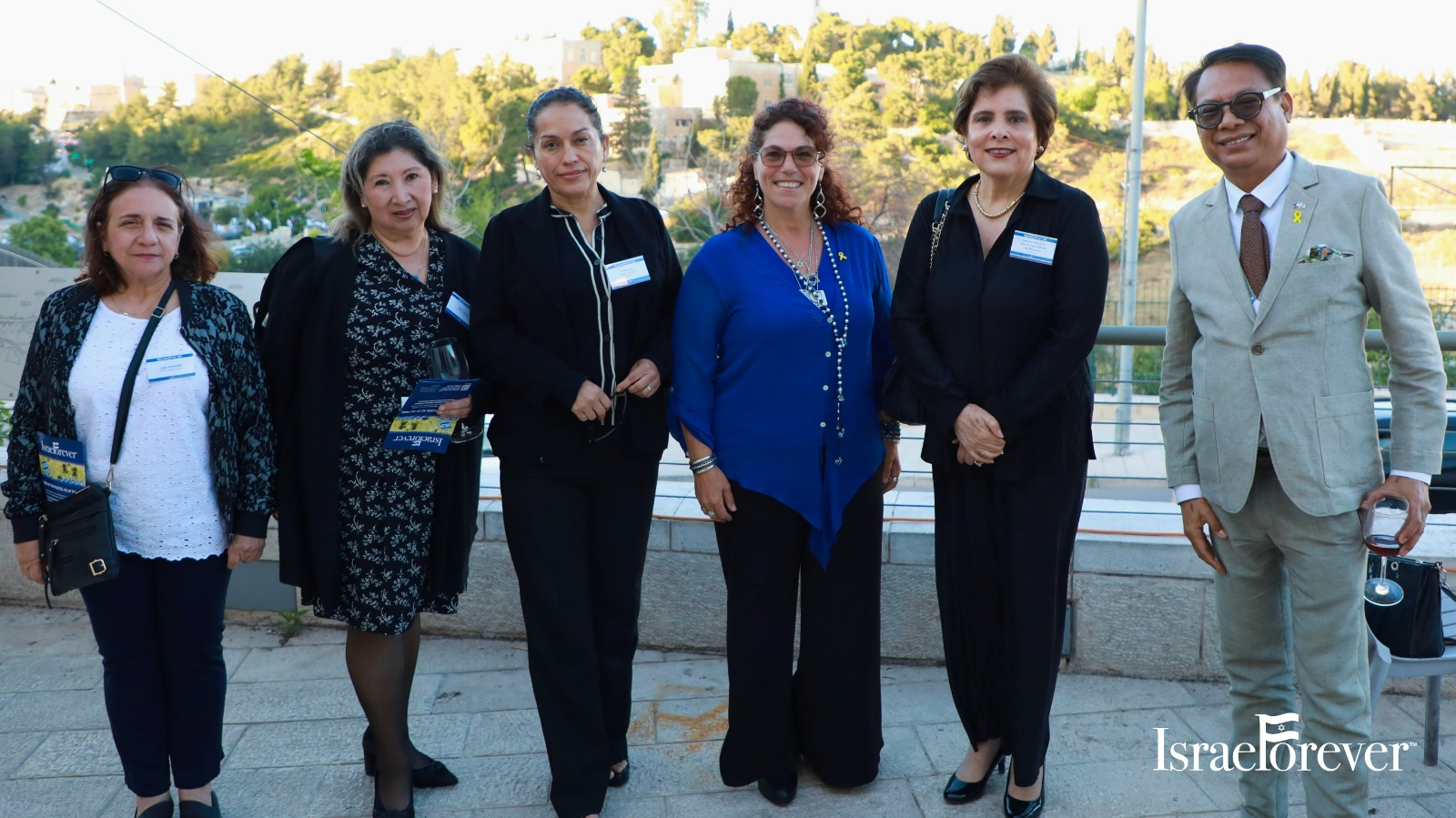 |
| With a group of ambassadors at Israel Forever Foundation Declaration Day event |
Varda Epstein: What is the most frustrating aspect of
antisemitism and the fight against Jew-hatred?
Elana Heideman: On one hand the most frustrating aspect is
how easily the masses are persuaded by the lies about Jews. On the other hand,
the most frustrating aspect is how careless and callous people have become when
it relates to expressions of Jew-hatred. Elie Wiesel taught that indifference is
amongst the most dangerous elements of a society. And yet, people are
inevitably susceptible to compassion fatigue and, in the competition for
empathy, the Jews simply do not factor in. We seem as nothing but a burden; a
thorn in the side of societies who just want to be able to forget that the Jews
exist. To many, we represent something beyond “foreignness;” rather an entity
whose existence and resistance they cannot understand, and in too many cases
cannot accept as legitimate, no matter human. So I believe that our fight
against Jew-hatred begins with respect for the Jew and what the Jew stands for,
and it is immensely frustrating to know that we cannot achieve this respect
while our people continue to have such internal divisions and public conflicts.
They weaken us, they demonstrate that we are, within our own community,
indifferent to the impact of this internal division on how the external world
accepts us or understands us. For years, and especially in the past year,
we hear how Israel hasn't done enough to explain ourselves. But in fact the
fight against antisemitism should not rest on the shoulders of Israel alone,
but on those of the diaspora organizations who, sadly, have spent these last
decades treating the rise of antisemitism as if it was insignificant. Now we
see how such indifference to our own reality has fostered some of the
inadequate response to what we are currently seeing happening everywhere around
us.
Varda Epstein: Talk to us about October 7. What was your
original reaction when news of the atrocities began to filter out? How have
your feelings and purpose evolved over the one year since that black day?
Elana Heideman: The first siren in my community was within
the first hour of the onslaught, which began at 6:29 a.m. I immediately grabbed
my phone in spite of Shabbat. The videos were the first thing I saw. I felt
like I had been transported in time. Like everyone else here, it was impossible
for me - for anyone at that time - to understand the extent of what was
happening, such as how many terrorists had infiltrated what we believed to be
our safe borders, the depravity of their acts or the extent of the psychological
tortures inflicted on children, elderly, and women. Where were the soldiers to
protect them, was, of course, one of everyone’s first questions as I was
already seeing some of the conversations that were happening in these
communities as they were under attack, simply by virtue of random shared connections
in my social feeds. It was everywhere, and I saw before they were taken down
some of the most graphic images of the fields of Nova, the bodies of raped
women, beheaded corpses, and burned babies. I found myself seeking story after
story from that day and onward, knowing that my role as an atrocity memory expert
might somehow be an asset in trying to comprehend and cope with the aftermath
of this slaughter. I still continue to inherit these stories, and I do
everything in my power to pass them along. Much as I had done with the stories
of painful suffering and abuse during the Holocaust, I knew that this was a
part of the blessing/curse I had inherited. I had to be able to give voice to
the voiceless; I had to be able to keep people informed while alleviating their
personal fears and anxieties. For each month of the one year following the
slaughter, I held a virtual program on the 7th that allowed people to learn,
listen, and to feel some small glimmer of solace in knowing that they were not
alone and that they could have a safe and private space to feel somehow
together, even with people who are far away. Another program we developed to
foster this connection was our Healing Hearts
mosaics project, a therapeutic craft that we provided to displaced
families, and that we continue to provide for bereaved and traumatized
families, individuals and communities, through the generosity of donors from
around the world. At a time when we all feel helpless and yet wishing we could
do more, I continue with every chance I get to create opportunities for
interaction, healing, and the continued learning about what October 7th means
to each one of us, especially as the months continue to pass.
I will say that my feelings have only grown more intense,
and my purpose even more empowered. And my intensity grows despite the
fact that everybody since October 7th is now an “expert” on anti-Semitism and
the holocaust. While it is indeed difficult to wade through the new voices of
influencers, whose popularity are dominating the conversations, I know
that my role is perhaps even more relevant as a link between generations of
knowledge and insight that I have learned and inherited.
Varda Epstein: How has the focus of your work changed
since October 7? What are you doing to spread awareness and fight back against
misperceptions and anti-Israel sentiment?
Elana Heideman: The focus of my work has changed only in the
continuous need to keep our war for Jewish rights and freedom at the forefront
of people's consideration and consciousness. Alongside the necessary awareness
of our hostages in captivity we must look at ways we could be fighting our
fight better, such as emphasizing the full transparency of the IDF in their
unprecedented care to reduce civilian casualties, and to call out the
propagandists and their manipulated numbers and demonization. The focus of my
work just has even more purpose now than ever because, in truth, many Jews are
simply feeling lost. We must join our soldiers fighting this just war for
freedom against this tyranny of terror that is taking over the world and so I
will continue to seek opportunities, partnerships, and find ways to help the
common person, the every Jew, so that they might feel more confident as they
wade through the sea of confusion and encroaching despair. I have increased our
visual presentations of information and empowerment messages, interviews with
people who are involved in a grassroots level of activism, philanthropy, and
community strength. We continue to reach people directly with ideas on how to
channel their energy into positive ways during this most trying time. I
have expanded the lessons on historical relativism, recognizing that we are
indeed living through a historic time.
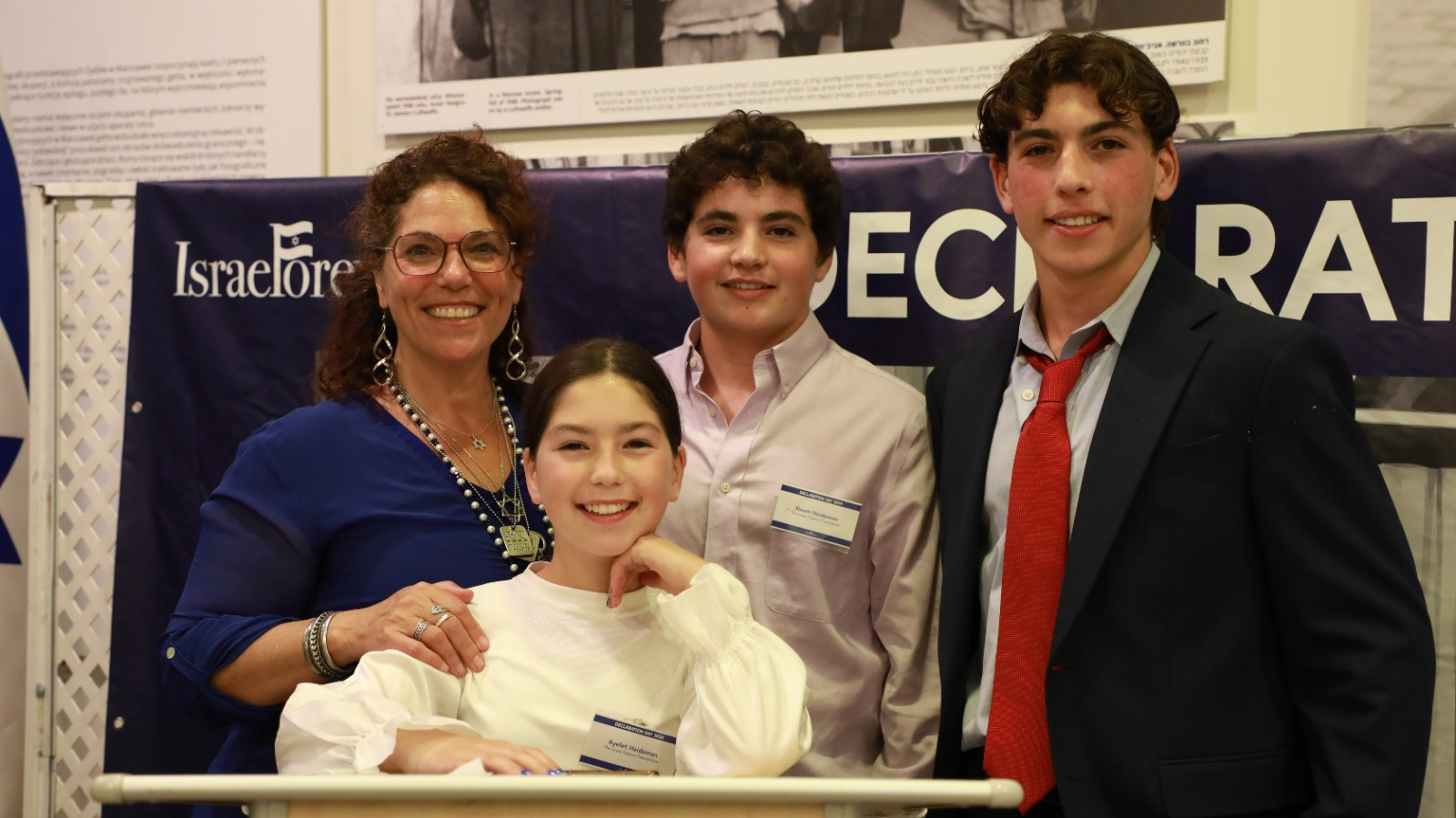 |
| Elana and her beautiful family |
Varda Epstein: What is your advice to those who want to
make a difference on behalf of Israel and the Jewish people, but don’t know
where to begin?
Elana Heideman: This is precisely what I have been doing for
years - helping people find their spark, polish their voice, and find ways to
be involved with activism that meet their personal abilities, interests and
availability. In our busy lives, we have to make the time - we have to commit
ourselves to something in particular that helps us feel we are making a
tangible difference. For some that might be advocacy, for others it could be
letter-writing and call campaigns to administrations and organizations. Whether
for the release of our hostages or the rights of Israel or of Jews in
classrooms and communities, these individual voices are essential to keeping up
momentum. Of course, finding a local group or leader works for some; but for
others, they are looking for ways to fit activism into our already overstimulated
and over-programmed reality.
Anyone can take a first step - don’t be shy, and definitely
reach out for help. I do private consulting for people looking for direction,
and help develop skills through a hands-on internship program that has
propelled many into activism or even career pursuits. Helping stay motivated is
often a challenge, and feeling helpless or lonely can be obstacles to having a
sense of accomplishment - especially in social media activism, which is very
difficult to navigate because of the exposure to the toxicity of hate. So I
believe starting small and making meaningful connections is a great first step
to finding your personal niche of how you can use your time and energy.
Israel needs every voice, and we all have a potential to do
more to join the efforts to go beyond just Jewish pride to be Zion-proud -
deeply invested in the success of our ancestral national project. You can find
connections in the most random of spaces and build creative expression in the
most diverse of platforms that can all serve our collective purpose of keeping
alive the legacy of the nation of Israel.
Our unity is at the helm of our fight to overcome the hatred
and danger we face today, and that unity begins with sharing what we know about
the issues and what we have seen work over the years. Don’t underestimate the
meaningfulness, the power and importance, of your single voice. Consider the
many skills and relationships you have picked up over your life, and how they
can help you to grow and strengthen your own Jewish identity and that of other
Jews in your life. Be the ambassador for the Jewish fight for freedom and
sovereignty with Israel Forever, or come explore with me your next path - the
opportunities are yours if you want them.
Varda Epstein: What’s next for Elana Heideman?
Elana Heideman: My vision for myself in 5 years is to
continue to be at the helm of an organization that I believe plays a crucial
part in the continuity of connection for Am Yisrael. I have channeled my
passion for learning and activism into meaningful programming and content,
creating engagement and empowerment opportunities and inspiration for a wide
range of audiences around the world. I continue the work of Elie Wiesel in
utilizing the lessons of the Jewish lived experience into our current realities,
facing a new war against the Jews. I hope the future allows me to carry
Israel Forever into new levels of global awareness and programming
opportunities, to continue building upon the thousands of hours taught,
hundreds of articles and resources written and published on israelforever.org,
to create partnerships allowing us to reach, connect and collaborate with local
communities for the sake of our collective future. And above all, I hope I will
still be inspiring fellow Jews in discovering their connection and destiny as a
part of the nation of Israel, knowing that Israel Forever can play a historic
role in protecting the integrity of one of the great civilizations of the
world.
|
 Buy the EoZ book, PROTOCOLS: Exposing Modern Antisemitism today at Amazon! Buy the EoZ book, PROTOCOLS: Exposing Modern Antisemitism today at Amazon!
Or order from your favorite bookseller, using ISBN 9798985708424.
Read all about it here!
|

|

 Wednesday, January 28, 2026


 Buy
Buy 


