
 Monday, October 19, 2026
 Elder of Ziyon
As my regular readers know, I’ve spent a lot of time over the past couple of years developing a philosophical framework I call Derechology. It’s an attempt to build a practical system of thinking from first principles that makes intuitive sense and can be applied to literally any situation.
I’m still trying to organize the Derechology book, but as I played with the idea, I wondered: could the concepts be made simple enough for a five year-old?
The result is my first children’s book, Sarah Makes the World Better.

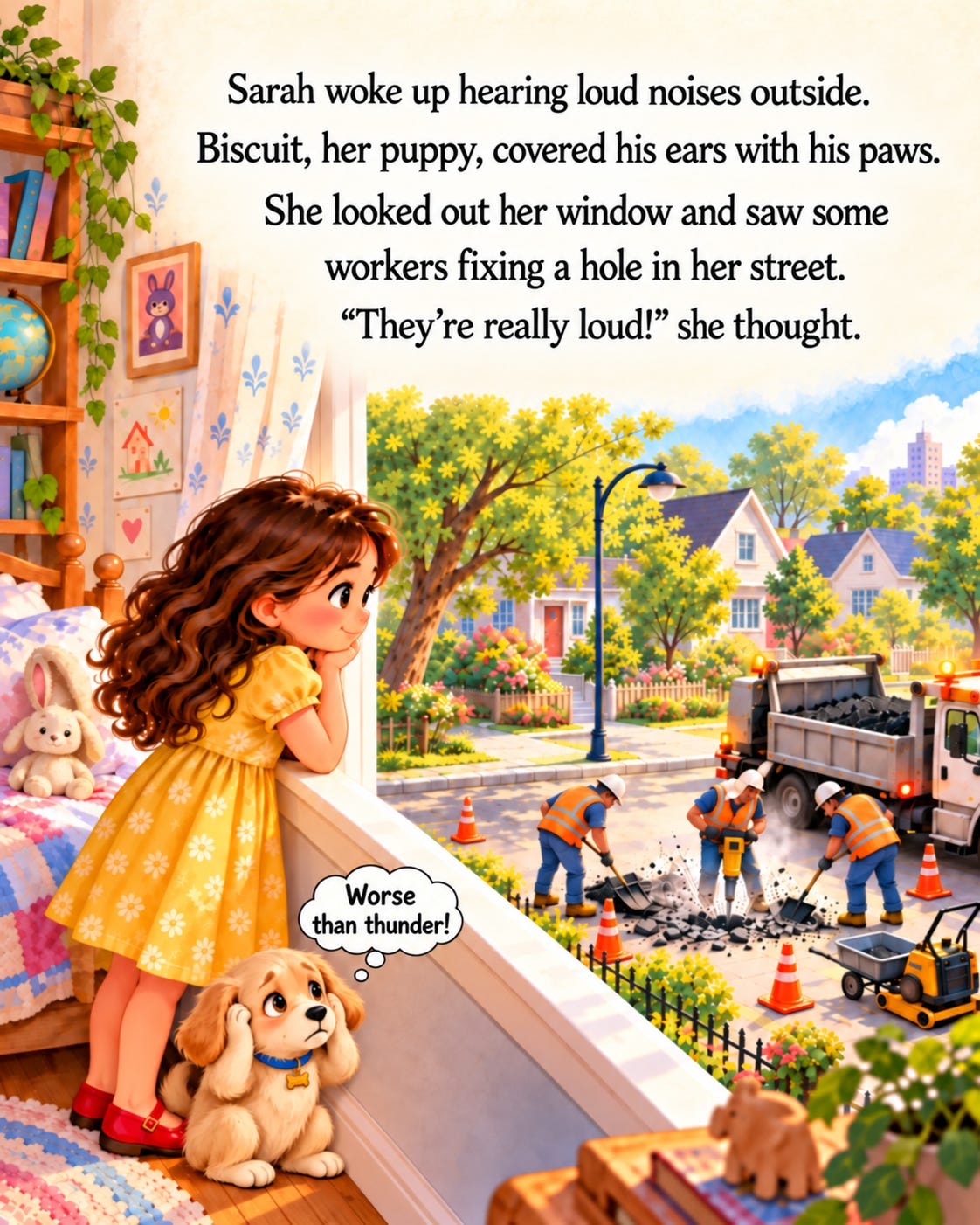
Sarah is a little girl who wakes up one morning to the sound
of workers repairing a pothole outside her window. She learns that things wear
out and need to be repaired, but also that people can create entirely new
things that make life better. She decides that she wants to make the whole
world better herself.
In the course of a deceptively simple story, Sarah
encounters several problems that adults struggle with as well.
She discovers that telling the truth is important, but so is
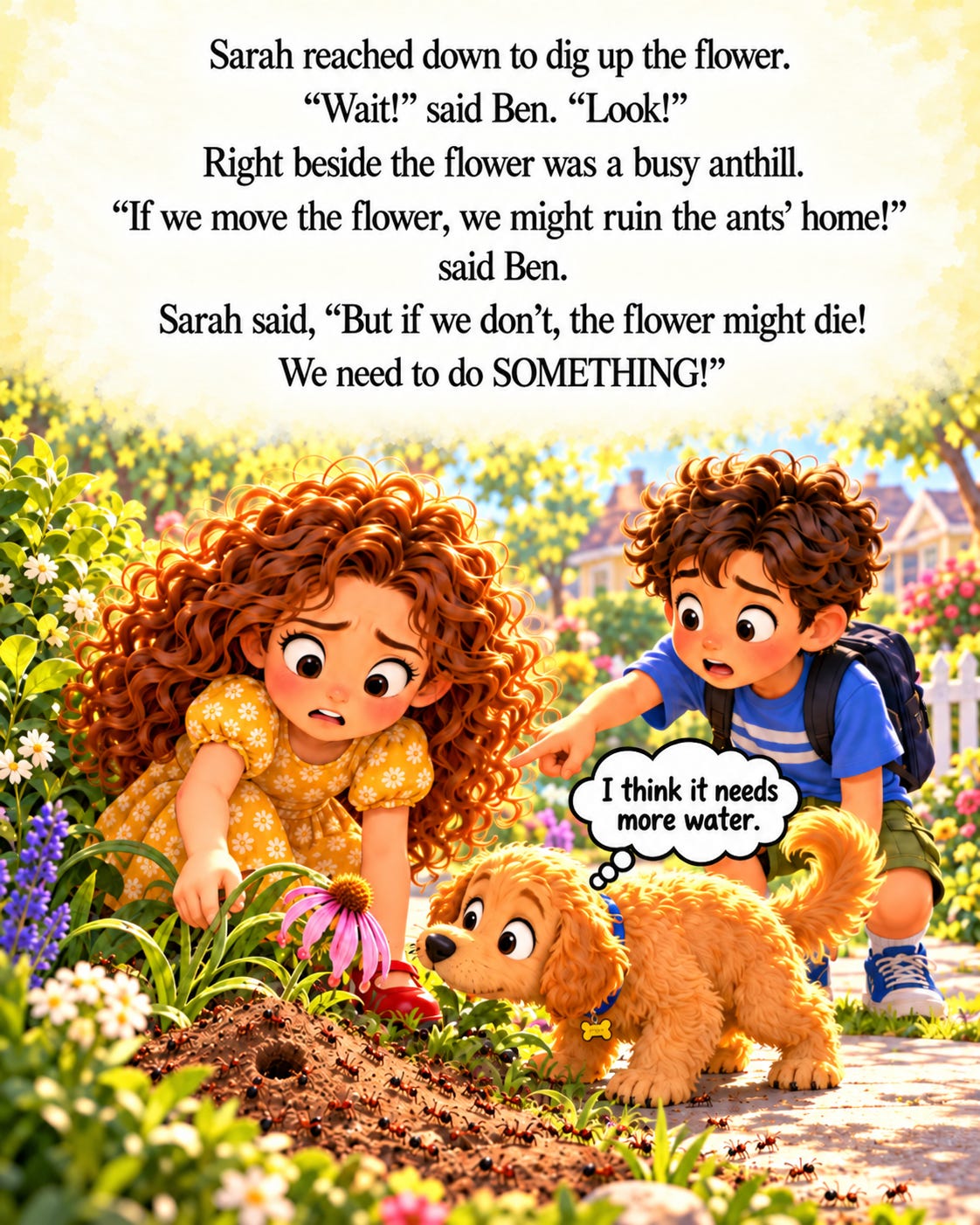
how you tell it. She finds a drooping flower that she wants to move into the
sunshine, but doing so might destroy an anthill beside it. Which is more
important? How can she know what the right thing is?
These are serious ethical questions that are difficult to
answer. That’s the point. Sometimes we don’t have enough information to know
what is best, and sometimes legitimate values conflict with each other. How do
we navigate these decisions?
Sometimes we should not act. Sometimes we do what is clearly
right, like when Sarah visits a friend with a broken leg. Even then, she
inadvertently hurts her friend’s feelings, recognizes her mistake, apologizes,
and learns to listen to what her friend actually wants.
She also discovers something about relationships: helping
one person can help others as well. And since those people are part of the
world, making their lives better really does make the whole world better.
Along the way, the story introduces ideas about truth, the
limits of knowledge, ethical judgment, competing values, creativity,
relationships, and learning from mistakes. These are all central to
Derechology, but none of the philosophical vocabulary appears in the story
itself.
I wanted to avoid the usual formula where a children’s story
presents a moral problem and then supplies the correct answer. Real life
doesn’t work that way. Sometimes there are no perfect choices. Sometimes we
misunderstand other people. Sometimes what matters most is recognizing that we
made a mistake and doing better next time.
Sarah Makes the World Better includes a note for
grown-ups on how to discuss some of the issues mentioned in the book with the
child. These are mostly open-ended questions but even children face real
dilemmas every day, and the book helps children navigate them without giving
black and white answers.
The Hebrew word derech means a path. That is really
the central idea: ethics isn’t about making one perfect decision. It’s about
choosing a good direction and continuing to learn as we travel along it.
Sarah doesn’t solve every problem by the end of the day. But
she has made the world better in her own small way, and she wants to stay on
that same path tomorrow.
I’m happy at how this came out. It was also an interesting
test of Derechology itself: if these concepts are genuinely fundamental to
human life, they should be scalable from children to nations.
While Derechology is based on Jewish thinking, the book is
for all; there is nothing overtly Jewish in it.
Sarah Makes the World Better is
now available on Amazon. It would make a great gift for your children or
grandchildren.
You can see all of my current books available on my new media kit.
I’d be interested in hearing what readers think, especially
whether the story succeeds in encouraging children to ask questions rather than
simply accept the ready-made answers most children’s books offer.


