Showing posts with label Holocaust. Show all posts

Wednesday, December 31, 2025


The October 7 massacre did not emerge from a vacuum—and historian Rafael Medoff’s new book traces the long ideological road that led to it.

Medoff, a prodigious scholar of Jewish history and a prolific writer, is the founding director of The David Wyman Institute for Holocaust Studies and the author of more than twenty books on Jewish history, Zionism, and the Holocaust. His latest, The Road to October 7: Hamas, the Holocaust, and the Eternal War against the Jews, is a grim but important read—one that places the October 7, 2023 massacre within a wider historical context and shows how it echoes the long, tragic history of the oldest hatred: antisemitism.

The Road to October 7 is a two-part book. In Part 1, The Present: Understanding October 7 and Its Aftermath, Medoff offers a detailed account of that black day and what happened in its wake. He traces the rise of Hamas and the sickening ideology that underpins its hatred and bloodlust—including its affinity for Mein Kampf. Medoff shows how Arab children are taught to hate and kill Jews through what he describes as “jihad education.” He also examines the campus protests, along with the blind eye turned toward them by university boards, administrators, and presidents. The book explores the recent history of terror, and the ways in which anti-Jewish libels are propagated and mainstreamed.

Part 2, The Past: Tracing the Echoes of History, highlights unsettling similarities between the atrocities of October 7 and earlier pogroms in medieval Europe, Czarist Russia, and Ukraine. Medoff examines both the Holocaust and a century of Arab terror—and how each contributed to what happened on that black Sabbath: October 7, 2023. This section is particularly illuminating for its documentation of how American universities cultivated alliances with Nazi Germany during the 1930s—an echo of the same institutions that later tolerated pro-Hamas protests on campus.

In the interview that follows, Medoff discusses the long ideological road to October 7—how antisemitic education and radical Islamic theology shape violence, why so many Western institutions minimized or rationalized the massacre, and why the events of that day cannot be understood in isolation. He also reflects on the historical echoes that make October 7 so uniquely haunting—and on what compelled him to write this book now.


The Road to October 7: Hamas, the Holocaust, and the Eternal War against the Jews by Rafael Medoff (The Jewish Publication Society, October 1, 2025), 368 pages. ISBN-13: 978-0827615748.


Rafael Medoff

Varda Epstein: You mention the close cooperation and coordination between the Hamas terrorists and the Gaza civilians who infiltrated southern Israel on October 7, citing Kibbutz Nirim Security Chief Daniel Meir who saw 50 armed and uniformed Hamas terrorists along with “dozens of ordinary Gazans.” Meir described “complete cooperation between the two groups: Hamas did most of the fighting while “the civilians went into houses and turned them upside down. They took phones, computers, jewelry, whatever they could find. From what I know, they also took most of the hostages.”

How should we respond to claims that “most” Gaza civilians are peaceful in light of testimony like this? Why do you think this assertion continues to circulate so widely, often without close scrutiny or independent verification?

Rafael Medoff: There’s significant evidence of widespread support for Hamas among the population of Gaza. Remember that in the elections to the Palestinian Legislative Council in 2006, Hamas won 74 of the 132 seats. During the two decades that followed, there wasn’t a single uprising against the Hamas regime. There’s never even been a serious opposition party or movement of any kind there. You noted that thousands of Gazan civilians took part in the October 7 invasion. In addition, there’s no evidence that any Gazans tried to help any of the Israeli hostages escape. In fact, some of the hostages were kept as slaves by civilians. It stands to reason that there must be some Gazans who are dissatisfied with Hamas—not because they sympathize with Israel, but because Hamas has made their personal lives miserable. Unfortunately, those dissidents seem to be a very small minority.

Varda Epstein: You write: “Previous Palestinian Arab terrorist attacks had never triggered such reactions abroad. Nor had previous Arab-Israeli wars. The vehemence and in many instances, sheer irrationality, of the reactions to October 7 raised important questions. How could so many people accept as fact assertions about Israel and Gaza that were unsupported by evidence? What caused people who are sincerely concerned about sexual violence to consciously look away from sexual violence against Israeli Jewish women? What was it about this particular terrorist attack that induced such a uniquely massive and extreme response?”

Since your book was published, Prime Minister Netanyahu, in his most recent address to Congress, wore a lapel pin with a QR code linking to photos and footage from October 7. Yet there has been remarkably little visible public engagement with that material in mainstream media or public discourse. There have been no widespread claims that the images were fabricated, nor serious allegations of a false-flag operation—just an apparent absence of response.

How does this indifference to direct visual evidence fit into the pattern you describe? Why does proof itself seem to matter so little to so many?

Rafael Medoff: The same question often is asked about the international community’s response to news of the Holocaust—and the answer, sadly, is similar. Most of the world is indifferent to Jewish suffering. Some of that is because of antisemitism, some of it because of political or diplomatic considerations, and some of it because of simple, selfish apathy.

The response of many prominent feminist groups to the sexual violence perpetrated by the October 7 invaders has been particularly appalling because their hypocrisy is so blatant. They speak out against sexual atrocities committed everywhere else in the world—but when Palestinian Arabs are the perpetrators and Israeli Jews are the victims, many feminists choose to look away.

Varda Epstein: At Harvard, some three weeks after October 7, you write that “Board member Penny Pritzker wrote President Gay that a ‘river to the sea’ placard at a recent protest was ‘clearly an antisemitic sign which calls for the annihilation of the Jewish state and Jews.’ Pritzker added that she was ‘being asked by some why we would tolerate that and not signage calling for lynchings by the K.K.K.’ Gay consulted with Provost Garber, who commented that the slogan's ‘genocidal implications when used by Hamas supporters seem clear enough to me, but that's not always the same as saying that there is a consensus that the phrase itself is always "antisemitic."’ Gay, for her part, worried that calling the phrase ‘antisemitic’ would ‘prompt [people to ask] what we're doing about it, i.e. discipline.’”

What does this episode reveal about how university leaders understood the slogan—and, more importantly, about what they feared would follow if they named it as antisemitic? Why did something that seemed morally clear become such a bureaucratic and rhetorical minefield?

Rafael Medoff: The internal Harvard correspondence goes straight to the heart of the problem. Provost Garber knew the slogans were antisemitic, but he was worried about whether there was a “consensus” among his colleagues about it. He should have been able to tell right from wrong, whether or not others agreed with him. That’s one kind of timidity. For President Gay, the problem was that if she acknowledged the truth, she would have felt pressure to do something about it, and she didn’t want to do anything about it. That’s another kind of timidity. Both kinds are morally reckless. Would Garber or Gay ever have taken such positions if a different minority group was being targeted on their campus? I doubt it.

Varda Epstein: As you document in your book, the campus protests have died down to a large extent. What do you think accounts for that shift? Was it a matter of administrative pressure, waning public interest, internal fractures within the protest movement, or something else entirely?

Rafael Medoff: The protests fizzled out due to a combination of reasons. First, some universities feared they would lose federal funding or private donations, so they belatedly cracked down on illegal protests by imposing curfews and other steps that they should have taken from the start. Second, many of the protesters never were really committed—they were just hangers-on who knew little about the issue; they soon got bored with it and moved on to more interesting things. Third, some of the leaders of the protests were foreigners who were violating the conditions of their visas, and when they faced the prospect of deportation, they dropped out.

Varda Epstein: The Road to October 7 offers the reader historical precedent and context for the events of the October 7 massacre. To many of us, the horrors of October 7 seemed somehow worse than anything we’d heard about in the long, sad history of the Jewish people. Yet you document some obscene atrocities committed against Jews during, for example, the Crusader period—acts that in many ways rival those of Hamas on and in the wake of October 7.

Why isn’t rape and murder enough for terrorists? What explains the apparent investment of imagination and effort in devising ever more elaborate forms of cruelty, rather than channeling that same human capacity for creativity toward education, innovation, or improving life for their own people?

Rafael Medoff: Every human being has the capacity for good or evil. Some have the potential to take it to unusual extremes, depending on circumstances and opportunities—so why do they? What I show in The Road to October 7 is that the key factor is education—at home, at school, and in the public arena. If children hear at their breakfast table, and in their classrooms, and in their houses of worship, that Jews are evil and deserve to be killed, then some of them eventually will act on those beliefs. That has been the common denominator in antisemitic violence from the Crusades to the Czarist Russian pogroms, the Holocaust, and Palestinian Arab terrorism.

Varda Epstein: Much of the public and academic discussion of October 7 continues to frame the massacre primarily in political, territorial, or socioeconomic terms. Yet Hamas itself is explicit that its actions are rooted in radical Islamic theology and a religiously grounded hatred of Jews. Why do you think so many commentators persist in sidelining or denying the centrality of theology in explaining both the massacre itself and the moral worldview that celebrates or excuses it? And how does that same theological framework help explain the language and behavior of some of the protesters who have justified or minimized the violence?

Rafael Medoff: The reason apologists are so reluctant to acknowledge the Islamist theological dimension of Palestinian Arab terrorism is that it’s incredibly difficult to persuade religious fanatics to change their beliefs. So rather than admit that making peace with such people is impossible, it’s easier to blame Israel and to claim that Israeli territorial concessions are the answer to everything.

In this context, we shouldn’t ignore the Islamist component in some of the pro-Hamas rallies on campuses. We’ve heard demonstrators chanting slogans calling for “another Khaybar.” That’s a reference to a 7th century massacre of Jews by Muhammad, the founder of Islam. That’s not a historical event with which the average American college student is familiar; but the campus extremists who organized the rallies know it well because they learned it from their parents and their religious teachers.

Varda Epstein: Regarding the protesters and the violence, do you think some participants failed to grasp the full moral enormity of their actions—simply following the behavior of others rather than reflecting independently on what they were doing? Take, for example, those who tore down posters of Israeli hostages. Did some do this out of a kind of “monkey see, monkey do” conformity—seeing others do it and joining in without stopping to consider the implications?

But even allowing for ignorance or social pressure, how does a person arrive at a point where ripping down a poster of a beautiful red-haired infant like Kfir Bibas can be justified? What does it take, psychologically or ideologically, to see a baby as unworthy of notice or concern?

Rafael Medoff: Yes, that does require a certain level of moral degeneracy. But think of all the previous Palestinian Arab terrorist attacks in which Jewish babies and children were slaughtered—and yet for many years, legions of academics, pundits, and Jewish anti-Zionists have been demanding that the killers be given a sovereign state in Israel’s back yard. So in many ways, the responses to October 7 simply mirrored, on a larger scale, the depraved responses of apologists to earlier attacks.

Varda Epstein: You write that “President Biden and Vice President Kamala Harris broke important new ground—on both sides of the debate. On the one hand, each made statements implying a measure of understanding for the anti-Israel extremists. President Biden, addressing a Democratic National Convention on August 19, 2024, said of the anti-Israel demonstrators outside the arena, ‘Those protesters out in the street, they have a point.’ The previous month, Vice President Harris told The Nation that the demonstrators were ‘showing exactly what the human emotion should be’ in response to Gaza. However, in what were arguably more consequential, albeit less publicized remarks, both Biden and Harris in effect labeled large sections of the protest movement antisemitic.”

In what ways—and for whom—were those less publicized remarks more consequential than the sympathetic ones? And politically speaking, did this attempt to balance moral clarity with electoral caution ultimately help or hurt Biden and Harris? In trying to please everyone, did they end up pleasing no one?

Rafael Medoff: President Biden and Vice President Harris both acknowledged that celebrating Hamas is antisemitic. Their words are a matter of record. But they made a political decision to refrain from making a big issue of it, most of the news media went along with that. This is where Jewish organizations need to step in. They have the funds, staff, and other resources to bring that important information to light. How many full-page ads have been placed in the New York Times or Washington Post by pro-Israel groups over the past two years? They can probably be counted on one’s hands.

Varda Epstein: Your book is about “Hamas, the Holocaust, and the Eternal War against the Jews.” In public discourse, October 7 is often described as the worst massacre of Jews since the Holocaust—a formulation that some readers struggle to understand given that more than six million Jews were murdered in the Holocaust and “only” some 1,200 were murdered on October 7. Why do you think the Holocaust comparison arises so frequently, and what kind of comparison is actually being made? Is it primarily about scale, or about intent, symbolism, and historical continuity?

Rafael Medoff: The similarity lies in the intent, the ideology, and the methods. The intent of both the Nazis and the 10/7 perpetrators was to kill as many Jews as possible. As for ideology, the beliefs of Hamas and its allies are essentially religious, while the Nazis’ beliefs were essentially secular; but antisemitism is the core principle of both groups. There is a significant similarity in their methodology, as well. During the first nine months of the Holocaust, in 1941-1942, most of the killing was done up close—by bullets, not gas chambers. The same is true of October 7. The comparison is important because it illustrates the savagery and utter depravity of the perpetrators.

Varda Epstein: Did you write “The Road to October 7” for a particular audience? Who do you imagine reading your book? Do you have hopes that your work will persuade some of those who continue to deny the truth of what happened on that black day?

Rafael Medoff: October 7 deniers can never be persuaded, just as Holocaust-deniers can never be persuaded, because they’re not motivated by the search for truth. They’re motivated by hatred of Jews. No matter how many facts are presented, they will try to explain them away or distort them to fit their preconceived narrative. So I don’t expect them to read The Road to October 7. It needs to be read by those who care about the subject but aren’t familiar with the historical precedents. It’s especially important to get this book into the hands of college students. On campuses across the country, anti-Israel forces are trying to win over the hearts and minds of young Jews. This book will help them fight back with the one weapon that matters most—the truth.

Varda Epstein: What compelled you to write The Road to October 7—and what did you hope readers would take away from it?

Rafael Medoff: As the details of the October 7 atrocities emerged, I was struck by how similar they were to descriptions of antisemitic violence going all the way back to the Middle Ages. I realized this information needs to reach a wider audience. October 7 was the product of the same kinds of educational and religious forces that have incited violence against Jews for more than 1,500 years. A very long road led to October 7.


Buy EoZ's books  on Amazon!

"He's an Anti-Zionist Too!" cartoon book (December 2024)

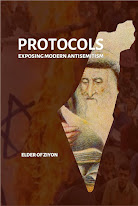
PROTOCOLS: Exposing Modern Antisemitism (February 2022)


Wednesday, May 07, 2025

Disclaimer: the views expressed here are solely those of the author, weekly Judean Rose columnist Varda Meyers Epstein.

In 1938, Eva G., a Jewish student at the University of Vienna, slipped her Star of David necklace beneath her collar before walking into a lecture hall. She was met with swastikas scrawled on the walls and whispers of “Juden raus.” Eighty-six years later, in 2024, a Jewish student at Columbia University pulls his hoodie over his kippah to walk past demonstrators chanting, “Go back to Poland."

Decades apart, these moments are uncanny in their resemblance—almost like a freeze frame. Eva is likely long dead and buried, but the fear she once felt—of being harassed, abused, and hated—remains a chilling reality for Jewish students today. Campuses, once assumed to be bastions of learning and tolerance, have become places where Jews are not safe, where they must hide, if not themselves, then their identity.

Since October 7, antisemitic incidents on U.S. college campuses have surged 477%. That number alone demands attention. But it’s the atmosphere—hateful chants and symbols in combination with administrative silence—that makes the past feel dangerously close. Where does all this hate for Jewish students lead?

During the rise of Nazism, German universities were among the first institutions to adopt antisemitic policies. At Heidelberg, Jewish students were boycotted in 1933. By 1935, lecture halls bore swastikas. By 1938, Jews were gone from campus altogether—expelled or worse. The violence didn’t begin in death camps; it began with students, professors, and rectors who either joined the mobs or stood silently by.

University of Heidelberg lecture hall adorned with swastikas.

A report from the Jewish Telegraphic Agency in 1933 described one such incident:

“Two hundred Nazi students surrounded the Jewish students in the campus restaurant and, employing chairs, tables, and glassware as missiles, attacked the Jews. Five Jewish students sustained injuries... The Rector of Berlin University failed to intervene.”

“The use of the academic environment to foster extremist views and expression against Jews was essential to the Nazi success in reaching elements of society who could be impassioned, inspired, and ignited towards violent expression through the systematic logic applied in the hate against the Jews,” says Dr. Elana Yael Heideman, Holocaust historian and CEO of the Israel Forever Foundation. “When this began in the decade prior to the rise of Hitler's Third Reich, no one could have imagined that antisemitic riots against students on University campuses in Austria and Germany throughout the 1920s and 30s would have developed into a full-blown genocide of the Jews as the primary targets. Yes, there were indications, but none saw the proverbial writing on the wall. By the time the Nazi regime was in full force by 1935, the social acceptance of the hatred was steeped in the public mindset, thus enabling the subsequent bystanderism that enabled horrific persecutions, and murder by bullet or gas.”

Today, Jewish students in the United States are not being expelled by law. But they are being targeted by hate speech, swastikas, and chants like “intifada revolution,” shouted on elite campuses from Princeton to Tufts. At Cornell, Russell Rickford, an associate professor of history exclaimed to an excited student mob that he felt exhilarated by the October 7 massacre.

At Harvard and Stanford, Jewish students have been harassed, doxxed, or pushed to the margins of campus life. And too often, university leaders respond with moral equivocation or bureaucratic platitudes and do nothing to stanch the flow of hate.

Sometimes history echoes rather than repeats. Then and now, it is the failure of moral leadership that not only allows hate to fester, but gives it permission to thrive and grow. This is not the same as 1930s Europe—but the hate is exactly the same, and it is still every bit as dangerous. As Holocaust survivor David Schaecter, president of the Holocaust Survivors Foundation USA, testified before the U.S. Senate:

“I remember vividly when Slovakian classmates taunted Jewish kids like me, and what’s happening today looks and feels the same.”

When protests devolve into chants denying Jews’ right to exist, glorifying terrorism, or intimidating visibly Jewish students, the line has been crossed. It is not “free speech” to threaten Jewish people with annihilation and it never was.

The most haunting question of course isn’t about what’s happening now—but where this all could lead. In Germany, the radicalization of universities helped normalize Nazi ideology. Academic complicity didn’t just reflect fascism; it fed it. Professors trained bureaucrats and camp guards. Rectors joined the Nazi Party. University violence, once ignored, metastasized into something far worse.

This time things are different.

“As there is no current administration driving the antisemitism on campuses forward into increased violent fervor,” says Elana Heideman, “there is a tentative sense of security that it will not get worse than what is already taking place. That it will dissipate, as sanctions for their actions grow. However there is and should be a palpable hesitance to rest on such baseless confidence that the hate-fests and public demonization of Jews will cease or level out. Rather, we must accept that what will come will not look the same, or be structured the same as 100 years ago.

“Elie Wiesel himself once said, the next chapter will not look like cattle cars and gas chambers. What it will look like, no one can be sure. But indeed, Jews, Israelis, and our allies, will continue to be increasingly listed, targeted, threatened into apathetic compliance with whatever demands are made upon the Jew in order to save them/ourselves.”

The doxing is a particularly frightening and danger-laden phenomenon. “Many of these lists,” says Heideman, “have already been exposed, the Mapping Project for example which now doesn't even mask its intention and has publicly emerged as the Map of Liberation, in which Jewish homes, businesses, and Israel connected institutions are all identified. But even with the efforts put into uncovering these blatant efforts to coordinate this modern genocidal effort against Jews, the lists, the labels, the systematic social and media assaults on truth continue to grow in numbers and in power.”

Where is this going? We know where it led to in Berlin, Heidelberg, and Vienna. Could today’s doxing, protests, and antisemitic chants on campus spiral into Holocaust-like horrors?

Probably not. “The result,” says Heideman, “will be an increasing isolation of Jews everywhere. There will be increased infighting between groups of Jews, as we saw in the Holocaust and as we already see having grown especially since the October 7 massacre, trying to point the fingers of blame and dividing ourselves, which of course weakens us against this enemy which is not a single regime but rather an entire world of totalitarian minded individuals who have been convinced by the propaganda of Islamofascism and who have been enabled sufficiently to achieve dominance, and will only continue to do so as they join forces with the other extremist elements who share the Jew as the common enemy.

“What might the next phase look like?” asks Heideman. “We are already in it. There are more attacks then are reported, out of a desire to remain anonymous or to avoid the inevitable trouble it will bring if they have to chase down every Jew hater that slings their slurs, or shouts free Palestine.”

The Jews, meanwhile, will continue to do what they have always done, find ways to keep a low profile and stay safe. “More Jews will be seeking smaller intimate communities where they are able to find or create a safe space,” says Heideman. “There are those who will seek to emigrate, many attempting to choose somewhere other than our ancestral Homeland in Israel. There are those who will try to convert, religiously i.e., to Islam, politically or socially, as if any of these are a way to save oneself.”

But then there are the others, says Heideman, “Those whose identities will be awakened, whose souls will be empowered. There will continue to be an increase in Zionism as a collective dream, and Aliyah, as Israel will become once again the sole safe haven that was envisioned when our 2,000-year-old dream was fulfilled through political Zionism and the rebirth of Jewish sovereignty at the end of the British Mandate on May 14th, 1948, Declaration Day.

“What will become of the America that we know?” asks Heideman. “Or the campuses and public streets of any country or society that allows this harassment and public expression against Jews, Judaism, Jewish history, humanity and nationhood? Violence will continue, as will the silence.

“But if the Holocaust has taught us anything, we must hope that Jewish response will be different. The existence of a Jewish state, and the vibrant voice of pride and passion in this war for the survival of humanity, will determine what the pending catastrophe to befall the world will look like.”

Will the Trump administration’s financial pressure on Ivy League institutions make a difference? Or will the courts get in the way of these efforts in the name of free speech, leaving Jewish students to twist in the wind? It’s anyone’s guess, but if there’s one thing history teaches us, it’s this: what starts with words can end in atrocities. The time to act is not after tragedy, but now.


Buy EoZ's books  on Amazon!

"He's an Anti-Zionist Too!" cartoon book (December 2024)

PROTOCOLS: Exposing Modern Antisemitism (February 2022)


Wednesday, April 30, 2025


Disclaimer: the views expressed here are solely those of the author, weekly Judean Rose columnist Varda Meyers Epstein.

This week, Doug Emhoff was informed of his removal from the US Holocaust Memorial Council, alongside other Biden appointees, by the Trump administration. Emhoff responded in a statement to the New York Times, which said, in part, “Holocaust remembrance and education should never be politicized. To turn one of the worst atrocities in history into a wedge issue is dangerous — and it dishonors the memory of six million Jews murdered by Nazis that this museum was created to preserve.”

Emhoff, of course, is missing the point. His ouster is not about politicization but about failure—about being bad at one’s job. To put it bluntly, the Biden administration’s approach to remembering the lessons of the Holocaust ain’t working. Witness the campus protests exploding on college campuses since October 7, with professors gushing that they found the massacre “exhilarating” and with students  assaulted for being Jewish and afraid to go to their classes.

Antisemitism proliferated and became widespread during the Biden years. So tell us, Doug Emhoff, why would President Trump still want you and your pals in charge? And what does it tell us about you that this explosion of antisemitism happened on the watch of your closest associates, including your wife?

No, getting rid of Emhoff is not about politicization, nor is it about scoring points. New administrations clean house. Biden unraveled Trump’s first-term policies with a vengeance. Now Trump is restoring order, installing his own people—people who care about making America great again—which includes making Jewish students safe again.

Given Trump’s unapologetic support for Israel and admiration for the Jewish people, it’s only logical he’d want to appoint Holocaust Memorial Council members who would advocate for Jewish students drowning in a sea of campus hate. The Biden years, on the other hand, were basically a replay of Germany during Hitler’s rise to power. The uproar on German campuses then, were no different than those on American campuses today. This is where Biden and company, including Doug Emhoff and the symbolic, synthetic Holocaust council he sat on, led us.

Which is why Emhoff and his ilk just weren’t going to make the cut once Donald Trump turned his sights on the mess they’d made, the out-of-control antisemitism spreading across America like an oil spill, something very difficult to clean.

Trump had perfectly viable reasons to fire Doug Emhoff’s butt. Beyond Trump, the Jewish people should themselves be questioning Emhoff’s suitability to sit on a Holocaust memorial council. Doug Emhoff, born Jewish, married non-Jewish women—first his ex, then Kamala Harris. His children? Not Jewish. By choice, Emhoff severed his Jewish line, a voluntary echo of the deliberate destruction Hitler inflicted on Jews who had no choice in the matter. What could be more antithetical to the Holocaust’s memory than a Jew who, with eyes wide open, ends his branch of the tribe? If that’s not a betrayal of Jewish continuity, what is?

Why would we want this person deciding how the memory of the Holocaust and the murdered should be preserved when he himself has ended his own Jewish chapter? A man who doesn’t even know the meaning of Chanuka?

Then there is the matter of Emhoff’s non-Jewish daughter, Ella, who raised money for UNRWA whose staffers have killed Jews alongside Hamas—a group whose charter calls for annihilating the Jewish people. 


Ella calls Kamala “Momala,” as if Harris were some Jewish matriarch, while helping those who would erase her father’s people. Kamala herself? Hardly a friend to Israel before or since October 7, as we well know.

This is the Emhoff-Harris clan: Jewish when it suits the optics, divorced from Judaism when it counts.

I always tell friends whose parents or grandparents survived the Holocaust that their children are a victory over Hitler. One branch that evil didn’t manage to snuff out. Emhoff? He is the opposite of that, a victory handed to Hitler on a plate. Because Doug is the absolute end of his line. And he did it seemingly without a second thought—twice.

Emhoff may be an expert in the Final Solution, having killed off his line. But in no way should we consider Doug a suitable person to honor the memory of those who had their lines cut short by Hitler and his “Final Solution.” A Jew who voluntarily cuts short their own line is doing Hitler’s work for him and should not be serving on a Holocaust Memorial Council. The Holocaust Memorial Council should be peopled by those who embody the Jewish will to endure, not those who shrug as the legacy of their ancestors fades away.

Not long ago, on Quora I was asked, “Why is being pro-Israel but anti-Zionist considered by some as being extremely antisemitic?”

I kept my response simple, saying that anti-Zionism is by definition antisemitic, because to be anti-Zionist is to be against Jewish rights. I didn’t specify which rights. I left it at that. But of course, Zionism is the right of the Jewish people to be sovereign in their indigenous land.

The opposite of that, of course, is to agitate to ethnically cleanse Israel of Jews from the river to the sea.

Which is why Ella Emhoff’s fundraising for UNRWA isn’t a call to help the people of Gaza—but a call to eliminate the Jews and steal their rightful heritage, the Land of Israel. Ella’s father Doug, by extension, is complicit not only in his own line’s demise; but in the efforts of his spawn to undermine the survival of the Jewish people as a whole. How can such a man sit on a council meant to honor those who died for being Jews? Should this person, whose actions and those of his family are antithetical to the preservation and rights of the Jewish people get to decide things about the Holocaust?

To my own children, I often say, “Never mind the rest. Just have Jewish babies.”

Because nothing on earth is more important than that. It’s the most righteous and most philosemitic response to Hitler I can think of: add Jews to your family tree—continue the line.

Continue the line. The rest is only sound and fury, signifying nothing. Which is pretty much the story of Doug Emhoff’s small little life.


Buy EoZ's books  on Amazon!

"He's an Anti-Zionist Too!" cartoon book (December 2024)

PROTOCOLS: Exposing Modern Antisemitism (February 2022)


Wednesday, November 06, 2024

Guiding Ambassador Ron Dermer on the March of the Living, with Professor Steven T. Katz

Dr. Elana Yael Heideman has a list of accomplishments so long it will make your jaw drop, with every last accomplishment earned in the service of her people and the Jewish homeland. Heideman, CEO and executive director of the Israel Forever Foundation, is a Jewish rights activist, historian, leading educator, author, and dynamic public speaker. Her knowledge of Jewish history and of the Holocaust is both vast and encyclopedic. If I want to find a specific Holocaust photo and have only a vague memory of what it depicts, Elana will always know which one I mean and quickly pull it up for me from her extensive personal archives. After all, this is the woman who studied for her thesis under famed Holocaust survivor, writer, and Nobel laureate Elie Wiesel.

Since October 7, I and many others have turned to Dr. Heideman to gain clarity and understanding of just how this could have happened to us: how Hamas could have attacked us as we slept, safe in our own land, secure in the knowledge that unlike during the Holocaust, we had our own Jewish army to protect us?

Was it all a mirage?

Heideman is the right address to discuss these things: How to make sense of world indifference to the plight of the Jews, the victim-blaming, the antisemitic campus protests. Whether to avoid upsetting graphic photos and stories from October 7. These make it difficult to carry on with our family and professional lives, but do we even have a right to avoid these things? Don’t we have a responsibility to bear witness to what has happened for the sake of future generations?

And of course, now that the elections have drawn to their fiery close, Dr. Elana Yael Heideman will also be the right person to help us understand the implications of the hateful Nazi label rhetoric so blithely applied to President Trump by his failed opponent and her fellow Democrats. What can we do to stand up to this ugly phenomenon of Nazi name-calling in modern day politics?


Dr. Elana Heideman

As a people we are lucky to have Dr. Elana Heideman. Heideman, who made Aliyah in 2005, and today lives in Nes Harim with her 3 beautiful children, is a visionary. She saw long before October 7 that the global Jewish world needed the Israel Forever Foundation, “an empowerment and engagement organization that provides experiential learning opportunities to the global Jewish world to celebrate, strengthen and mobilize the personal connection and activism of Jewish People as the nation of Israel.”

Today, we need Heideman and her foundation more than ever. She will always have something to teach us. Hopefully, this interview will give the reader a taste of Dr. Elana Heideman’s particular brand of genius.

***

Varda Epstein: You’ve been a Jewish rights activist since the time you were young. What’s your earliest memory of fighting for Jewish rights? What are some of the Jewish causes you’ve battled?

Elana Heideman: When I was very young, I encountered not only Jew-hatred in my middle school in Louisville Kentucky, but also Messianic Jews for Jesus who were out to persuade, and Holocaust deniers determined to falsify historical fact.

I can recall various instances where my identity was challenged, and where I had to think on my feet as to how to address the twisted misinformation of the people in groups I encountered. I have found that my pride and confidence as a Jew rooted in Jewish traditional life has aided my ability to counter each obstacle, including the cadre of self-hating Jews that have emerged in the past decades.  

Dr. Elana Heideman teaches children about the Holocaust

Varda Epstein: Can you tell us a bit about your family and the milieu in which you were raised? How did your family impact your Jewish identity and the trajectory your life has taken?

Elana Heideman: Activism is a part of my blood, and my part in that tradition emerged from a very young age, having watched my parents serve as prominent leaders fighting for Jewish rights, each in their own way. In a traditional home, rich with Ahavat Yisrael, I found myself active in more than one youth movement out of a desire to be involved in the many different avenues of Jewish expression. In the B'nai B’rith Youth Organization, following the legacy of leadership set by my parents who met as youth members of BBYO, I worked my way through chapter offices up to council and the International involvement. Simultaneously I was active in National Conference of Synagogue Youth (NCSY) where I was able to explore and embrace aspects of my religious and spiritual life as a leader. From a very early age I was involved in program development, something I have continued throughout my career as an educator, consultant, and transformational guide for young activists and interns.

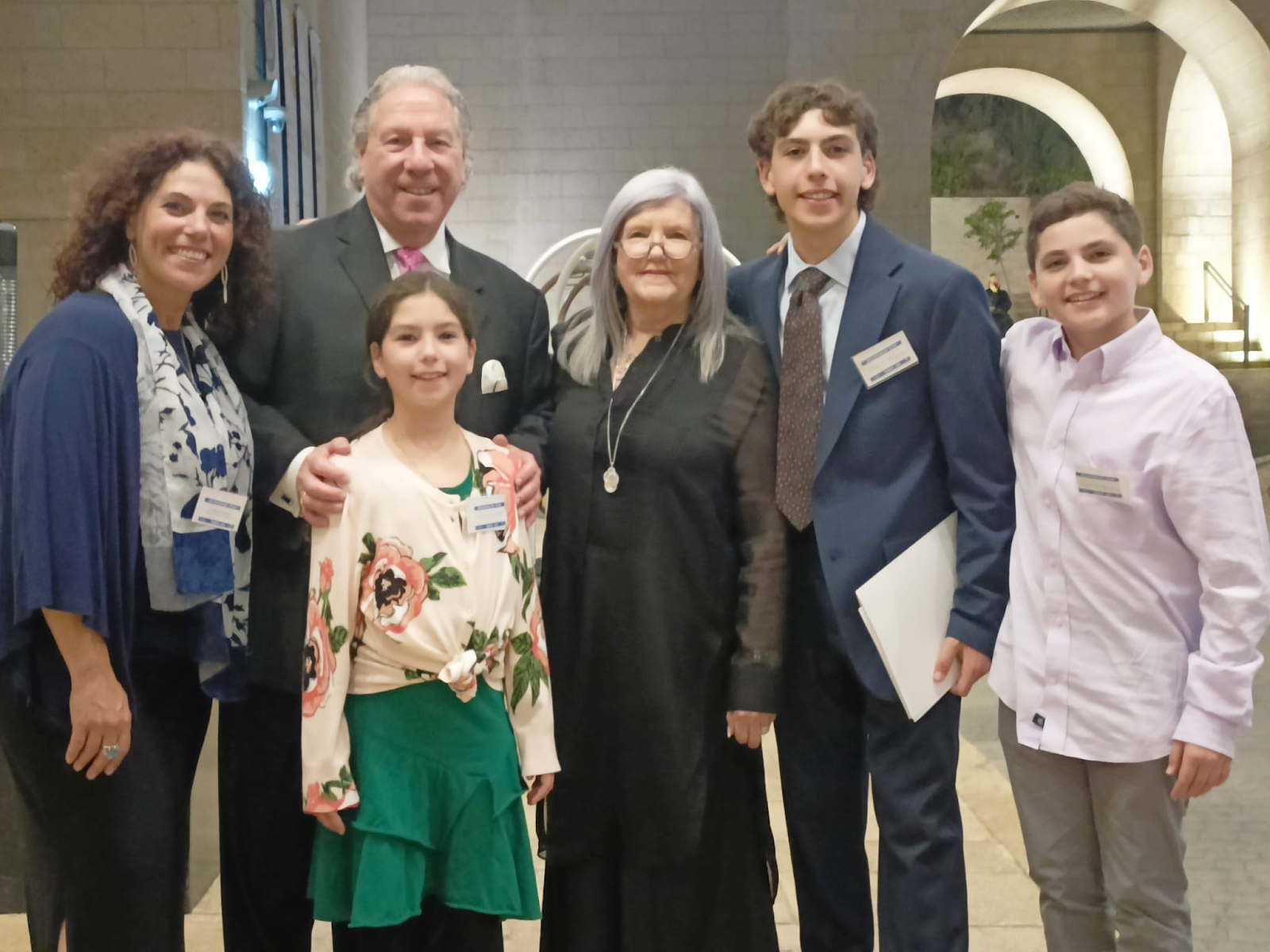
Elana Heideman with her parents and children.

Varda Epstein: Your specific expertise is in Holocaust studies and antisemitism. What drove you to choose these specific fields of study? What is it like to be so constantly immersed in these grim subjects? How do you stay sane? And what is the impact of all this on your children?

Elana Heideman: From a very young age I was drawn to the mystery of the Holocaust. I was somewhat fascinated by the experience that each victim and survivor had to endure. I entered that world through the children's stories of Terezin, and one of my very first books I ever read at a very young age was Elie Wiesel's Night. I was immersed; I felt the lives and the pain of each person I met through his words and those of every book I read and every survivor I met throughout my life.

My life was directed toward the discovery of how these tragedies could impact those of us living so many years in its aftermath. Sometimes I wonder if I chose the topics or if they chose me, but I know that being constantly immersed in this study is indeed grim. Yet it is also so often a source of astonishment, even hope and strengthened faith, knowing that even through all of the nightmares, moment after moment, there are those who lived, breathed, and died never forsaking their part in the destiny of what it means to be a Jew. 

Sanity is relative. Sometimes I feel I live with a part of my soul in each of these worlds, but rather than allow it to overwhelm  my senses with sadness or despair, I continue, even after all of these 36-plus years, seeking out the messages of strength and empowerment that help to balance the pain that I have inevitably inherited.

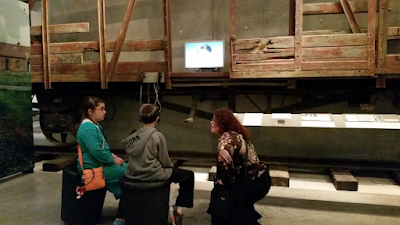
I am quite blessed by the openness of my children, that together we are able to explore many relevant topics on this dark history without their feeling that such a memory is a burden. Rather, we are able to talk openly, dissect stories and fears. Especially in light of the October 7th massacre that has awakened in our entire nation a correlation to the historical Jewish experience of suffering, we have been able to balance ourselves and never take for granted any element of the courage and resilience shown during the Holocaust or any other era in history where our people have been forced to suffer such atrocity. Indeed, my children even have found themselves strong enough to join me to visit the memorial sites, including Nova, as we passed one year since the catastrophe, where together we could feel and consider its meaning in our lives.

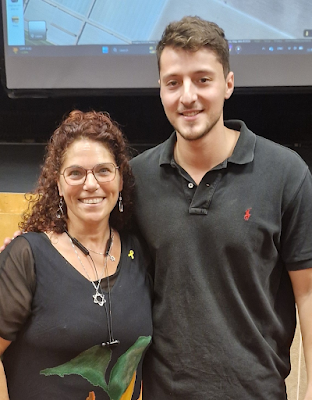
Elana with Atir Vinikov, survivor of Nova who has been sharing his story with Israel Forever

Varda Epstein: Famed author and historian Elie Wiesel was your thesis advisor. That’s certainly something most people cannot claim. What was it like working under Professor Wiesel, himself a Holocaust survivor?

Elana Heideman: I had the great honor of being invited by Elie Wiesel to study under him for my doctoral research. He was more than just an advisor, he was my mentor, he was my Rabbi; he was my guide through the past and towards the future. It was a very powerful experience, every single encounter leaving an indelible impression on my soul, and of course, on my mind. He shared details of his own life and his own thinking that enabled me to carry his voice further as I continue to do now, even years after his passing. As one of only a handful of doctoral students who studied under his guidance, I am honored to have filled the unique role of being the only student to focus specifically on the Jewish Human Experience during the Holocaust. It was not easy for him, and we would engage in very healthy debates on the analytical interpretations of the transformation of The Jewish Human Condition in particular, which I termed “momentary survival.” I was able to engage with my esteemed master not only as my professor, famed Holocaust Survivor, writer and eloquent speaker, but also with the young Eliezer that I had met in my childhood encounter with his life experience. And to this day I am determined to protect Elie's Echo and to help others learn from his absent voice, especially now at a time when our people desperately need the guidance that he once offered to our nation.

While people can no longer hear him in person, it is essential that we continue to share his voice. I am honored to be considered his protégée and a carrier of his legacy.

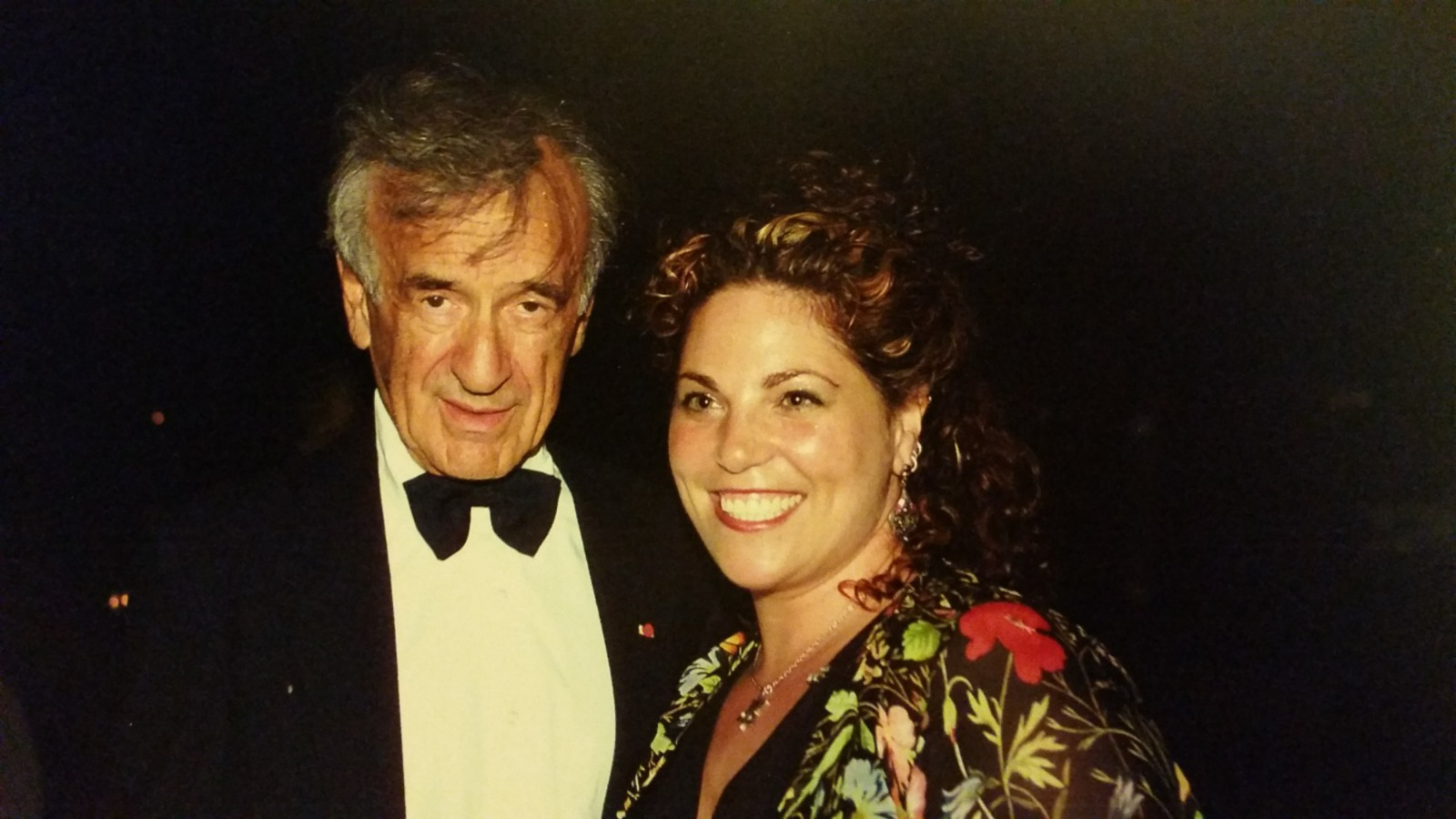
Dr. Elana Heideman with Prof. Elie Wiesel, her mentor and "rabbi"

Varda Epstein: Can you describe some of the work you’ve done at/for Yad Vashem, Israel’s Holocaust museum and on behalf of Holocaust education? From your perspective, why is this work so critical?

Elana Heideman: My work on behalf of Holocaust education continues every day, and it pulses through the activism work I do on behalf of our people and our country. I educate educators, I train teachers, and continue to work with students looking to explore the field for research or other methods of memory transmission.

I began my work at Yad Vashem as a student, going there for my endless research efforts and taking part in every program I could get involved with. I attended their summer courses and went on to become an educator for the International School of Holocaust Studies and have served as a private guide for 20 years, providing a most unique and personalized experience through the Historical Museum. I was a part of an initiative that brought together teams from Yad Vashem with the United States Holocaust Historical Museum on applications of academic research to the future of Holocaust memory, and I have been a mentor for many students who seek to make Holocaust research and education a part of their future career path. I continue to educate and train educators and do my very best to encourage creative methods of the transmission of memory in a purposeful and meaningful way. Most importantly, I believe the work that we do as historians is, as Elie Wiesel said, our tool in our fight for Jewish rights and freedom. Those of us who are capable of translating the messages of history into action for today and the future are essential as our history and our very existence as the Jewish Nation continues to be threatened.

October 7 presented an unexpected comparison with the events of the Holocaust and I have tried to help people contend with the (im)balance of these atrocities. I am involved in memory efforts in Israel for the future of the memory of the Simchat Torah massacre, and I am involved with helping survivors tell their stories onward. I am working with descendants of Holocaust survivors who suddenly feel their identities shift following this tragedy, and am helping those who are trying to find their voice in the process of memorialization and meaning. Along with that comes helping people find clarity in the relationship between events of the past and those of today, as well as the warning signs for the future. 

Nazism of today does not look or sound like the Nazism of yesterday, yet people are quick to leap to unrealistic comparisons and sleight of tongue in name calling. The true lessons of the Holocaust would be a recognition of the power game of its perpetrators, and the language used to demonize the Jew and anything and everyone non-Aryan. To use the terms Nazi, Hitler  and, in fact, the term genocide so loosely for political gain, as has been done about Trump and Netanyahu, and the battle for existence in the defensive wars of Israel, is irresponsible and inaccurate. We should do better to retain the integrity of the survivors and the experience of fascist tyranny, and to recognize the patterns of public manipulation that employ the same fear tactics as the Nazis before them. The closest comparison can only be found in the global jihadist movement for the extermination of Israel and the Jewish nation that has become the rallying cry of the antisemitic hate fests taking over the streets and social streams of the world. That is where energy should be directed - to stopping the trend enabling the violent vitriol that will lead whole societies into dark and trying times.

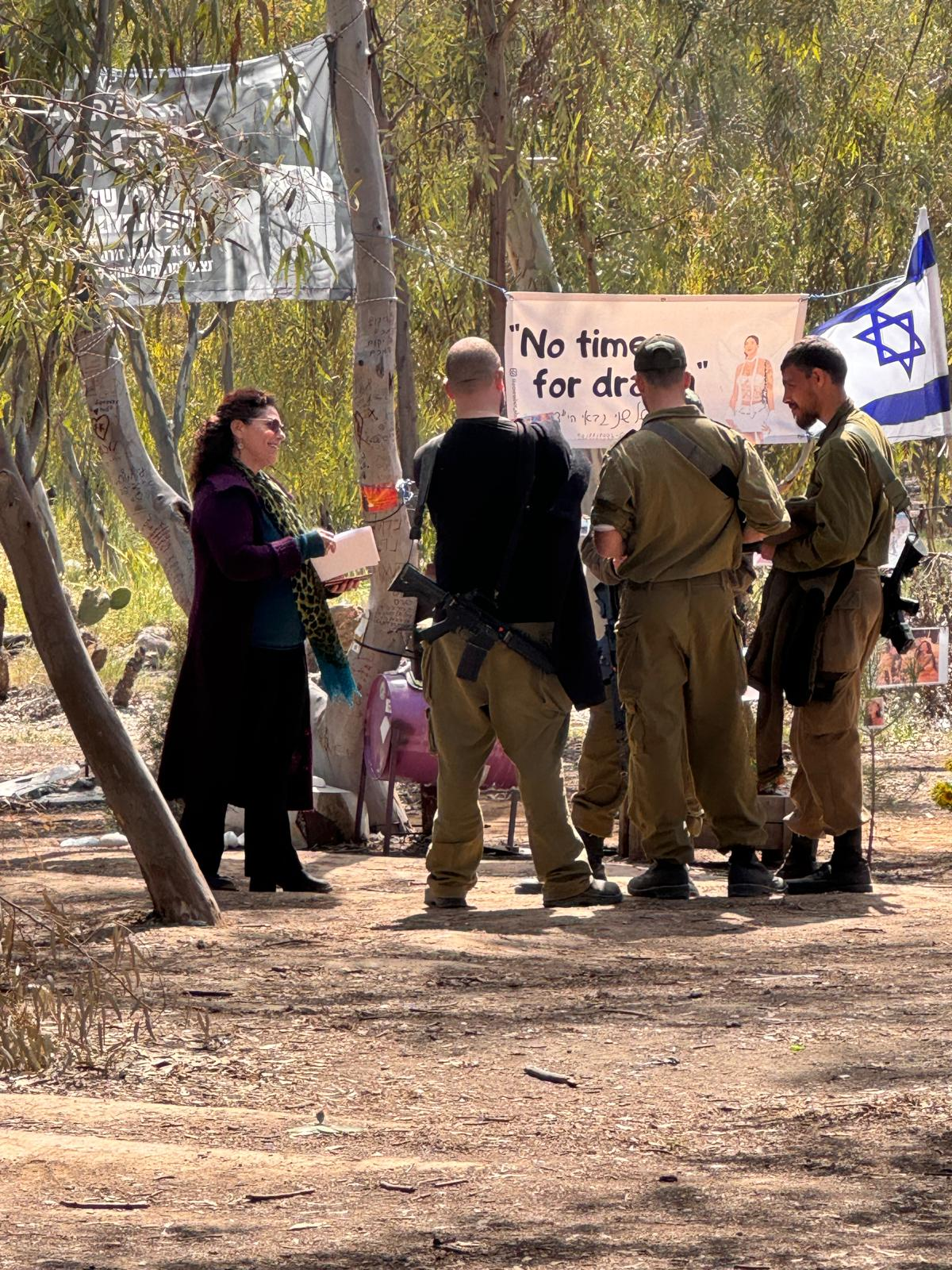
At Nova

Varda Epstein: Why did you make Aliyah? Do you see Aliyah as a Jewish imperative?

Elana Heideman: Aliyah for me felt inevitable since my very first visit to Israel at the age of 13. The experience transformed my life and my identity, my self-awareness and my motivations. I had postponed my desired Aliyah for the sake of my academic career, and was blessed with the opportunity to spend 12 years under the tutelage of Elie Wiesel, but right in the middle of our learning together I felt a change. Having guided many journeys to Poland within a short timeframe, it was that last arrival back to America where I understood this was no longer my home where I could feel at peace, where my soul was complete. I knew that in order to write the best work and to do the best teaching I could do for the sake of the future, I needed to be where I was my best and most complete self, and that was in the land of Israel. 

As we know, making Aliyah is not easy for anyone, but I found myself so enthralled by the ability to live the miracle and to learn the language of our people, that I built quite a beautiful and substantive life here where I now live on a moshav with my three children in the Judean mountains. I know that Aliyah is not for everyone, however I do wish more people would consider it so that we can carry on the pioneering dream of our people, those who lived in exile for too many years. I believe Aliyah could be a greater ideal for some Jews today, but of course as we've seen throughout history, it is not easy to pick up an entire life and face the countless challenges of the cultural, financial, social, and even religious shift that comes along with such a major move.

I do believe that it should be a Jewish imperative, and frankly I believe that every diaspora Jewish youth should be obligated to inherit their birthright as a virtual citizen of Israel, and to serve one year of either volunteer army service or community service, Sherut Leumi, or other opportunities.  Sadly, not enough of our diaspora family feels that it is worth the potential sacrifice, no matter how many years we repeat the phrase “next year in Jerusalem”, or “if I am not for myself who will be for me”, or singing the songs that remind us that we are all watchmen on the wall. Unfortunately we will continue to see Aliyah of despair, of escape from the rising Jew-hatred in every corner of the world.  

I pray that Jewish families today and those of the future will understand that Aliyah by choice is something that we can each make possible if we dream it. But the dream must be fostered by a sense of shared responsibility to our homeland, a shared destiny with the ancestors of thousands of years ago and every generation since. Only then can someone realistically envision taking on the more difficult life, the many bureaucratic and cultural obstacles. Building a meaningful life in Israel outweighs so much of the burden of the obstacles we face because we know that it is the chosen life to be a part of blossoming and living our land, and being a part of the collectivity of the nation of Israel as fulfilled in our biblical blessing. 


Varda Epstein: Tell us about the Israel Forever Foundation. What is the mission of this nonprofit of which you are the executive director, and how did it come to be?

Elana Heideman: Israel Forever was born as an organization focused on celebrating Israel's centrality in Jewish identity and her contributions to humanity and civilization. Expanded to become a home for engagement, inspiration, and empowerment, Israel Forever offers programming, resources, and consulting for our global community of members, who we recognize as Virtual Citizens of Israel. 

I developed Israel Forever to meet the continuous need of Jews from all backgrounds and places in the world to feel connected to our source as Israel and the many dimensions of what that means. This vision extends to those already involved and also for the unaffiliated and non-religious. It includes creating opportunities for informal learning to reach those who lack a community or educational connection.

We cater to the continuously growing needs of the Jewish world, for those who are unaffiliated, isolated, seeking to deepen their personal connection, to mobilize their families and friends in creative ways that help them feel like they're making a tangible difference. We serve as a partner and often a guide, creating opportunities for learning, activism, and to bring together those in the diaspora with grassroots efforts in Israel, helping to not only raise awareness but to increase compassion and connection no matter how far apart the members of our global Jewish family might be. 

We have been active for 14 years in designing content that meets the needs of educators, parents, community leaders, organizations and individuals. Since the war, we have been sponsoring Healing Hearts mosaics therapeutic activities to displaced communities, distributing messages and packages of support to bereaved, traumatized and displaced families. We have supported soldiers and soldier’s families, especially miluimnikim reservists, and we have been sharing the stories of Israel and helping to inspire those around the world to be IsraelStrong in every way possible. 

Israel Forever was built on the understanding that not all Jews would come to Israel to foster the sense of belonging. Instead, we have brought pride in Zion and Israeli identity to those around the world. Now, as our people face a war on multiple fronts and platforms, Israel Forever continues our vital role in serving as a bridge and a source of empowerment.


Varda Epstein: Can you tell us about your work on behalf of Zionist organizations, such as B’nai Brith and the World Zionist Council?

Elana Heideman: When I was growing up, Zionist was not a bad word. And it was with immense, unfettered pride that I served as a B’nai B’rith delegate of the World Zionist Council from a very young age. I was exposed to the activism and voices of elders and leaders from all over the world, and I was able to learn from their expertise.  Eyewitness to debates both civil and non, I gained greater insight and appreciation by listening deeply to the various perspectives that I encountered. I recognized and appreciated the different styles of communication and activism of Israelis, empowered by their confidence in our nation state. I learned how to navigate the intricacies of international collaborations and networking, and to find a balance between ideas and passion, and actualization and implementation. 

As the chairperson for the Young Leadership Action Network, I was able to not only meet fellow young activists but also share my ideas for potential improvements in making possible the change we all were hoping to see. Then again, as a delegate for the Global Conference for Combating Antisemitism, since its inception in 2004, I do feel as if we continue to fight the same battle that many of us were shouting about for all of these years since. The new waves of Jew-hatred we see on the streets right now were already in their inception phase, incubated by years of indifference and accusations of paranoia for anyone who was, like myself, able to see the writing on the wall and trying to be involved in every way possible to find solutions to the lack of preparation or response. 

I continue to sit in the conferences, serve as a delegate, and see how I can make an impact while wading through the organizational bureaucracies that we all know are obstacles to our ability to make change. Israel Forever, as a grassroots independent unaffiliated apolitical Jewish Rights Movement, allows us to succeed in making Israel and Jewish identity empowerment a personal goal. 

"Silly me."

Varda Epstein: What is Declaration Day, and what drove you to this initiative?

Elana Heideman: In simple terms, Declaration Day commemorates the day on which Ben Gurion declared Israel's independence as a nation state following the end of the British mandate over Palestine on May 14th, 1948. The Declaration Day initiative aims to establish this day of recognition on international calendars. While Yom HaAtzmaut is our day of celebrating our rebirth as a sovereign nation in our ancestral homeland, the international world must remain continuously aware of the facts that surround this reestablished sovereignty.

Every year the lies get worse. The Nakba lie has grown in popularity and has circumvented nearly all elements of historical truth surrounding the formal establishment and recognition of the modern Jewish state of Israel. But rather than create a reactionary campaign, we aim for Declaration Day to be a proactive affirmation of the ancestral rights that were affirmed on this historic date. With increased programming for recognition of the path to independence as a just cause for Jewish national freedom, reaffirmed again and again in international law, we can prevent the future deterioration of the facts in the minds of common people. We can educate them as to the fundamental values on which not only was Israel created, but values Israel continues to uphold in both our pursuit of peace and in our methods of war, as we are continuously forced to demonstrate.

No international body gave Israel the right to exist. Not the Balfour on November 2nd, 1917; not the League of Nations on June 24th, 1922; not the United Nations vote for the partition on November 29th, 1947. But by virtue of these recognitions of Jewish rights to the biblical and indigenous homeland of the Jewish people, Jewish life has continued to grow and blossom in a desolate land, fulfilling our ancestral destiny and the blessing bestowed upon us by God. Declaration Day allows people to stand proud for these same values and ideals. 

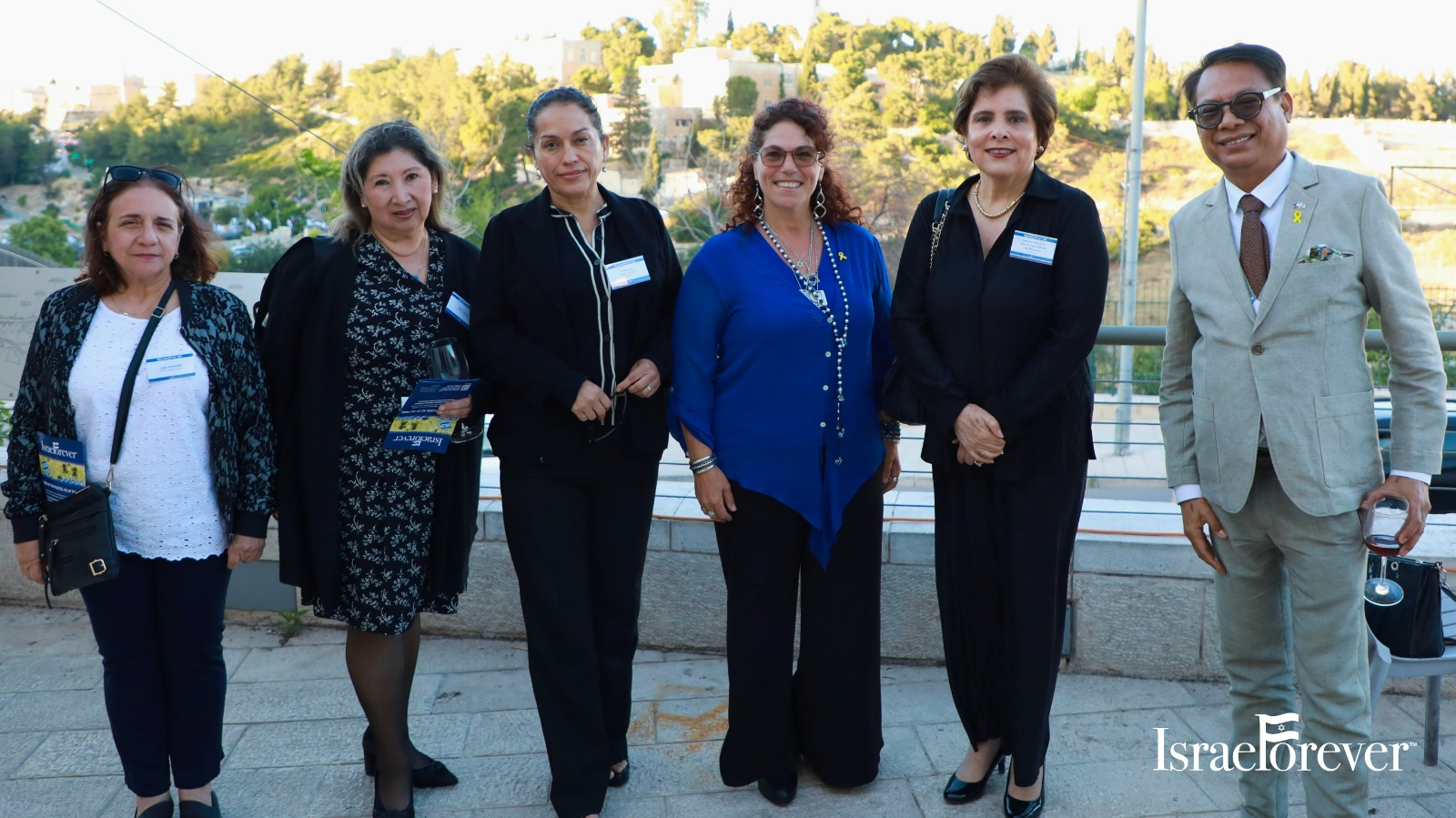
With a group of ambassadors at Israel Forever Foundation Declaration Day event

Varda Epstein: What is the most frustrating aspect of antisemitism and the fight against Jew-hatred?

Elana Heideman: On one hand the most frustrating aspect is how easily the masses are persuaded by the lies about Jews. On the other hand, the most frustrating aspect is how careless and callous people have become when it relates to expressions of Jew-hatred. Elie Wiesel taught that indifference is amongst the most dangerous elements of a society. And yet, people are inevitably susceptible to compassion fatigue and, in the competition for empathy, the Jews simply do not factor in. We seem as nothing but a burden; a thorn in the side of societies who just want to be able to forget that the Jews exist. To many, we represent something beyond “foreignness;” rather an entity whose existence and resistance they cannot understand, and in too many cases cannot accept as legitimate, no matter human. So I believe that our fight against Jew-hatred begins with respect for the Jew and what the Jew stands for, and it is immensely frustrating to know that we cannot achieve this respect while our people continue to have such internal divisions and public conflicts. They weaken us, they demonstrate that we are, within our own community,   indifferent to the impact of this internal division on how the external world accepts us or understands us. For years, and especially in the past year, we hear how Israel hasn't done enough to explain ourselves. But in fact the fight against antisemitism should not rest on the shoulders of Israel alone, but on those of the diaspora organizations who, sadly, have spent these last decades treating the rise of antisemitism as if it was insignificant. Now we see how such indifference to our own reality has fostered some of the inadequate response to what we are currently seeing happening everywhere around us.

Varda Epstein: Talk to us about October 7. What was your original reaction when news of the atrocities began to filter out? How have your feelings and purpose evolved over the one year since that black day?

Elana Heideman: The first siren in my community was within the first hour of the onslaught, which began at 6:29 a.m. I immediately grabbed my phone in spite of Shabbat. The videos were the first thing I saw. I felt like I had been transported in time. Like everyone else here, it was impossible for me - for anyone at that time - to understand the extent of what was happening, such as how many terrorists had infiltrated what we believed to be our safe borders, the depravity of their acts or the extent of the psychological tortures inflicted on children, elderly, and women. Where were the soldiers to protect them, was, of course, one of everyone’s first questions as I was already seeing some of the conversations that were happening in these communities as they were under attack, simply by virtue of random shared connections in my social feeds. It was everywhere, and I saw before they were taken down some of the most graphic images of the fields of Nova, the bodies of raped women, beheaded corpses, and burned babies. I found myself seeking story after story from that day and onward, knowing that my role as an atrocity memory expert might somehow be an asset in trying to comprehend and cope with the aftermath of this slaughter. I still continue to inherit these stories, and I do everything in my power to pass them along. Much as I had done with the stories of painful suffering and abuse during the Holocaust, I knew that this was a part of the blessing/curse I had inherited. I had to be able to give voice to the voiceless; I had to be able to keep people informed while alleviating their personal fears and anxieties. For each month of the one year following the slaughter, I held a virtual program on the 7th that allowed people to learn, listen, and to feel some small glimmer of solace in knowing that they were not alone and that they could have a safe and private space to feel somehow together, even with people who are far away. Another program we developed to foster this connection was our Healing Hearts mosaics project, a therapeutic craft that we provided to displaced families, and that we continue to provide for bereaved and traumatized families, individuals and communities, through the generosity of donors from around the world. At a time when we all feel helpless and yet wishing we could do more, I continue with every chance I get to create opportunities for interaction, healing, and the continued learning about what October 7th means to each one of us, especially as the months continue to pass.

I will say that my feelings have only grown more intense, and my purpose even more empowered. And my intensity grows despite the fact that everybody since October 7th is now an “expert” on anti-Semitism and the holocaust. While it is indeed difficult to wade through the new voices of influencers, whose popularity are dominating the conversations, I know that my role is perhaps even more relevant as a link between generations of knowledge and insight that I have learned and inherited. 


Varda Epstein: How has the focus of your work changed since October 7? What are you doing to spread awareness and fight back against misperceptions and anti-Israel sentiment?

Elana Heideman: The focus of my work has changed only in the continuous need to keep our war for Jewish rights and freedom at the forefront of people's consideration and consciousness. Alongside the necessary awareness of our hostages in captivity we must look at ways we could be fighting our fight better, such as emphasizing the full transparency of the IDF in their unprecedented care to reduce civilian casualties, and to call out the propagandists and their manipulated numbers and demonization. The focus of my work just has even more purpose now than ever because, in truth, many Jews are simply feeling lost. We must join our soldiers fighting this just war for freedom against this tyranny of terror that is taking over the world and so I will continue to seek opportunities, partnerships, and find ways to help the common person, the every Jew, so that they might feel more confident as they wade through the sea of confusion and encroaching despair. I have increased our visual presentations of information and empowerment messages, interviews with people who are involved in a grassroots level of activism, philanthropy, and community strength. We continue to reach people directly with ideas on how to channel their energy into positive ways during this most trying time. I have expanded the lessons on historical relativism, recognizing that we are indeed living through a historic time.


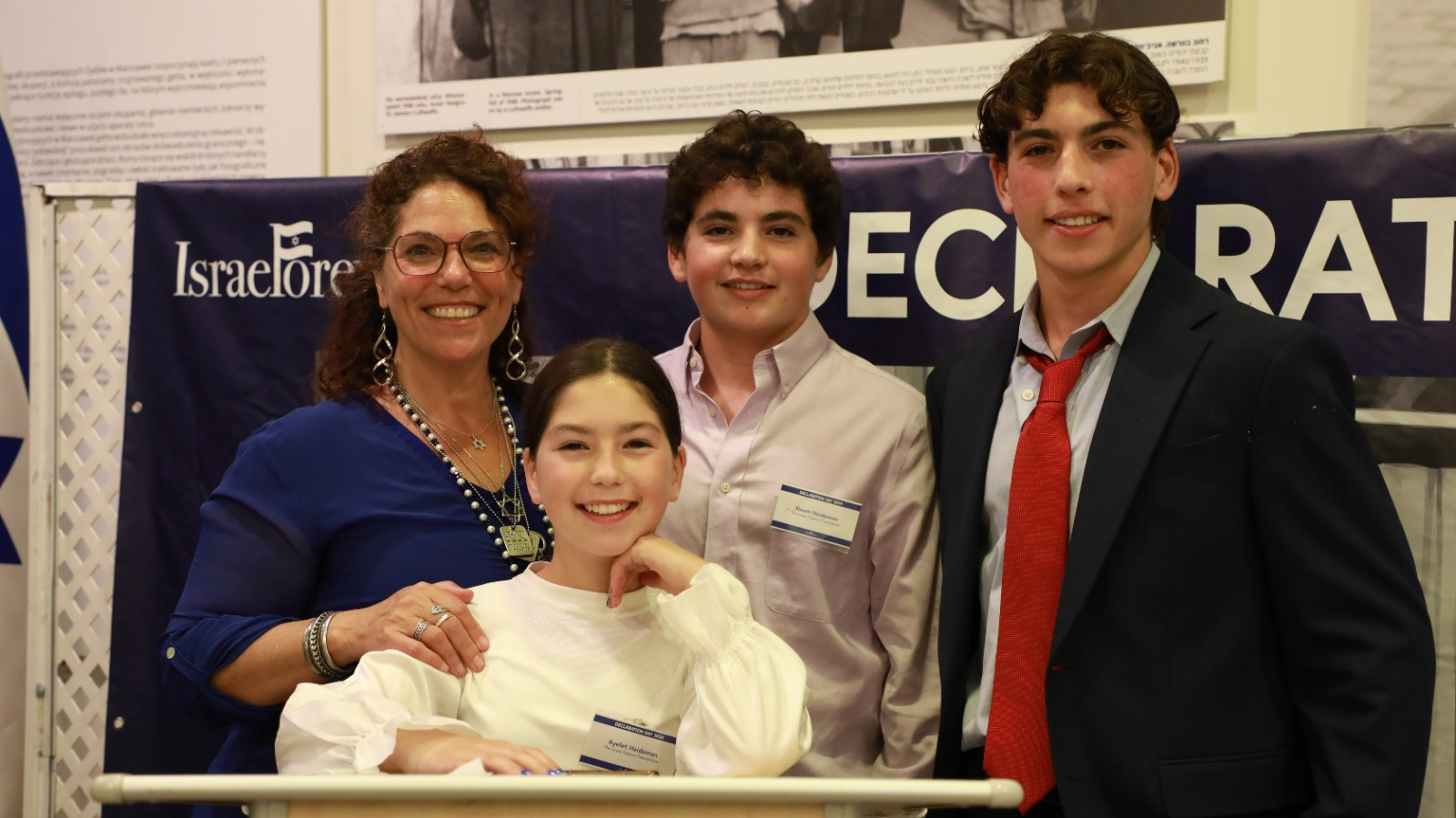
Elana and her beautiful family

Varda Epstein: What is your advice to those who want to make a difference on behalf of Israel and the Jewish people, but don’t know where to begin?

Elana Heideman: This is precisely what I have been doing for years - helping people find their spark, polish their voice, and find ways to be involved with activism that meet their personal abilities, interests and availability. In our busy lives, we have to make the time - we have to commit ourselves to something in particular that helps us feel we are making a tangible difference. For some that might be advocacy, for others it could be letter-writing and call campaigns to administrations and organizations. Whether for the release of our hostages or the rights of Israel or of Jews in classrooms and communities, these individual voices are essential to keeping up momentum. Of course, finding a local group or leader works for some; but for others, they are looking for ways to fit activism into our already overstimulated and over-programmed reality. 

Anyone can take a first step - don’t be shy, and definitely reach out for help. I do private consulting for people looking for direction, and help develop skills through a hands-on internship program that has propelled many into activism or even career pursuits. Helping stay motivated is often a challenge, and feeling helpless or lonely can be obstacles to having a sense of accomplishment - especially in social media activism, which is very difficult to navigate because of the exposure to the toxicity of hate. So I believe starting small and making meaningful connections is a great first step to finding your personal niche of how you can use your time and energy.

Israel needs every voice, and we all have a potential to do more to join the efforts to go beyond just Jewish pride to be Zion-proud - deeply invested in the success of our ancestral national project. You can find connections in the most random of spaces and build creative expression in the most diverse of platforms that can all serve our collective purpose of keeping alive the legacy of the nation of Israel. 

Our unity is at the helm of our fight to overcome the hatred and danger we face today, and that unity begins with sharing what we know about the issues and what we have seen work over the years. Don’t underestimate the meaningfulness, the power and importance, of your single voice. Consider the many skills and relationships you have picked up over your life, and how they can help you to grow and strengthen your own Jewish identity and that of other Jews in your life. Be the ambassador for the Jewish fight for freedom and sovereignty with Israel Forever, or come explore with me your next path - the opportunities are yours if you want them. 


Varda Epstein: What’s next for Elana Heideman?

Elana Heideman: My vision for myself in 5 years is to continue to be at the helm of an organization that I believe plays a crucial part in the continuity of connection for Am Yisrael. I have channeled my passion for learning and activism into meaningful programming and content, creating engagement and empowerment opportunities and inspiration for a wide range of audiences around the world. I continue the work of Elie Wiesel in utilizing the lessons of the Jewish lived experience into our current realities, facing a new war against the Jews.  I hope the future allows me to carry Israel Forever into new levels of global awareness and programming opportunities, to continue building upon the thousands of hours taught, hundreds of articles and resources written and published on israelforever.org, to create partnerships allowing us to reach, connect and collaborate with local communities for the sake of our collective future. And above all, I hope I will still be inspiring fellow Jews in discovering their connection and destiny as a part of the nation of Israel, knowing that Israel Forever can play a historic role in protecting the integrity of one of the great civilizations of the world. 


Buy the EoZ book, PROTOCOLS: Exposing Modern Antisemitism  today at Amazon!

Or order from your favorite bookseller, using ISBN 9798985708424. 

Read all about it here!


AddToAny

Printfriendly

EoZTV Podcast

Podcast URL

Subscribe in podnovaSubscribe with FeedlyAdd to netvibes
addtomyyahoo4Subscribe with SubToMe

search eoz

comments

Speaking

translate

E-Book

For $18 donation


Sample Text

EoZ's Most Popular Posts in recent years

Search2

Hasbys!

Elder of Ziyon - حـكـيـم صـهـيـون


This blog may be a labor of love for me, but it takes a lot of effort, time and money. For 20 years and 40,000 articles I have been providing accurate, original news that would have remained unnoticed. I've written hundreds of scoops and sometimes my reporting ends up making a real difference. I appreciate any donations you can give to keep this blog going.

Donate!

Donate to fight for Israel!

Monthly subscription:
Payment options


One time donation:

Follow EoZ on Twitter!

Interesting Blogs

Blog Archive